
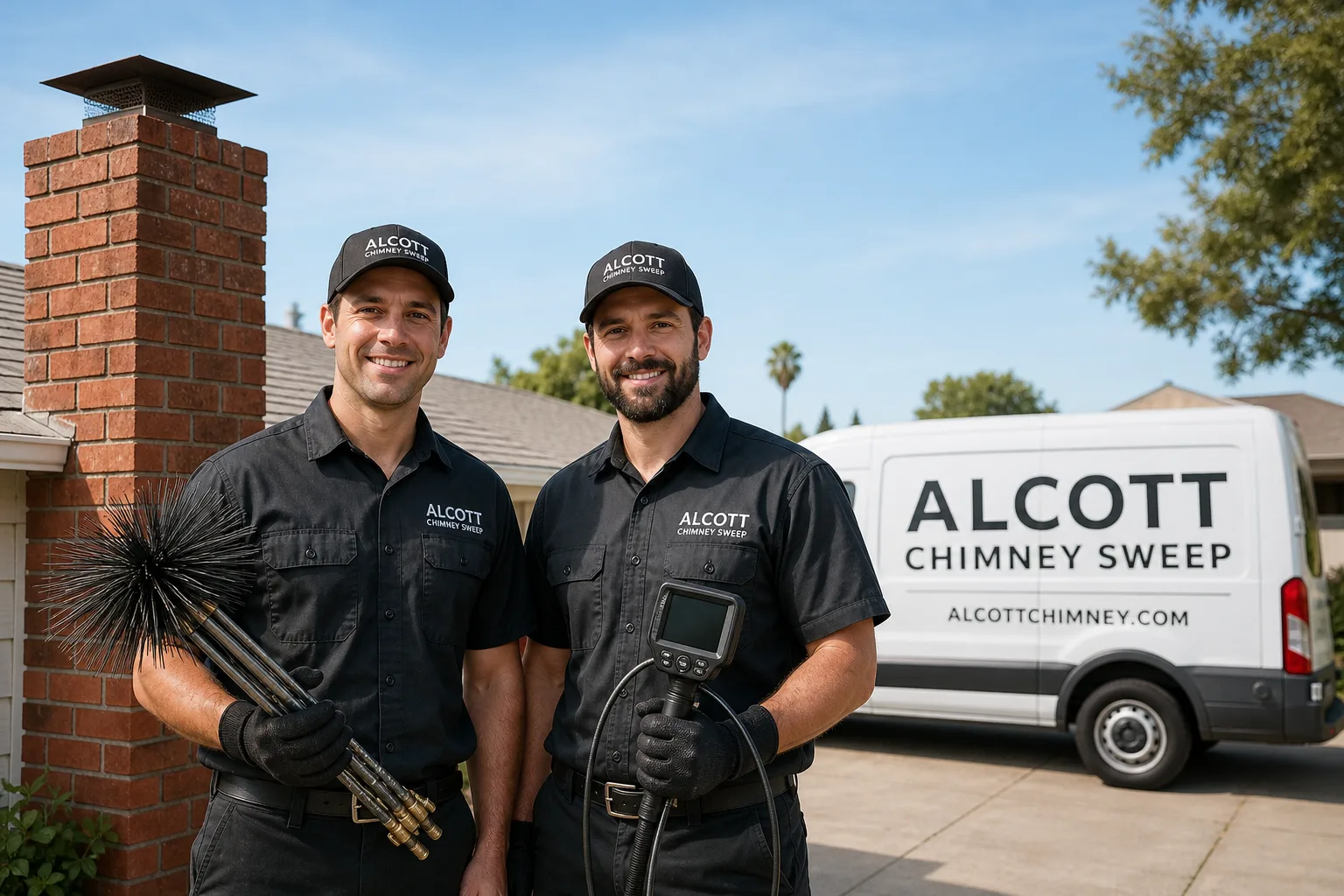
Level 1 sweep and inspection to the NFPA 211 annual standard - flue, crown, cap, and flashing checked and photographed
Chimney sweep logs do not sweep chimneys. They loosen some creosote - which then falls where a brush and vacuum still have to collect it.
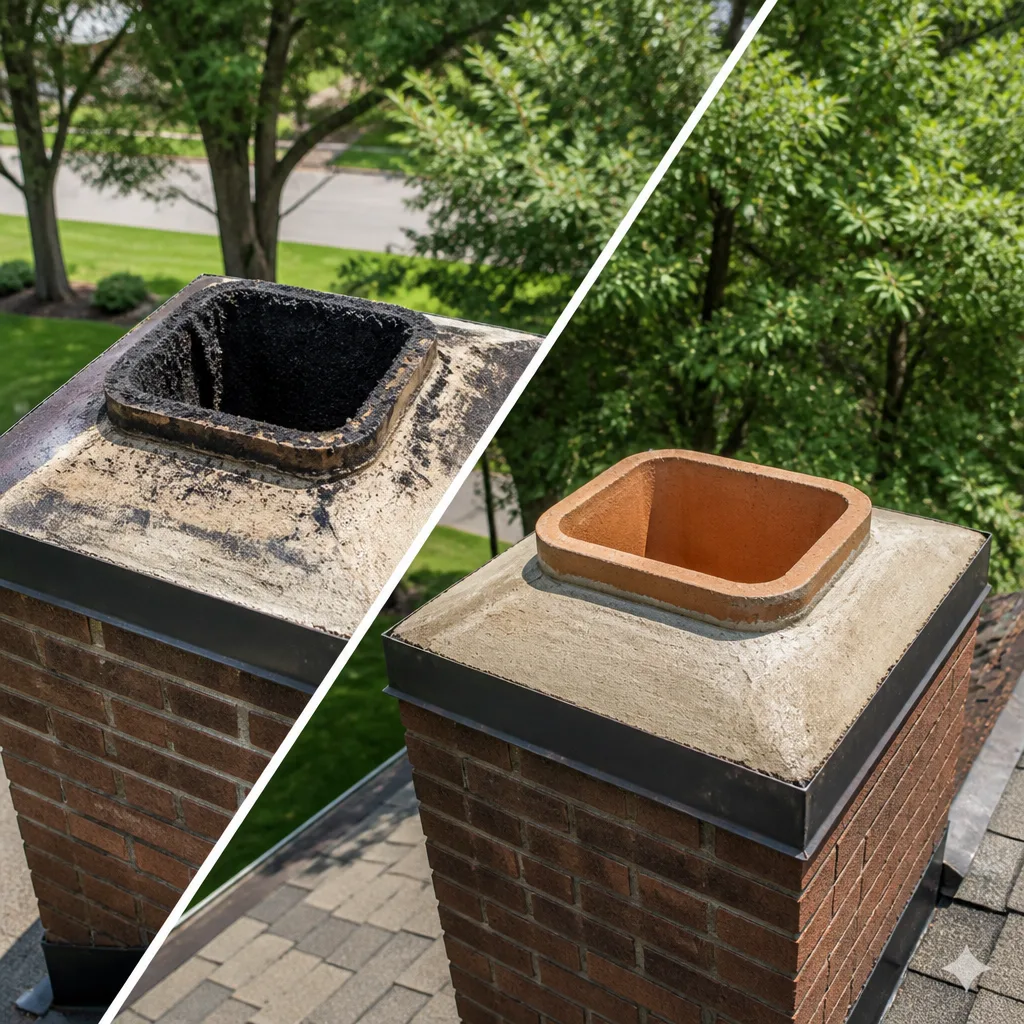
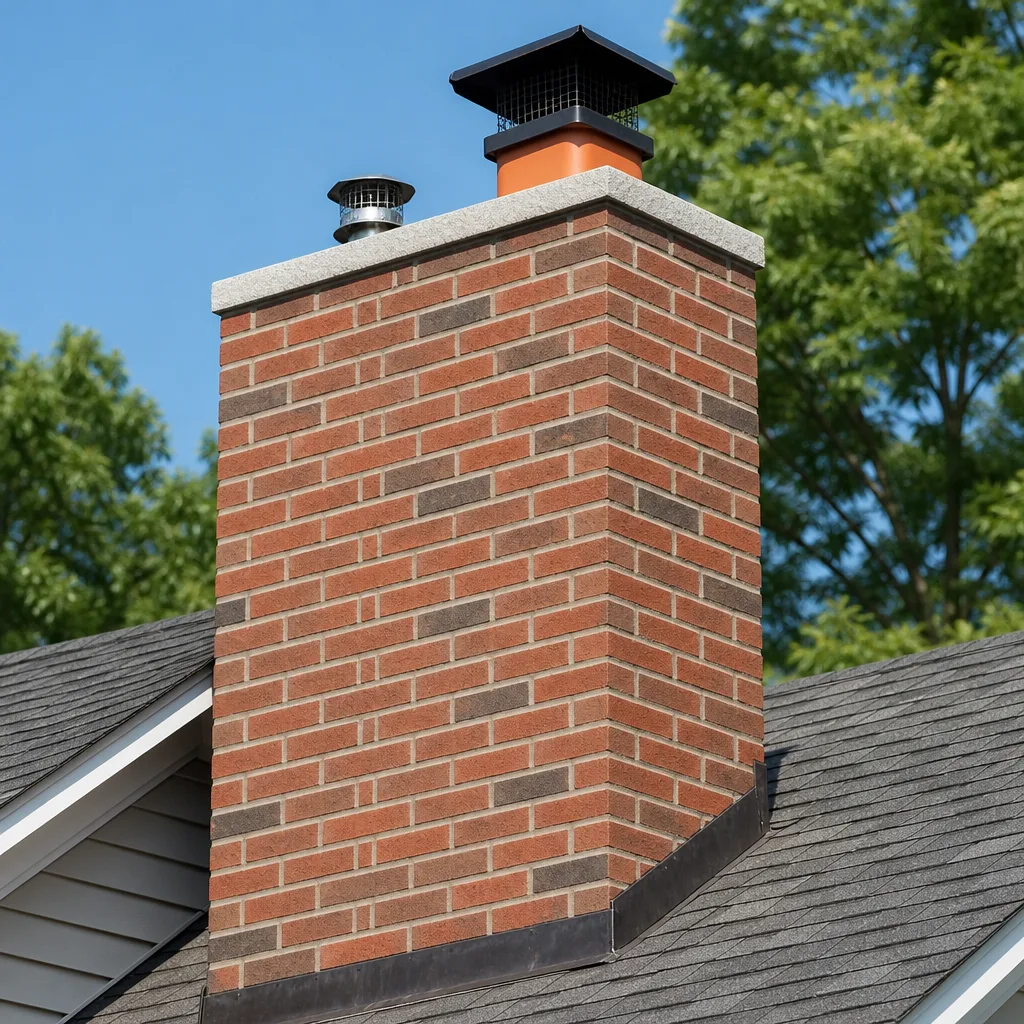
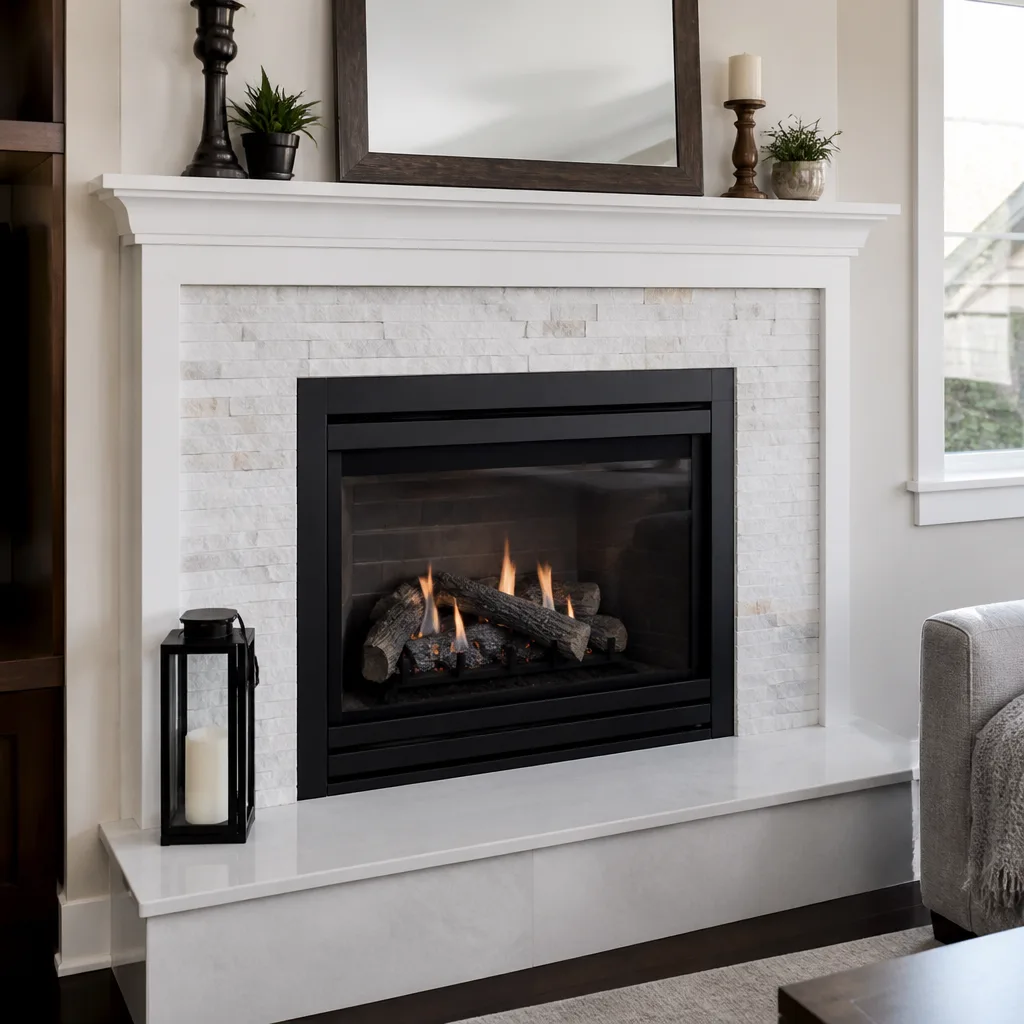
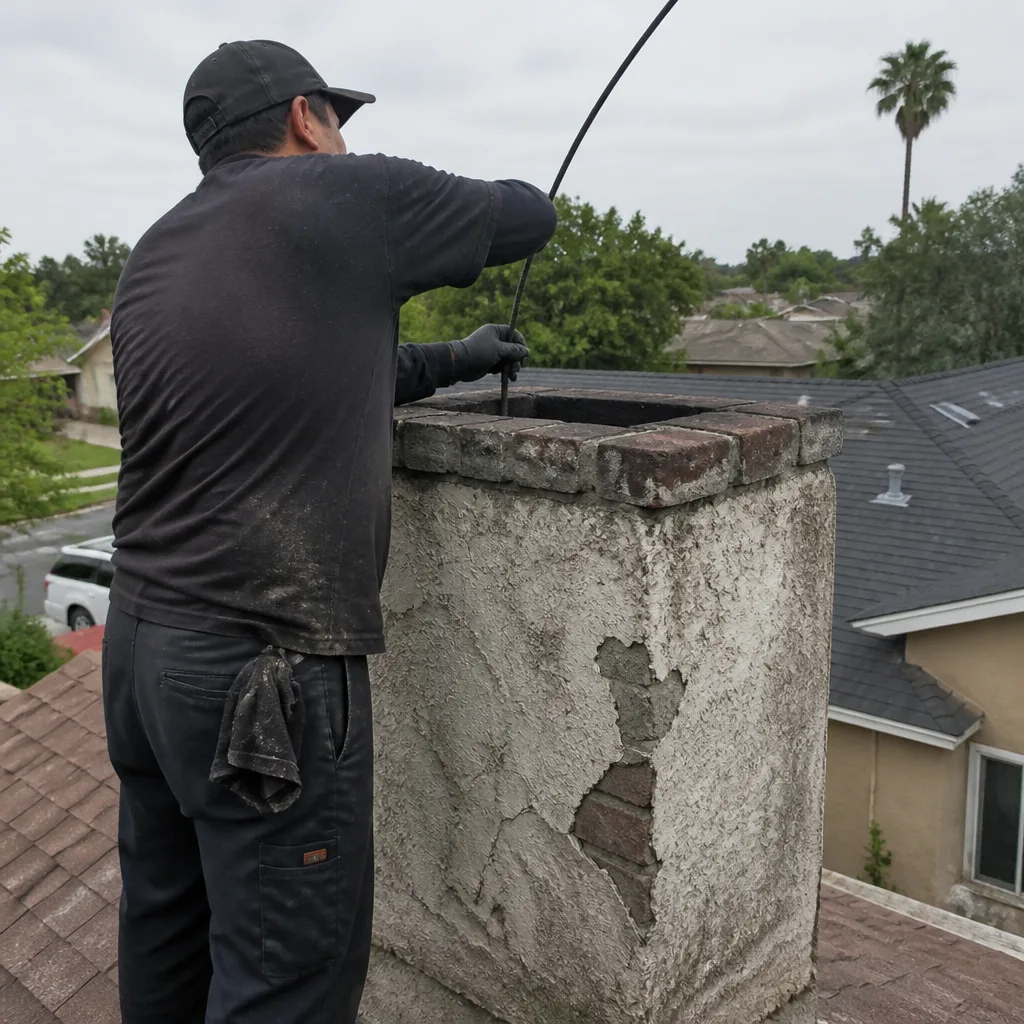 Before
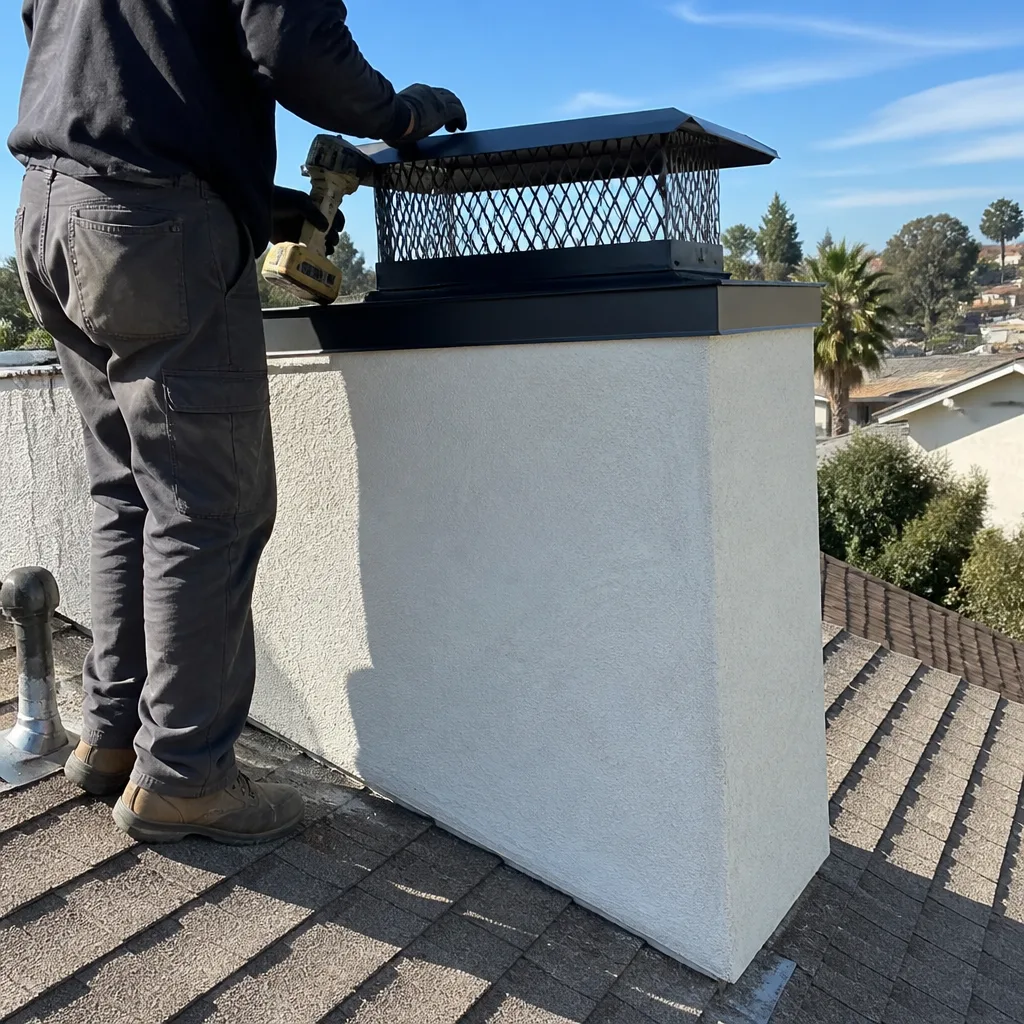 After
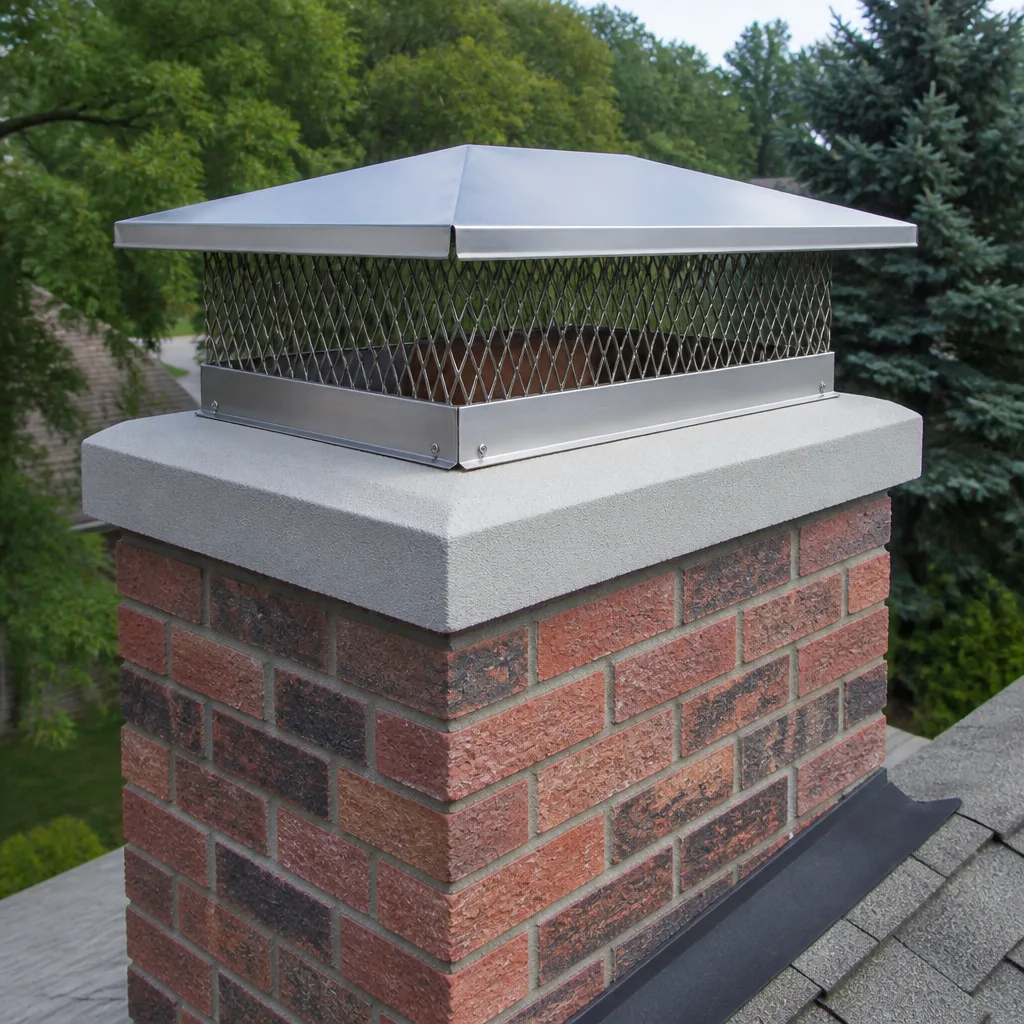
After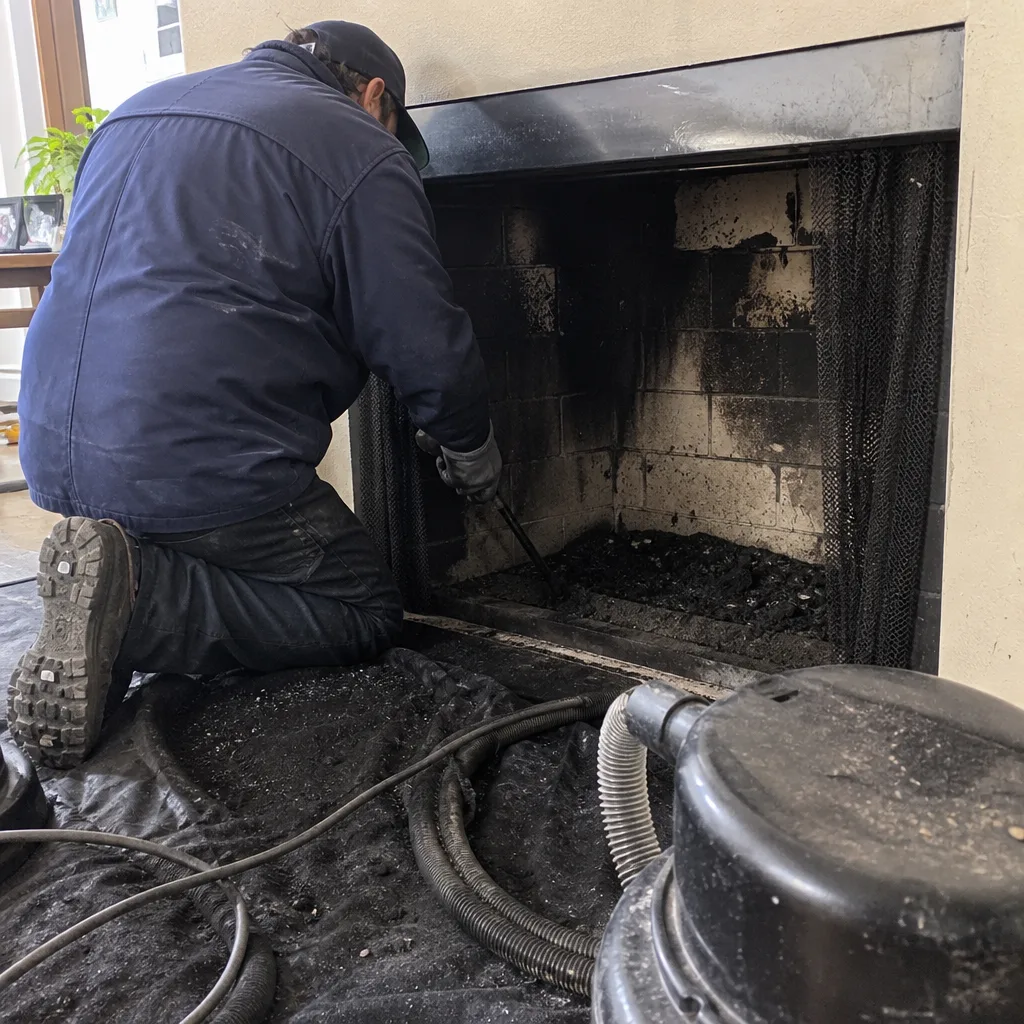 Before
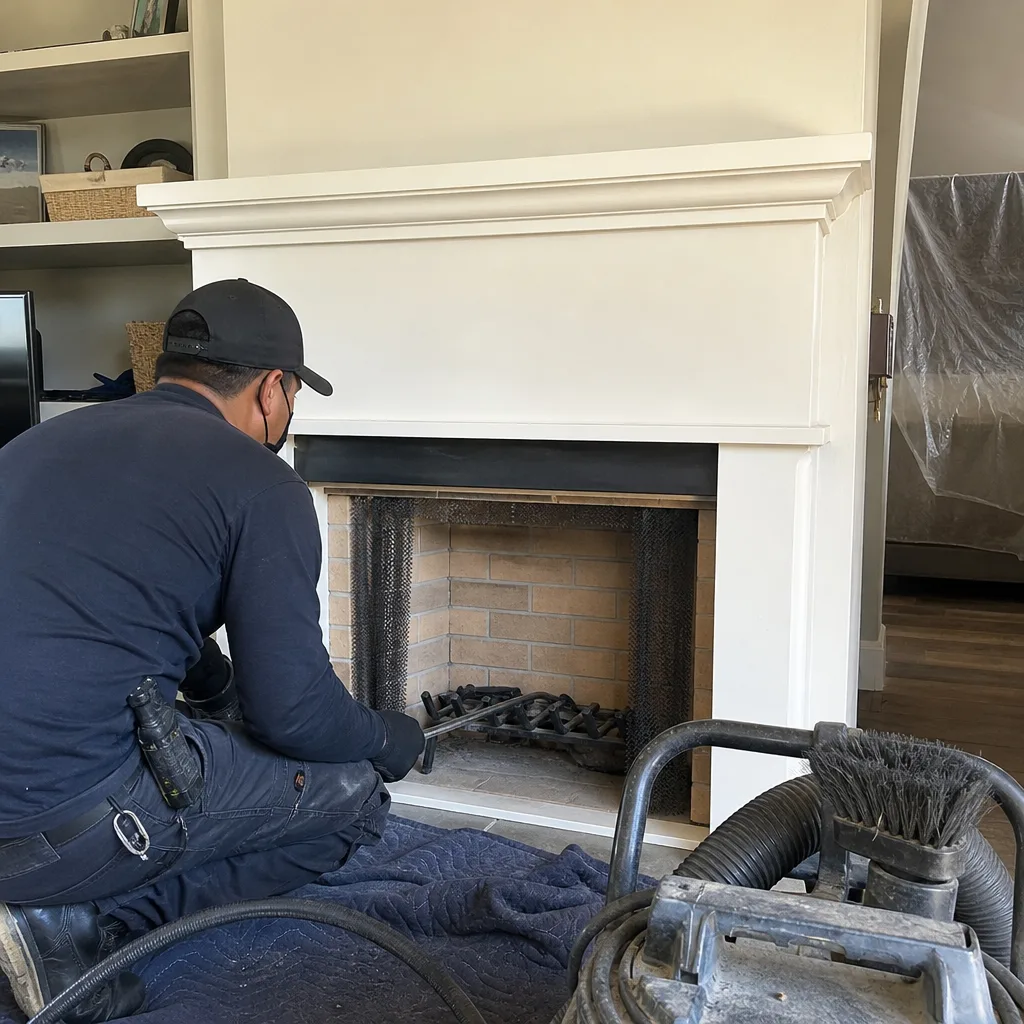 After
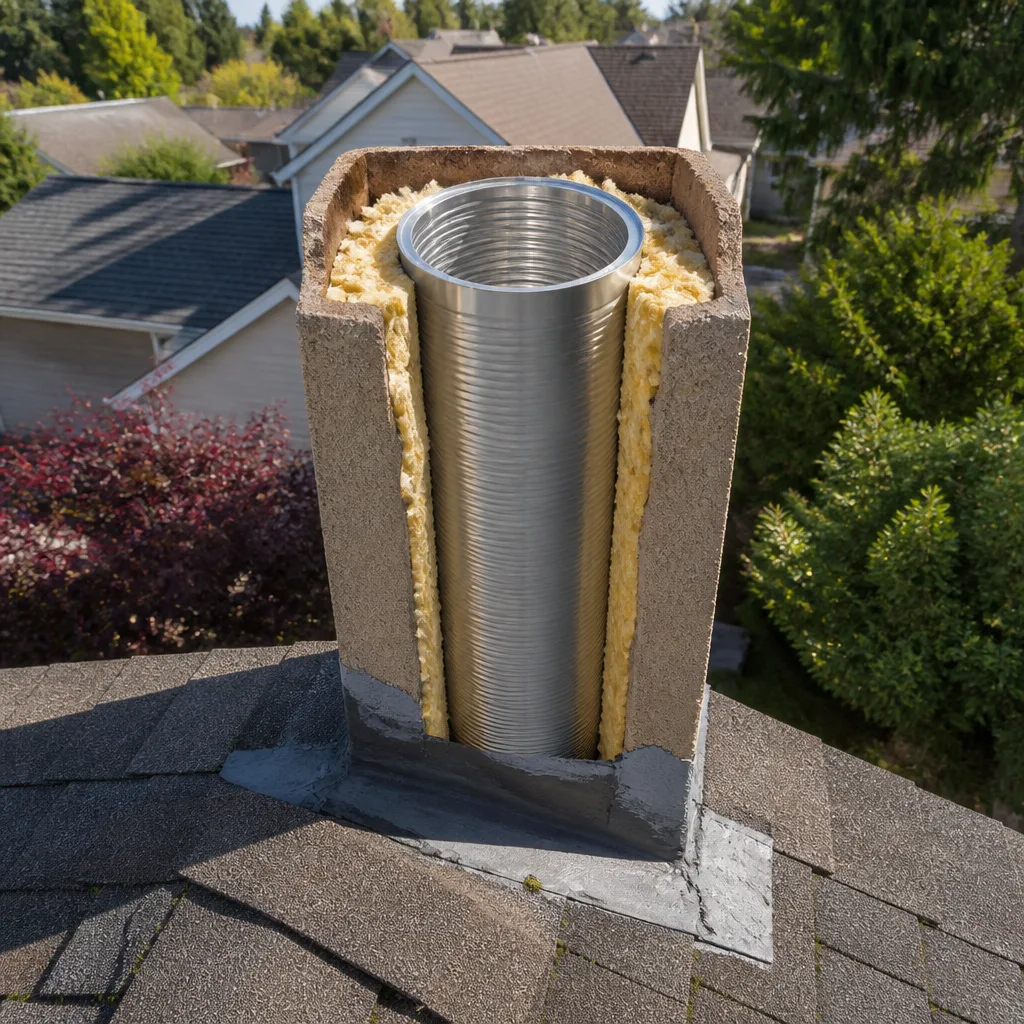
After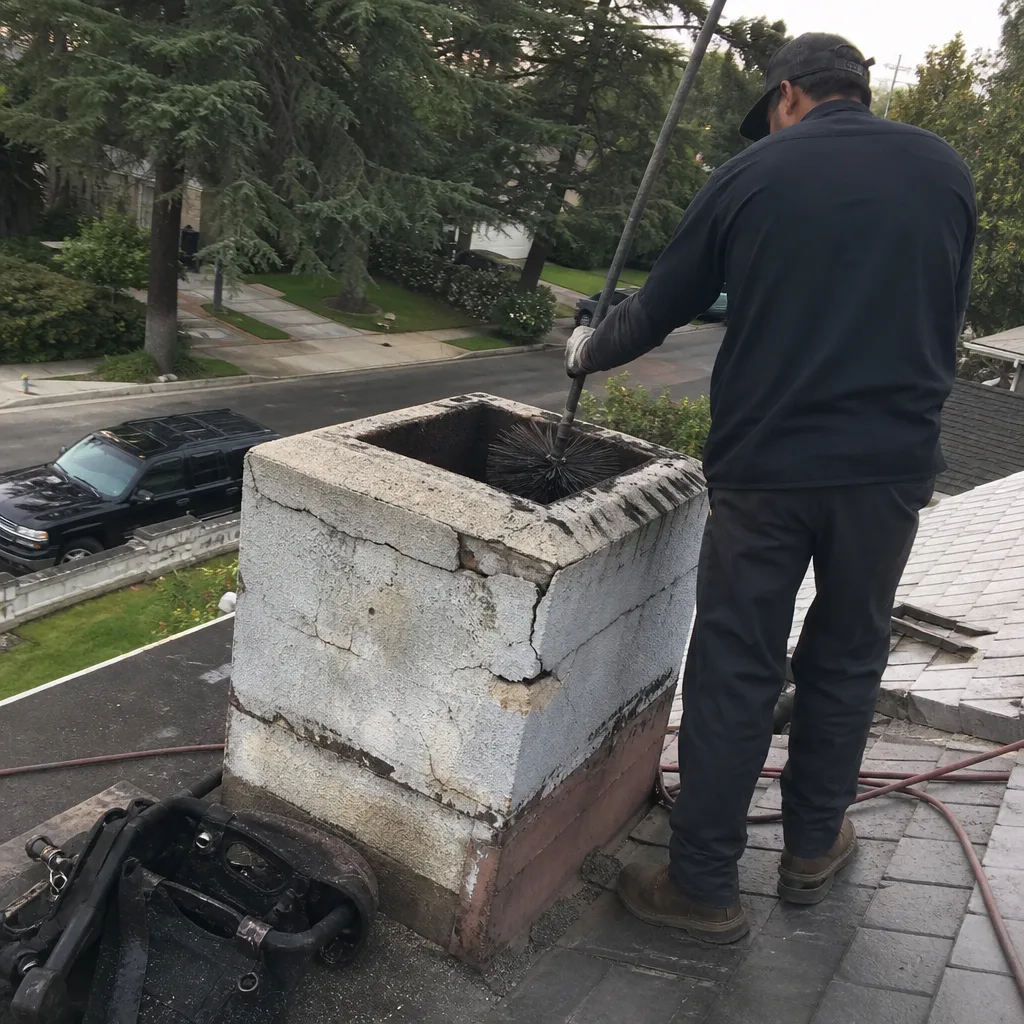 Before
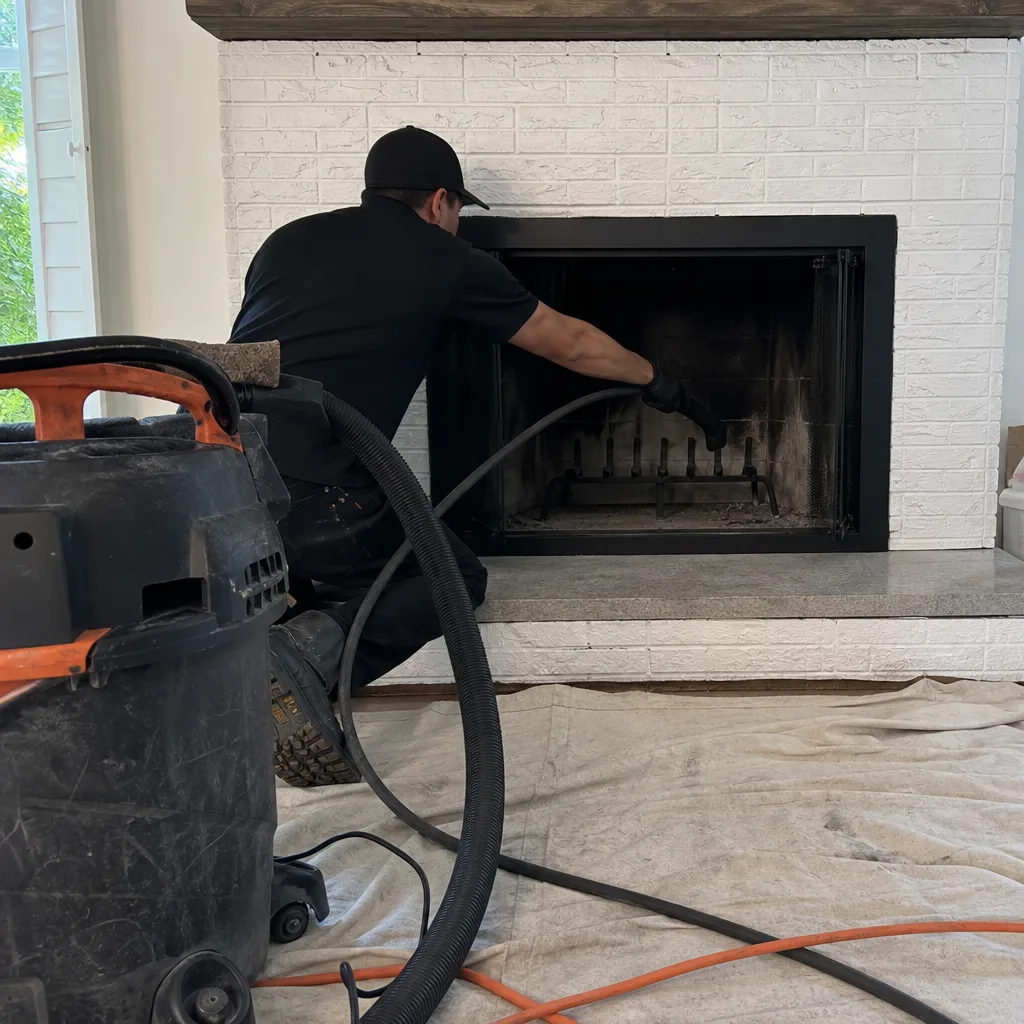 After
AfterSmoke Coming Back Into the Room
What’s Happening
Smoke coming back into the room almost always means your chimney is not drafting properly – the column of warm air that should carry combustion gases up and out has stalled or reversed. This is a ventilation problem, and in most cases it traces back to one of four causes: a blocked or dirty flue, a cold chimney that hasn’t warmed up enough to pull, a closed or broken damper, or a pressure imbalance inside the house.
None of those causes is a mystery. A chimney technician can identify which one is happening within the first few minutes of an inspection. What matters right now is that you stop feeding the fire and figure out what’s going on before you light it again. Smoke in a living space carries carbon monoxide – a gas you cannot see or smell on its own – so this symptom deserves a straight answer, not a wait-and-see approach.
Why It Happens
Blocked or Dirty Flue
Creosote, a tar-like byproduct of wood combustion, builds up on the inside walls of the flue with every fire. Over time it narrows the passage and eventually restricts airflow enough to push smoke back into the room. If your fires have been producing heavy smoke, if you’re burning unseasoned wood, or if the chimney hasn’t been swept in more than a year, a blocked flue is the most likely culprit. You may also notice a sharp, acrid smell even when the fireplace is not in use – that’s creosote off-gassing into the house.
Closed, Stuck, or Damaged Damper
The damper is the metal plate just above the firebox that opens to let smoke escape and closes when the fireplace is not in use. If it’s closed, partially stuck, or warped from heat, it will block the draft the same way a pinched hose blocks water. You can usually check this yourself by looking up into the throat of the firebox with a flashlight – you should see daylight or open space above the damper plate when it’s fully open. If the plate won’t move, or moves but doesn’t fully open, that’s your problem. Dampers can also crack or warp over years of thermal cycling, and a damaged plate may look open while still restricting flow significantly.
Cold Flue / Downdraft at Startup
A chimney that has been cold for hours – or all season – is filled with a column of dense, cool air that actively resists the upward draft you need. When you light a fire in that condition, the cold air pushes back and the smoke takes the path of least resistance: into the room. This is especially common on the first fire of the season or on a very cold day. The fix is to warm the flue before lighting the main fire – holding a lit rolled piece of newspaper up near the open damper for a minute or two – but if the problem persists beyond the first few minutes of a fire, something else is going on.
House Pressure Imbalance
Modern homes are built tight. Exhaust fans in kitchens and bathrooms, whole-house ventilation systems, and well-sealed windows can create a negative pressure condition where the house is trying to pull air in from wherever it can find it – including the chimney. If you notice the smoke problem gets worse when kitchen exhaust fans are running, or when interior doors are closed, a pressure imbalance is worth investigating. This one often requires some detective work and doesn’t resolve itself with a sweep alone.
What to Do Right Now
- Stop using the fireplace. Don’t light another fire until the cause is identified. Continuing to burn with a draft problem means carbon monoxide can continue to enter the living space.
- Open a nearby window or door slightly to relieve any negative pressure and improve fresh-air supply to the firebox – this can sometimes improve draft enough to confirm whether pressure is the issue.
- Check the damper with a flashlight. Stand in front of the firebox, open the damper handle, and look up. You should see the damper plate fully open and ideally some light from above. If it won’t move, or you can’t tell whether it’s open or closed, stop here and call a technician – do not reach up into the flue to force a stuck damper by hand.
- Photograph what you can see from outside: the top of the chimney, the cap if there is one, and any visible debris or obstruction around the crown. This gives your technician a useful starting point before they arrive.
- Turn off all exhaust fans in the house and note whether the smoke behavior changes. If it does, tell your technician – that information narrows the diagnosis considerably.
Do not attempt to clear a flue blockage yourself. The creosote deposits that cause restrictions are flammable, and disturbing them without the right equipment can trigger a chimney fire. That’s not a risk worth taking for a problem a technician can solve safely in a single visit.
How We Fix It
When your local Alcott Chimney Sweep technician arrives, the first thing they do is a visual assessment of the firebox, damper, and flue – often with a camera – to confirm exactly what’s causing the backdraft before any work begins. You’ll receive a written price for the recommended work before anything starts. That’s not a formality; it’s how every job works here.
If the cause is creosote buildup or a general blockage, a professional chimney sweep clears the flue, removes the deposits, and restores the draft opening to specification. If the damper is warped or broken, a technician can repair or replace it with professional-grade components from the brands we carry, including Gelco and Copperfield. If the flue liner itself has deteriorated and is contributing to poor draft, a DuraFlex liner system or HeatShield resurfacing may be the right path – and if that’s the case, you’ll see camera footage that shows exactly why before we recommend it.
Most visits resolve the draft problem the same day. Any repair comes with a written guarantee, and our 365-Day Done Right Promise means that if the repair fails, the second visit is free. No fine print on that.
Frequently Asked Questions
Yes, and it should be treated as a real safety concern rather than a nuisance. Wood smoke contains carbon monoxide, fine particulates, and other combustion byproducts that are harmful to breathe, especially over repeated exposures. A properly functioning chimney carries all of that outside. Stop using the fireplace until the cause is identified and corrected, and if anyone in the house is experiencing headaches, dizziness, or nausea, leave the home and call 911 – those can be early signs of carbon monoxide exposure.
It needs to be fixed before you use the fireplace again. There’s no version of this problem where the right answer is to light another fire and see what happens – a draft failure means combustion gases are entering your living space, and that’s a carbon monoxide risk. If the chimney hasn’t been swept in over a year and you’re heading into burning season, the timing is doubly important. Call us at (336) 863-3889 and your local Alcott team will get you on the schedule.
The cost depends entirely on the cause: a blocked flue that needs a sweep is a different job from a failed liner that needs replacement, and we won’t quote one as the other. Every customer gets a written price before any work begins – that’s not negotiable on our end, and it means you’ll never see a surprise number at the end of the visit. Call (336) 863-3889 to schedule a visit and get an exact written estimate for your specific situation.
Call us at (336) 863-3889 and a live person will answer – not a voicemail, not a callback queue, any time of day or night. Your local Alcott Chimney Sweep team will tell you the earliest available appointment and work to get there as quickly as scheduling allows. Before your technician arrives, you’ll receive their name and photo so you know exactly who to expect at the door.
Get It Fixed
Call (336) 863-3889 right now and a live person will pick up. Your local Alcott Chimney Sweep team will schedule a visit, send you your technician’s name and photo ahead of time, and arrive with a written price before anything starts. The fireplace should work the way it’s supposed to – let’s make that happen.
Written by Ruben Castellano, Owner at Alcott Chimney Sweep, part of the Threshold Group family of home-service companies, serving homeowners since 2002.
What Our Customers Say
"Cap, screen, and a full inspection with photos sent to my phone. Easy to understand and a fair price."
- Tomas Y."Very respectful of my home. Took off his boots and wiped the hearth when finished."
- Carol D."Annual inspection and sweep. He used a camera to check the liner and found a cracked tile I had no idea about. Gave me a written estimate and did not push."
- Janet W.