

Level 1 sweep and inspection to the NFPA 211 annual standard - flue, crown, cap, and flashing checked and photographed
Chimney sweep logs do not sweep chimneys. They loosen some creosote - which then falls where a brush and vacuum still have to collect it.
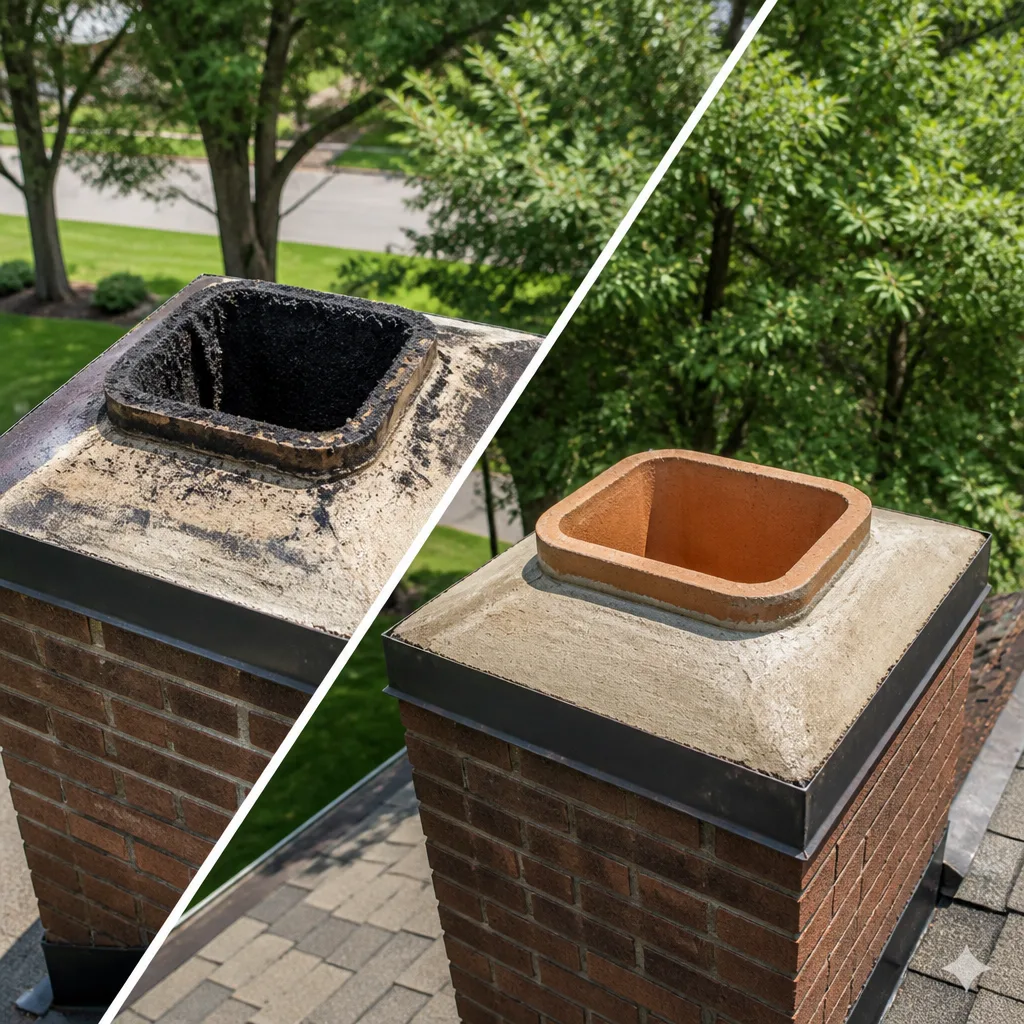
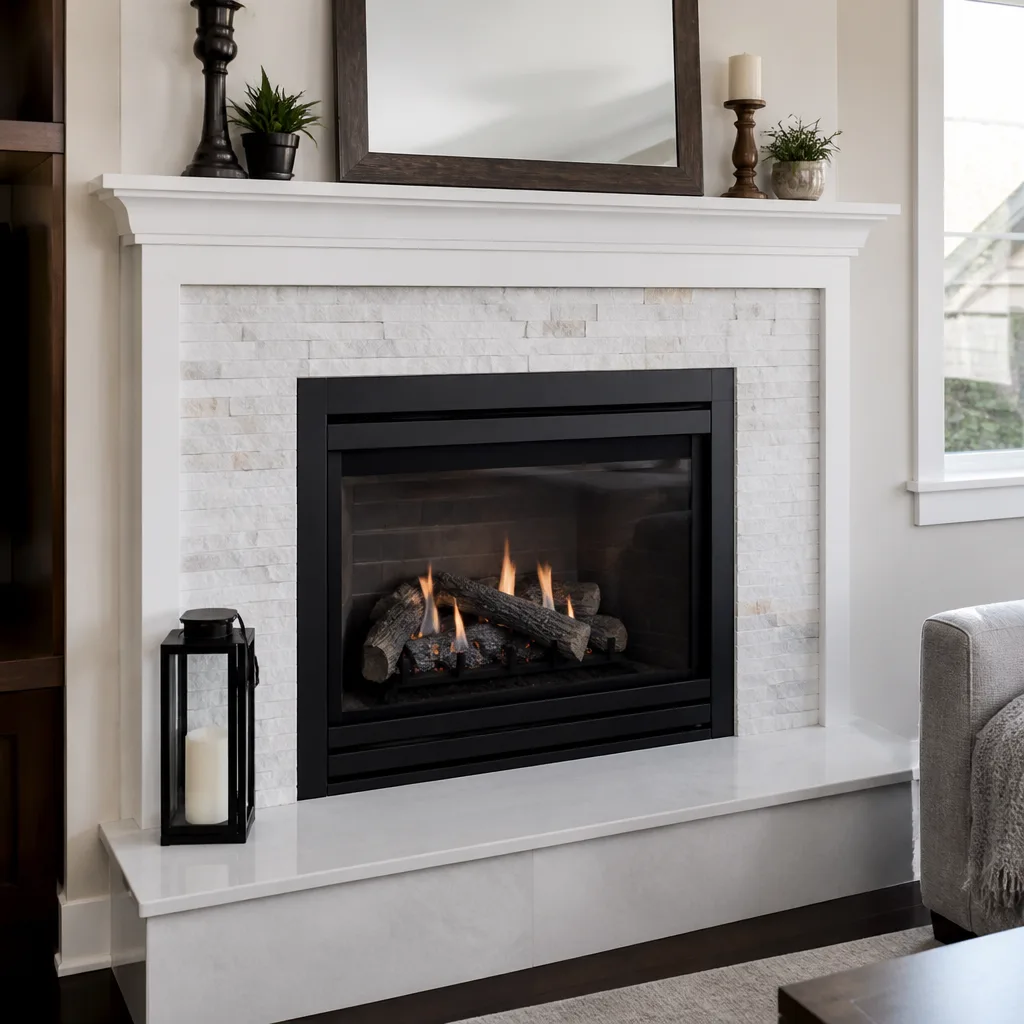
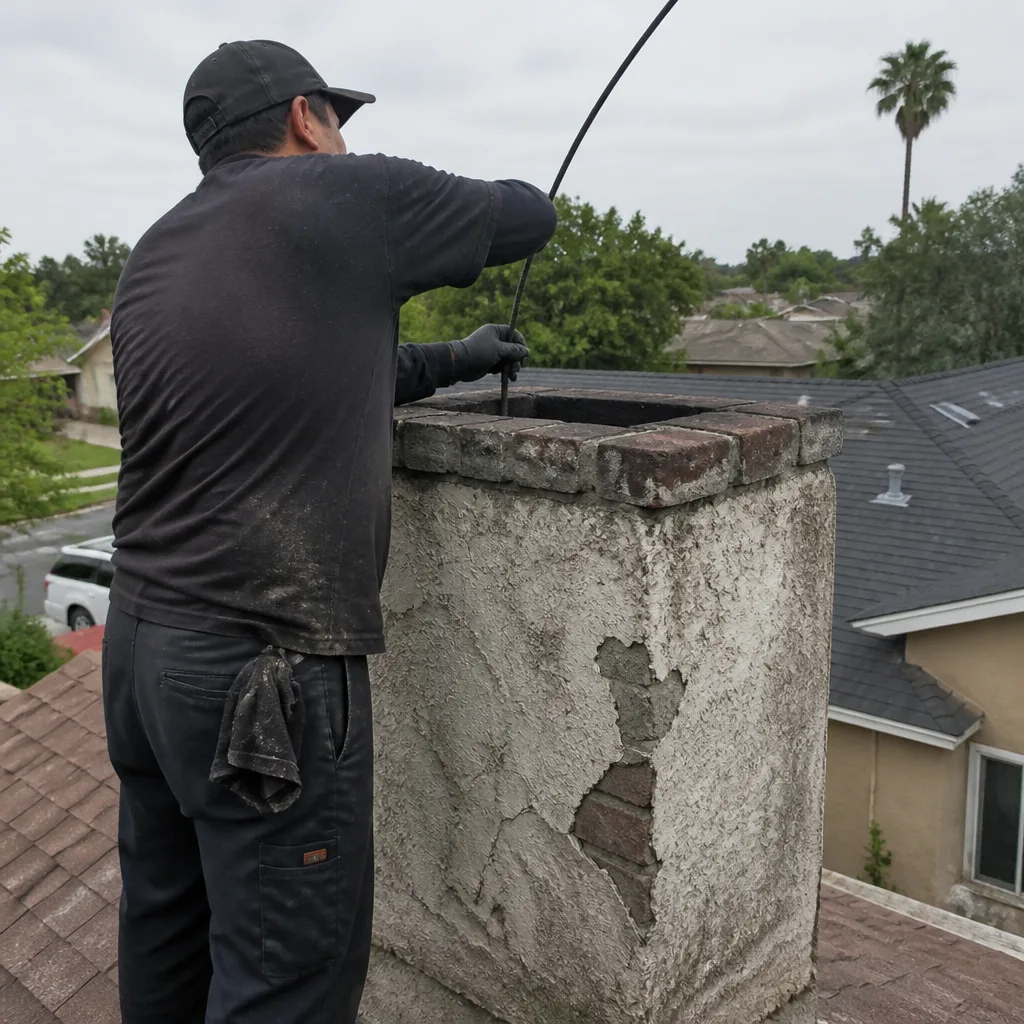 Before
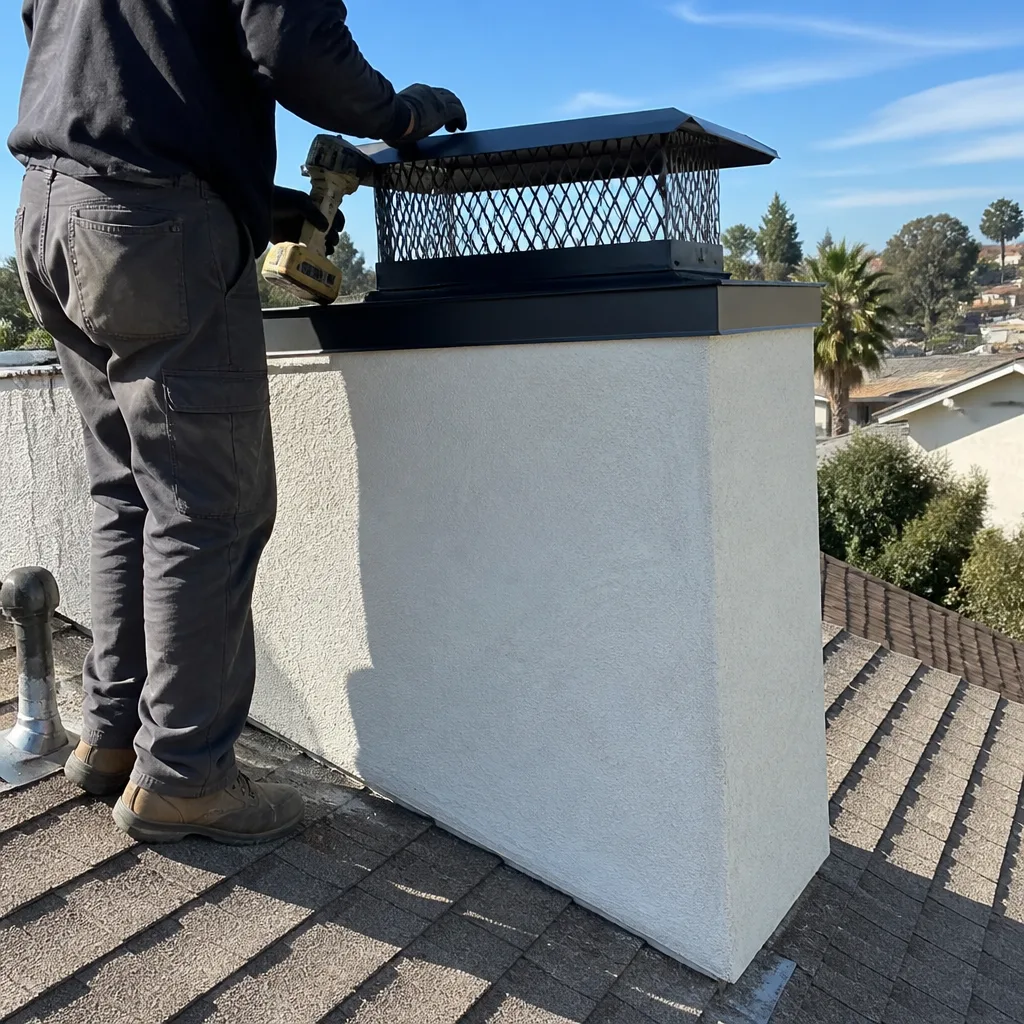 After
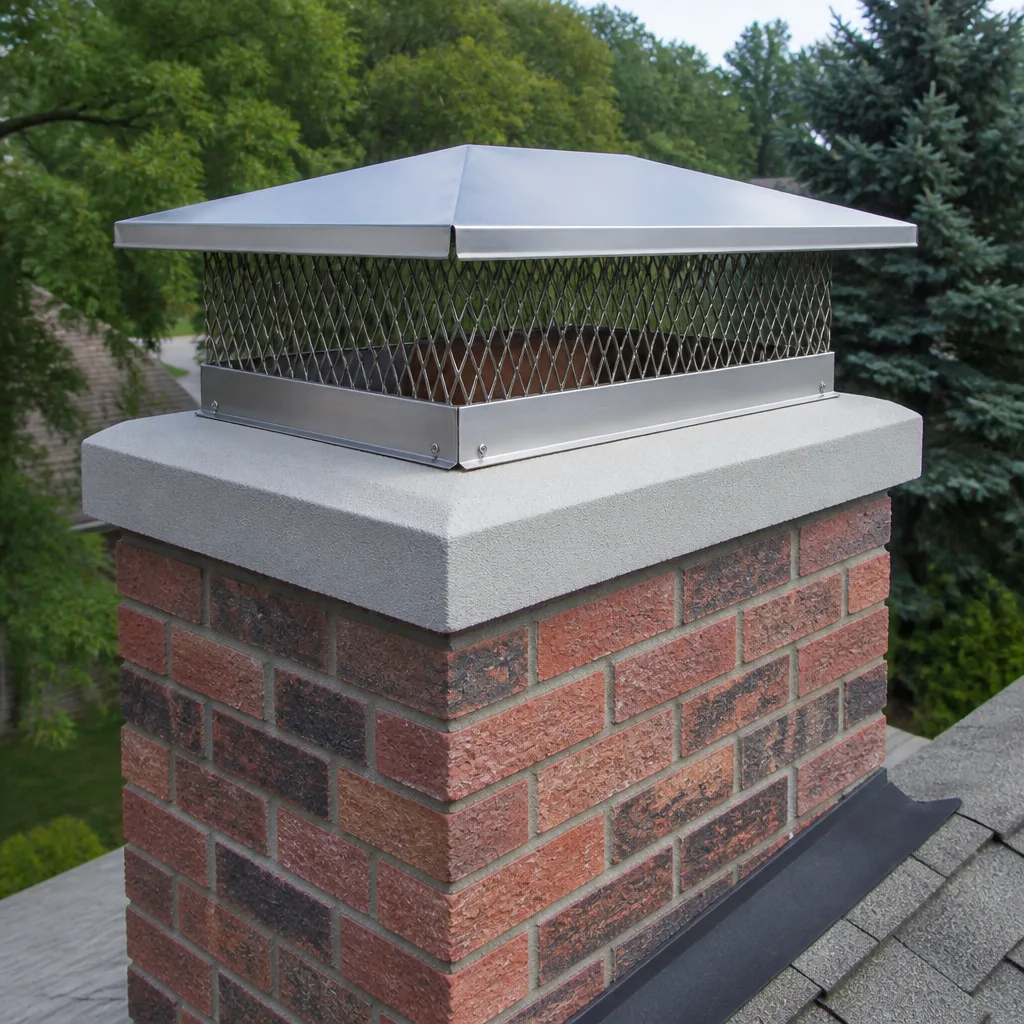
After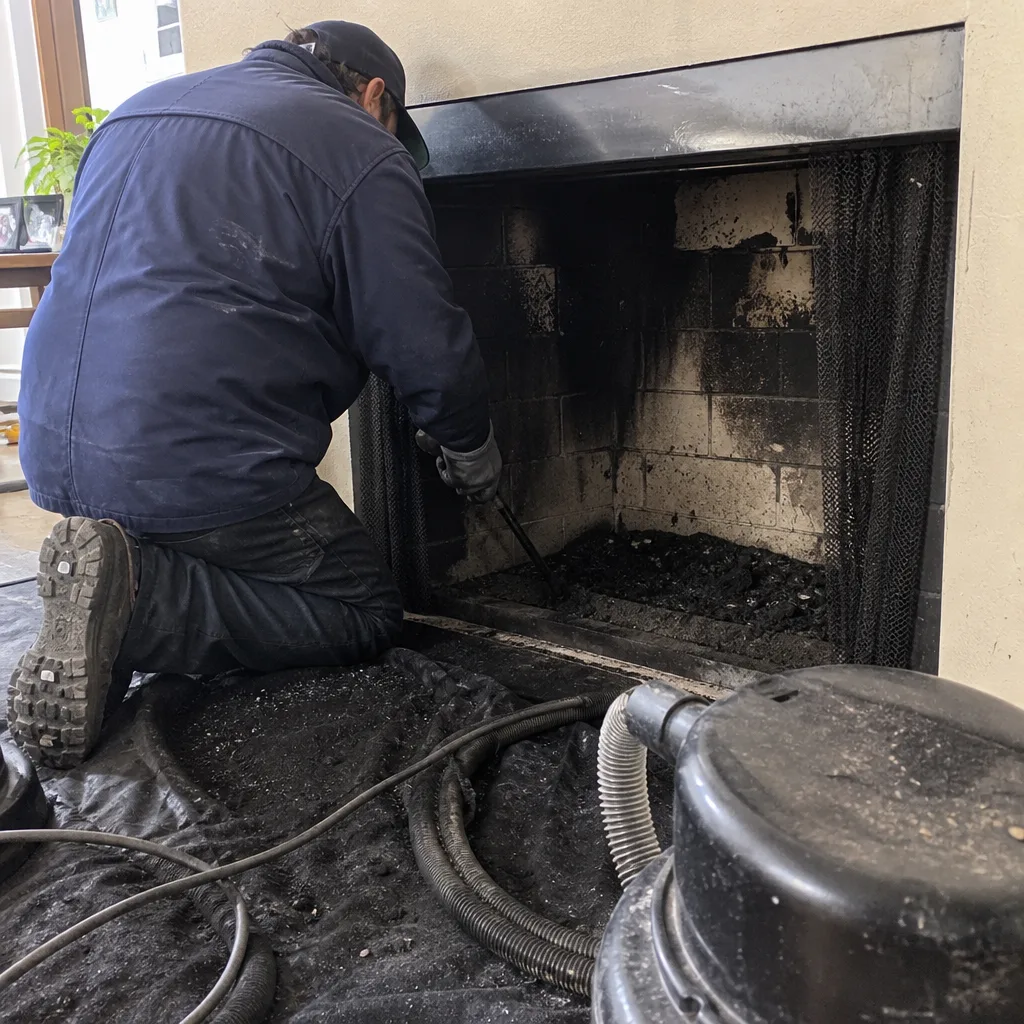 Before
 After
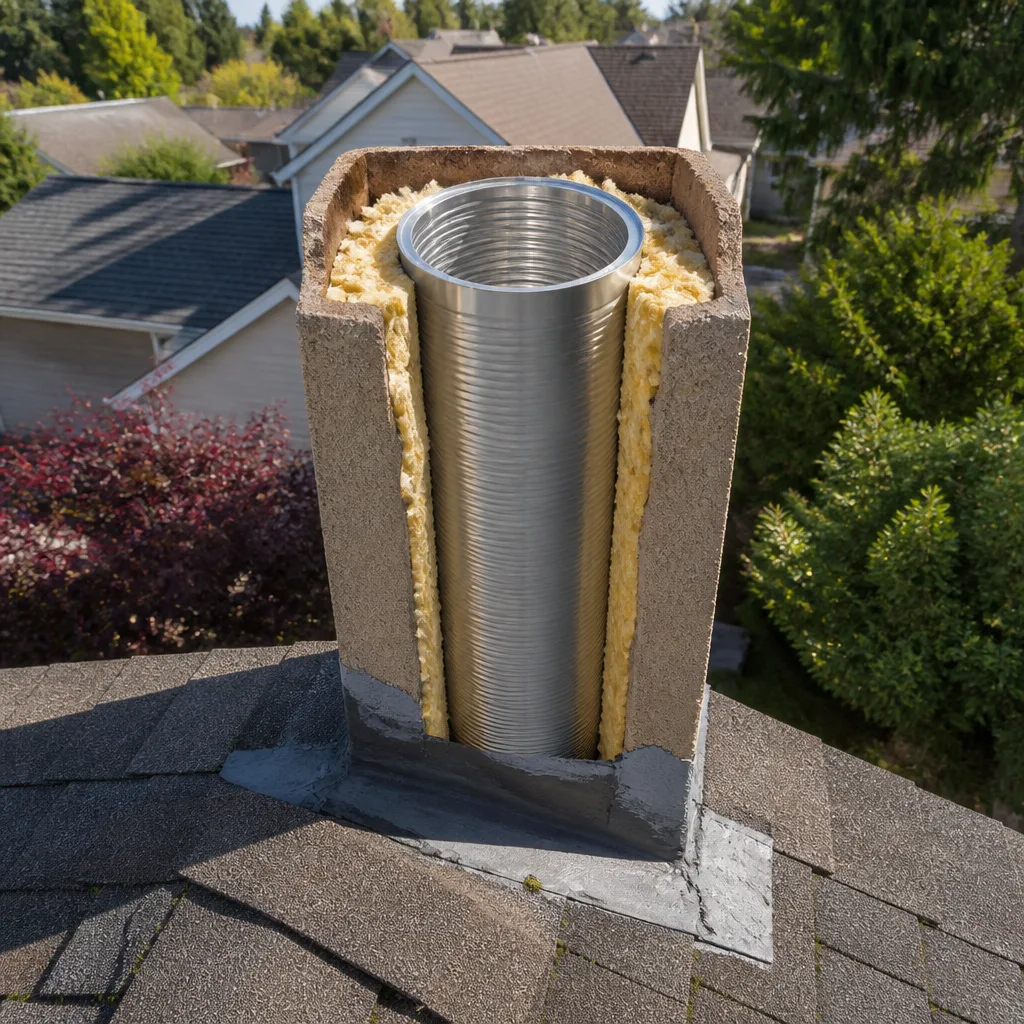
After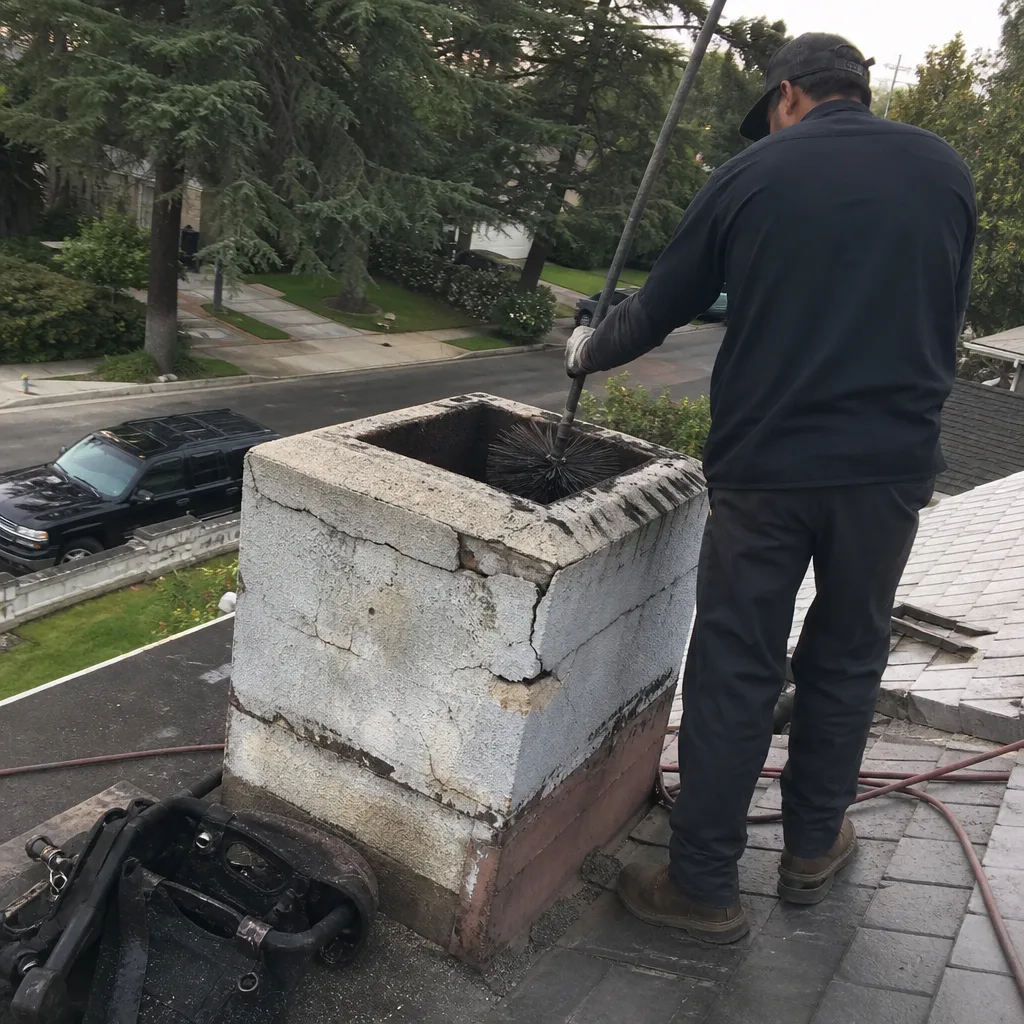 Before
 After
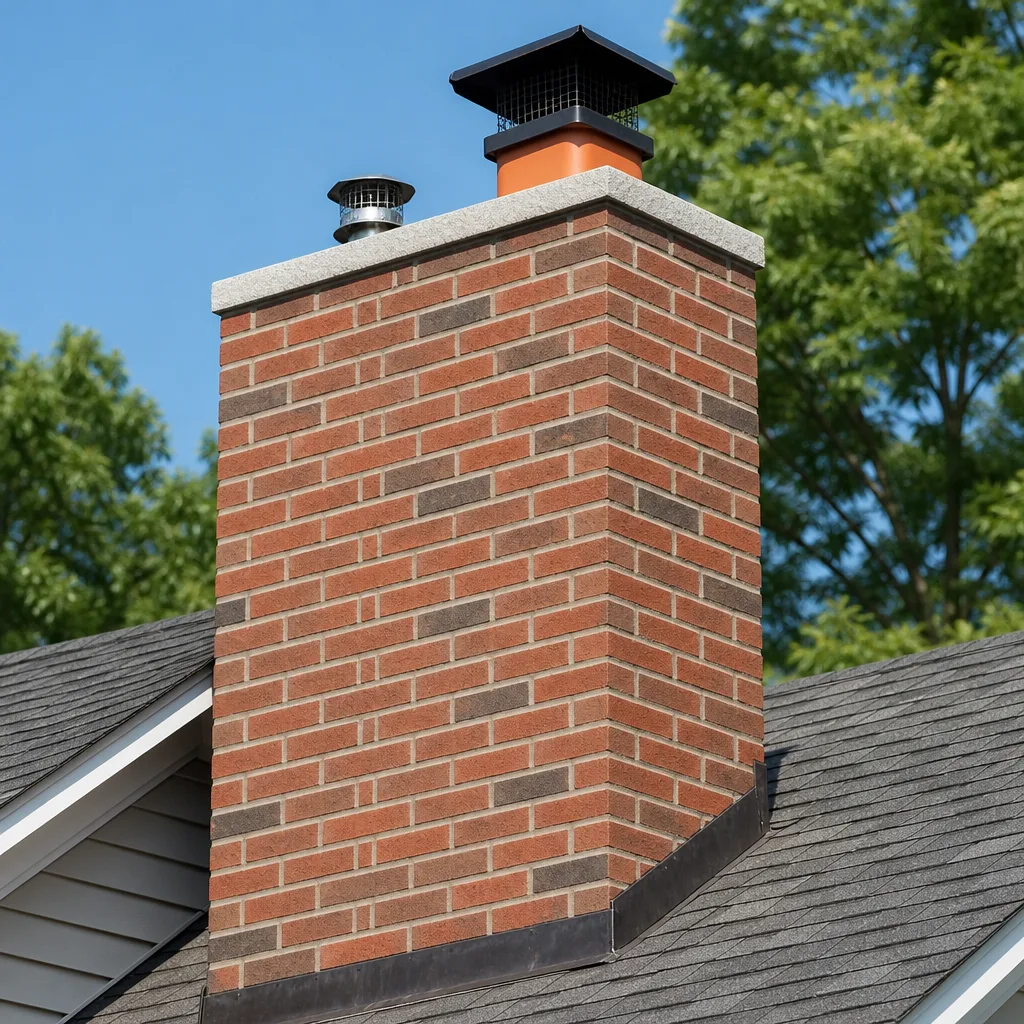
AfterWhat’s Happening
Creosote buildup in a chimney is the residue left behind every time you burn wood – a flammable, tar-like deposit that clings to flue walls and, if it accumulates enough, can ignite into a chimney fire or block combustion gases from escaping. If you’re seeing dark, flaky or shiny residue inside your firebox opening, smelling something acrid or oily when the fireplace isn’t in use, or noticing your fires burning sluggishly despite good draft conditions, creosote is almost certainly the reason.
Creosote forms in three stages. The first is a light, gray-brown flake you can brush off. The second is a thicker, tar-like coating that requires professional tools to remove. The third – the one that keeps chimney technicians up at night – is a hard, glassy crust that is extremely difficult to remove and highly flammable. Most homeowners discover they have a problem somewhere in the middle of stage two, which is exactly the right time to act. Waiting until stage three is not a safety margin; it’s a risk transfer.
Why It Happens
Burning Unseasoned or Green Wood
Wood that hasn’t dried long enough releases far more moisture and unburned gases as it combusts. Those gases cool quickly as they rise and condense on flue walls as creosote. If your fires produce a lot of dark smoke, hiss audibly while burning, or struggle to stay lit without constant attention, the wood is likely the culprit. A simple test: knock two pieces together – seasoned firewood sounds hollow, green wood sounds dull and dense.
Low-Temperature Fires and Smoldering Habits
A fire that’s damped down too early or kept deliberately small doesn’t generate enough heat to push combustion gases out before they condense. The sweet spot for a clean flue is a brisk, hot fire – not a slow smolder meant to stretch an armload of wood through a cold evening. If you routinely bank the damper low to keep a fire going overnight, you’re creating near-ideal conditions for accelerated creosote deposits.
Restricted Airflow Through the Damper or Flue
A stuck or partially closed damper, a flue that’s undersized for the fireplace opening, or a blockage near the top of the chimney all reduce the draft that carries heat and gases upward fast enough to prevent condensation. You can usually tell this is happening when smoke spills into the room before the chimney warms up, or when you need the damper wide open just to keep the fire drawing. The damper plate is worth checking visually – a flashlight aimed up into the firebox will show you whether it opens fully. Do not reach into the flue to test components by hand. If anything looks corroded, cracked, or immovable, that’s the technician’s job to assess.
Infrequent Cleaning
Every cord of wood you burn adds to what’s on the flue walls. Without an annual sweep, deposits compound on top of each other. Stage one creosote – the light, brushable kind – can transition to stage two within a single burning season if the conditions above are also present. If you can’t remember the last time the chimney was swept, the buildup is probably further along than a quick look into the firebox suggests.
What to Do Right Now
- Stop using the fireplace. If you’ve seen stage two or three creosote (shiny, tar-like, or hard glassy patches), or if you noticed any popping, cracking sounds inside the flue during a recent fire, treat the chimney as out of service until a technician inspects it. A chimney fire can reach temperatures that crack the flue liner within minutes.
- Open the damper and look up with a flashlight. You’re not diagnosing the depth of the deposit – you’re checking for visible blockages, fallen debris, or whether daylight is visible at the top. If you see orange or brown shiny glaze anywhere on the visible flue walls, make a note of it and photograph it if you can reach without leaning in.
- Check for odor in rooms adjacent to the chimney. A strong, oily or smoky smell in a room that shares a wall with the flue – even when the fireplace isn’t in use – can indicate creosote off-gassing through cracks in the liner. That’s a separate problem from the surface deposit and worth mentioning when you call.
- Note your last sweep date. If you have any paperwork from a prior inspection or cleaning, pull it. Technicians can use it to assess how much has accumulated in the intervening time and whether the flue liner shows any progression of damage.
- Do not attempt to remove stage two or three creosote yourself. The products sold for DIY creosote removal are not substitutes for mechanical cleaning. Some chemical treatments can loosen deposits in ways that make the next burn unpredictable. The risk of working near a flue with a significant deposit – and the risk of missing a liner crack underneath it – is real. This is where a trained technician earns the call.
How We Fix It
When your local Alcott Chimney Sweep team arrives, the first step is a camera inspection of the flue – top to bottom – before a single brush enters the chimney. That inspection tells us which stage of creosote we’re dealing with, whether the liner is intact, and whether there are secondary problems like a damaged damper or a blocked crown. You see the same images we see.
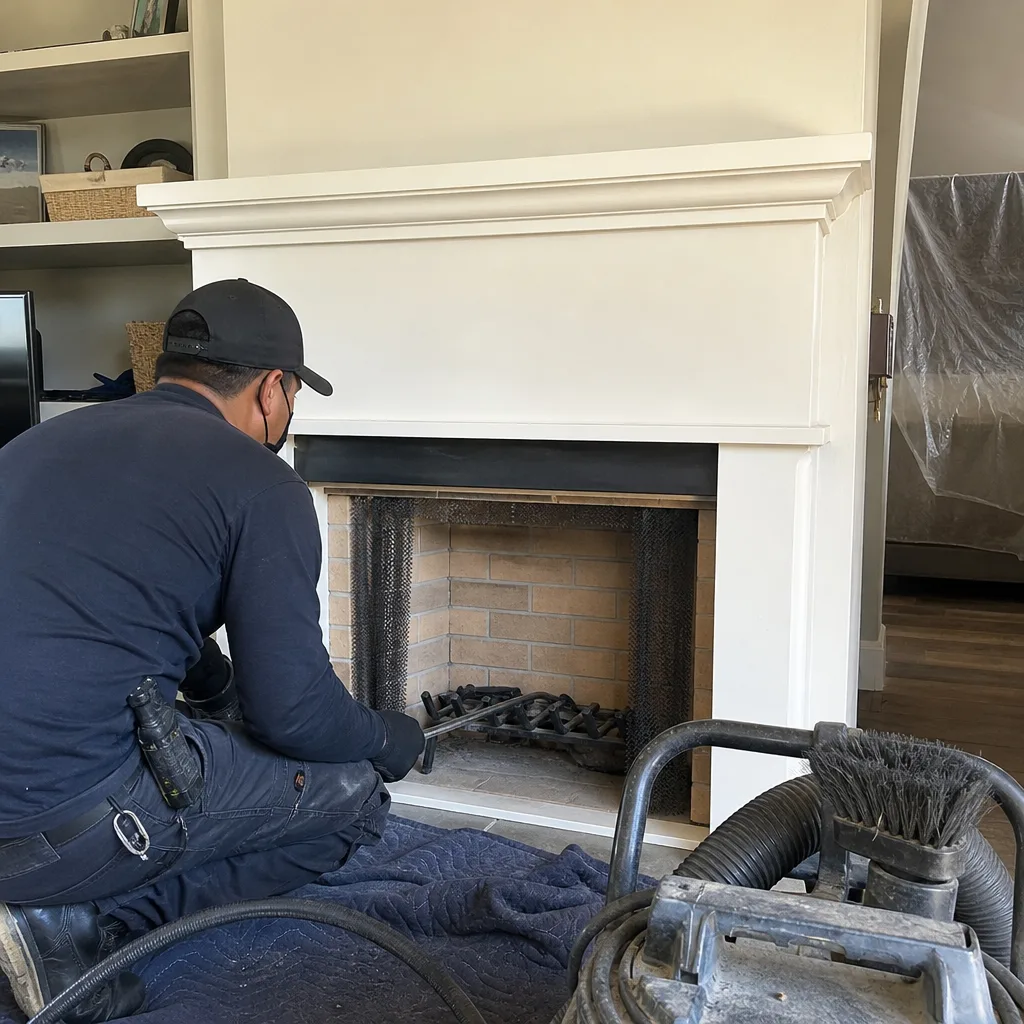
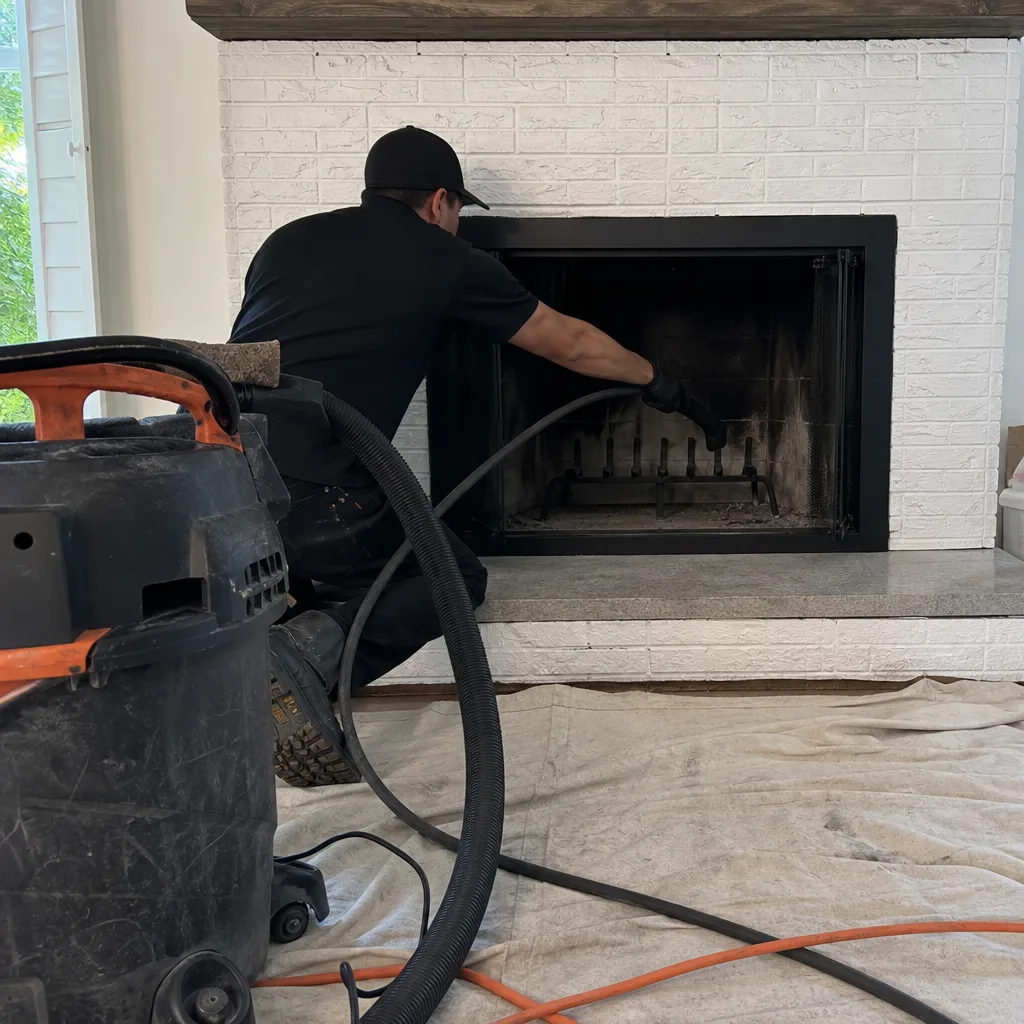
For stage one and most stage two deposits, a professional chimney sweep clears the flue mechanically using rotary tools and HEPA-filtered equipment that keeps the mess contained to the firebox and drop cloth – not your living room. The sweep itself typically takes under two hours for a standard single-flue system. Where stage two has progressed to the point of coating the liner surface unevenly, HeatShield resurfacing may be the right follow-up: it rebuilds the interior ceramic surface and reduces the rough texture that accelerates future buildup.
Before any work starts, you receive a written price – specific to what we found on your flue, not a ballpark. Every repair is covered by a written guarantee. If the repair fails within a year, the return visit is free. That’s the 365-Day Done Right Promise, and it’s not negotiable.
Frequently Asked Questions
It’s both, and the distinction matters. Light stage one deposits are a maintenance issue you can stay ahead of with regular sweeping. Stage two and three creosote are a fire hazard – the material is combustible, and if it ignites inside the flue, the temperatures generated can crack the liner, damage the surrounding masonry, and in serious cases spread to the framing of the house. Carbon monoxide is a separate risk: significant deposits can restrict the flue enough to push combustion gases back into the living space. Neither outcome is theoretical. If you’re seeing heavy deposits or a shiny, glazed coating, stop using the fireplace and call (336) 863-3889.
It depends on what you’re looking at. Stage one creosote with no signs of liner damage, no odor in adjacent rooms, and no history of slow draft can reasonably wait a short time – though we’d encourage booking before your next fire, not after. Stage two or three buildup, any visible glazing, or any sign that combustion gases are not venting cleanly means the fireplace should be out of service now. Don’t risk another fire in that flue until it’s been inspected. Call (336) 863-3889 and describe what you’re seeing – a live person will pick up and help you figure out how urgently you need to be seen.
Once per year is the standard recommendation for a wood-burning fireplace in regular use – typically timed before the burning season starts so you’re not waiting while temperatures drop. If you burn frequently, use a wood stove insert, or burn anything other than well-seasoned hardwood, more frequent sweeps are worth considering. The camera inspection that comes with every Alcott sweep gives you a clear picture of where things stand, so you’re not guessing.
A new liner is only warranted when the camera inspection shows actual structural damage – cracks, spalling, gaps at the joints, or deterioration that a resurfacing product like HeatShield can’t safely address. We show you the camera footage. Nothing gets recommended without visual evidence you can see for yourself, and we’ll tell you plainly when a repair can safely wait versus when it can’t. If the liner is sound, we say so and sweep it. Call (336) 863-3889 and we’ll walk you through the process before anyone arrives at your door.
Get It Fixed
Call (336) 863-3889 – a live person answers every call, around the clock. Tell us what you’re seeing and your local Alcott Chimney Sweep team will give you a written price before any work starts. You can also book online. No voicemail, no guessing, no surprise charges at the end.
Written by Ruben Castellano, Owner at Alcott Chimney Sweep, part of the Threshold Group family of home-service companies since 2002.
What Our Customers Say
"Cap, screen, and a full inspection with photos sent to my phone. Easy to understand and a fair price."
- Tomas Y."Very respectful of my home. Took off his boots and wiped the hearth when finished."
- Carol D."Annual inspection and sweep. He used a camera to check the liner and found a cracked tile I had no idea about. Gave me a written estimate and did not push."
- Janet W.