
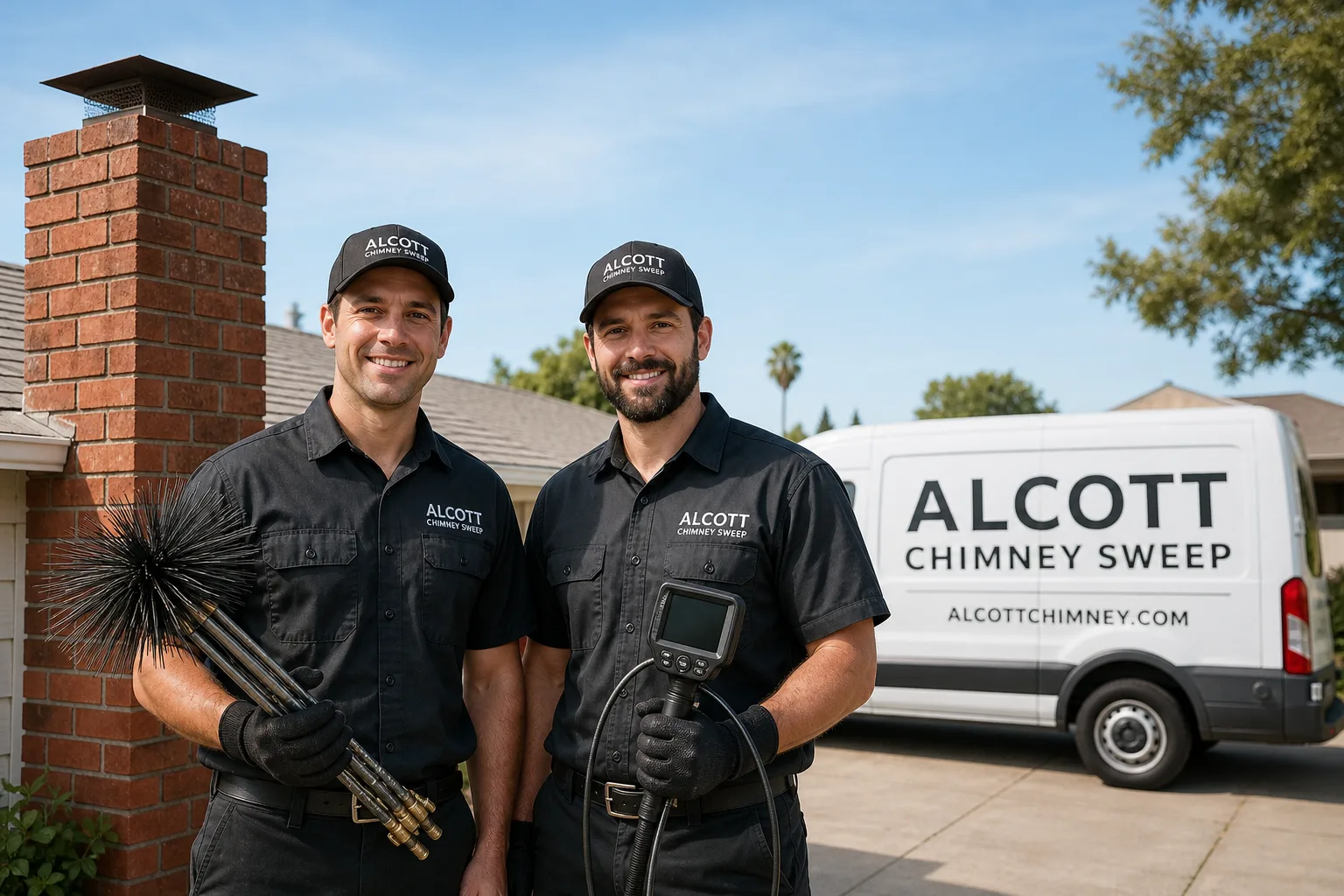
Level 1 sweep and inspection to the NFPA 211 annual standard - flue, crown, cap, and flashing checked and photographed
Chimney sweep logs do not sweep chimneys. They loosen some creosote - which then falls where a brush and vacuum still have to collect it.
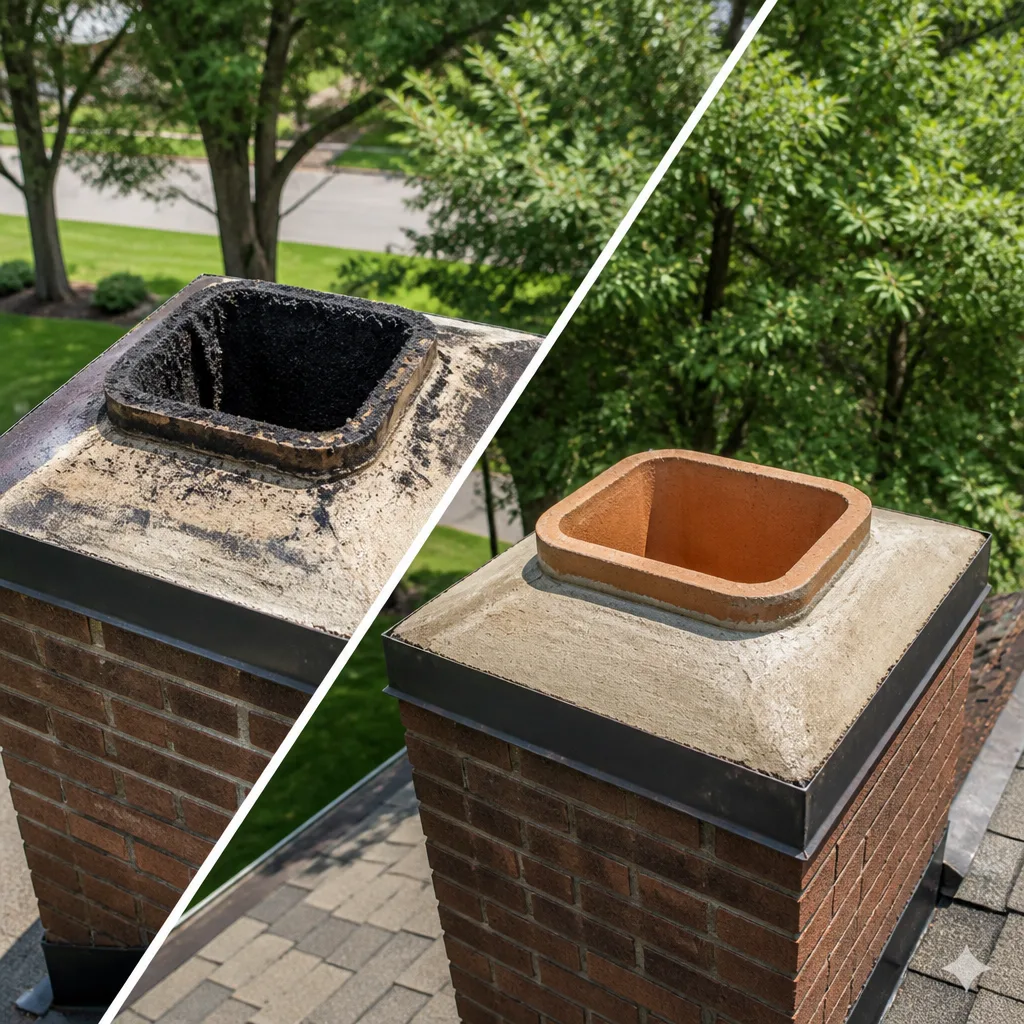
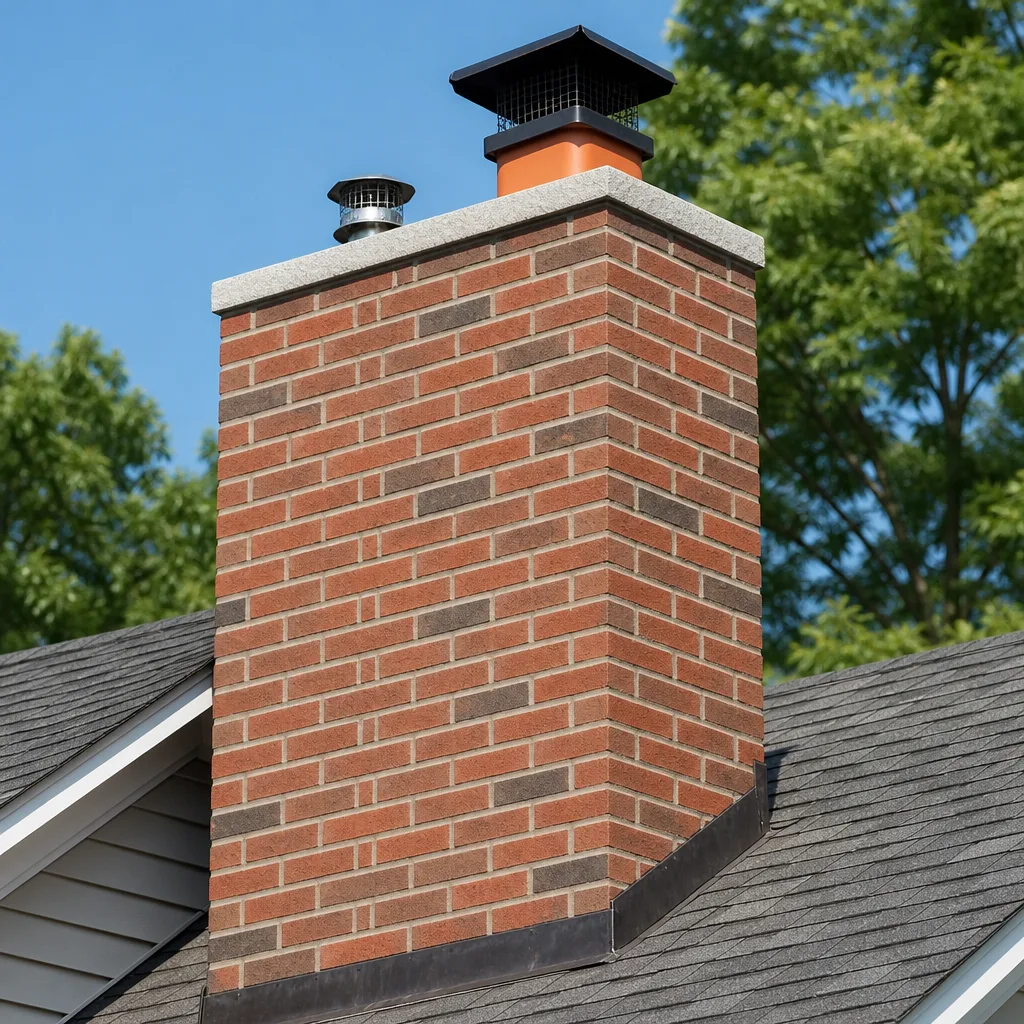
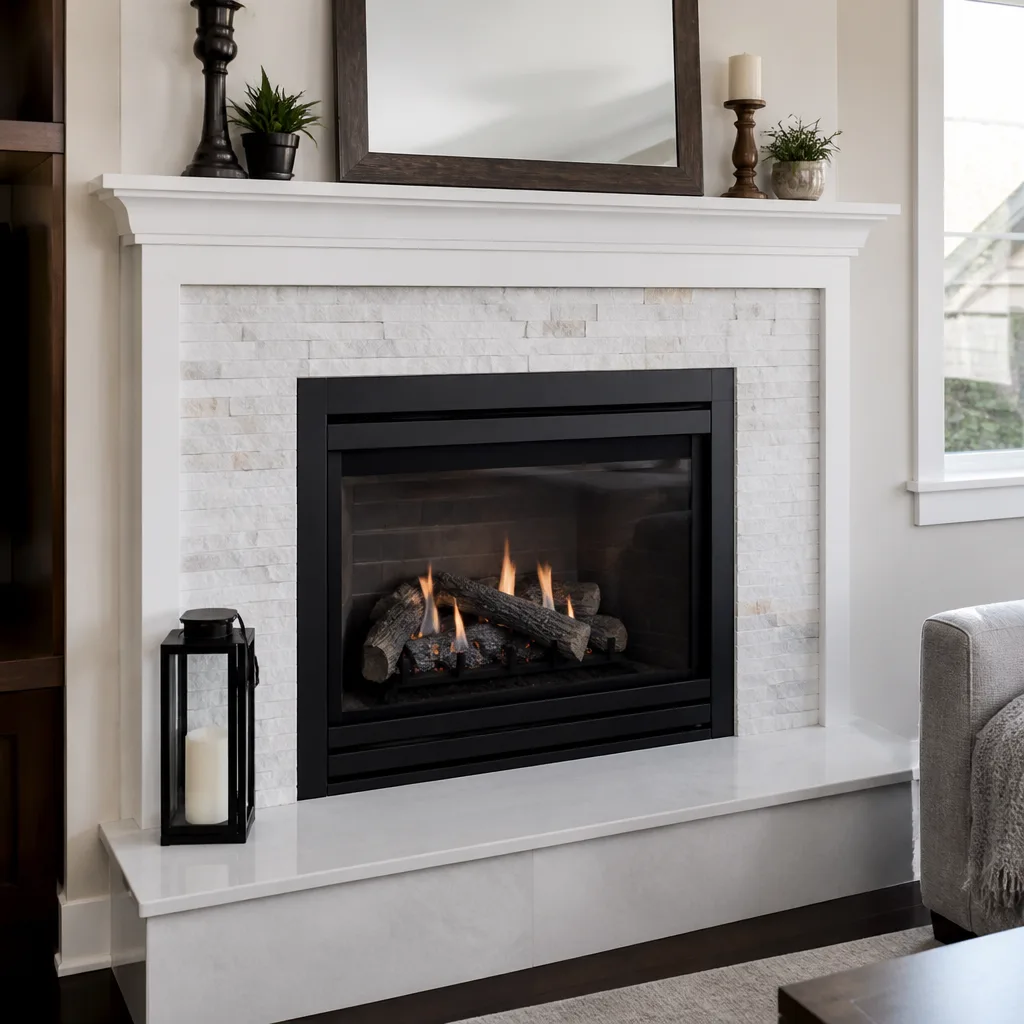
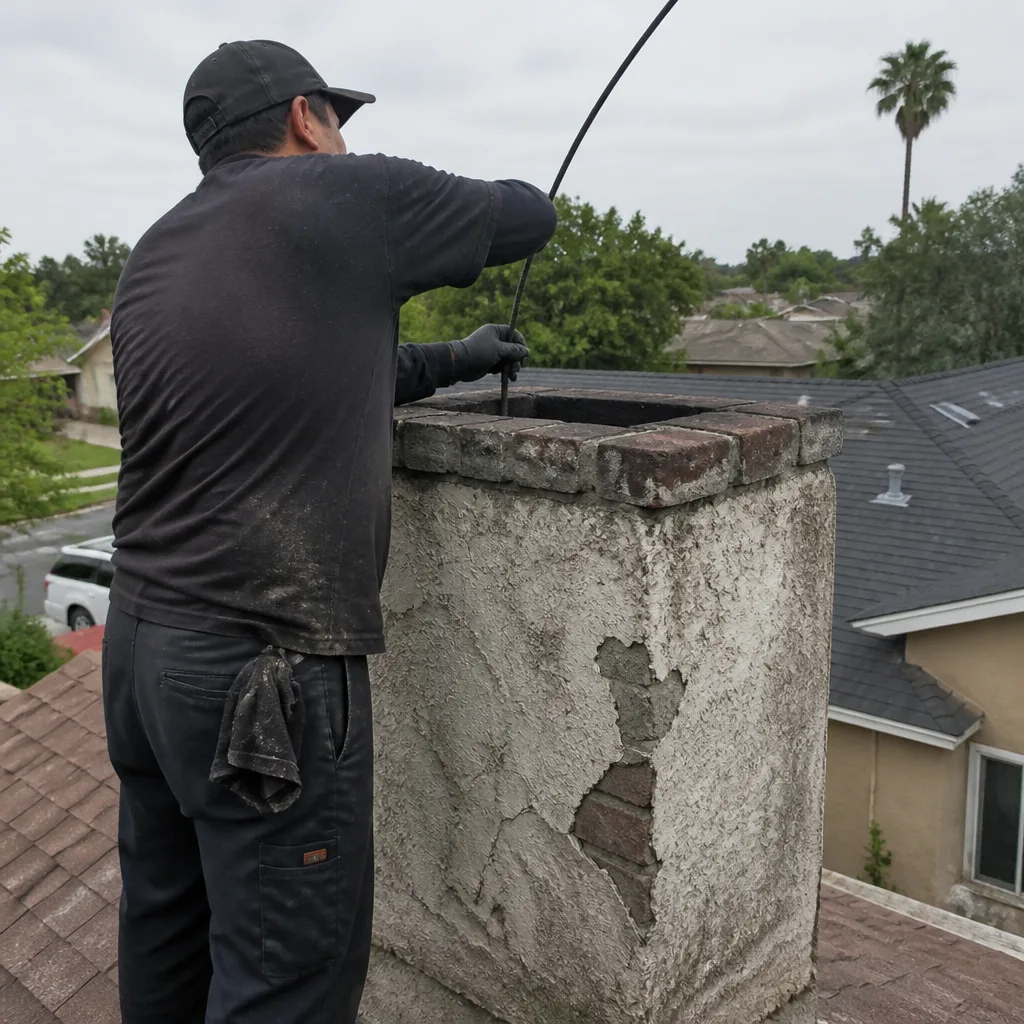 Before
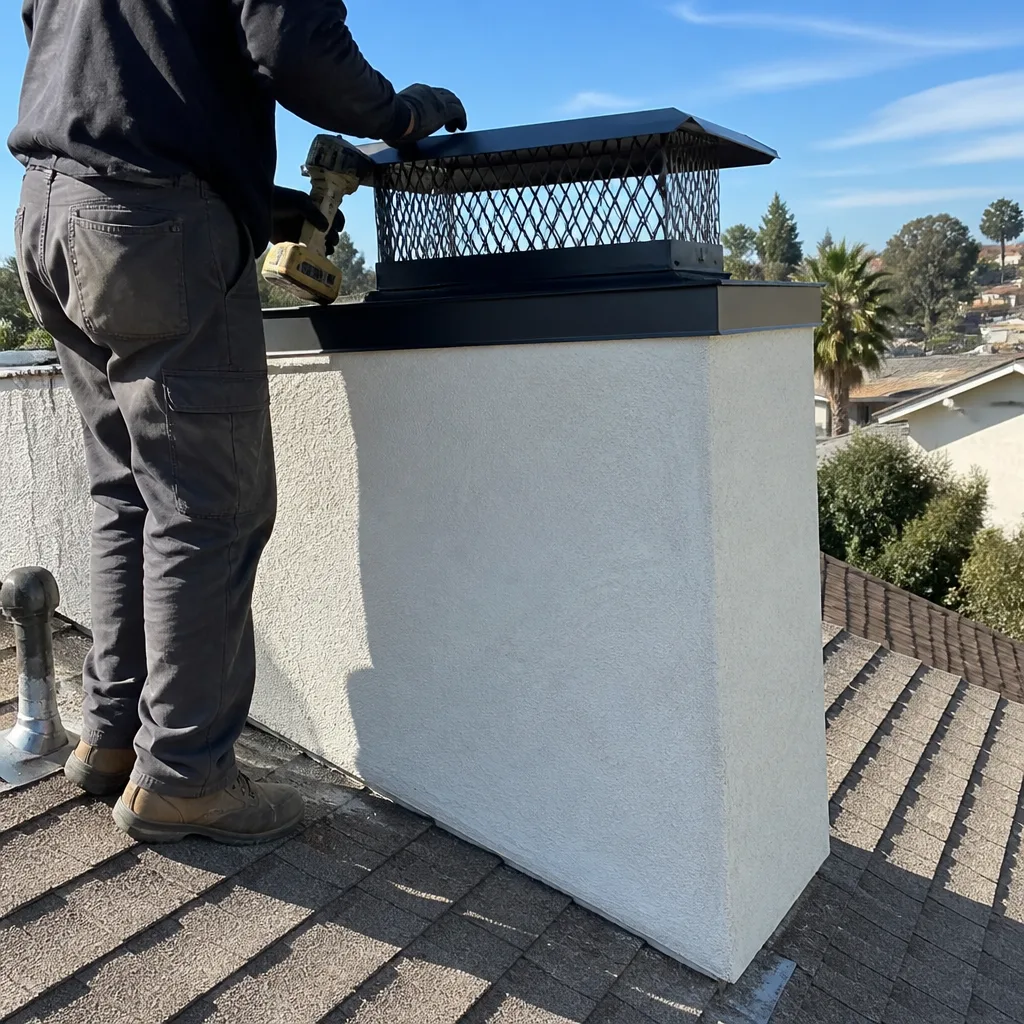 After
After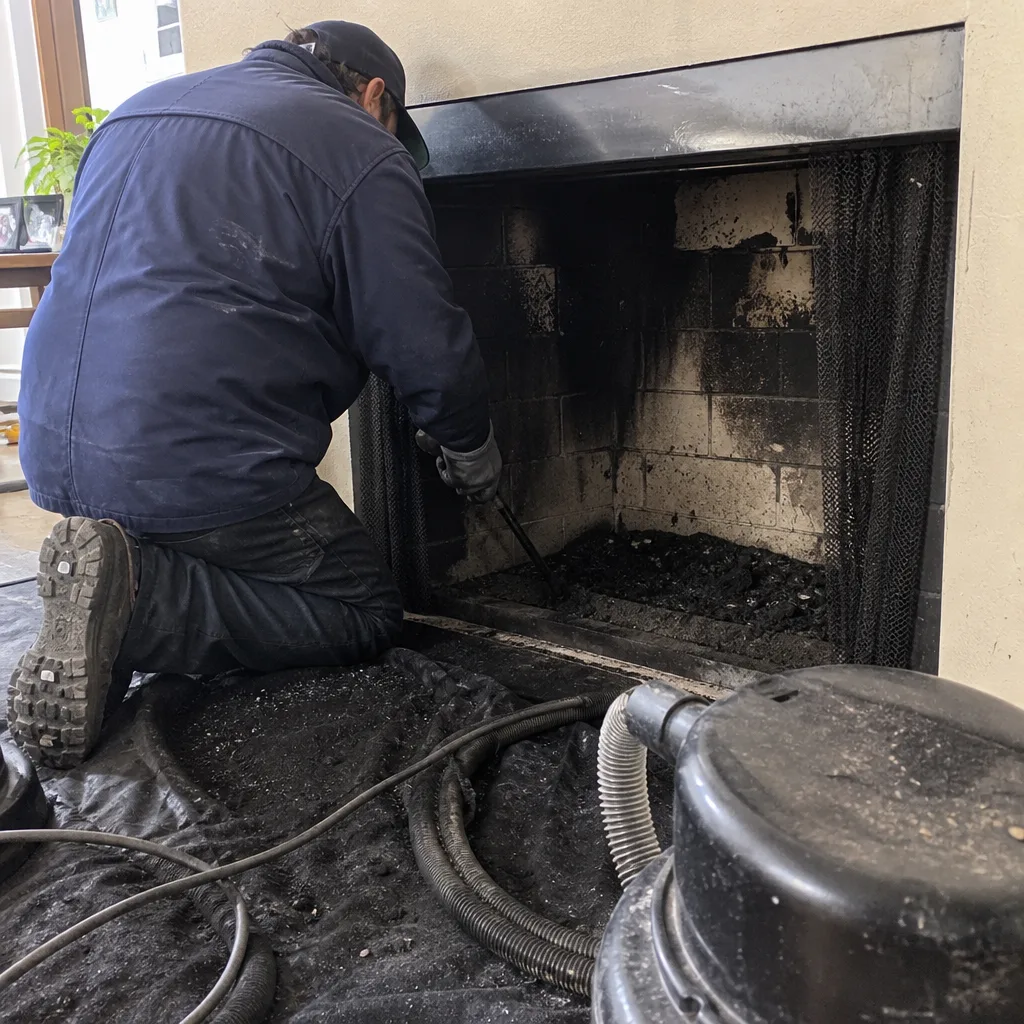 Before
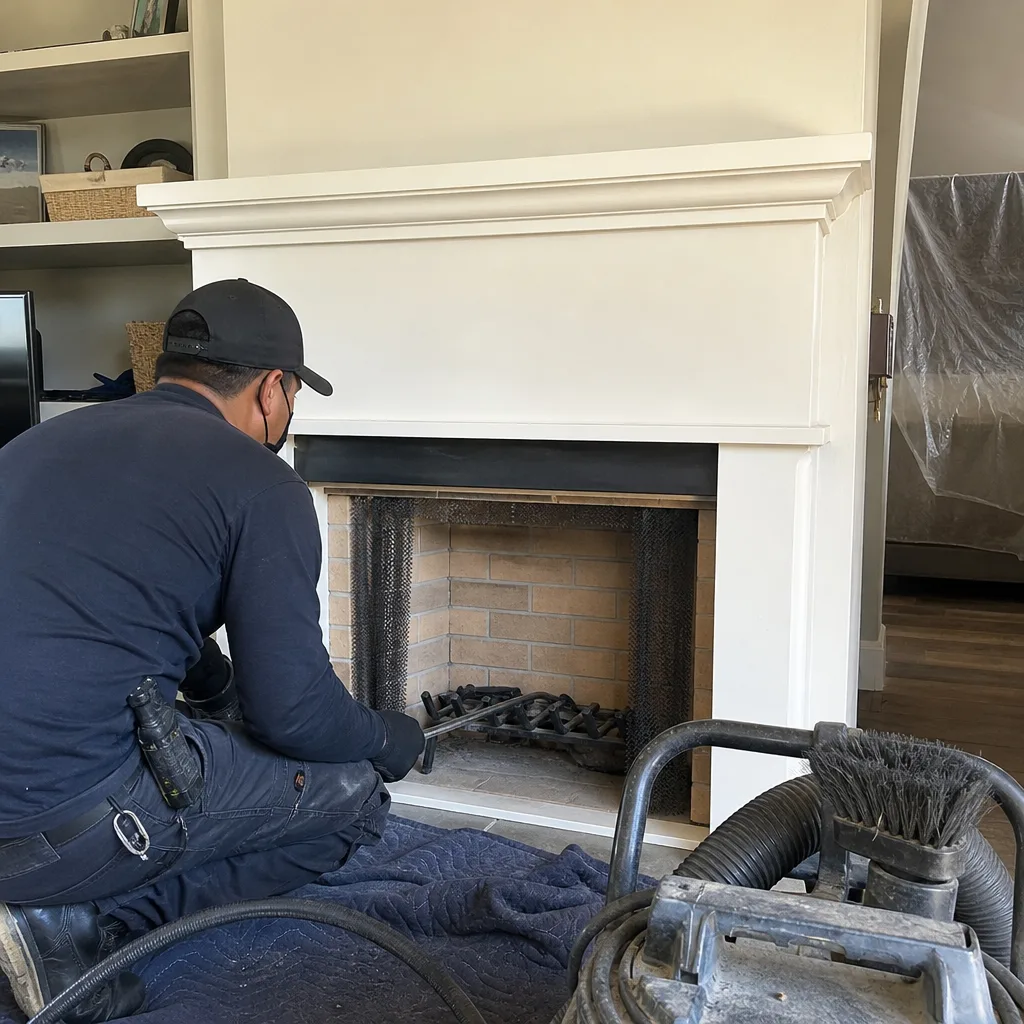 After
After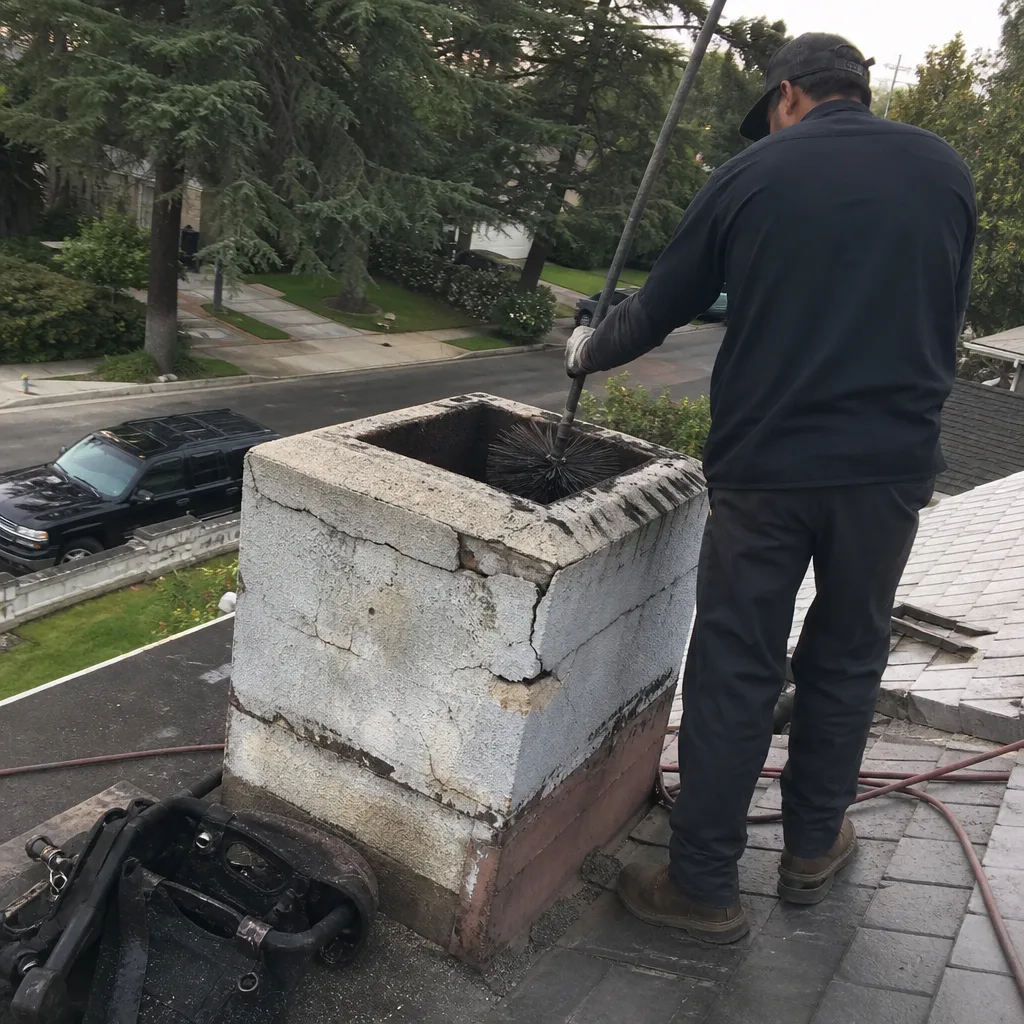 Before
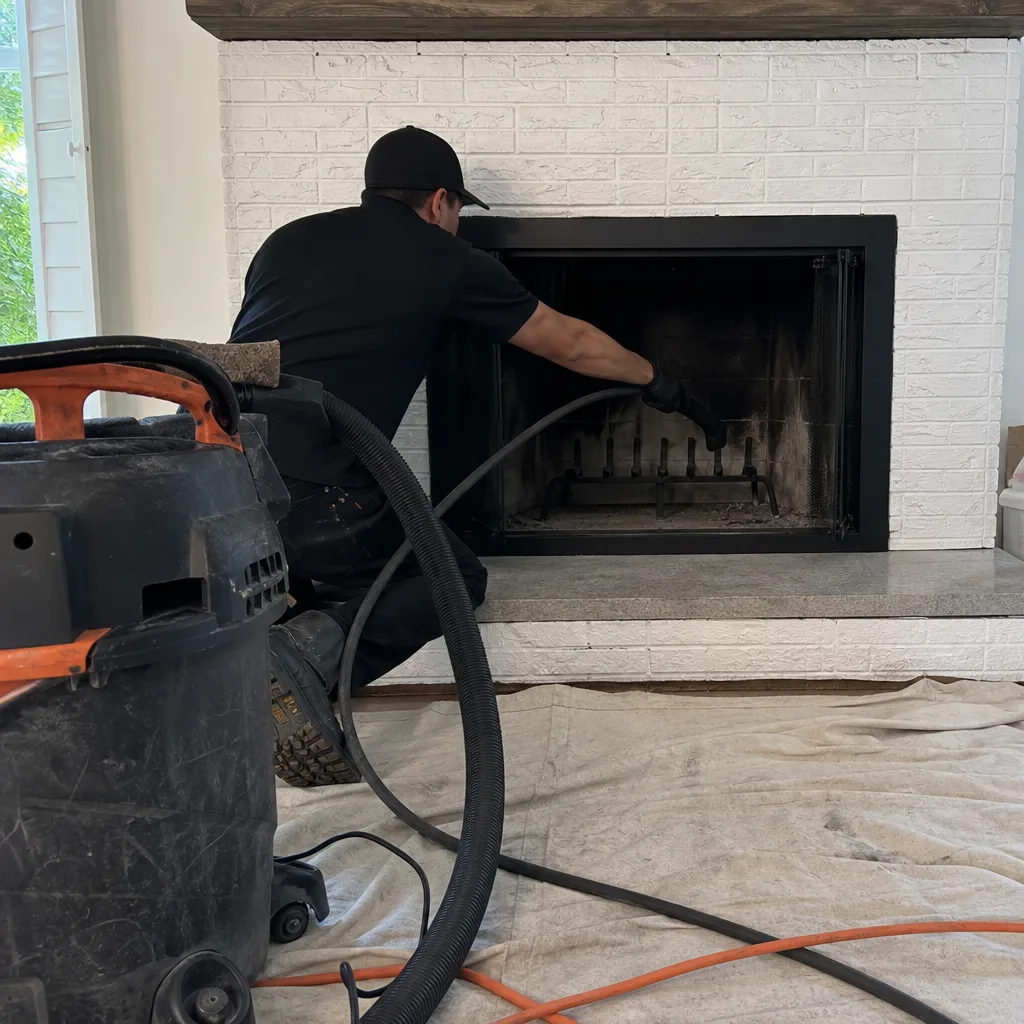 After
AfterCrumbling mortar inside the firebox
What’s Happening
Crumbling mortar inside the firebox almost always means the refractory joints between your firebox panels or firebrick courses are breaking down from repeated heat and moisture cycling. This is a structural problem, not a cosmetic one, and it typically gets worse with continued use. A chimney inspection will tell you exactly how far the deterioration has spread and whether the firebox can be safely fired again.
The firebox is lined with a specific type of mortar called refractory mortar – it’s rated to withstand temperatures that would crack ordinary masonry mortar in a single season. When that refractory mortar starts to powder, flake, or fall away in chunks, the joints holding your firebrick or firebox panels together are no longer doing their job. Heat and combustion gases can migrate into gaps they were never meant to reach, and the surrounding masonry or framing begins to absorb damage it isn’t built to handle. Left alone, a minor joint failure can widen into a significant structural repair. Caught early, it’s usually a straightforward fix.
Why It Happens
Heat cycling over many fire seasons
Every fire your firebox sees expands the refractory mortar, and every cool-down contracts it. Over years, that expansion-contraction cycle micro-fractures the joints until they start to crumble. You’ll typically see this as fine horizontal or vertical cracking along the mortar lines first, then loose material on the firebox floor after a fire. If the crumbling follows the mortar joints specifically – rather than cutting through the brick or panel faces – heat cycling is the most likely culprit.
Moisture intrusion from above
Water is the single most destructive force in a chimney system. A cracked or missing chimney cap, a damaged crown, or a compromised flashing joint lets rain travel straight down the flue and pool in the firebox. Refractory mortar that gets repeatedly wet and then flash-dried by a fire breaks down far faster than dry mortar ever would. If you’re noticing white staining on the firebox walls, a musty smell when the fireplace is cold, or mortar crumbling that got worse after a rainy stretch, moisture from above is worth putting at the top of the list.
A damaged or missing damper letting weather in
A damper that doesn’t seal properly – or one that’s corroded or warped to the point where it no longer closes fully – lets outdoor air, rain, and humidity cycle through the firebox year-round, not just when the chimney is actively venting. That constant moisture and temperature swing accelerates mortar breakdown, usually concentrated in the upper portion of the firebox near the throat. If you can look up and see daylight around the damper plate when it’s supposed to be closed, or if the damper plate is visibly corroded or missing, you’ve likely found a contributing cause.
Original installation used the wrong mortar
Ordinary portland cement mortar has no business being used inside a firebox, but it shows up there more often than it should – either from a repair done by someone unfamiliar with refractory materials, or from a builder who substituted what was on hand. Portland mortar can look fine for a year or two, then begins to fail rapidly once sustained fires start working on it. If the crumbling is concentrated in one area that looks like a past repair – slightly different color, different texture, or applied over what appears to be an older mortar beneath – a wrong-mortar repair is a real possibility.
What to Do Right Now
- Stop using the fireplace. A firebox with failing mortar joints is not structurally sound. Combustion gases and heat can travel through those gaps into spaces they should never reach. Don’t light another fire until a technician has assessed the extent of the damage.
- Photograph what you see. Take photos of the crumbling mortar before anything shifts further – good close-up shots and a wider shot showing the full firebox. These help your technician understand what they’re walking into and can shorten the on-site assessment.
- Collect the loose material in a bag. Set aside any chunks or powder that have fallen onto the firebox floor. The size, texture, and color of the debris can help a technician distinguish refractory mortar failure from panel cracking or other deterioration.
- Check the firebox floor for debris after the last fire. A significant amount of loose material on the floor, especially gritty gray or tan powder along the brick seams, confirms the mortar is actively breaking down rather than simply showing old surface wear.
- Do not attempt to patch it yourself before an inspection. Refractory mortar repairs require specific materials – HeatShield or equivalent refractory-grade products – and the right preparation of the substrate. A patch applied over failing mortar or with the wrong product can seal in moisture, accelerate deeper damage, and give a false sense of safety without addressing the underlying problem.
How We Fix It
When your local Alcott Chimney Sweep technician arrives, the first step is a Level 1 chimney inspection of the firebox – hands-on, close-up, with a camera where the geometry calls for it. The technician will map out exactly which joints are compromised, check the damper condition, and look for any evidence of moisture intrusion from the flue above. You’ll see what they see.
If the damage is limited to failing refractory joints, the repair path is a professional repointing using the correct refractory-grade mortar. For firebox panels that have cracked beyond what repointing can address, HeatShield resurfacing is a durable option that restores the firebox interior to a sound, sealed surface without replacing the underlying masonry.
Most firebox repointing visits take two to four hours depending on the extent of the joint damage. Before any work starts, you’ll have a written price in hand – what the job costs, in plain language, before a single tool comes out. That’s not a policy we bend. Every repair also comes with Alcott’s 365-Day Done Right Promise: if the repair fails within a year, the return visit is free.
Frequently Asked Questions
It is genuinely dangerous if you continue to use the fireplace before the damage is assessed. Failed refractory mortar joints allow combustion gases – including carbon monoxide – to migrate through gaps in the firebox structure into adjacent building materials. Whether it can safely wait depends on how far the deterioration has spread, which only an inspection can determine. If you’re seeing loose material on the firebox floor or gaps between bricks, stop using the fireplace and call (336) 863-3889 to schedule an inspection.
Your local Alcott Chimney Sweep team schedules inspections and repair visits as quickly as availability allows – call (336) 863-3889 and a live person will answer, tell you what’s open, and get you on the schedule. We don’t route you to voicemail. In the meantime, keep the fireplace closed and unlit.
Crumbling firebox mortar and flue liner condition are two separate issues, though they sometimes appear together. The inspection will tell you what’s actually going on in both locations. A technician will never recommend a liner replacement without camera evidence you can see for yourself, and nothing gets added to your repair list without a written price in front of you first.
The cost depends on how many linear feet of joint need repointing, whether any firebox panels require HeatShield resurfacing, and whether a damper repair is part of the same visit. Alcott doesn’t quote flat figures before seeing the actual condition, because a superficial estimate isn’t worth much either way. What you will get is a specific written price before any work begins – no surprises at the end of the job. Call (336) 863-3889 to schedule a free written estimate.
Get It Fixed
Call (336) 863-3889 – a live person answers every call – or book online to schedule your inspection. Your local Alcott Chimney Sweep team will send you the technician’s name and photo before they arrive, show ID at the door, and put the price in writing before any work begins.
Written by Ruben Castellano, Owner at Alcott Chimney Sweep, part of the Threshold Group family of home-service companies, serving homeowners since 2002.
What Our Customers Say
"Fast and tidy. Fireplace draws properly again."
- Mina K."Good chimney cleaning. They found a small gap in the mortar and quoted the repair, which was a bit more than I wanted to spend. Did the sweep and left the repair for later without any pressure."
- Stuart L."Left no soot anywhere. Even brought a vacuum with a sealed filter. I'd use them again every fall."
- Beth H.