
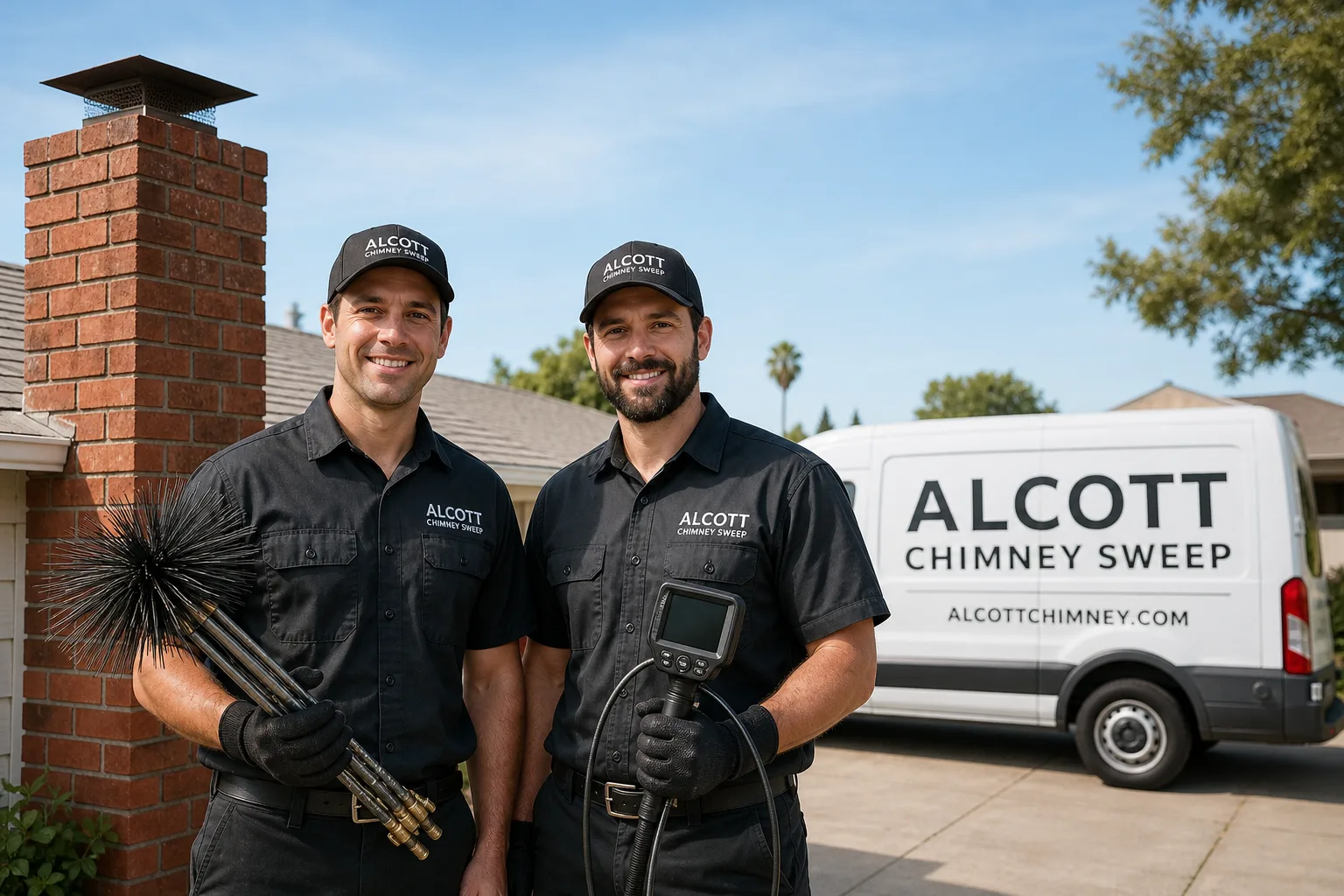
Level 1 sweep and inspection to the NFPA 211 annual standard - flue, crown, cap, and flashing checked and photographed
Chimney sweep logs do not sweep chimneys. They loosen some creosote - which then falls where a brush and vacuum still have to collect it.
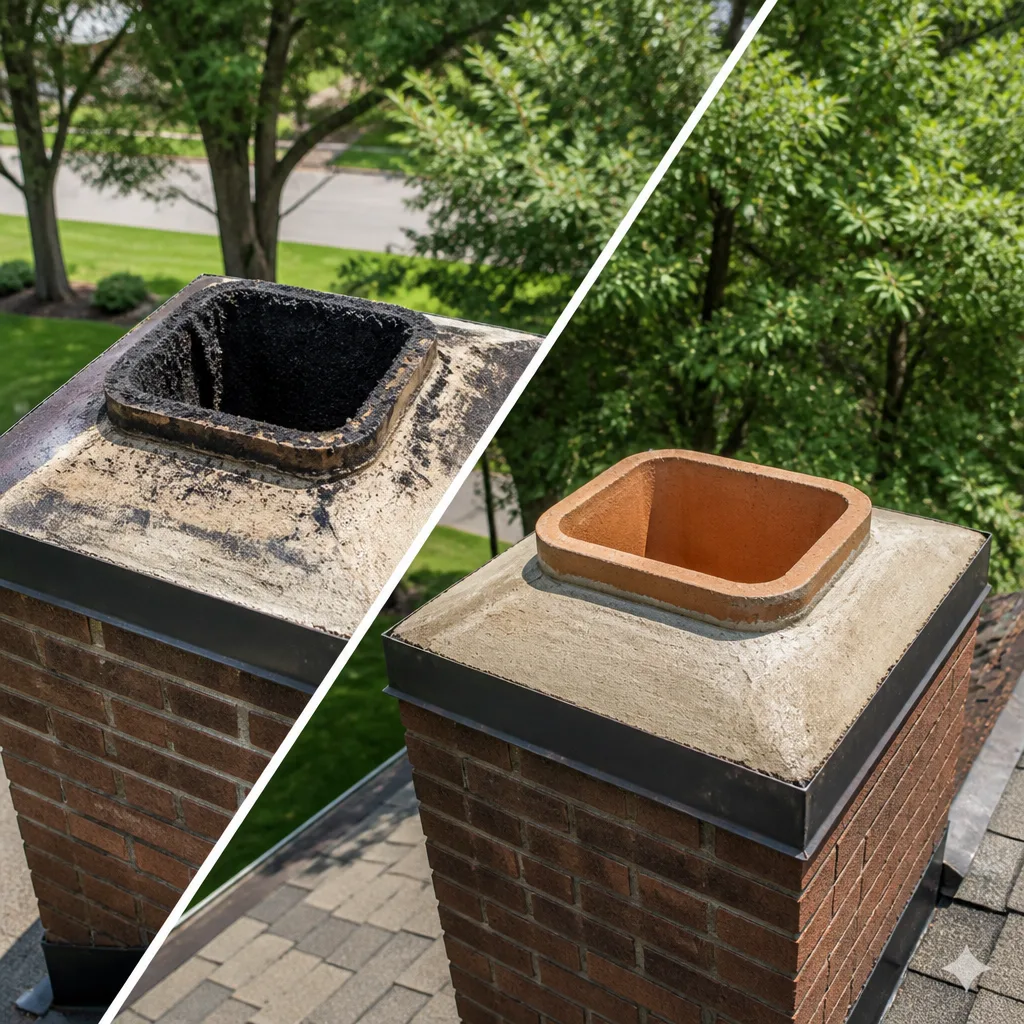
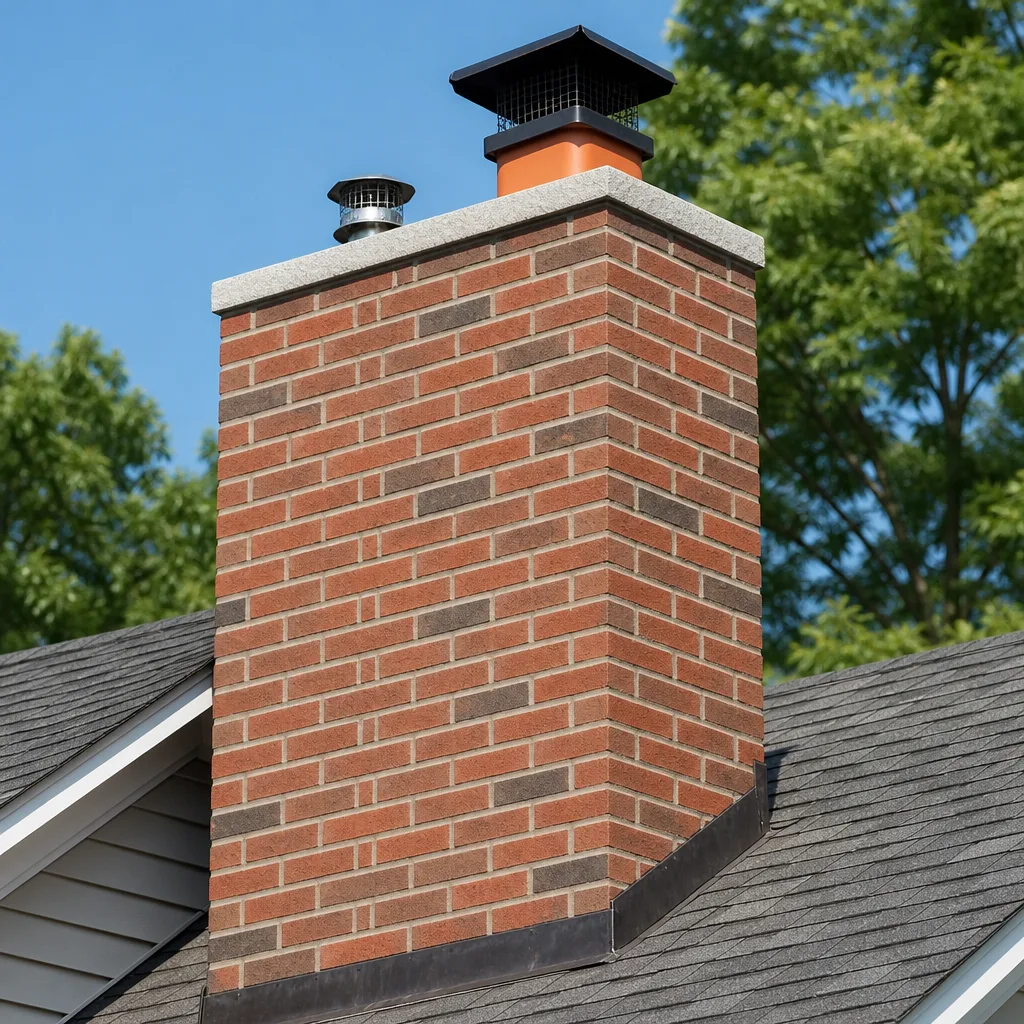
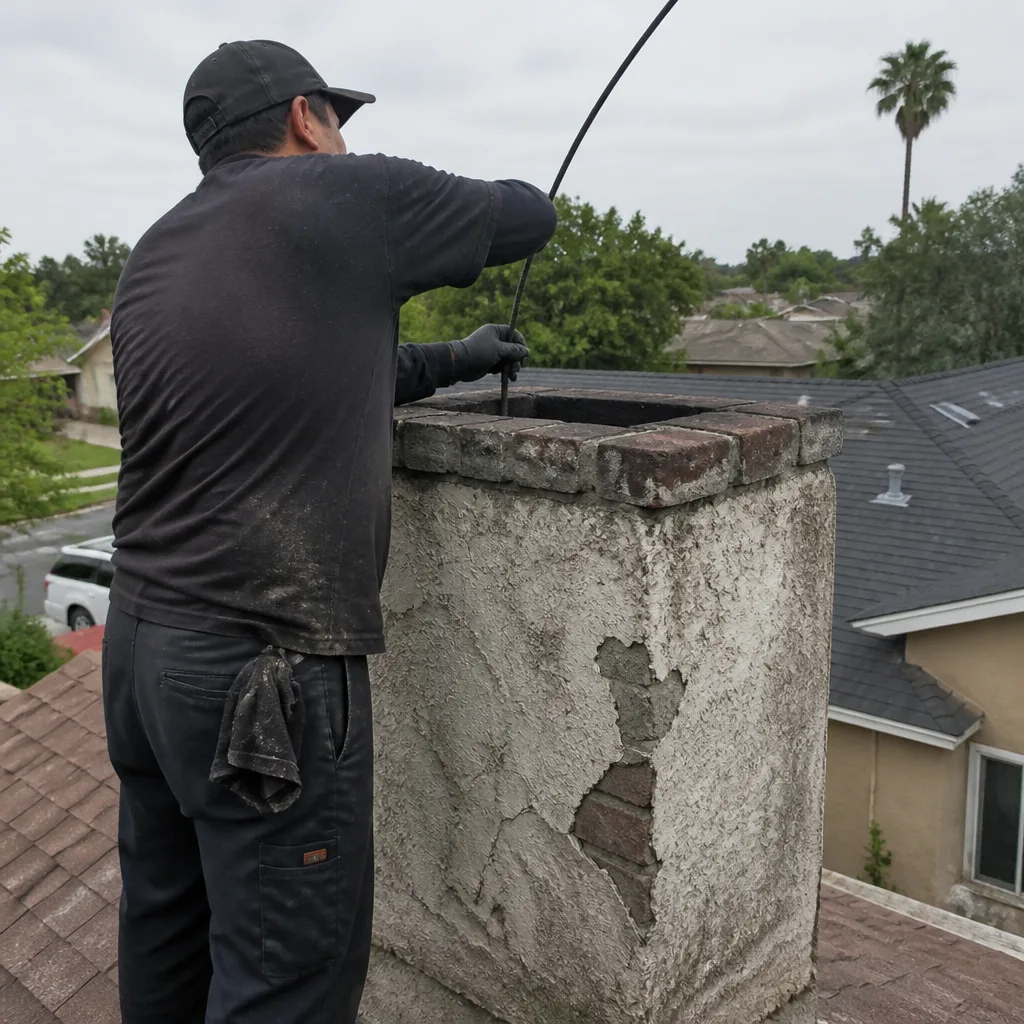 Before
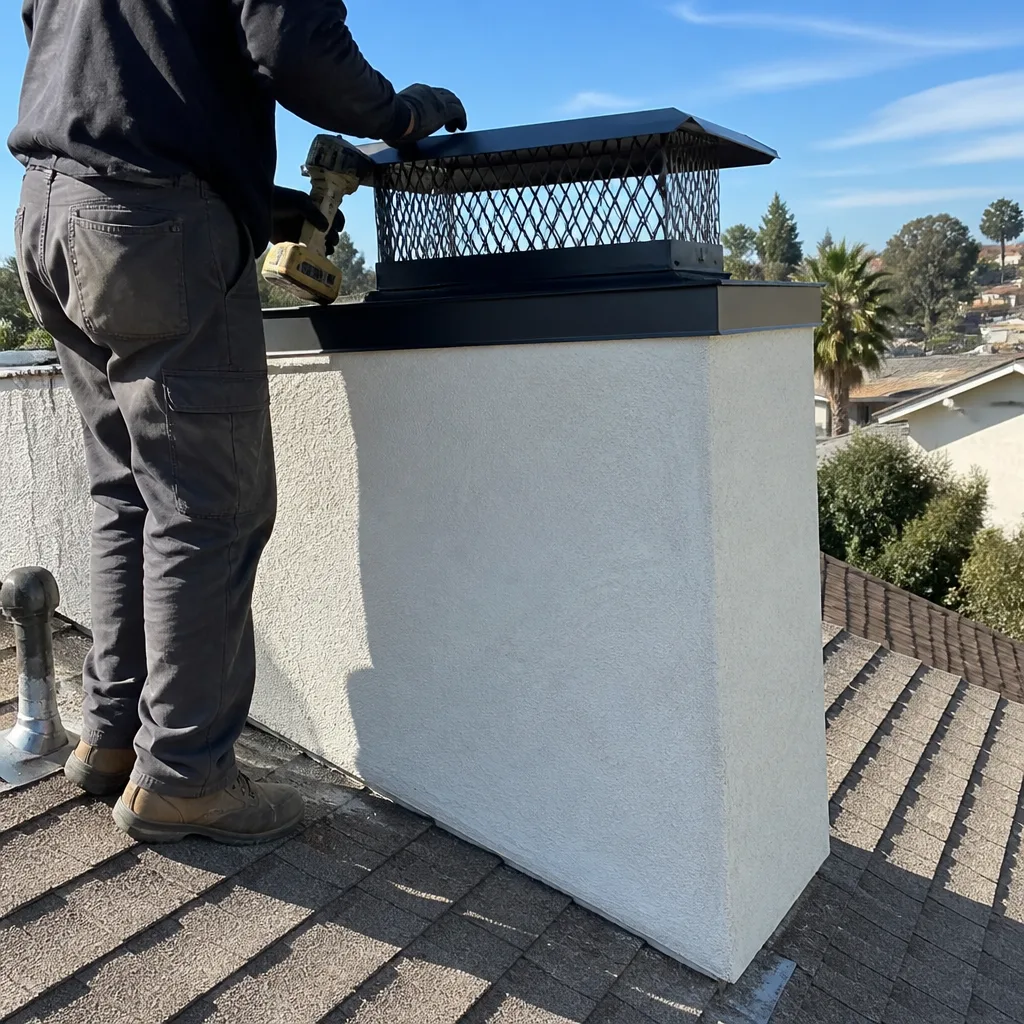 After
After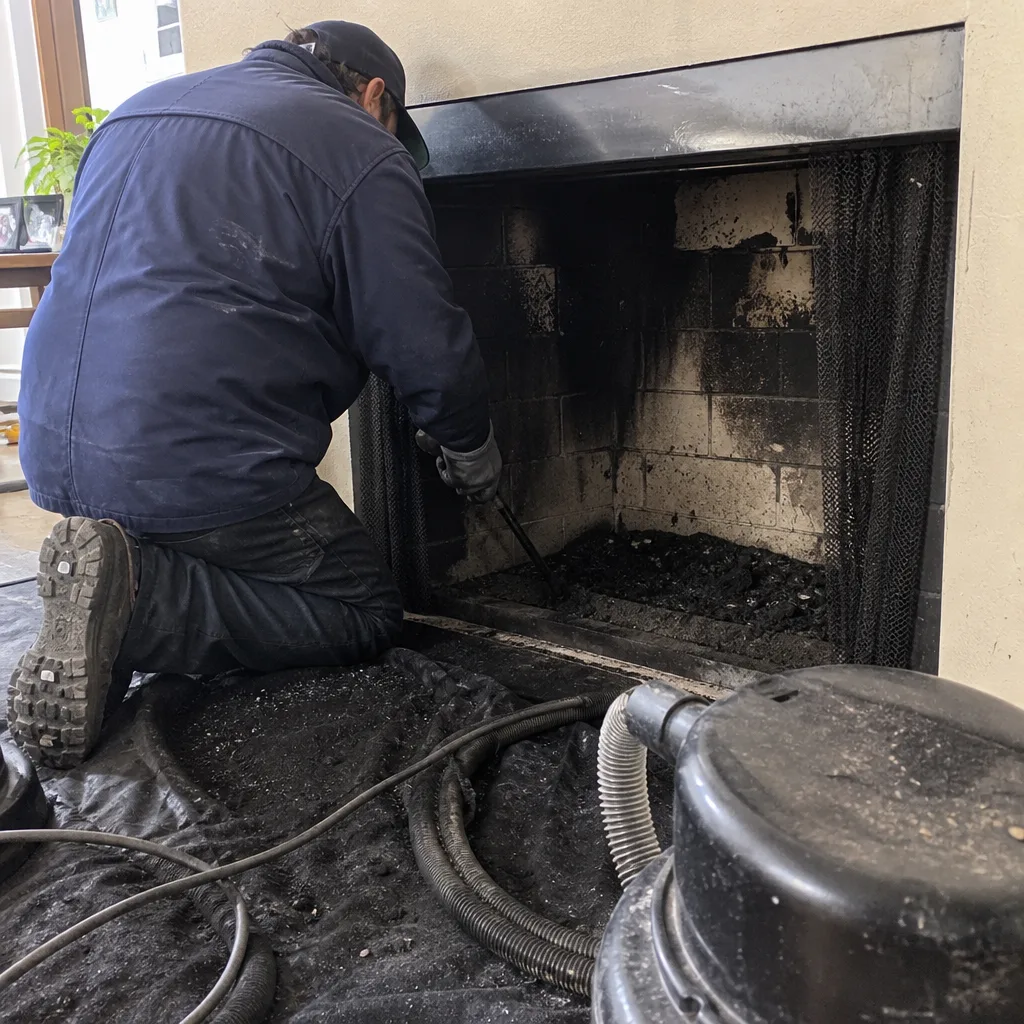 Before
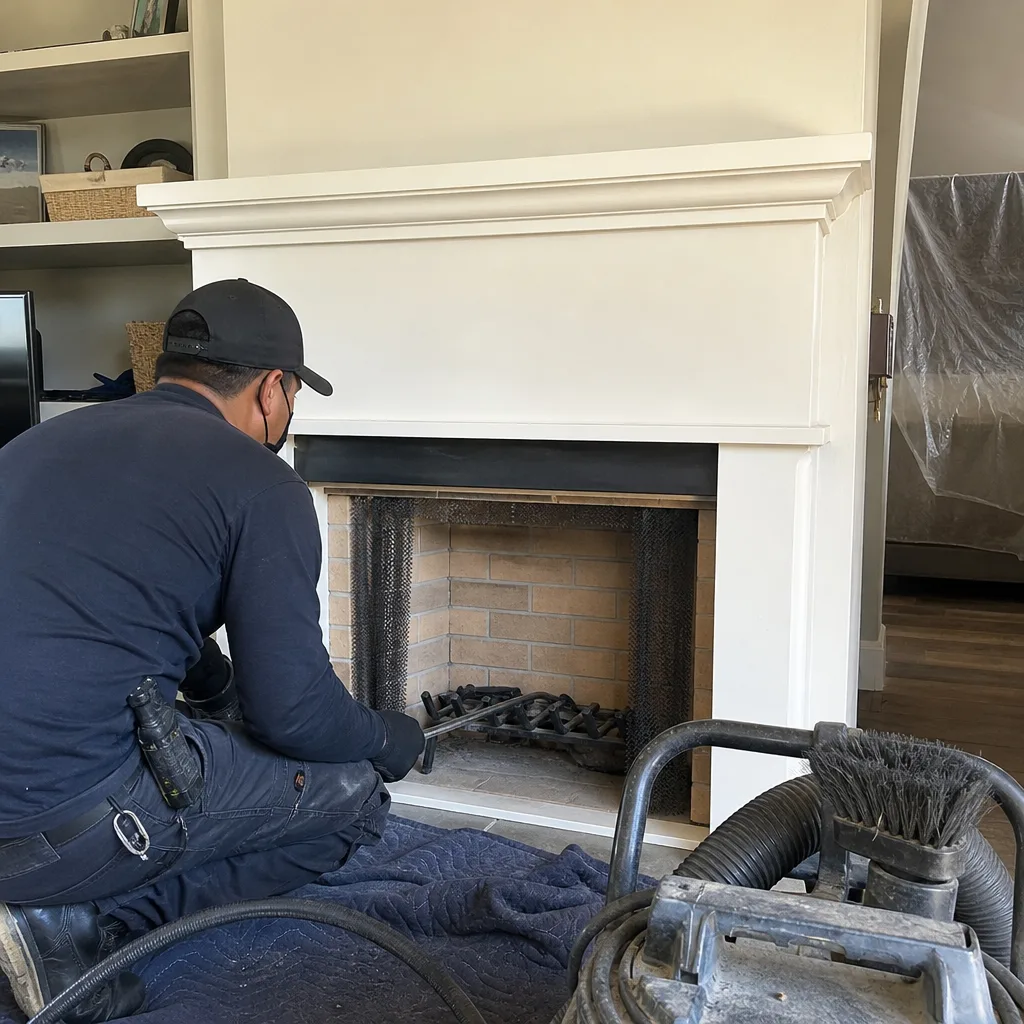 After
After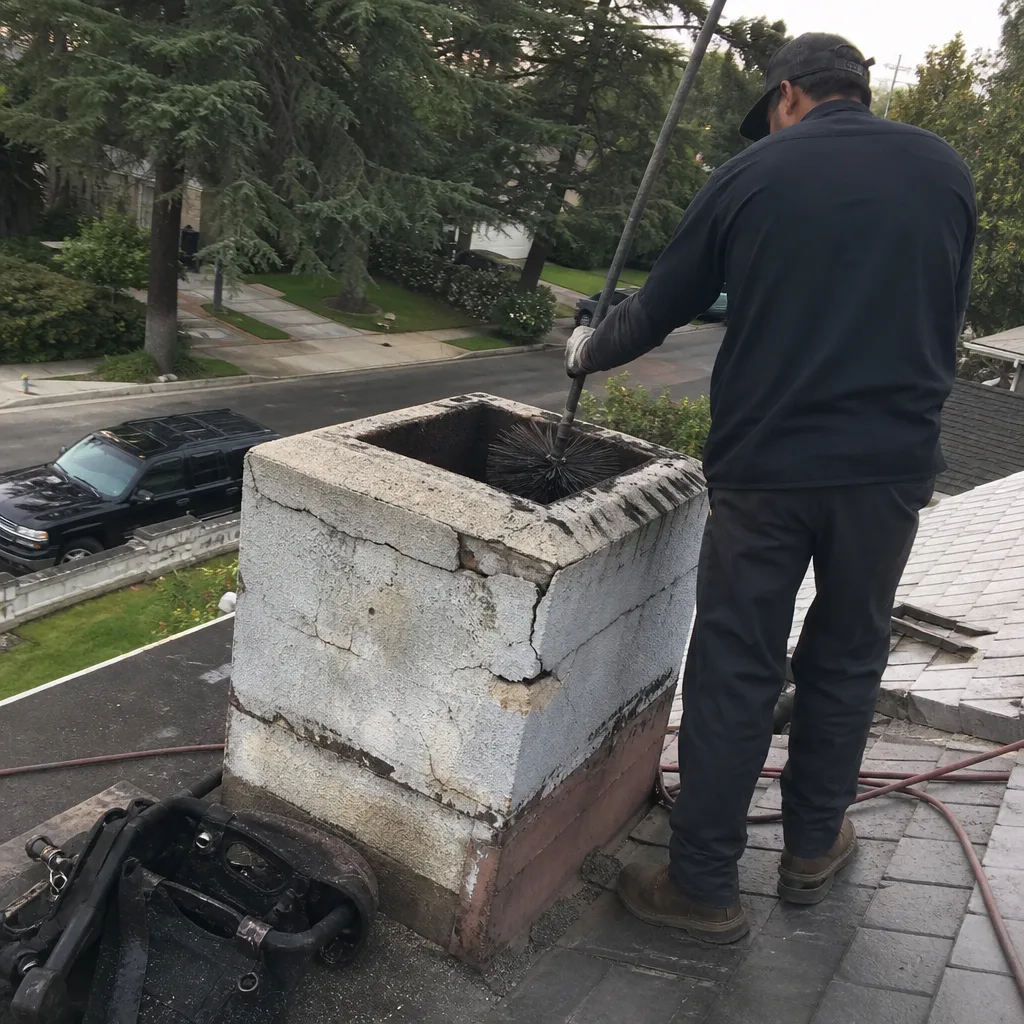 Before
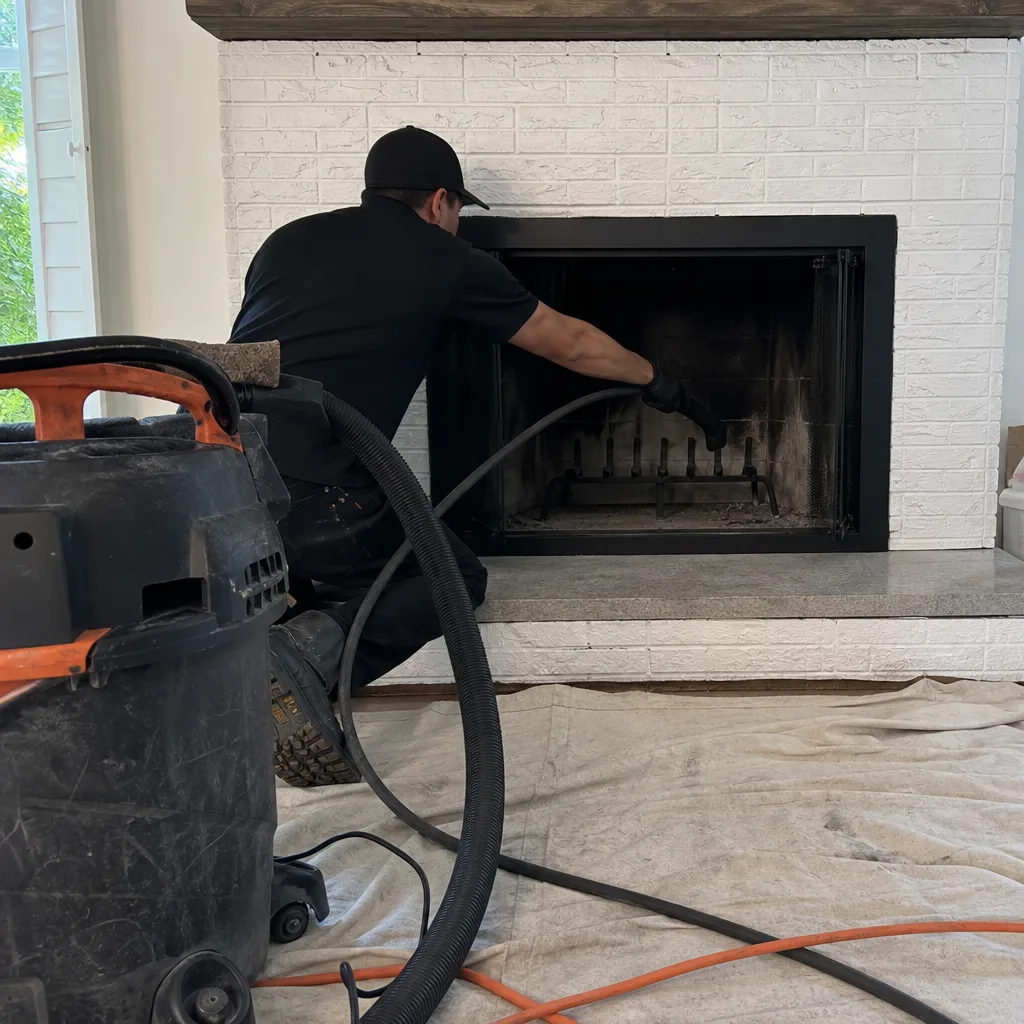 After
AfterAnimals or Birds Nesting in the Chimney
If you’re hearing scratching, fluttering, or chirping from your fireplace wall, there’s almost certainly an animal or bird that has found its way into your chimney. The most common culprits are chimney swifts, starlings, squirrels, and raccoons – each one attracted to the warm, dark column for exactly the same reasons your flue was designed to vent heat away from your home. This is not a problem that goes away on its own, and using the fireplace while an animal is present can be fatal to the animal and genuinely dangerous to your household.
What’s happening inside is usually one of two things: either the animal entered through a damaged or missing chimney cap, or the damper is stuck open and the flue is acting like an open invitation. Either way, the nest or carcass now sitting in your flue is blocking airflow, and that means combustion gases – including carbon monoxide – have nowhere to go but back into your living space. Before anyone lights a fire, this needs to be inspected and cleared by a professional.
Why It Happens
Missing or Damaged Chimney Cap
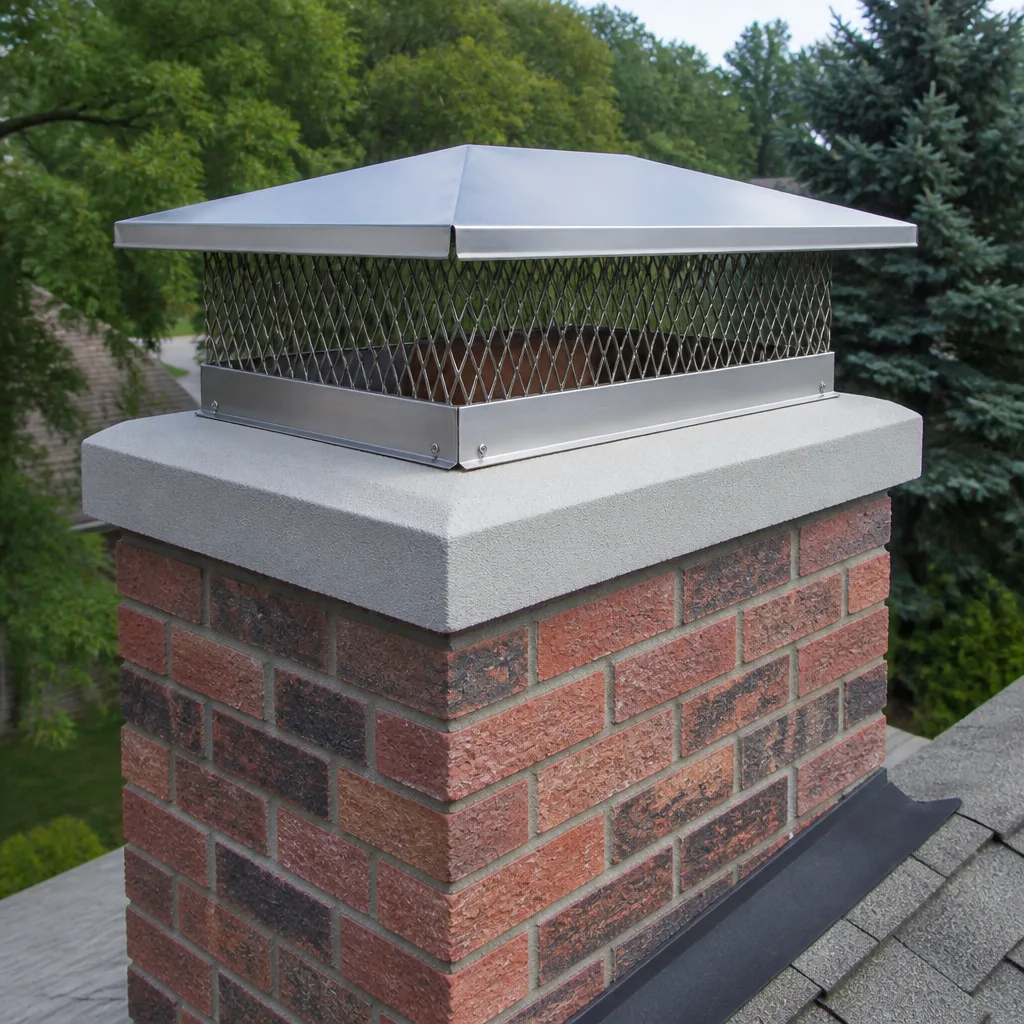
The chimney cap sits over the flue opening at the roofline and is the primary barrier between your chimney and everything living outdoors. Caps rust, crack, or get knocked loose by wind and falling branches. If you can safely see the top of your chimney from the ground and there’s no cap visible – or you can see one that’s tilted or broken – that’s almost certainly where the animal got in. A missing cap is an open door, and birds and squirrels find it within a season.
Stuck-Open or Absent Damper
The damper plate sits just above the firebox and is supposed to close off the flue when the fireplace isn’t in use. Older throat dampers corrode and warp over time, and plenty of homes have dampers that haven’t fully closed in years. If you open the firebox door and feel a noticeable draft or hear outdoor sounds clearly, the damper is either stuck open or missing entirely. An open damper with no cap above it is the single most common entry path for nesting animals.
Chimney Swifts (a Protected Species – Different Rules Apply)
Chimney swifts are a federally protected migratory bird, and this changes the situation significantly. If you hear a churring, chattering sound – almost like a tiny motor – coming from inside the flue, particularly between April and October, swifts may be nesting. Federal law prohibits disturbing an active swift nest. Your local Alcott Chimney Sweep team can inspect the flue, confirm the species, and advise you on the legal timeline before any work happens. This is one case where patience is required by law, not just courtesy.
Cracked or Deteriorated Flue Liner
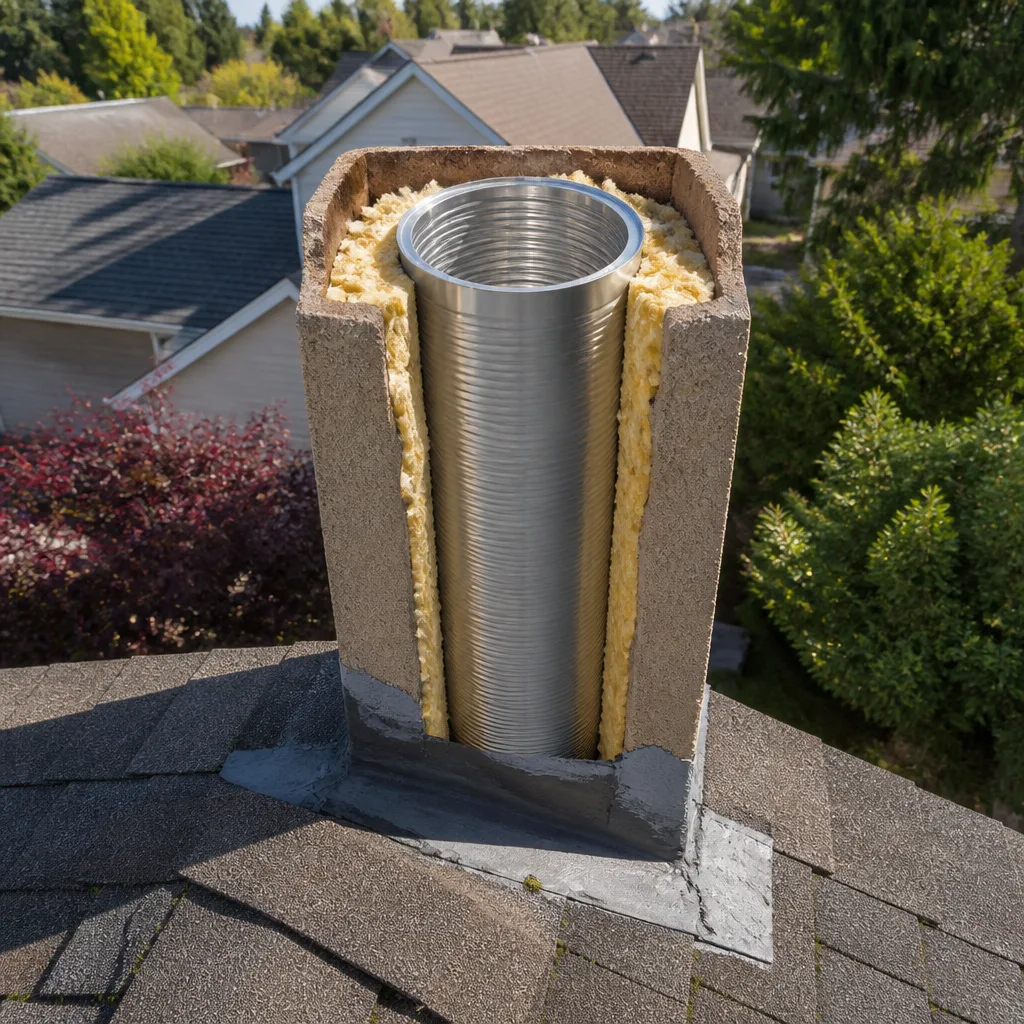
Animals that make it past the cap sometimes work their way deeper into the system if the liner has gaps or missing sections. A clay tile liner that has cracked over years of heating and cooling can create ledges and voids that a squirrel or raccoon will treat as a home. You won’t see this from the firebox – it requires a camera inspection. If you’ve found evidence of nesting debris well below the firebox opening, or you’re smelling something that suggests an animal didn’t make it back out, a liner inspection is the next step.
What to Do Right Now
- Stop using the fireplace immediately. An active nest or a carcass in the flue creates a serious blockage. Lighting a fire forces smoke and carbon monoxide back into the living space. This is not a judgment call – stop until the flue is inspected and cleared.
- Close the damper if you can do so safely from inside the firebox. This limits how far the animal can travel into your home. Do not reach up into the flue or attempt to retrieve nesting material yourself – dislodged debris, animal waste, and the animal itself can all create hazards.
- Keep interior doors near the fireplace closed. If the animal is still alive and active, you want to limit where it can go if it comes down further. A squirrel in your living room is a manageable problem; a squirrel in your bedroom at 2 a.m. is considerably less so.
- Photograph what you can see from the firebox opening. A photo of nesting material, feathers, or debris gives your technician useful information before they arrive and helps establish what species may be involved.
- Do not attempt to remove the animal, nest, or cap from the roofline yourself. Chimney caps are at height, often on steep roof pitches. This is work that requires proper equipment and someone trained to do it safely. Call your local Alcott Chimney Sweep team instead.
How We Fix It
When your local Alcott Chimney Sweep technician arrives, the first step is a thorough chimney inspection – camera included. We run a video scope through the full length of the flue to see exactly what’s there: nesting material, a carcass, damage to the liner, or a combination. You see the same images we do. Nothing is recommended without evidence you can look at yourself.
Once we know what we’re dealing with, the repair path is straightforward. A chimney sweep clears all debris, nesting material, and blockage from the flue. If the cap is missing or damaged, we install a new one – sized and fitted to your specific flue opening, using professional trade materials from brands like Gelco and Famco, not hardware-store substitutes. If the liner shows damage that allowed the animal to nest inside the system, we’ll document it, show it to you, and give you a written price before any liner work begins.
Every repair comes with a written guarantee and the 365-Day Done Right Promise. If the repair fails within a year, the second visit is free. Most animal removal and cap replacement jobs are completed in a single visit. You’ll have a written price before we start – always.
Frequently Asked Questions
Yes, and not just to the animal. Nesting material is highly flammable, and a blockage in the flue means combustion gases – including odorless carbon monoxide – can back up into your living space when the fireplace or any gas appliance vents through that chimney. Animal waste also carries health risks. Don’t use the fireplace until the flue is cleared and inspected. If you have any reason to suspect carbon monoxide is already present in your home, get everyone outside and call emergency services first.
It can wait for a scheduled appointment, but it shouldn’t wait for several weeks. The longer nesting material sits in a flue, the more it compacts and the harder it is to clear cleanly. More practically, a missing chimney cap means additional animals can enter every day you leave it open. If you’re smelling something that suggests an animal has died inside the flue, schedule sooner rather than later – decomposition accelerates in a warm flue and the odor will reach your living space. Call us at (336) 863-3889 and we’ll get you on the schedule.
Availability depends on your location and current schedule, but your local Alcott Chimney Sweep team keeps booking open for situations exactly like this. Call (336) 863-3889 – a live person answers every call around the clock, no voicemail – and we’ll tell you the earliest available slot in your area. We’ll also send you the technician’s name and photo before the visit so you know exactly who to expect.
Not necessarily. Many animal intrusions happen above the liner, at or near the top of the flue, and the liner itself is undamaged. We don’t recommend a liner until a camera inspection shows us it’s actually needed – and when we do recommend one, we show you the footage. If the liner is intact, we’ll tell you so and cap the flue to prevent re-entry. If it does need work, we’ll give you a written price in advance and explain exactly what we found. DuraFlex liner systems and HeatShield resurfacing are the materials we use when liner work is warranted – professional trade brands, not improvised substitutes.
Get It Fixed
Call (336) 863-3889 – someone answers every hour of the day and night – or book online with your local Alcott Chimney Sweep team. We’ll confirm who’s coming, send their name and photo before they arrive, and give you a written price before any work starts. Your flue, cleared and capped.
Written by Ruben Castellano, Owner at Alcott Chimney Sweep, part of the Threshold Group family of home-service companies, serving homeowners since 2002.
What Our Customers Say
"Very respectful of my home. Took off his boots and wiped the hearth when finished."
- Carol D."Annual inspection and sweep. He used a camera to check the liner and found a cracked tile I had no idea about. Gave me a written estimate and did not push."
- Janet W."Water was leaking around the flashing. They resealed it and installed a new crown coating. Dry through two heavy rains since."
- Douglas P.