
Top Signs You Need Chimney Cleaning Service – Don’t Ignore These
You need a chimney cleaning when creosote buildup reaches 1/8 inch or more, when you notice a tar-like smell coming from the fireplace even when it’s cold, or when smoke rolls back into the room instead of drafting up the flue. Those three signs mean the system is either partially obstructed or carrying a flammable coating that should not be there. If you’d rather not crawl around with a flashlight, call (336) 863-3889 and we’ll take a look.
Here’s the thing about “warning signs” lists online. They tend to lump a white stain on your exterior brick (efflorescence, which is cosmetic) with a crackling sound during a fire (which can be a flue fire in progress) and present them with equal urgency. They’re not equal. One you can photograph and monitor. The other means stop using the fireplace tonight and call a sweep. This guide separates what actually matters from what you can note for later, so you can make a clear-headed call about your chimney in Los Angeles.
The Triage: What to Do When You Notice Something Off
Not every chimney issue is an emergency. In our experience across Los Angeles, we see homeowners swing between two extremes: ignoring everything until smoke backs into the living room, or panicking over surface stains that were present when they bought the house. Neither helps.
Here’s the framework we use when a customer calls and describes a symptom. It puts each sign into one of three buckets:
- Stop using the fireplace immediately: smoke entering the room, a crackling or popping sound inside the flue during a fire, the smell of burning tar or asphalt, visible flames above the chimney top, or any sign of water leaking through the ceiling around the chimney chase.
- Schedule a sweep within 30 days: a strong campfire-like smell when the fireplace hasn’t been used in months, visible black flakes falling into the firebox, a damper that’s sticky or hard to move, or animals nesting sounds you can hear from the hearth.
- Note for your annual inspection: white mineral staining on exterior brick, a damper that works but sits slightly off-seat, light soot dusting on the firebox walls, or a fire that burns fine but leaves more ash than it used to.
That last bucket matters. Call a Chimney Inspection in Los Angeles pro once a year regardless, and bring up anything you’ve noticed. But understanding the difference between “act now” and “mention later” saves you from sleepless nights over nothing and from ignoring the one thing that actually needed attention.
The Most Underreacted-To Sign: That Tar Smell in a Cold Fireplace
If you walk past your fireplace in July and catch a smell like hot asphalt or a chemical tar odor, that’s third-stage creosote. And in our experience, it’s the sign homeowners most consistently wave off as “just how fireplaces smell.”
Creosote is the tar-like byproduct of wood combustion that condenses on flue walls as smoke cools. It forms in three stages. Stage one is flaky and brushes off easily. Stage two is harder and shiny, more like baked-on glaze. Stage three is a hardened, tarry layer that looks like black glass and is extremely difficult to remove without professional rotary tools. That tar smell you’re catching in summer means stage three creosote is present, and stage three creosote is a fuel source sitting inside your chimney. A hot enough fire can ignite it.
Here’s what’s happening when you smell it in a cold fireplace: warm air rises through the flue even when there’s no fire, picking up volatile compounds from the creosote and carrying them down into the room. You’re essentially smelling the chimney breathe. Once that smell is strong enough to notice without an active fire, the buildup is typically substantial.
What to do: schedule a cleaning. A standard sweep in Los Angeles typically runs $200 – $400 before any repairs, and the sweep will tell you honestly whether the creosote comes off with standard brushes or whether you’re looking at a heavier removal process. If you have a smell like burning tar while a fire is actively burning, that’s different. Stop the fire, close the damper if safe to do so, and call a sweep before you use it again. That smell means creosote inside the flue is actively smoldering.
Smoke in the Room on Startup: Four Causes, Only One Is a Dirty Flue
Most Los Angeles homeowners we talk to assume that if smoke comes back into the room when they first light a fire, the chimney must be clogged with soot. Sometimes it is. More often, it’s one of three other things, and knowing the difference helps you give a sweep useful information over the phone.
The four causes of startup smoke rollback:
- Cold-flue reversal: The air inside the flue is colder and denser than the air in the room, so it sinks instead of rises until the flue warms up. This is more common in Los Angeles homes with exterior chimneys and is typically worst on the first cold night after months of disuse.
- Pressure competition: An active kitchen exhaust fan, a bathroom vent, or a furnace pulling combustion air can overpower the fireplace’s natural draft and pull smoke into the room. This one is often fixable by cracking a window near the fireplace.
- Damper position or damage: A damper that’s rusted partly shut, or one that doesn’t open fully because of creosote buildup on its tracks, restricts the opening and causes rollback. This is the one homeowners can often check themselves with a flashlight.
- Actual obstruction or heavy buildup: Yes, a partially blocked flue from creosote, nesting material, or a damaged liner will cause rollback. This one is the dirty-flue scenario. It’s also the only one that definitively requires a sweep to resolve.
Before you call us, do a quick check. Open the damper fully and shine a flashlight up into the firebox. With the damper open, you should see a clear, dark opening above. If you see black crusty material flaking off the walls or a damper that only opens halfway, that’s useful to describe on the phone. If you see anything moving, or hear scratchy sounds, you may have a nest and should not attempt to remove it yourself.
If smoke is rolling into the room while a fire is actively burning well, stop the fire and call a sweep before using the fireplace again. That’s not a startup quirk. That’s a draft failure or obstruction, and it means carbon monoxide may be entering the home.
Why October and November Are When Los Angeles Chimneys Show Their Problems
The pattern is predictable. We field more calls about smoking fireplaces, stubborn dampers, and odd smells in October and November than any other stretch of the year in Los Angeles. Not because chimneys fail in fall. Because that’s when they’re asked to work again after eight months of sitting idle.
Here’s what’s happening. From roughly April through September, most Los Angeles fireplaces go unused. The flue sits dormant while the house cools and heats through a full cycle. During the dry Santa Ana season, creosote left from last winter’s fires bakes in place and hardens. Dust accumulates. Birds and squirrels find open dampers. Small gaps in the crown from a previous year’s minor seismic shift go unnoticed because nobody’s looking. Then the first cold evening arrives, a homeowner lights a fire, and every deferred issue announces itself at once.
The transition season is also when minor cracks in mortar become visibly active. Dry air contracts masonry, then the first damp cold front expands it. A hairline crack that was invisible in August opens up enough in November to let water in, which then does the real damage during winter rain. Los Angeles doesn’t have the deep-freeze cycles that destroy chimneys in colder climates, but our wet-dry seasonal swing does its own kind of work.
The practical takeaway: if you only schedule one thing for your fireplace this year, make it an inspection in September or early October. It gives us enough time to do a cleaning or minor repair before the cold nights arrive, and it means the first fire of the season doesn’t turn into a smoke filled living room.
Related services in Los Angeles: if your inspection turns up more than creosote, our Gas Fireplace Repair in Los Angeles team handles gas logs, valves, and pilot assemblies, while our Chimney Sweep in Los Angeles service covers the full cleaning and creosote removal process.
The One Sign Everyone Should Know How to Check: Damper and Firebox Visuals
You don’t need to be a technician to gather useful information before calling a sweep. A basic visual check of two things, the damper and the firebox, takes five minutes and tells you whether you’re describing a maintenance issue or a repair issue over the phone. Here’s what to look for.
The damper check. Open the damper as far as it goes. With a flashlight, look at the metal plate itself. A damper that’s coated in black, shiny, tar-like material, or one that only opens halfway because of crusty buildup on its hinge tracks, means creosote has been accumulating for a while. That’s a maintenance cleaning. A damper that’s rusted through, warped, or detached from its lever is a repair. In our experience, rusted-thin dampers are common in Los Angeles homes within five miles of the coast, where salt air accelerates corrosion.
The firebox check. Shine the light at the back wall and floor of the firebox. Light soot dusting is normal and will be removed with the sweep. Black flakes larger than a dime falling from above suggest flaky creosote from the flue walls, which usually means stage one or two buildup that standard brushes will remove. If you see what looks like smooth, glassy, black coating on the firebox walls or the damper, that’s stage three creosote, and you should mention it specifically when you call. It changes the cleaning approach.
What you shouldn’t do: don’t scrape at creosote with a fireplace tool or wire brush. Knocking it loose doesn’t remove it from the flue, and breathing the dust isn’t great. Don’t reach up into the flue to feel the walls, and don’t try to remove a nest or any animal material. Let a trained sweep handle anything that requires reaching into the chimney.
When to call a pro: if you find stage three creosote, see water staining inside the firebox, hear animals, or smell that tar odor we covered earlier, that’s the call line. If what you see is light dusting and a damper that opens fine, you’re likely in the annual cleaning range, and you can schedule on your timeline.
What a Sweep Actually Fixes, and What It Can’t
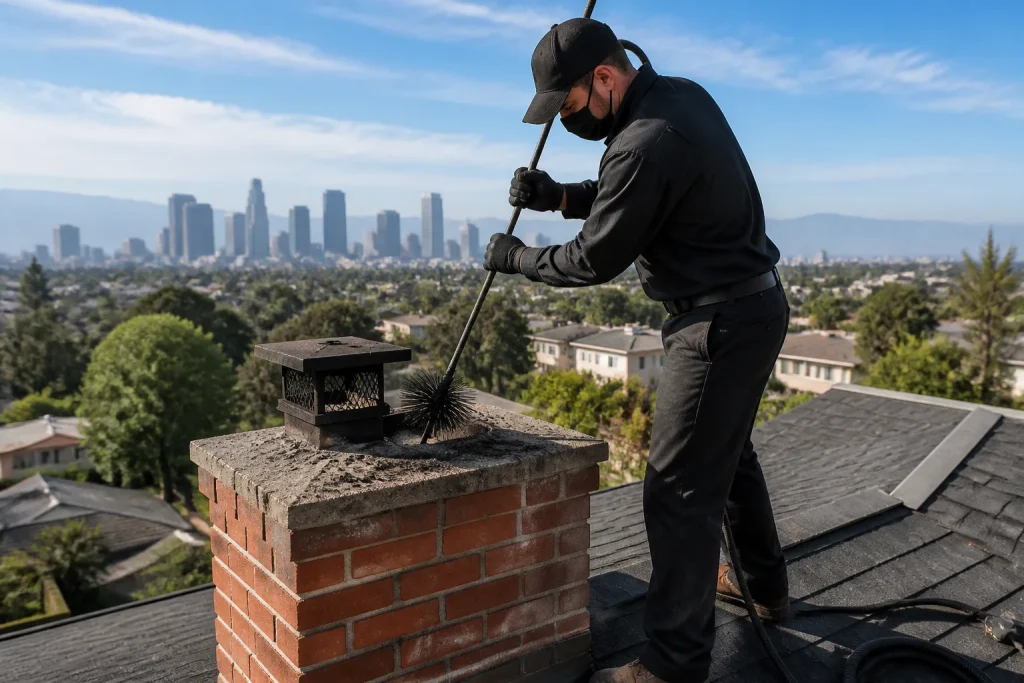
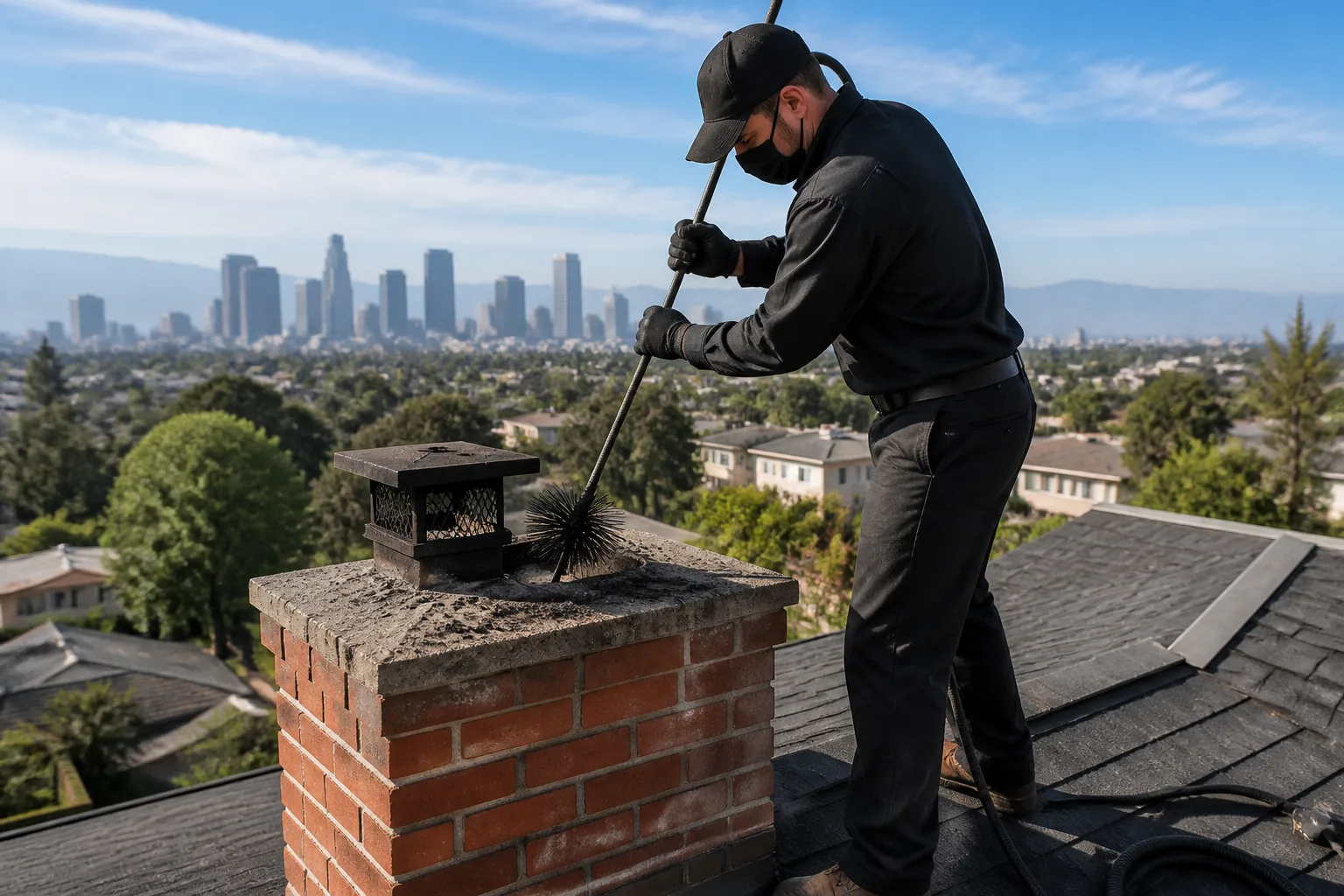
A chimney sweep removes creosote, soot, and debris from the flue and smoke chamber, and verifies that the path from firebox to chimney top is clear. That’s the core of the service, and it’s what prevents the majority of chimney fires in Los Angeles homes. In our work since 2002, the fires we’ve seen traced back to neglected creosote rather than sudden equipment failure.
What a sweep does not do is repair structural problems. If the flue liner is cracked, or the mortar joints between flue tiles have failed, sweeping removes the creosote but doesn’t fix the liner. That’s where you might hear about professional grade products like a DuraFlex stainless liner or HeatShield resurfacing. These are what our team uses when a liner either needs replacement or can be restored rather than torn out and rebuilt. The right call depends on what the inspection shows, and you should see the evidence before you’re asked to approve any repair. We show every customer camera footage from inside their flue before recommending a liner. Nothing gets recommended that you can’t see for yourself.
A sweep also can’t fix a house pressure problem. If your fireplace smokes only when the kitchen vent runs, the fix is behavioral (open a window, run the vent less during fires), not a chimney repair. A good sweep tells you that plainly instead of selling you something you don’t need.
The Bottom Line
The signs that genuinely require action are a tar smell in a cold fireplace, smoke rolling into the room, a crackling sound from inside the flue during a fire, and visible stage three creosote on the damper or firebox walls. The signs that can wait are cosmetic surface staining, light soot dusting, and a damper that works but feels slightly stiff. In Los Angeles, the smart season to address any of this is early fall, before the first cold night sends half the city’s fireplaces into a coughing fit at once. If you’ve spotted something and you’re not sure which bucket it falls into, call (336) 863-3889. We’ll talk you through what you’re seeing and tell you honestly whether it needs a visit now or just a note for the next inspection.
Frequently Asked Questions
The most reliable signs are a tar or asphalt smell coming from the fireplace when it’s not in use, black flaky material falling into the firebox, smoke rolling into the room during a fire, or a damper that’s sticky and coated with shiny black buildup. If you see any of these, a sweep in Los Angeles will typically confirm with a camera inspection of the flue. Call (336) 863-3889 and describe what you’re seeing, and we’ll help you figure out if it needs attention now or can wait.
The National Fire Protection Association recommends an inspection at least once a year, with cleaning done as needed based on what the inspection finds. In Los Angeles, where fireplaces sit unused for most of the year and see light seasonal use, a good pattern is to inspect every fall before the first fire. Some homeowners go two or three seasons between actual cleanings if they burn rarely and burn dry wood. We tell customers to base it on buildup, not a calendar.
Creosote continues to accumulate every time you burn wood, and the layers bake onto each other, gradually narrowing the flue. The more buildup, the higher the draft restriction and the higher the risk of a flue fire. You also lengthen the window during which animals can nest in the chimney, water can enter through a crown you haven’t inspected, and small issues can compound into larger repairs. A cleaning you deferred for a few years is still usually manageable. The real cost comes when deferred maintenance leads to a liner failure, and that’s typically when homeowners face a much bigger bill. We quote all repairs in writing before any work starts, so you always know the number before deciding.
You can do a basic visual check of the damper and firebox with a flashlight, and that’s genuinely useful information to have before you call a sweep. Full chimney cleaning involves working from the roof or running rotary brushes up through the flue, and it requires tools and access that most homeowners don’t have. It’s also a genuinely dangerous place to improvise, both in terms of roof access and creosote dust. We’ve also pulled raccoon nests and wasp activity out of flues in Los Angeles that a homeowner shouldn’t have gone near. For anything beyond the visual check, book a professional sweep.
Written by Ruben Castellano, Owner at Alcott Chimney Sweep home, serving Los Angeles since 2002.
Need Chimney Cleaning Help?
Call Alcott Chimney Sweep - licensed & insured, here with fast after-hours help in Los Angeles.
(336) 863-3889