
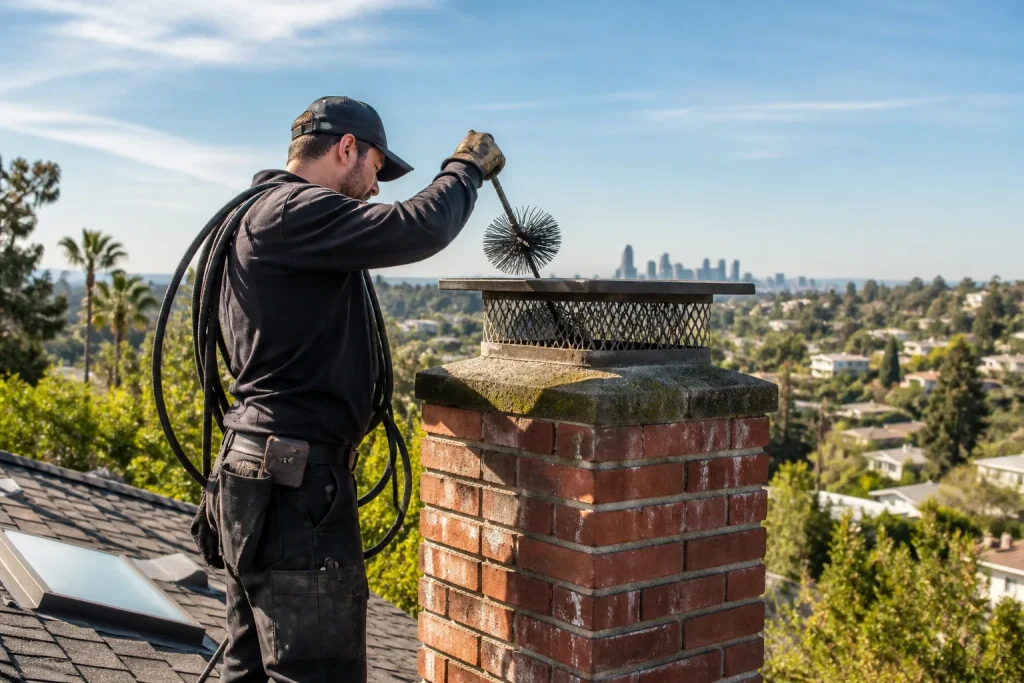
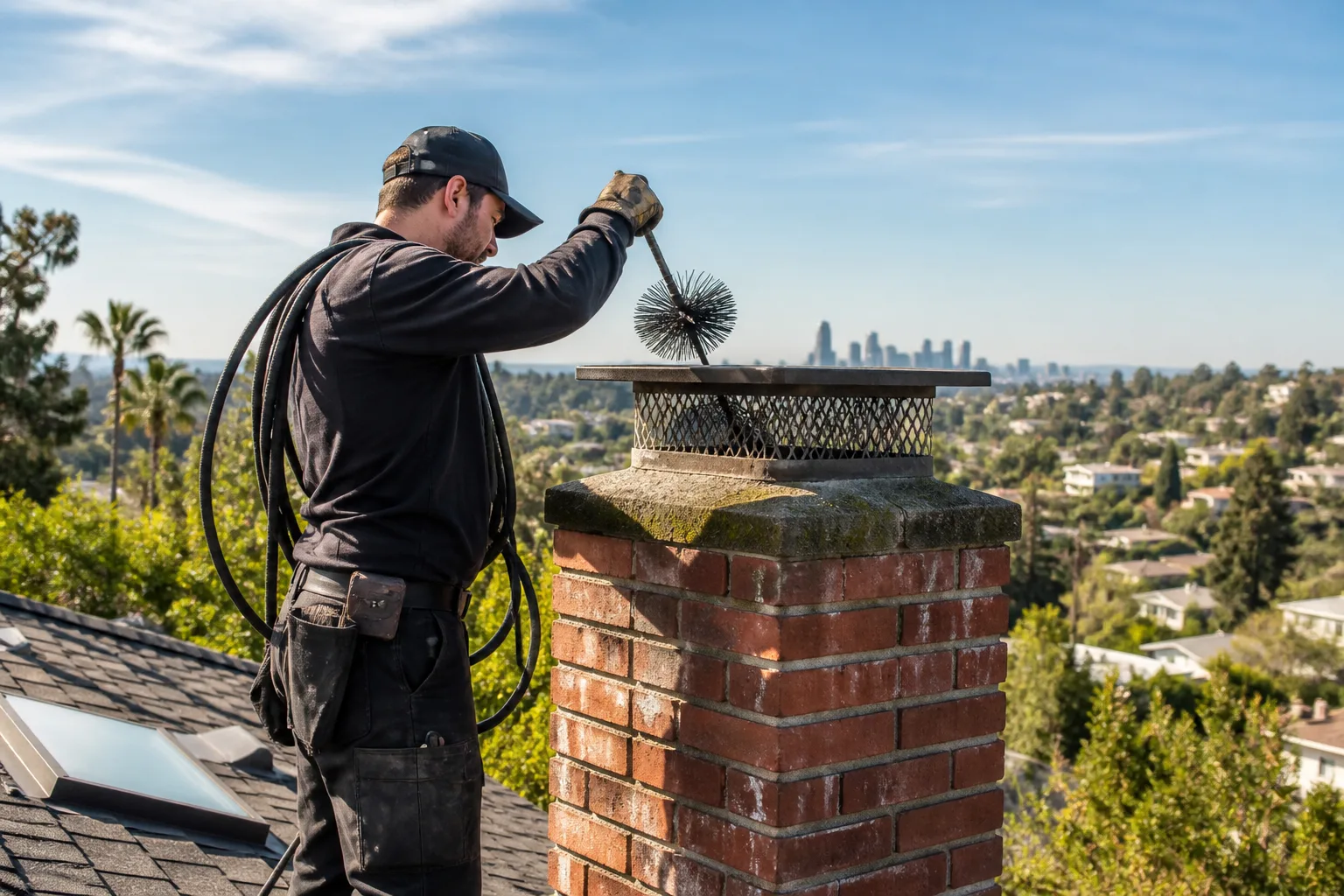
Spring Chimney Cleaning Checklist for Los Angeles Homes
Spring chimney maintenance in Los Angeles is less about removing soot and more about catching the damage a short, intense rainy season leaves behind. Most LA chimneys see light use, so creosote buildup is rarely the urgent problem: the real spring work is checking crown wash erosion, spalling mortar, and the hairline cracks that winter moisture exploits, then documenting everything before summer heat makes small failures worse. If you’d rather skip the ladder and have a trained eye handle it, call (336) 863-3889 and we’ll schedule a sweep and inspection at your pace.
Here’s the part most generic checklists get wrong: Los Angeles only gets about 15 inches of rain a year, but most of it lands in a focused 10-to-12-week window between December and March. A chimney that sat dry and stable all summer suddenly absorbs a season’s worth of moisture in a few storms. Masonry expands when wet and contracts as it dries. Hairline cracks become water channels. Water channels become spalling, staining, and crown failure. That’s why spring is when we see the most avoidable chimney damage in LA, and why the checklist below is built around our specific post-winter failure points, not generic soot talk.
What a Spring Chimney Cleaning in Los Angeles Should Actually Include
A proper spring sweep removes creosote and soot, yes, but in Los Angeles the bigger value is the condition assessment that comes with it. Most of the chimneys we service across neighborhoods like Sherman Oaks, Pasadena, and the Valley sit attached to homes built between the 1940s and 1980s. Those chimneys have been through decades of seismic micro-movement, seasonal moisture cycling, and deferred mortar maintenance. A sweep that doesn’t include a close look at the crown, cap, flashing, and masonry is half a job.
Here’s the spring checklist we work through on every Los Angeles chimney, and the one we’d recommend any homeowner run through before deciding whether to book a service:
- Remove creosote and soot from the flue. Even light buildup from occasional winter fires should come out before it hardens in the summer heat. We classify creosote in three levels: Level 1 is a light, flaky dust. Level 2 is a tar-like glazed deposit. Level 3 is full glaze that can ignite under the right conditions. In LA’s low-use chimneys, we almost always see Level 1 or a light Level 2. That’s often a straightforward sweep, not a full chemical treatment.
- Check the chimney cap and spark arrestor. Rain gets in when caps loosen, rust through, or get knocked askew. In Los Angeles, the bigger spring issue is actually the dry-season aftermath: birds and rodents nest in uncapped flues, and those nests become blockages and fire hazards by the time you light the first fall fire.
- Inspect the crown for wash erosion. The crown is the concrete slab that seals the top of the chimney around the flue. Winter runoff etches it, and in older LA chimneys the crown is often the first place we see active water intrusion. A small crown crack in March can become a spalling face brick by October.
- Look for efflorescence and spalling. Efflorescence looks like white, chalky staining on the brick face. It’s the mineral residue left behind when water moves through masonry and evaporates. It’s not a stain; it’s evidence of active moisture. Spalling is what comes next: brick faces popping off as trapped water expands and contracts. Both are signs the chimney needs masonry attention before next winter.
- Check flashing and the roofline seal. Flashing is the metal seam where the chimney meets the roof. In Los Angeles, the combination of UV exposure, rain, and periodic roof work means flashing gets pulled up or deteriorated faster than homeowners expect. A 5-minute flashing check during a spring sweep catches leaks before they become ceiling stains.
None of these items requires major demolition in the spring. Most are catch-it-early repairs that cost a few hundred dollars or less when addressed before summer. Wait until the next rainy season, and the same fixes routinely become $1,500 – $3,500 masonry jobs. That’s the seasonal math Angelenos should be thinking about.
Earthquake Micro-Movement: The LA-Specific Chimney Risk No One Mentions
This is the item that never shows up on national chimney checklists, and it’s the one we’ve learned to prioritize over 20-plus years working in Los Angeles. Every chimney in the basin sits on ground that moves. Not always in a dramatic quake, but in the small, constant shifts of seismic micro-movement that don’t even register on the news. Those micro-shifts are why chimney masonry in LA develops hairline cracks at a higher rate than in seismically quiet regions of the country.
Why that matters for a spring chimney cleaning: a hairline crack is an open door. During the rainy season, water seeps into those thin fissures. When temperatures drop at night, even in LA, that water expands as it cools. The crack widens. More water gets in. By spring, that hairline has become a structural weakness that’s invisible from the ground and easy to miss from a ladder.
Here’s what we look for after the spring rains, and what you can check if you’re comfortable with a pair of binoculars from the yard:
- Stair-step cracks in the brick pattern. These often follow mortar joints in a diagonal line and are the most reliable indicator of structural shifting, not just cosmetic wear.
- Vertical cracks running through bricks (not just between them). Splitting a brick face takes more force than a mortar joint crack, so these get our immediate attention.
- Shifted or tilted chimney caps. If the cap sits unevenly, the chimney crown underneath has likely moved. It’s a small tell for a bigger issue.
- Gaps at the flashing line or where the chimney meets the roofline. If the chimney and house are settling at different rates, that seam opens up and becomes a moisture and pest entry point.
The good news: most earthquake micro-movement damage in LA chimneys is repairable without a full rebuild, provided it’s caught before water intrusion turns a structural crack into a full spall. The bad news: a homeowner checking from the ground usually can’t see the early warning signs. That’s why we recommend a professional Chimney Inspection in Los Angeles as part of any spring service, even when the chimney hasn’t been used all winter.
Cap and Crown Repairs: Why Spring Is the Right Time to Schedule Them
The timeline matters more than most homeowners realize. If your spring chimney check finds a worn crown or damaged cap, scheduling the repair during spring gives the work the best possible chance to perform before the next rainy season. Concrete and masonry sealants need time to cure under favorable conditions: moderate temperatures, low humidity, and no rain. Los Angeles delivers exactly that from April through early October.
Do the same repair in November, and you’re asking fresh mortar to cure in a narrow window between rain events. It can still be done, but the chance of premature failure climbs. Do it in spring, and the new crown or cap has months to fully harden before the first storm rolls through from the Pacific.
When we replace a cap or rebuild a crown for a Los Angeles home, we install products designed for the exposure. For caps, we typically use Olympia Chimney or Famco components, both of which are built to handle sustained UV, rain, and the occasional wind-driven debris that comes with Mediterranean-climate winters. For crown resurfacing, we use a proper waterproof crown coat, not a thin layer of hardware-store caulk. The difference is lifespan, plain and simple.
The takeaway: if your chimney needs cap or crown work, spring is not the runner-up season. It’s the season the work should be done.
What About Creosote Levels in Low-Use Los Angeles Chimneys?
We get this question all the time: “We only burn a few fires a year. Does the chimney even need cleaning?” The honest answer: sometimes it needs a cleaning, and almost always it needs an inspection. The two are not the same thing, and a good company will tell you plainly which one applies.
In Los Angeles, most chimneys we service in March and April fall into one of two categories. The first is the occasional-use fireplace, maybe a dozen fires over the season. Creosote in those flues is typically Level 1, light and flaky. A standard sweep clears it, but the more important spring work is the structural check, because the chimney sat through the same rain and seismic movement as a heavily used one. The second category is the decorative fireplace that never gets used. Creosote is often negligible, but pest accumulation, moisture staining, and old liner degradation are common, especially in pre-1990s chimneys.
Here’s the threshold we use on whether a sweep is warranted or can safely wait:
- Level 1 creosote (light, flaky, less than 1/8 inch). A standard sweep is straightforward. If the chimney is otherwise clean and dry, this is the lower-cost spring service.
- Level 2 creosote (glazed, tar-like, or thicker than 1/8 inch). This needs more thorough removal, sometimes with rotary tools. It’s not a Level 1 sweep, and it costs more. In our experience, Level 2 in a low-use LA chimney usually means either wet wood, restricted airflow, or the chimney has been pulling smoke poorly for years.
- Level 3 creosote (heavy glaze, restricted flue). This is rare in coastal Los Angeles but shows up more in the hills, where colder nights mean longer, slower fires. It’s a serious fire risk and requires specialized removal.
When we do a Chimney Sweep in Los Angeles, we always include the creosote classification in the written report so the homeowner knows exactly what was found, not whether a crew thinks the chimney “looked okay.” That’s the kind of specificity that matters when deciding what to do next.
After the Spring Clean: Documentation That Protects You Later
One of the least-understood parts of chimney maintenance is the paper trail, and it’s something we’ve built our process around. After every spring sweep and inspection, you should leave with at least three things: clear photos of any problem areas, a written condition report, and a dated record of the service. Here’s why each one matters.
Photos are the strongest tool a homeowner has if a warranty claim comes up later or if a masonry issue worsens and you need to prove what was visible in March versus what happened in October. A written condition report from a chimney service documents creosote level, moisture findings, crown condition, and any recommended repairs, in language you can read. That report becomes your baseline. When next spring rolls around, you compare against it and see if a crack has widened or a stain has spread. Dated records matter because many chimney products, from caps to liner systems, carry manufacturer warranties that require proof of regular maintenance to stay valid.
This is also where we’d recommend being selective about who does the work. A chimney company that won’t provide a written report or photos is leaving you to take their word for it. We don’t think that’s good enough, and we don’t think Angelenos should accept it. Every service we perform includes that documentation as a standard part of the job, not an add-on you have to request.
When to Call a Pro vs. What You Can Safely Check Yourself
There’s a reasonable middle ground between ignoring your chimney for five years and paying someone to look at it every month. In Los Angeles, we’d suggest this seasonal rhythm: do a basic visual check from the ground twice a year, in early spring and early fall, and schedule a professional sweep and inspection annually, ideally in the spring when repair timing works in your favor.
From the ground, you can look for obviously missing caps, leaning chimney sections, visible cracks you can spot with binoculars, and efflorescence staining on the brick face. You can also check inside the firebox for pieces of brick or mortar that have fallen in, which indicates spalling higher up the flue. Those are useful observations to pass along when you book a service.
What you shouldn’t do is get on the roof and walk a two-story chimney line without proper safety equipment and experience. Chimney work, even inspection work, requires fall protection, and masonry edges are unforgiving in a way a ladder on a flat driveway never is. If you see something concerning, take a photo from the ground and call a professional. It’s a safer use of your time than DIY roof climbing, and the phone call is free.
If you’re in Los Angeles and want a documented spring chimney check, we handle the full scope: sweep, structural inspection, cap and crown assessment, and a written report with photos. We also service the fireplaces that don’t vent through a traditional masonry chimney. If you’ve got a gas unit that hasn’t been serviced in years, our Gas Fireplace Repair in Los Angeles service covers the full system, not just the exterior.
The Bottom Line
Spring chimney cleaning in Los Angeles is a maintenance discipline, not a cosmetic one. The work you do in March and April determines whether your chimney survives next winter’s rains without cracking, staining, or leaking, and whether small repairs stay small. The checklist that matters for LA homes is specific: check crown wash, spalling, efflorescence, earthquake micro-cracks, flashing, and cap condition, then document everything with photos and a written report.
If you’d rather have a trained eye do it, and you want to know who’s arriving before you open the door, Alcott Chimney Sweep offers free estimates. We’ll send a background-checked, identity-verified technician whose name and photo you’ll see before we arrive. Call (336) 863-3889 and we’ll walk you through what your chimney needs this spring, and what can safely wait.
Related services in Los Angeles: our Alcott Chimney Sweep home page covers the full service range, from annual sweeps to structural repairs and documentation.
Frequently Asked Questions
A standard chimney sweep in Los Angeles typically runs $180 – $340 for a typical one-story home, before any repairs. If the flue has Level 2 creosote buildup or the chimney hasn’t been cleaned in years, expect the price to land on the higher end or slightly above. A full sweep plus inspection, which is what most LA homes need in spring, usually falls in the $250 – $450 range depending on chimney height, accessibility, and condition. Call (336) 863-3889 for a written estimate before any work starts.
Annually, even with light use. The National Fire Protection Association recommends a chimney inspection at least once a year, and we apply the same standard in Los Angeles because the seasonal risk profile is different here. The chimney may not build up much creosote, but it absorbs rain, endures seismic movement, and gets exposed to pest activity year-round. A spring service catches all of that at the right time.
You can, but the risk-to-reward is poor for most homeowners. A proper sweep requires roof access, fall protection, and the right brushes and rods for your flue size. What a DIY sweep almost always misses is the structural inspection: crown condition, flashing integrity, and earthquake micro-cracks that become next winter’s leak. For the cost of a professional sweep, you get the cleaning plus a documented condition assessment. That’s the value.
The most common Los Angeles outcome is water damage, not chimney fire. Missed inspections mean small crown cracks go unnoticed, rain enters the masonry, and by the time you see efflorescence staining on the ceiling or wall near the chimney, the repair has moved from a few hundred dollars to several thousand. The second outcome is pest blockage, especially in uncapped flues. Either way, the cost of deferring maintenance far exceeds the cost of an annual check.
Written by Ruben Castellano, Owner at Alcott Chimney Sweep, serving Los Angeles since 2002.
Need Chimney Cleaning Help?
Call Alcott Chimney Sweep - licensed & insured, here with fast after-hours help in Los Angeles.
(336) 863-3889