
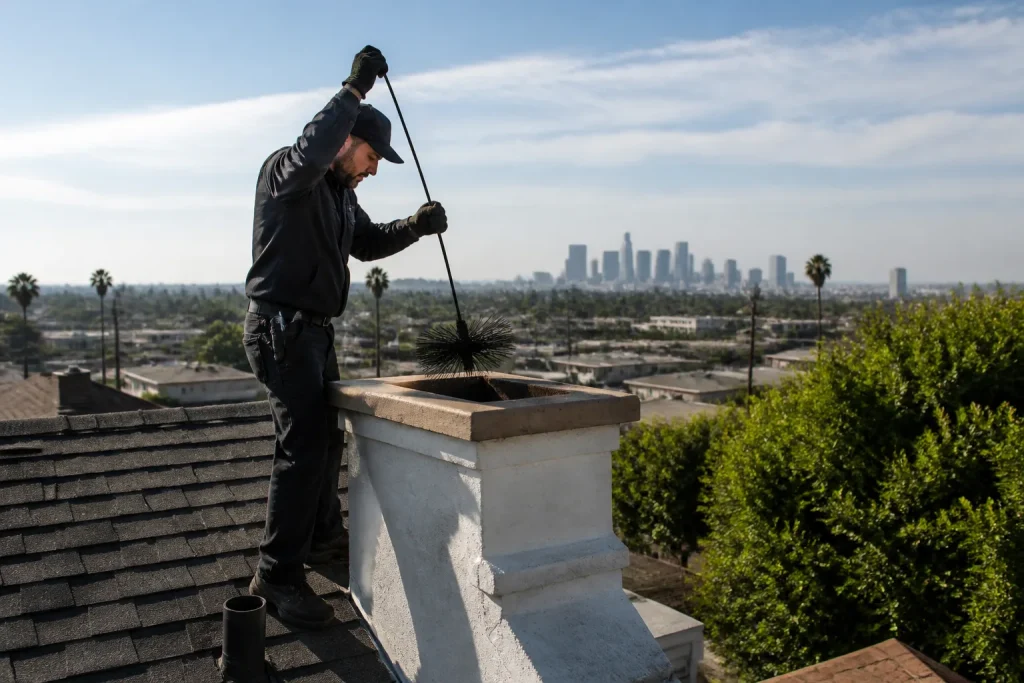
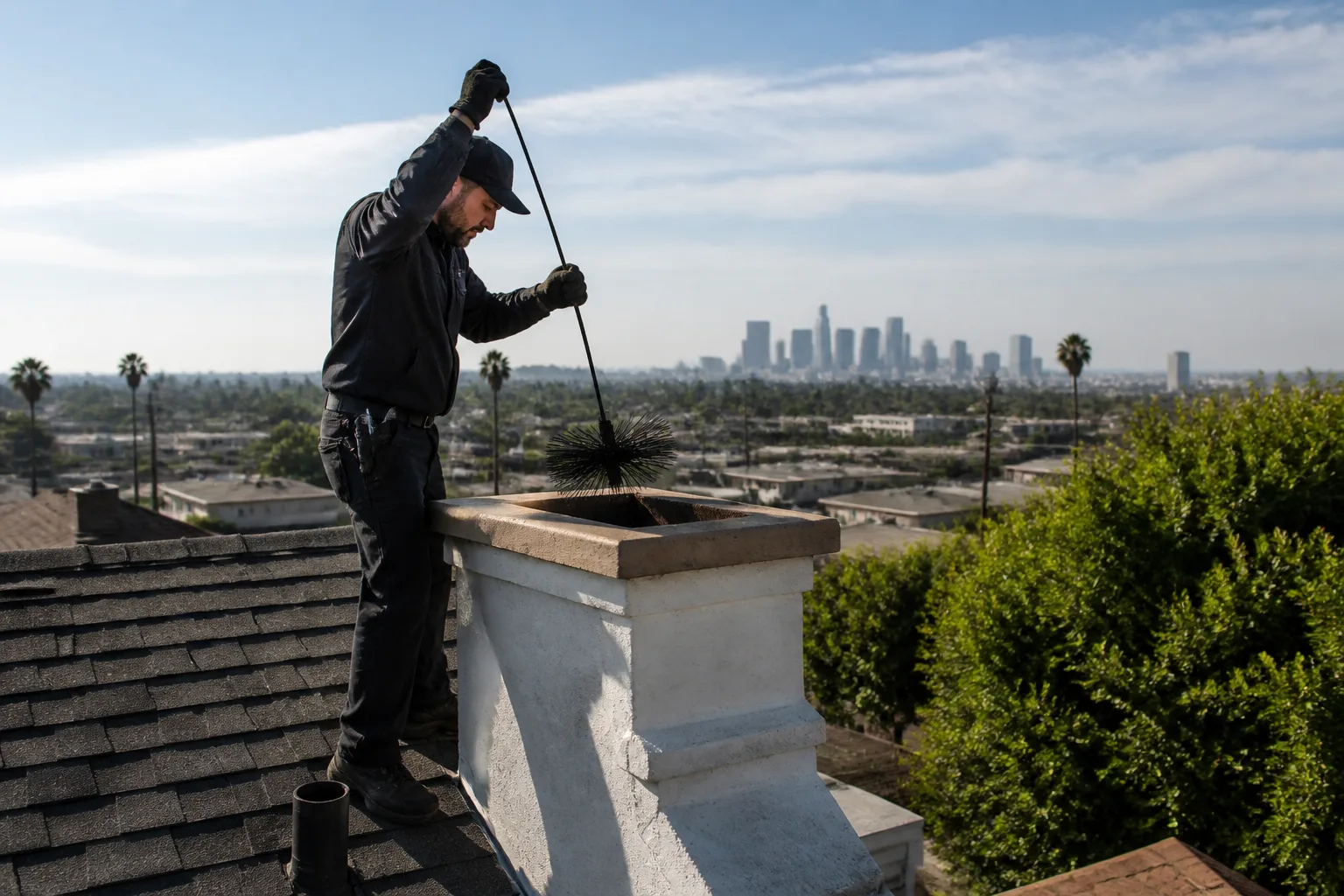
HeatShield Chimney Sweep in Los Angeles: A Homeowner’s Guide
HeatShield is a ceramic resurfacing system that repairs deteriorating chimney flue liners by coating the inside with a specialized sealant, restoring the liner’s ability to contain heat and combustion gases. In Los Angeles, where thousands of pre-1970 homes still have original masonry chimneys, HeatShield gets recommended constantly as a repair option. Most homeowners sign off on it without understanding what it is, what it costs, or whether it’s actually the right fix for their chimney. This guide explains all three, in plain English.
And if you’d rather not sort through flue liner chemistry on your own, call Alcott Chimney Sweep home at (336) 863-3889 and we’ll walk you through what your chimney actually needs, free of charge.
What HeatShield Actually Does to Your Flue Liner
Your chimney flue liner is the clay or terra cotta tube running up the inside of your chimney. Its job is simple: keep heat, smoke, and combustion gases moving up and out of your house without leaking into the walls or living space. Over decades, the mortar joints between clay liner sections start to crack and crumble. The liner itself can develop hairline fractures too. When that happens, the chimney can’t safely do its job.
HeatShield’s Cerfractory Resurfacer is a ceramically-reinforced sealant applied to the inside of the flue. Think of it as a new, seamless lining painted over the old one. It fills gaps in mortar joints, seals small cracks, and creates a smooth, insulated surface. The product cures into a hard, ceramic-like coating designed to handle the temperatures a wood-burning fireplace produces.
Here’s what we see in Los Angeles field conditions: older Spanish Colonial and Craftsman homes built between 1910 and 1965 overwhelmingly outnumber newer construction in neighborhoods like Hancock Park, Los Feliz, and West Adams. Those homes often have chimneys built with older terra cotta liners that weren’t necessarily fired to modern standards. Add a few decades of earthquake micro-shifting and the mortar joints start to fail. We regularly pull camera footage in Mid-Wilshire showing gaps you could slide a coin through.
What Problems HeatShield Actually Fixes, and What It Doesn’t
HeatShield is a specific tool for a specific problem. Understanding that distinction is where most Los Angeles homeowners get lost in their estimates.
HeatShield is designed for:
- Deteriorating mortar joints between clay liner sections – the most common aging-chimney problem we see in Los Angeles
- Minor to moderate cracking in clay liners – hairline fractures and small gaps, not structural separation
- Gaps where liner sections have shifted slightly – common in earthquake-adjusted chimneys
- Porous chimney surfaces from long-term water exposure – a year-round issue in coastal neighborhoods like Playa del Rey, where marine fog is a chronic problem
HeatShield is not designed for:
- Chimneys with major structural damage – if the masonry itself is crumbling or the chimney is out of plumb, resurfacing won’t fix it
- Liners that have collapsed or separated entirely – if sections have fallen, the chimney needs a fresh liner, not a coating
- Flues serving high-efficiency gas appliances – the acidic condensation from modern gas units usually requires a stainless steel liner instead
- Unlined masonry chimneys – HeatShield needs an existing liner structure to adhere to and reinforce
The honest take: HeatShield is an excellent repair product for the early-to-mid-stage deterioration we see all the time in Los Angeles’s older housing stock. But it’s a repair, not a rebuild. Knowing that boundary is how you avoid paying for the wrong solution.
How Much Does HeatShield Cost in Los Angeles?
In the Los Angeles market, HeatShield resurfacing typically runs between $950 and $3,400 depending on the size of the flue, the amount of prep work needed, and whether the chimney requires scaffolding. Most single-story Los Angeles homes with a standard fireplace fall in the $1,100 to $2,200 range. Multi-story homes, difficult roof access, or longer flues push costs toward the upper end.
For comparison, a standard Chimney Sweep in Los Angeles without any repairs runs $180 to $350. A full stainless steel reline with a system like DuraFlex generally starts around $3,500 and can reach $7,500 or more depending on flue length and access. HeatShield occupies the middle tier: it’s a meaningful investment, but it’s dramatically less expensive and less invasive than knocking out your old liner or rebuilding the chimney.
Cost Breakdown You Can Use
| Service | Typical Los Angeles Price Range |
|---|---|
| Standard chimney sweep (no repairs) | $180 – $350 |
| Level 2 camera inspection | $200 – $450 |
| HeatShield resurfacing (single flue) | $950 – $2,400 |
| HeatShield resurfacing (multi-story or complex) | $2,400 – $3,400 |
| Full stainless steel reline | $3,500 – $7,500 |
Every HeatShield estimate should include a written price before any work begins. If a company won’t put the number on paper, walk away. That’s a non-negotiable in our book – we hand every customer a written price before anything gets opened or coated. No surprises, no “while we were in there” add-ons.
How to Verify a HeatShield Applicator Before the Job Starts
HeatShield isn’t available to anyone with a ladder and a trowel. The manufacturer requires contractors to complete training and certification to purchase and apply the product. A real HeatShield applicator can show you their certification. You should ask to see it.
Here’s what to check before you sign anything in Los Angeles:
- Ask for HeatShield manufacturer certification – the technician or company should be able to show documentation that they’re an approved applicator, not “we use a HeatShield-type product.”
- Verify the product by name in writing – your written estimate should say “HeatShield Cerfractory Flue Sealant” or similar, not “chimney resurfacing treatment.”
- Ask about prep work – HeatShield requires a clean surface to bond correctly. The chimney should be swept before application, and the company should explain their prep process.
- Ask about the warranty in writing – HeatShield offers a manufacturer warranty on the coating material, and the installing company should have their own workmanship guarantee on top of it.
We pulled a HeatShield job from a home in Atwater Village last fall where a previous company had actually painted a waterproofing product from a box store up the flue and called it a resurfacing job. The homeowner had the right instinct to ask questions, but no one had ever told her what to ask. This guide exists so you don’t have that experience.
HeatShield vs. Full Stainless Steel Reline: When Does It Make Sense to Pay More?
This is the comparison that matters, and it’s where we spend the most time talking with Los Angeles homeowners. HeatShield repairs the liner you have. A stainless steel reline – we install DuraFlex systems – replaces the liner entirely with a new metal tube.
HeatShield is the better choice when:
- The liner structure is mostly intact but mortar joints are failing
- A camera inspection shows cracking but no separation or collapse
- You want to preserve the chimney’s original construction and avoid major masonry work
- Budget is a real constraint and you’re looking for a 10-to-15-year solution
A stainless steel reline is the better long-term investment when:
- The liner has separated, collapsed, or is missing sections
- You’re converting a fireplace to a wood stove or insert with different venting requirements
- You’re venting a high-efficiency gas appliance
- The chimney has major structural shifting and you’re already doing significant masonry repairs
The decision should always start with a camera inspection. If a company is recommending HeatShield – or a reline – without putting a camera up the flue and showing you the footage, that’s a red flag. We don’t make liner recommendations without camera evidence, and we show the footage to the homeowner. You should be able to see the problem before you pay to fix it.
What the Warranties Actually Cover
HeatShield’s manufacturer warranty covers defects in the product itself – failures of the coating material when properly applied. The details vary by application type and the resurfacing product used. The key word is “properly applied” – that’s where the installing company’s workmanship matters.
Here’s the part that often gets glossed over in Los Angeles estimates: the manufacturer warranty doesn’t cover improper installation, and it doesn’t cover underlying chimney problems that persist after resurfacing. If your chimney crown is cracked and leaking water, HeatShield won’t fix that, and damage from ongoing water intrusion isn’t a product defect.
That’s why the company’s own service guarantee should stack on top of the manufacturer’s coverage. At Alcott, every repair – including HeatShield application – comes with a written guarantee that spells out exactly what’s covered and for how long. If the repair fails within the coverage period, the second visit is free. No vague promises. No unwritten handshake agreements. We put it on paper because that’s the only kind of guarantee worth anything.
Before you book: ask what the manufacturer covers, ask what the installer covers, and ask what happens if the repair fails in year one. Any company that hesitates on any of those three questions isn’t the company you want in your chimney.
When to Call a Pro
Chimney liner work is not a DIY project. You’re working on a roof, at height, with materials that need to cure at specific temperatures and in specific thicknesses. The safety stakes are real: a failing flue liner can allow carbon monoxide into your living space, and creosote – the tar-like buildup that causes chimney fires – can ignite through liner gaps. If you suspect your liner is deteriorating, or if it’s been more than a year since your last inspection, get a Level 2 camera inspection before anything else. A trained professional can tell you in 30 minutes whether HeatShield is even relevant for your chimney.
Related services in Los Angeles: Chimney Inspection in Los Angeles, Gas Fireplace Repair in Los Angeles.
The Bottom Line
HeatShield is a legitimate, effective repair product for the most common chimney liner problem in Los Angeles: deteriorating mortar joints and minor cracking in aging clay liners. It costs meaningfully less than a full stainless steel reline and can add a decade or more to a chimney that’s not ready for retirement. But it’s not magic. It won’t fix structural damage, it won’t substitute for a proper liner where one doesn’t exist, and it only performs as well as the technician applying it.
The right order of operations is always the same: camera inspection first, written price second, product and warranty details in writing third. If you’re in Los Angeles and need help determining whether HeatShield is right for your chimney, Alcott Chimney Sweep home offers free estimates. Call (336) 863-3889 and we’ll show you exactly what’s going on in your flue before anyone picks up a brush.
Frequently Asked Questions
HeatShield resurfacing in Los Angeles typically costs between $950 and $3,400 depending on flue size, roof access, and number of stories. Most single-story homes with one fireplace fall in the $1,100 to $2,200 range. A full stainless steel reline, by comparison, usually starts around $3,500. Call (336) 863-3889 for an exact quote after a camera inspection – estimates are free.
HeatShield is better when your existing liner is mostly intact but mortar joints are failing. A stainless steel reline is better when the liner has separated, collapsed, or can’t handle the appliance you’re venting. The only way to know is a camera inspection. We don’t recommend one over the other until we’ve seen the inside of the flue.
Properly applied HeatShield generally lasts 10 to 15 years as a liner repair. Longevity depends on chimney crown condition, exposure to water, and how often the fireplace is used. A leaking crown will shorten the lifespan of any liner repair, which is why we check roof-level masonry before recommending HeatShield.
Yes. HeatShield needs a clean surface to bond properly, so the flue must be swept before application. A reputable company includes the sweep as part of the prep work and explains that in their written estimate. If the company doesn’t mention prep, ask about it explicitly.
Written by Ruben Castellano, Owner at Alcott Chimney Sweep, serving Los Angeles since 2002.
Need Chimney Cleaning Help?
Call Alcott Chimney Sweep - licensed & insured, here with fast after-hours help in Los Angeles.
(336) 863-3889