
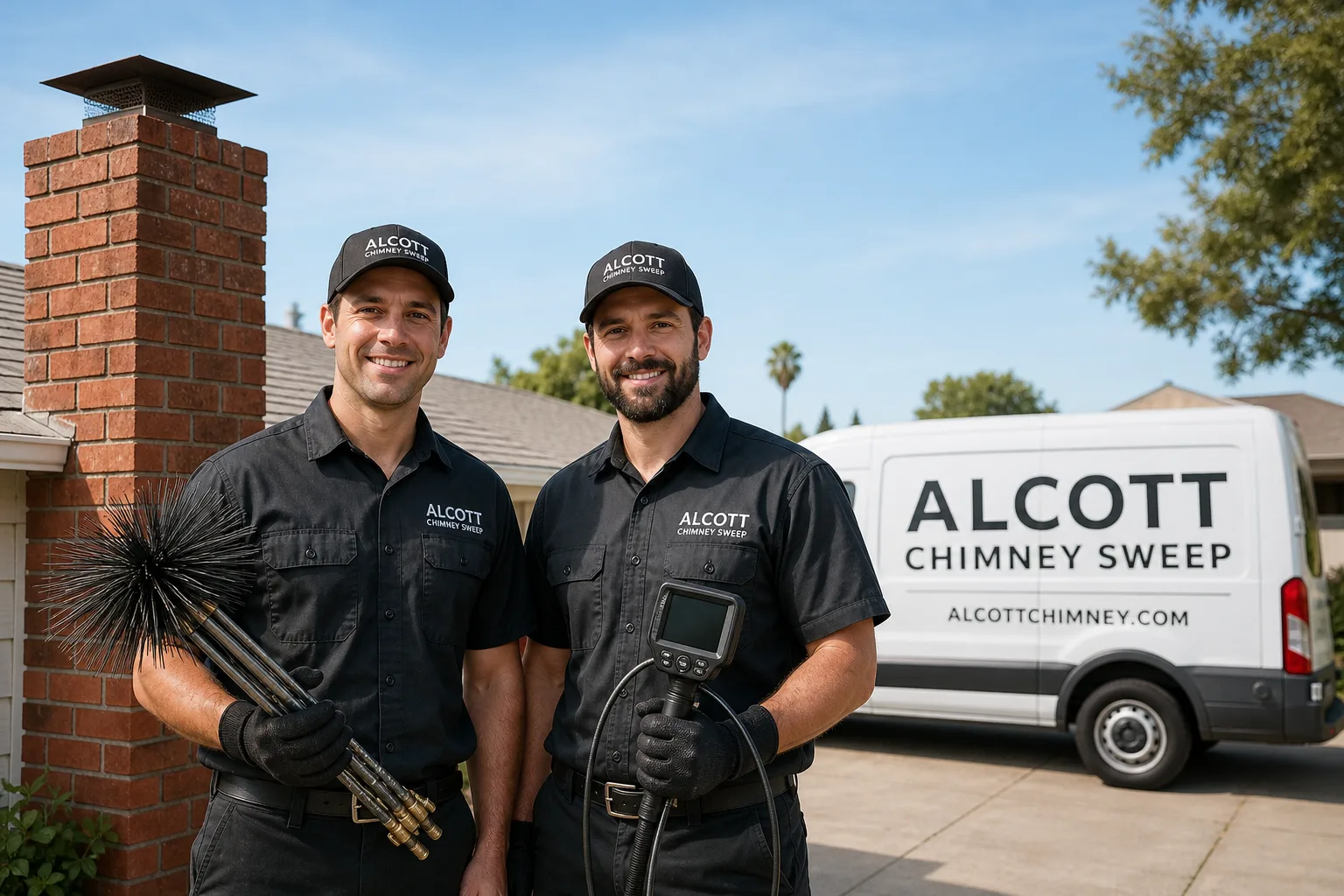
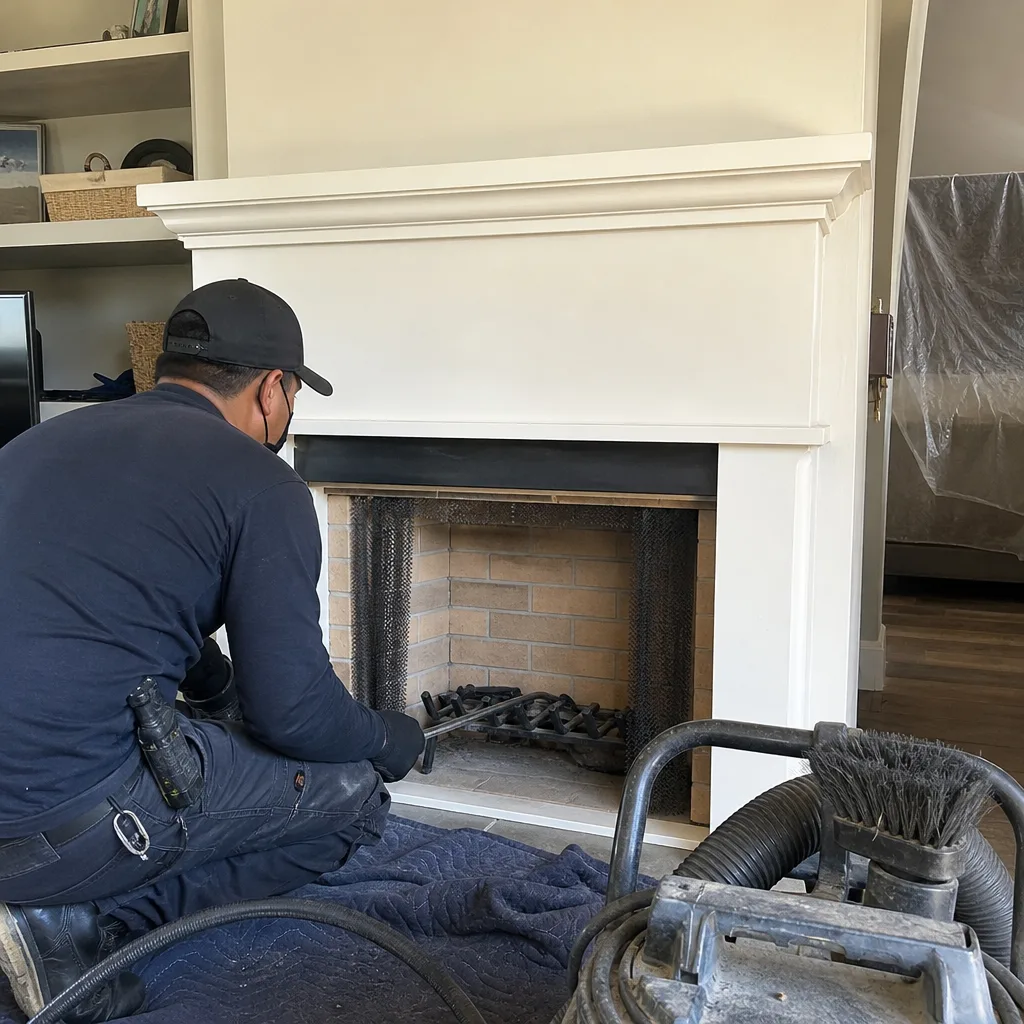
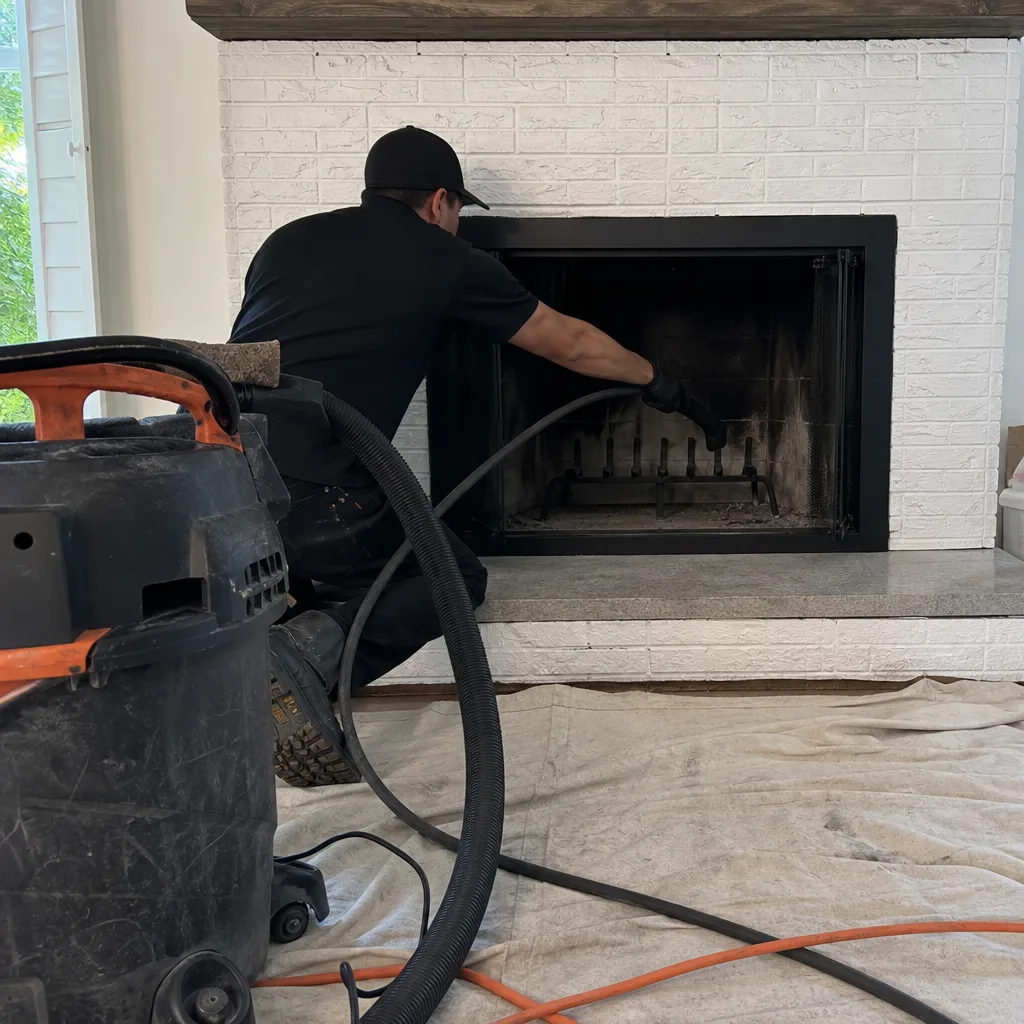
Level 1 sweep and inspection to the NFPA 211 annual standard - flue, crown, cap, and flashing checked and photographed
Chimney sweep logs do not sweep chimneys. They loosen some creosote - which then falls where a brush and vacuum still have to collect it.
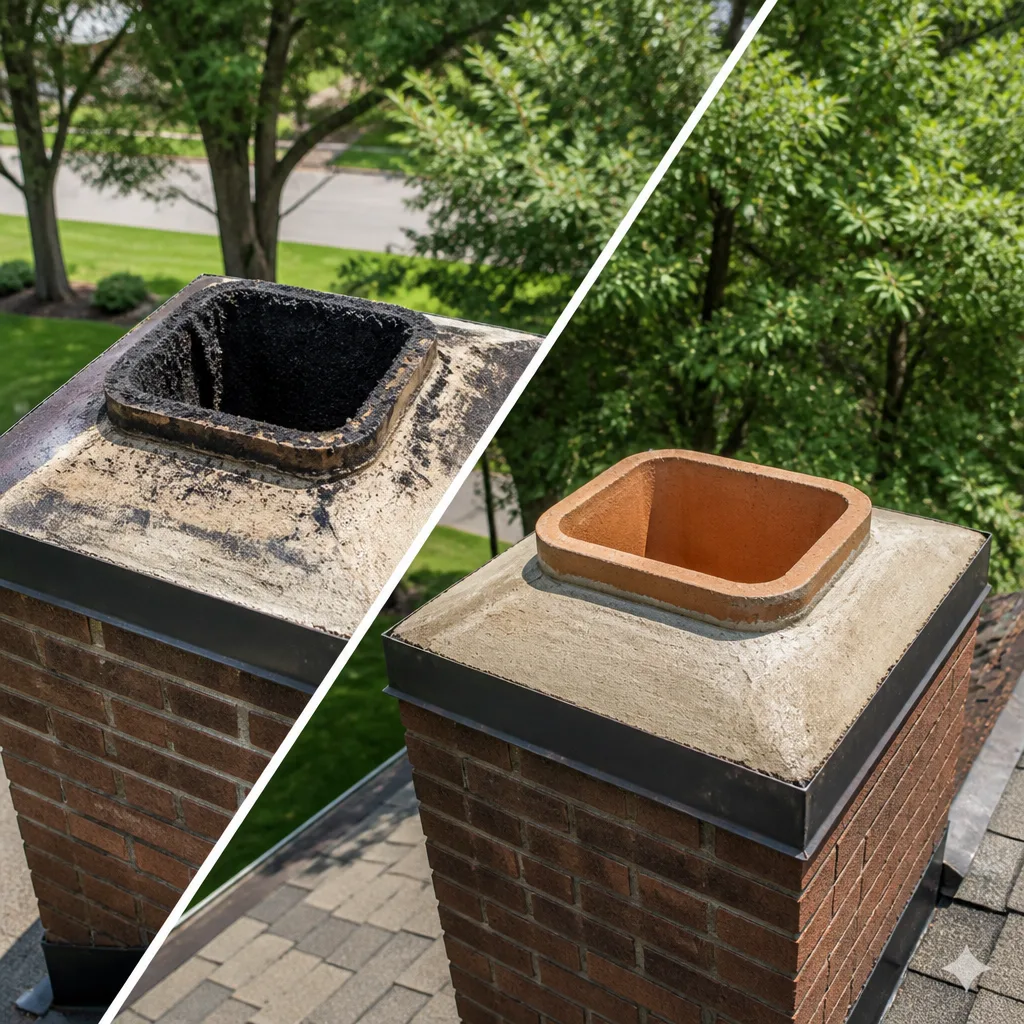
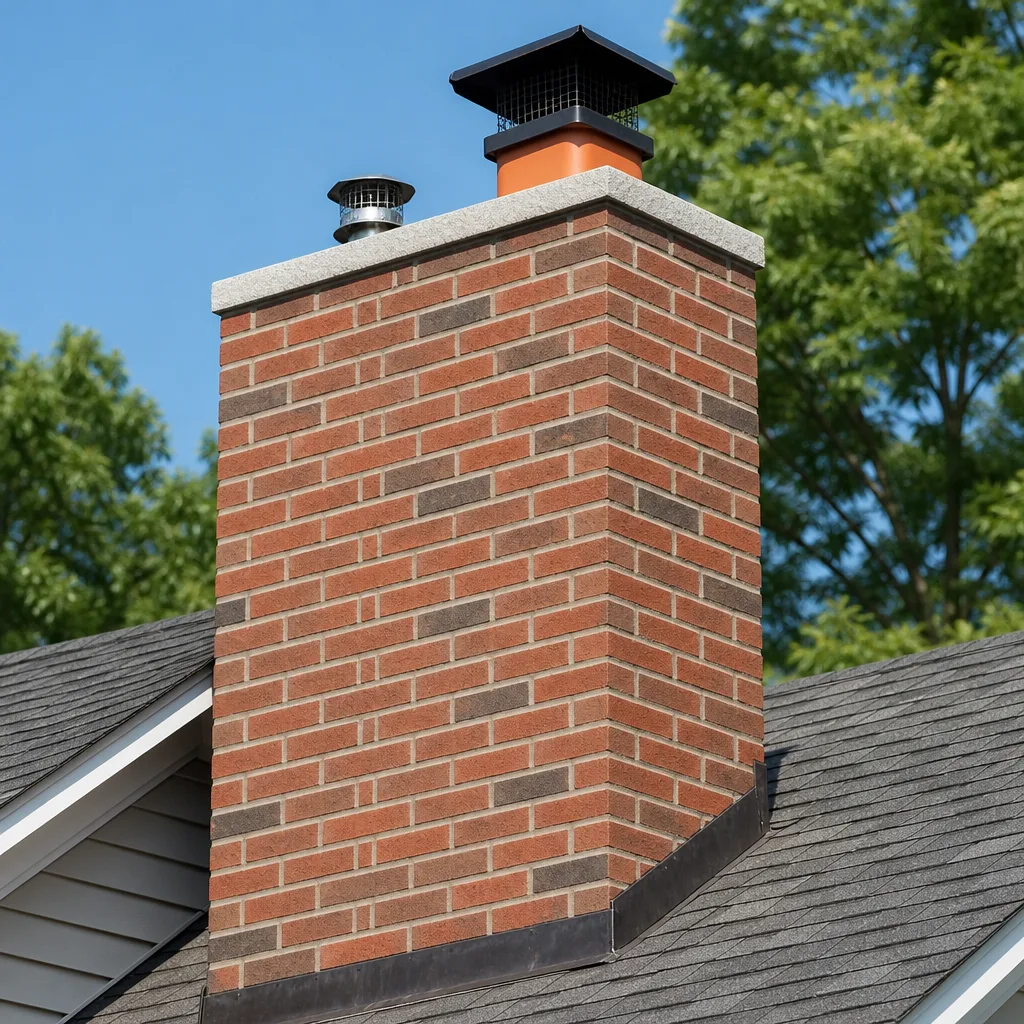
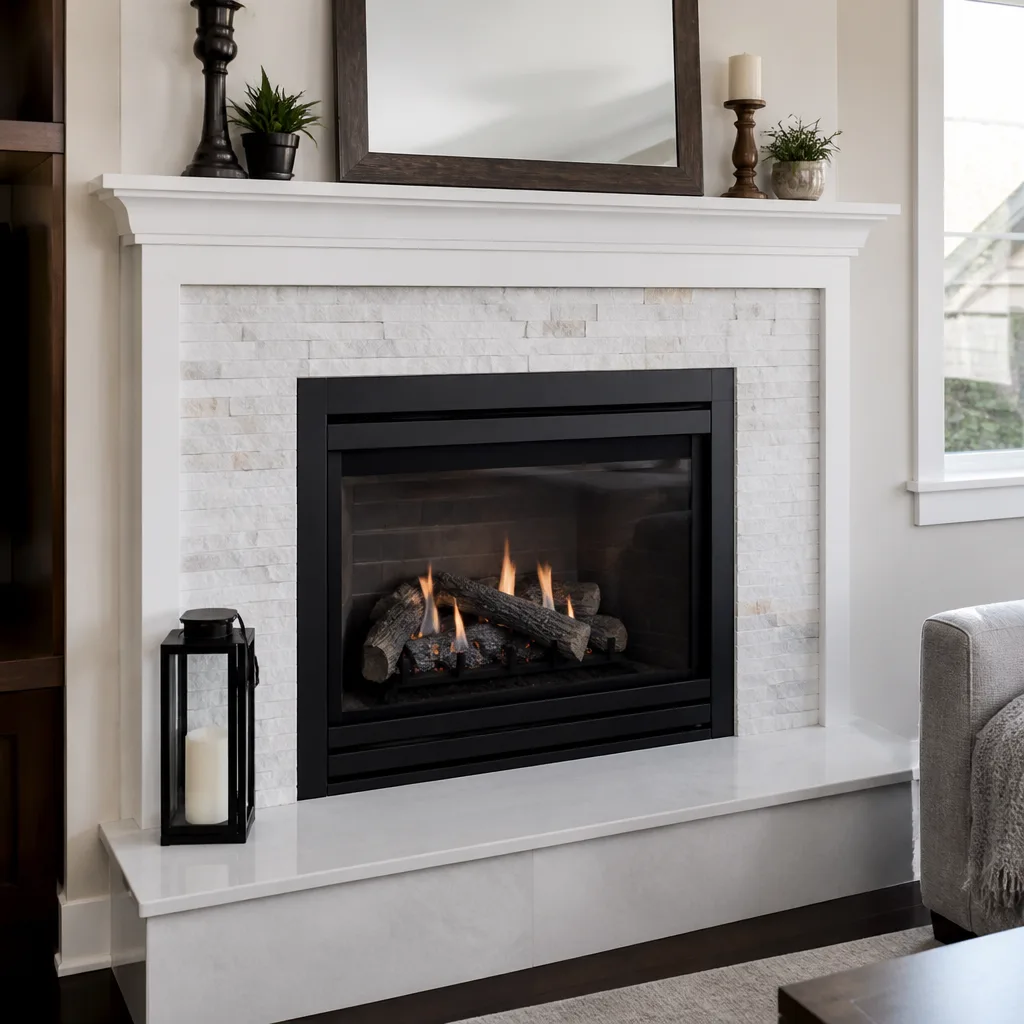
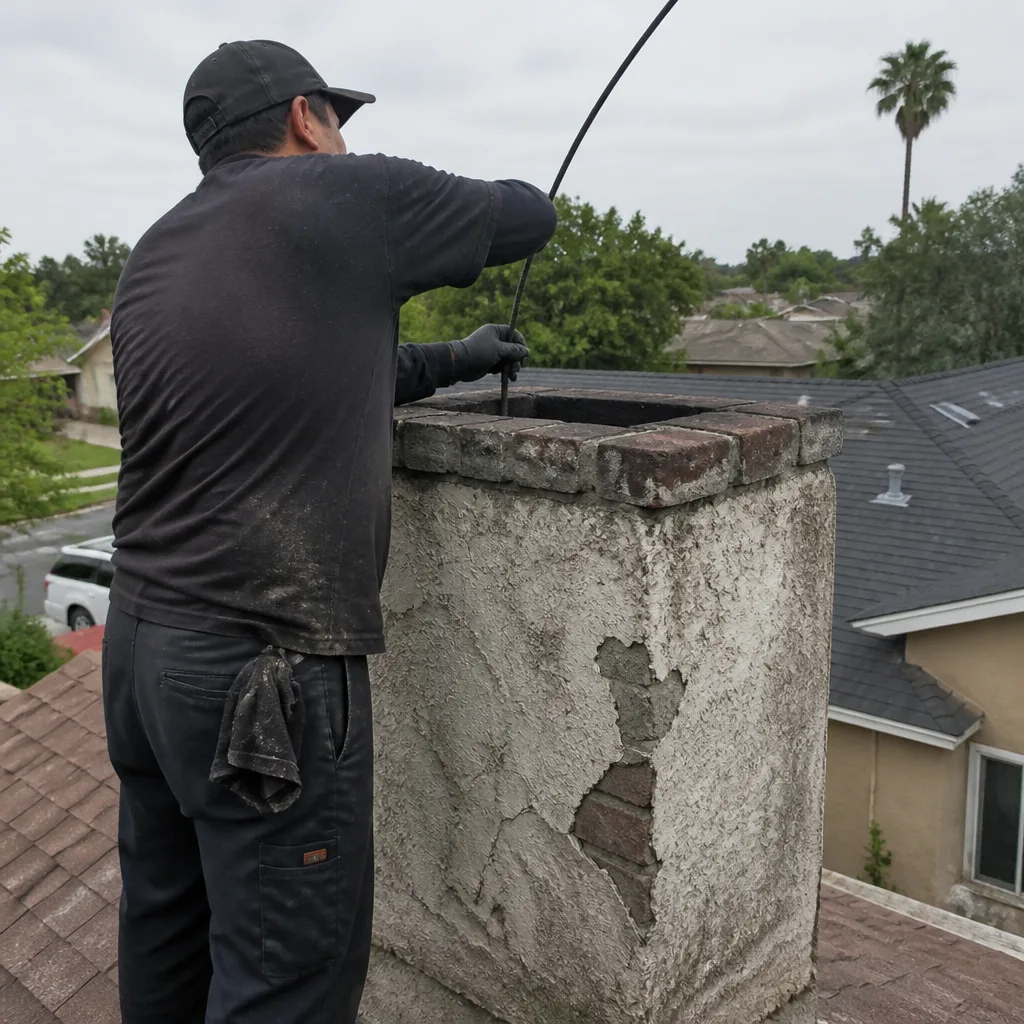 Before
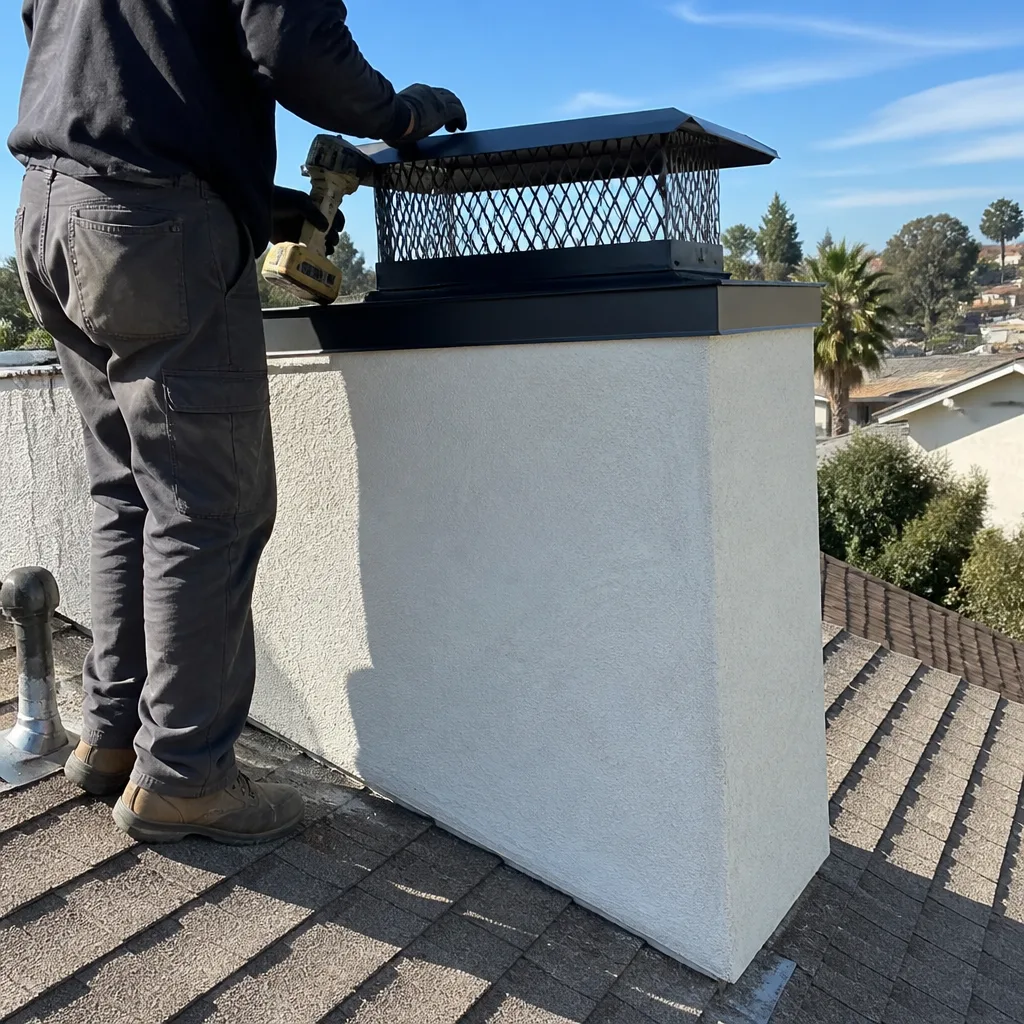 After
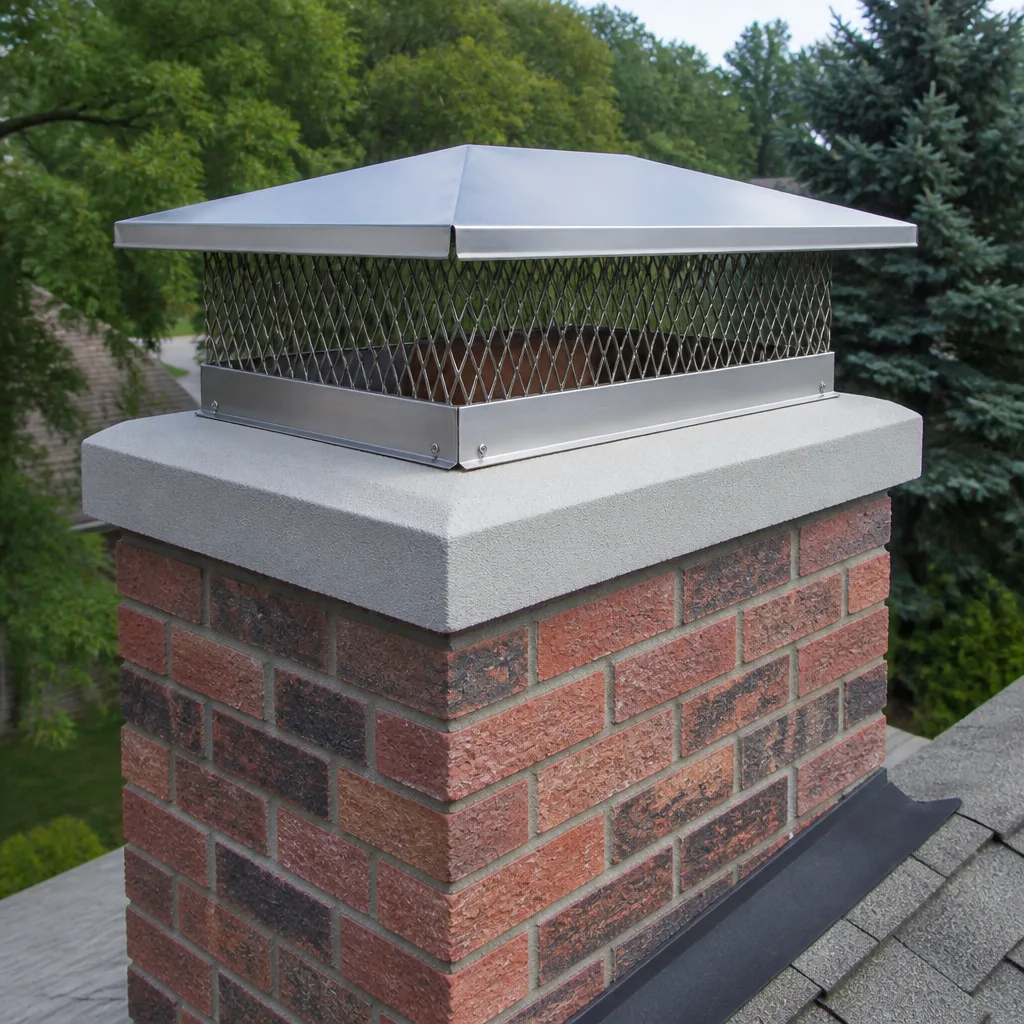
After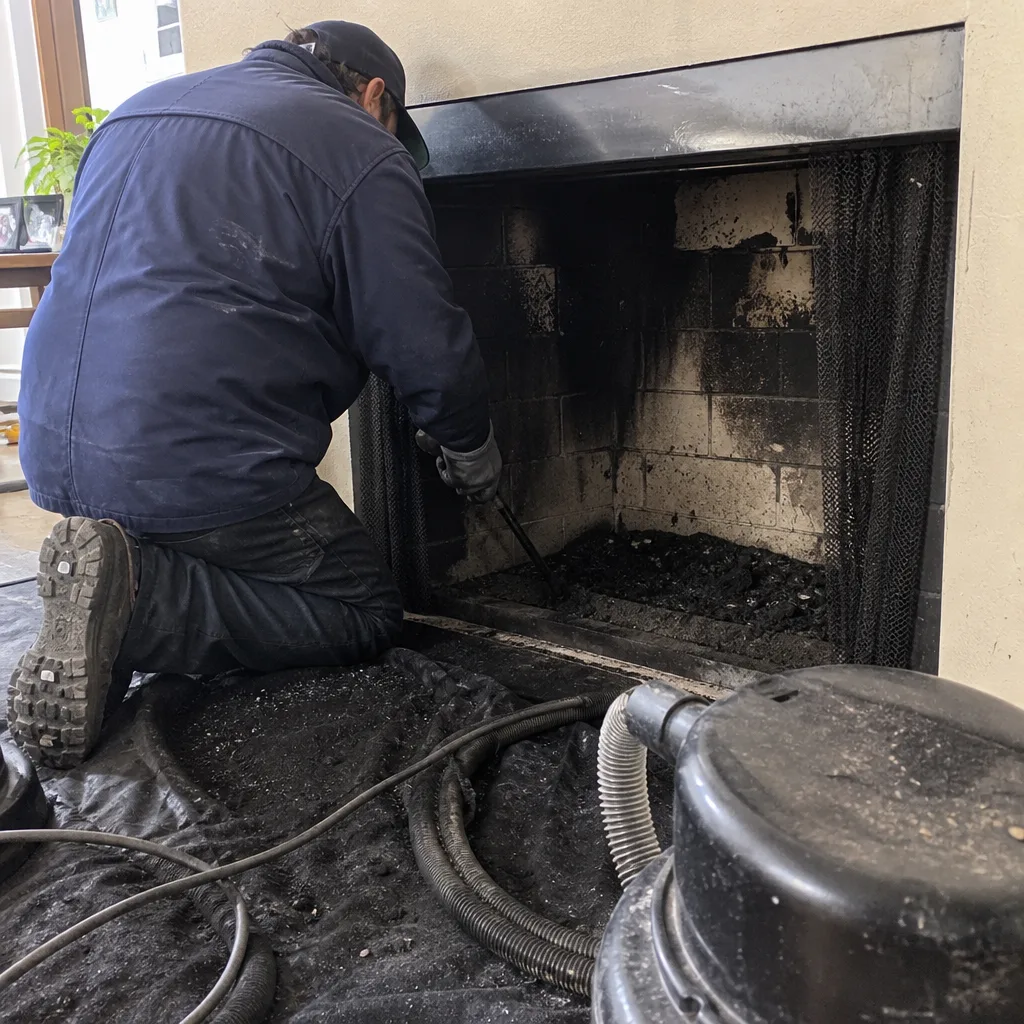 Before
 After
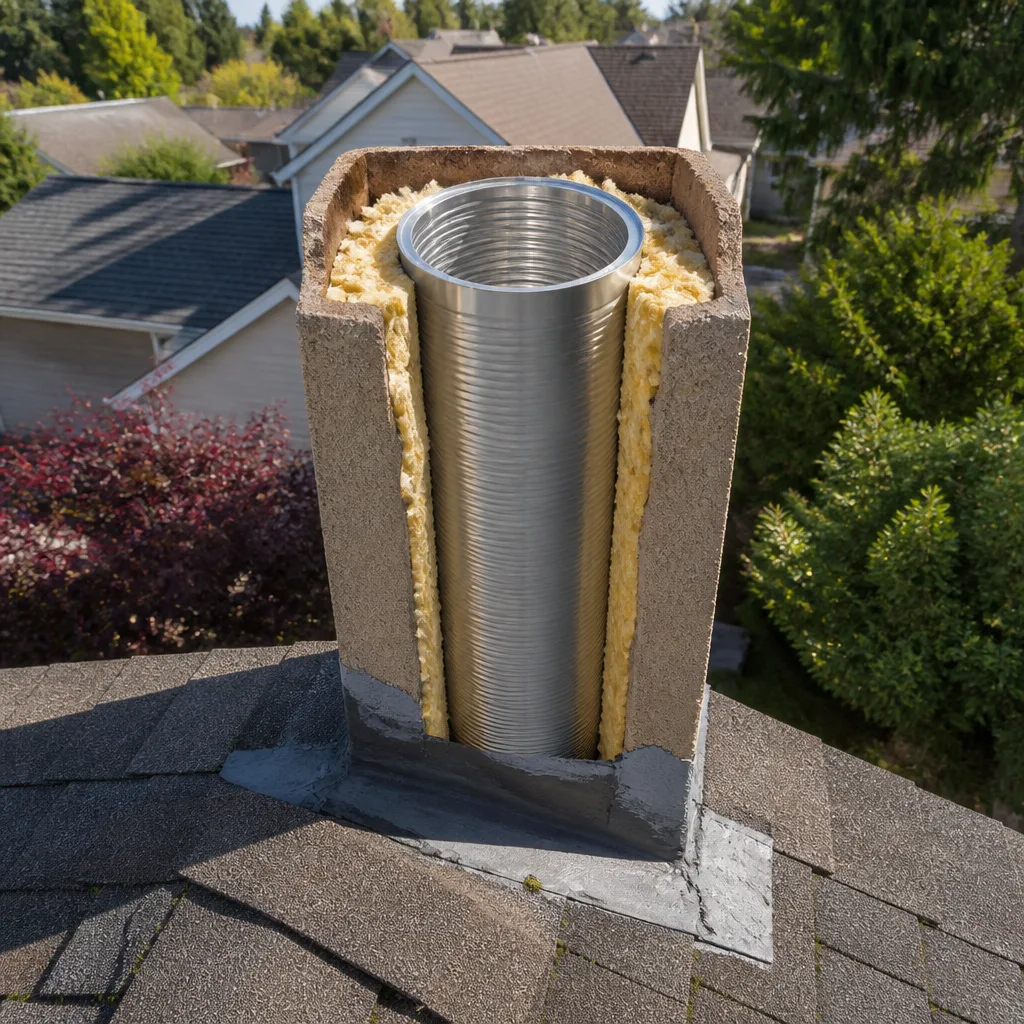
After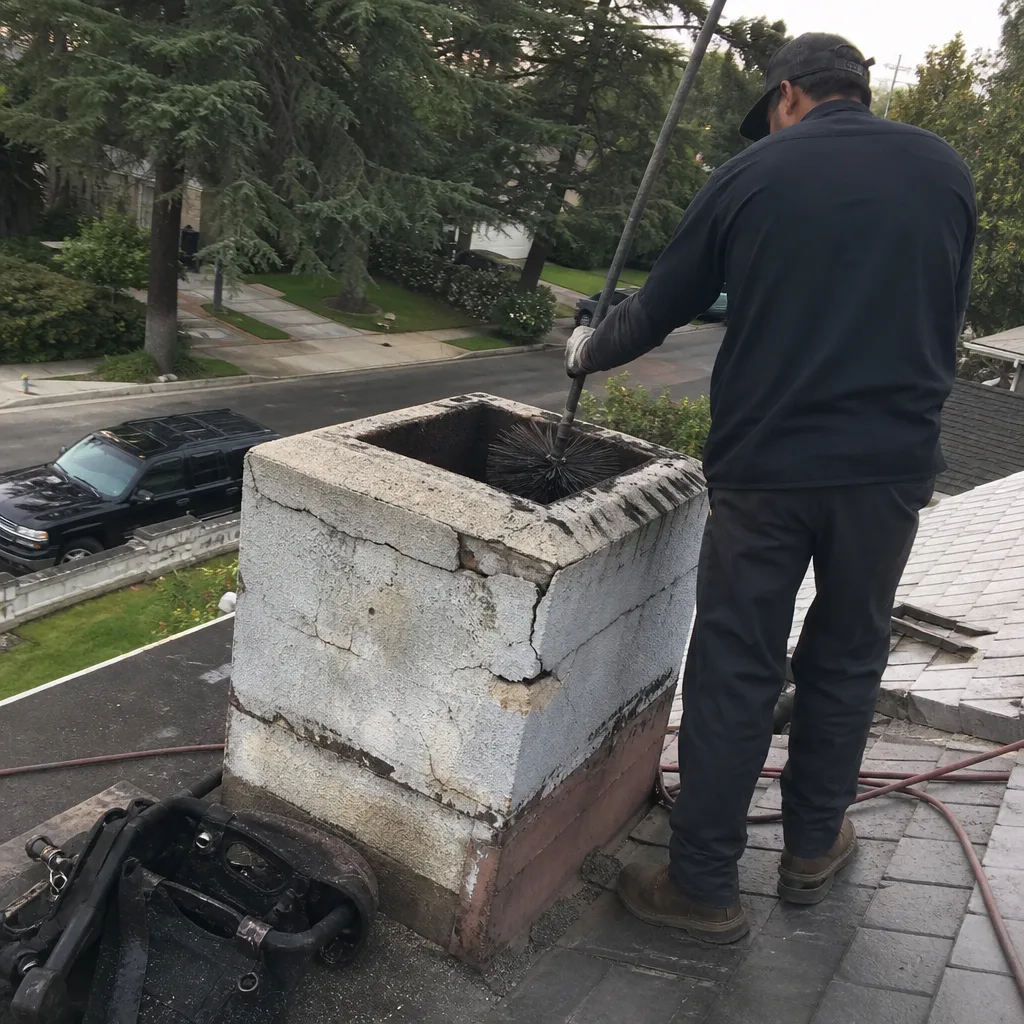 Before
 After
AfterCarbon Monoxide Alarm Going Off Near the Fireplace
If your carbon monoxide alarm is sounding near a fireplace, treat it as a real emergency first. Get everyone – people and pets – out of the house, leave the door open on your way out, and call 911 or your gas utility before you do anything else. Once the fire department clears the space, the next call is to find out why it happened – and a chimney inspection is almost always where that answer lives.
What’s Happening
A carbon monoxide alarm near a fireplace is almost always detecting a venting failure – combustion gases that should be going up and out of your home are spilling back into your living space instead. The most common cause is a blockage or deterioration somewhere in the flue system, and in most cases a chimney inspection will pinpoint exactly where.
Carbon monoxide is colorless and odorless, which is why the alarm exists – you cannot detect it any other way. When a fireplace or gas insert is running and CO is leaking into the room, it means the chimney or vent system isn’t doing its job: drawing combustion byproducts up and away from the interior. That failure can be a clogged flue, a cracked liner, a failed seal around a gas insert, a stuck damper, or a bird nest that landed in the wrong place last spring. The alarm doesn’t tell you which one it is. A camera inspection does.
Why It Happens
Blocked or Obstructed Flue
Creosote buildup, animal nests, leaf debris, and collapsed liner sections are all common flue obstructions. When the flue is partially or fully blocked, combustion gases have nowhere to go and they push back into the room. If you look up through the firebox and can’t see any daylight at the top of the flue – or if you notice a faint smoky or sulfur smell even when the fire is small – an obstruction is a strong possibility.
Cracked or Deteriorated Flue Liner
Clay tile liners develop cracks over time from thermal cycling – the repeated expansion and contraction that happens every time a fire burns hot and then cools. A cracked liner allows flue gases to leak through the chimney structure and find their way into interior spaces rather than venting to the outside. You generally can’t see liner cracks from the firebox; they show up on a camera inspection, which is exactly why that’s the diagnostic starting point.
Failed Seal or Improper Venting on a Gas Insert or Log Set
Gas fireplaces and gas log inserts vent combustion gases through a dedicated flue or direct-vent system. If the connection between the appliance and the flue has worked loose, corroded, or was never properly sealed to begin with, CO can leak at the joint before it even reaches the liner. A visual check of the insert surround sometimes reveals gaps or discoloration around the seam, but the connection inside the chase isn’t visible without a technician opening the unit.
Stuck, Damaged, or Incorrectly Sized Damper
A damper that’s corroded shut, warped, or closing on its own due to a broken plate allows exhaust gases to back-draft when the fireplace is in use. If you’ve noticed that your fires smoke into the room more than they used to, or if the damper handle feels stiff or doesn’t move smoothly, the damper is worth checking as part of any inspection. A damper that’s working correctly should open fully and stay open while a fire is burning.
What to Do Right Now
- Get out first, then figure out why. If the alarm is sounding now, evacuate everyone including pets, leave the front door open as you go, and call 911. Do not go back inside to investigate. Let the fire department verify the space is safe before re-entering.
- Stop using the fireplace or gas appliance. Do not restart the fire, relight the pilot, or run the gas insert until a technician has identified and fixed the cause. A second exposure is preventable.
- Note what was running and for how long. When the technician arrives, they’ll want to know: was it a wood fire, a gas log set, a gas insert? How long had it been burning? Was the damper open? That information narrows the diagnosis before the camera even goes in.
- Photograph anything visible around the firebox. Gaps in the insert surround, discoloration on the damper plate, or crumbling mortar around the firebox opening are all worth capturing on your phone. You don’t need to touch anything – just photograph it from where you’re standing.
- Do not attempt to inspect the liner, flue, or gas connections yourself. A camera inspection of a live flue requires equipment and training. Gas connections inside a firebox carry real risk if disturbed by someone unfamiliar with the system. Stop at photographs and leave the rest for the technician.
How We Fix It
When your local Alcott Chimney Sweep team arrives, the first step is a Level 2 chimney inspection – a camera goes the full length of the flue to show exactly what’s happening inside. That camera footage is the evidence, not a guess. Before a single repair is discussed, you’ll receive a written price for whatever work is actually needed. That’s not a policy we bend – it’s how every Alcott job works.
If the cause is buildup or a minor obstruction, a chimney sweep resolves it the same visit. If the liner is cracked or has gaps, we install a DuraFlex liner system or apply HeatShield resurfacing, depending on what the camera shows – both are professional trade materials specified for this kind of repair. Gas insert venting failures are addressed as part of our gas fireplace repair service.
Every repair comes with a written guarantee and is covered by the 365-Day Done Right Promise. If the repair fails within a year, the second visit is free. Most diagnostic and repair visits wrap up within two to three hours depending on what’s found.
Frequently Asked Questions
Treat it as real until the fire department tells you otherwise – that’s the only safe assumption. CO alarms do occasionally trigger from low-level, intermittent gas seepage that isn’t immediately life-threatening, but there is no way to know that without air quality measurement, which the fire department can do on arrival. A fireplace-related trigger is not a nuisance alarm. It means combustion gas is reaching the living space, which is a venting failure by definition. Call (336) 863-3889 once the space is cleared and you’re ready to schedule the inspection.
It needs to be fixed before you use the fireplace again – no exceptions. Using a fireplace or gas appliance with an unresolved venting failure repeats the exact conditions that triggered the alarm. This isn’t a “monitor it and see” situation. Call (336) 863-3889 and your local Alcott team will get eyes on it.
We don’t post a flat price for this because what the camera finds determines what comes next, and the repair scope varies. What we do guarantee is that you’ll have a written price in hand before any work begins – not an estimate that changes when the bill arrives, but a fixed price you agree to first. Call (336) 863-3889 and we’ll tell you what to expect for your specific situation.
Your local Alcott Chimney Sweep team makes every effort to schedule promptly, and our phones are answered by a live person around the clock – so you’re never leaving a voicemail at 11 p.m. wondering if anyone heard you. Call (336) 863-3889 and we’ll tell you exactly when we can get there.
Get It Fixed
Your local Alcott Chimney Sweep team is ready when you are. Call (336) 863-3889 any time – a live person answers every call, day or night. You can also book online. A written price before any work starts, a background-checked technician sent to you by name and photo – that’s how every Alcott visit works.
Written by Ruben Castellano, Owner at Alcott Chimney Sweep, part of the Threshold Group family of home-service companies since 2002.
What Our Customers Say
"Annual inspection and sweep. He used a camera to check the liner and found a cracked tile I had no idea about. Gave me a written estimate and did not push."
- Janet W."Water was leaking around the flashing. They resealed it and installed a new crown coating. Dry through two heavy rains since."
- Douglas P."Fast and tidy. Fireplace draws properly again."
- Mina K.