
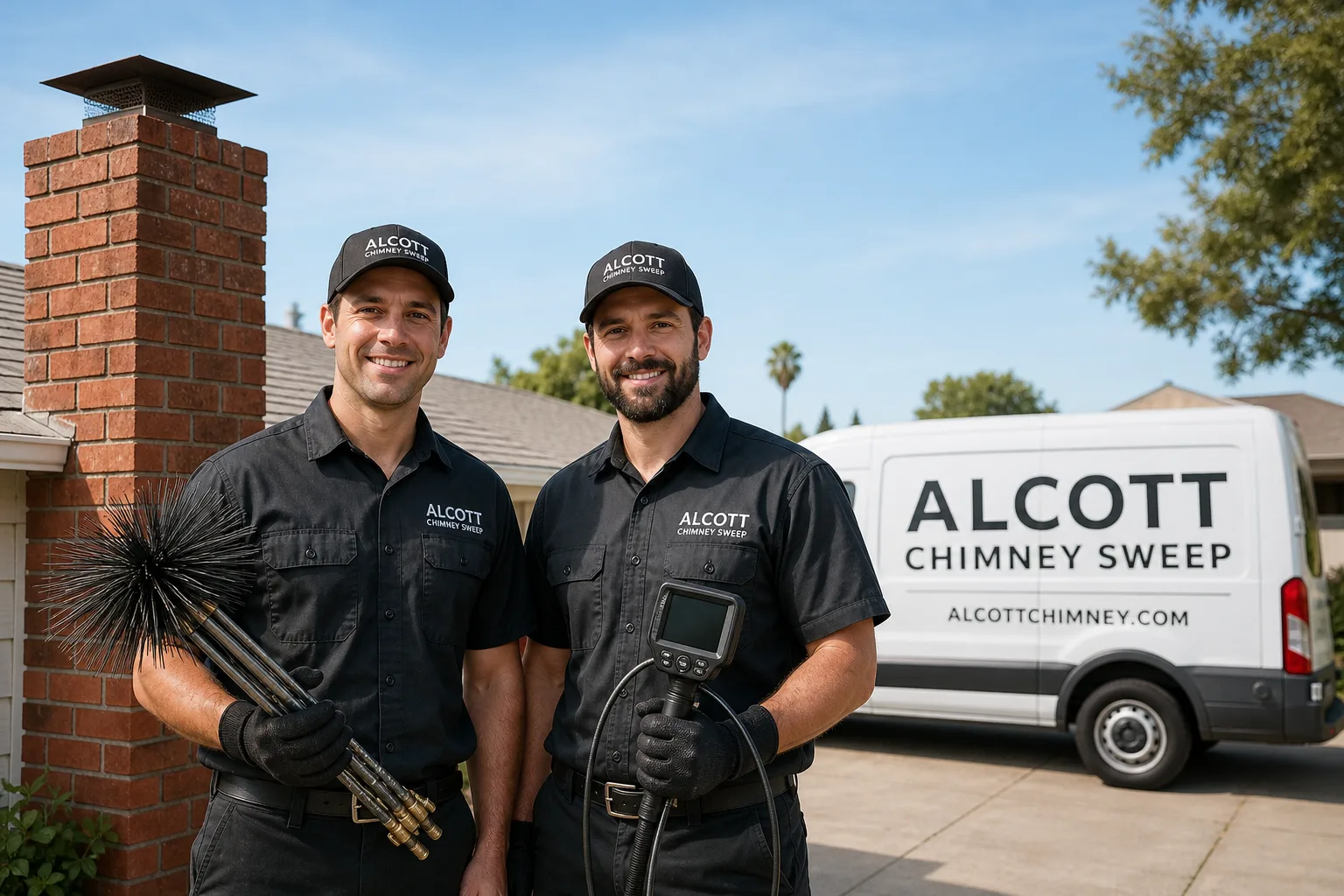
Level 1 sweep and inspection to the NFPA 211 annual standard - flue, crown, cap, and flashing checked and photographed
Chimney sweep logs do not sweep chimneys. They loosen some creosote - which then falls where a brush and vacuum still have to collect it.
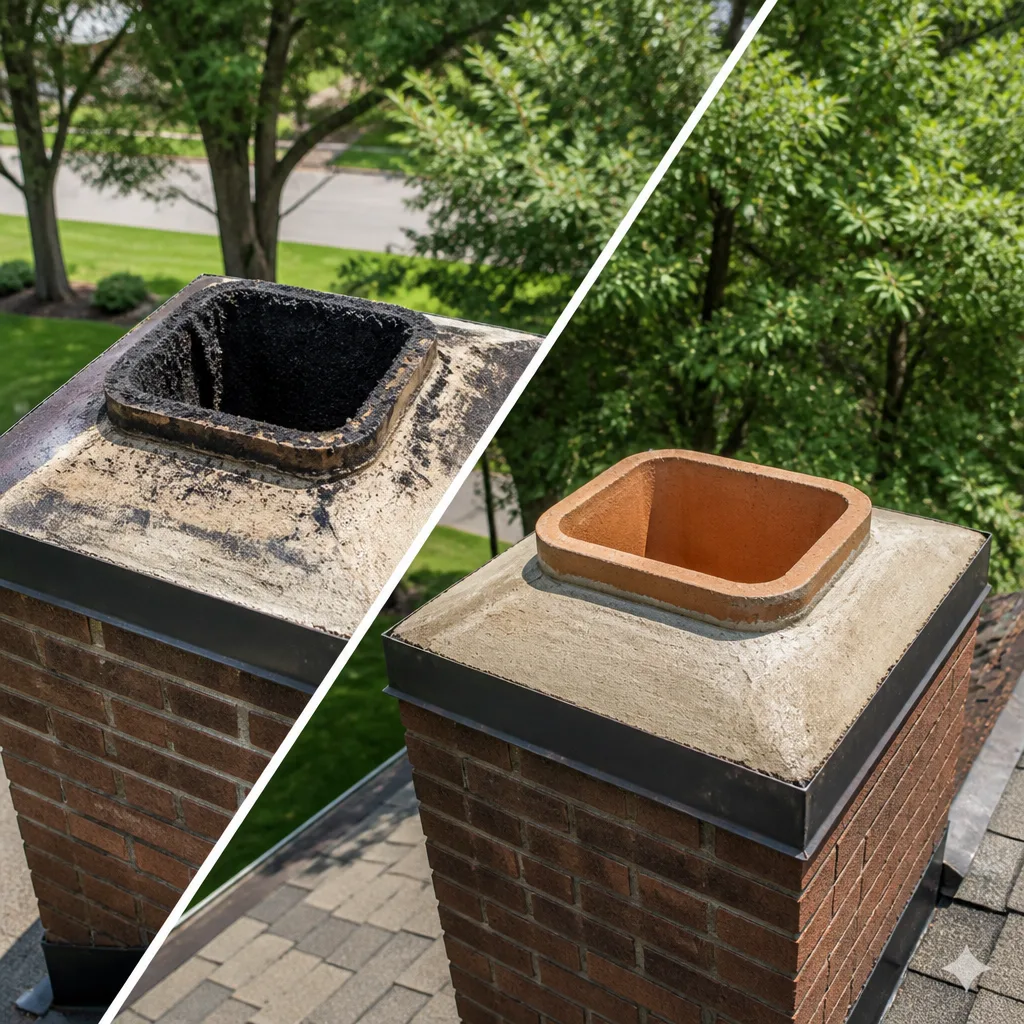
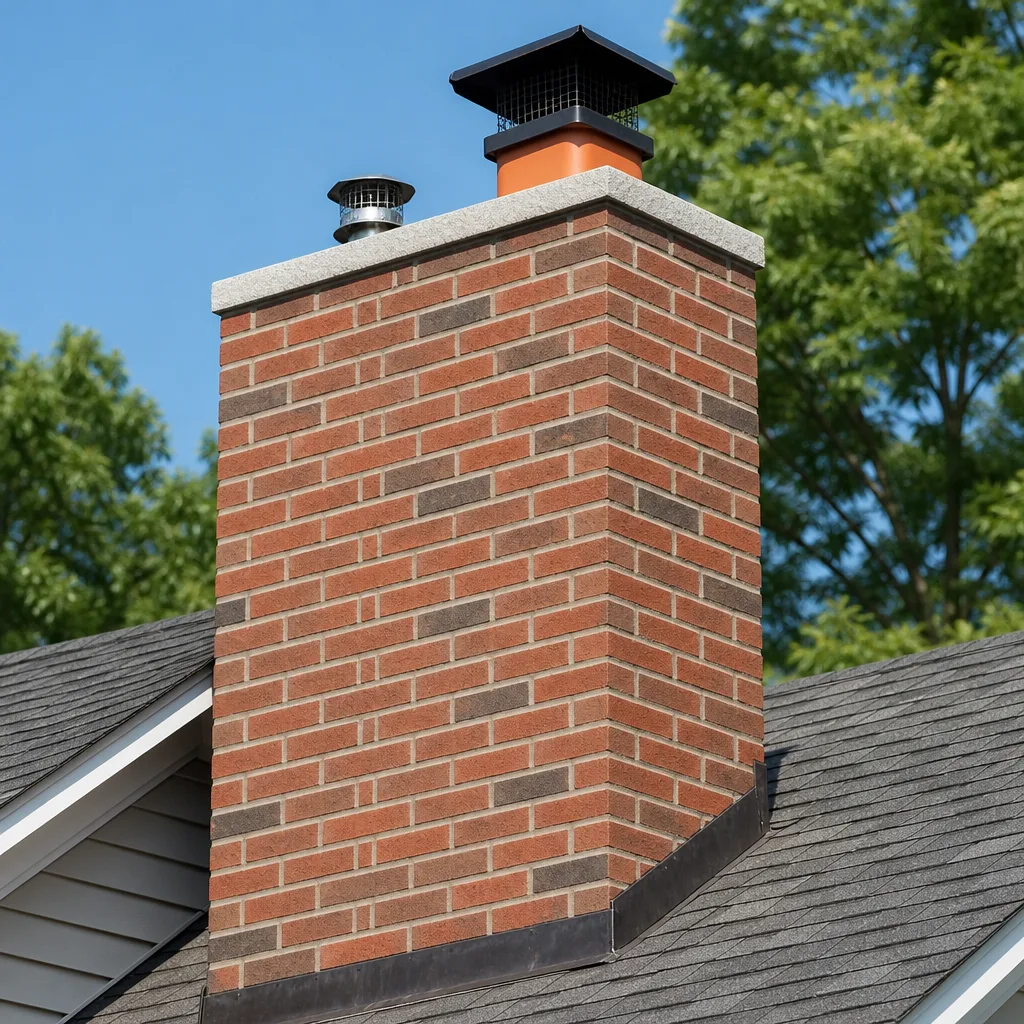
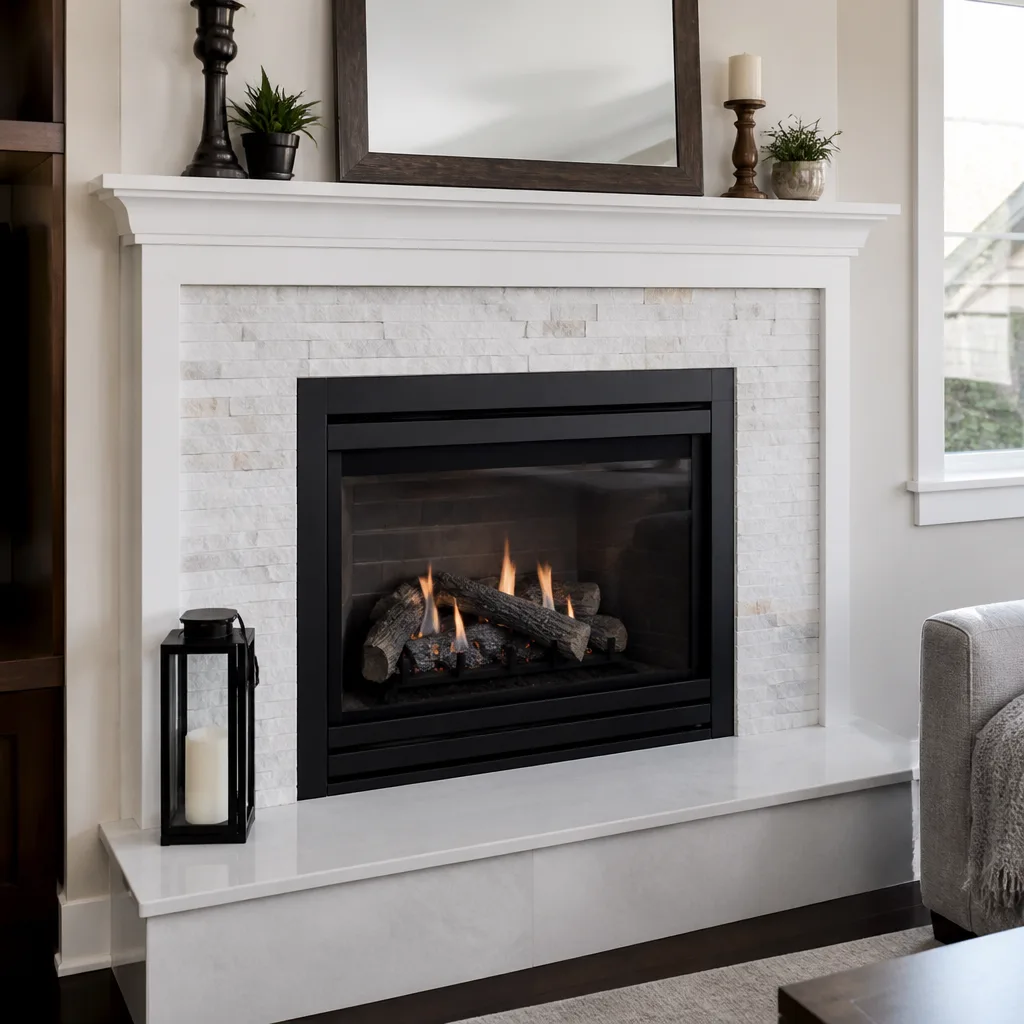
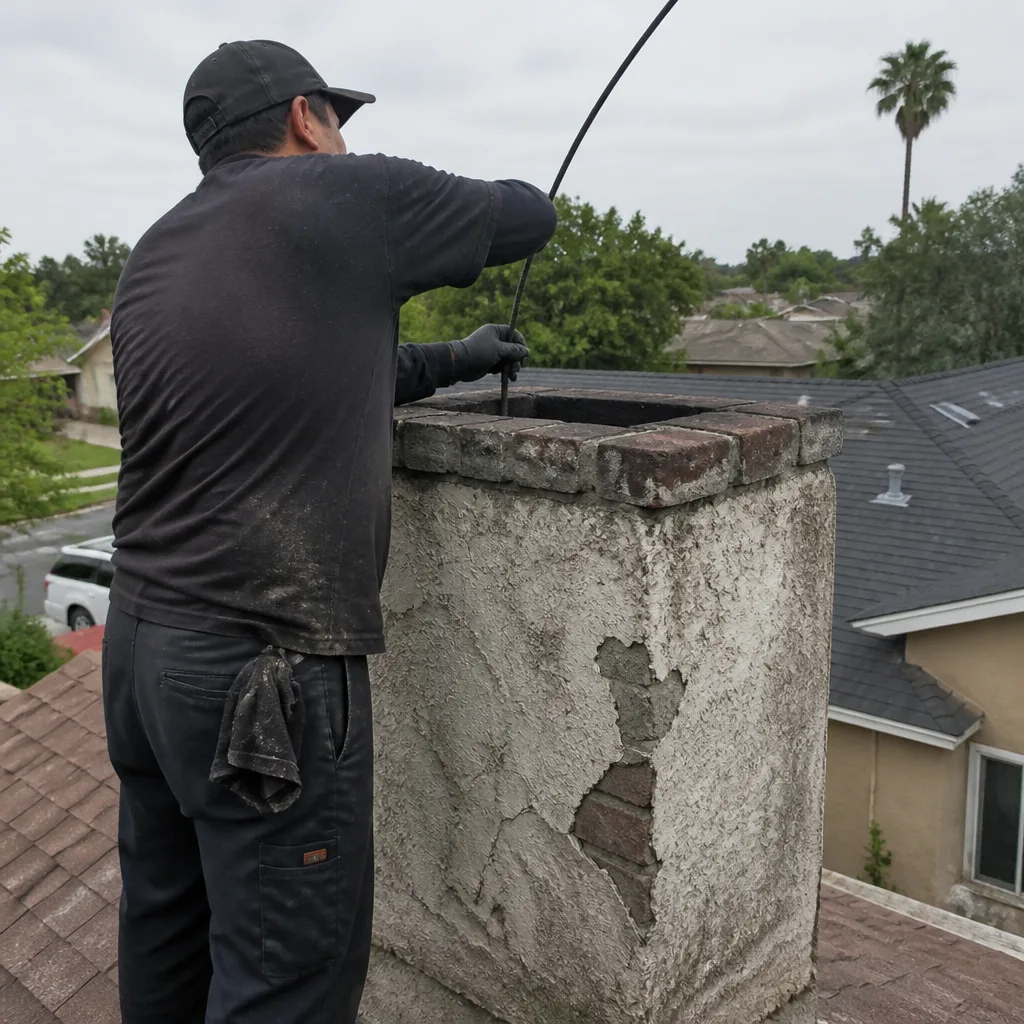 Before
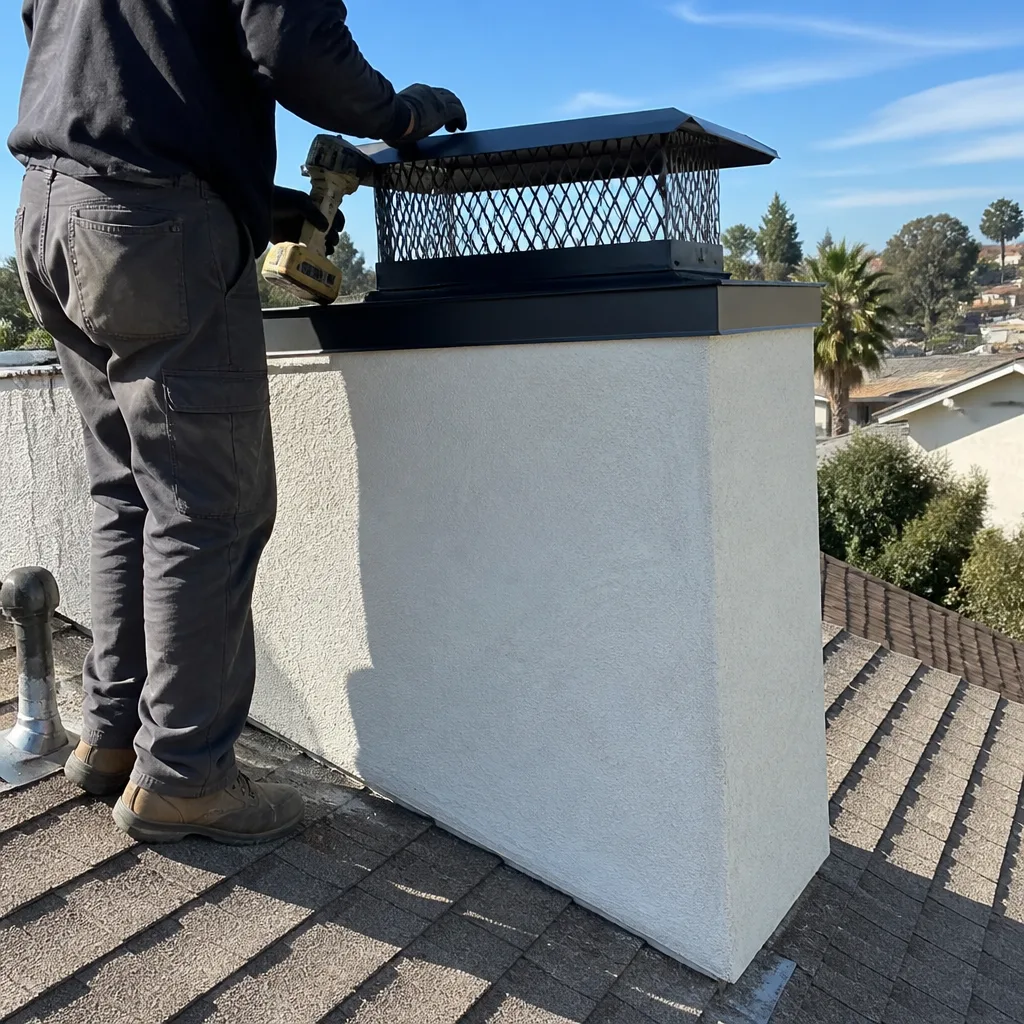 After
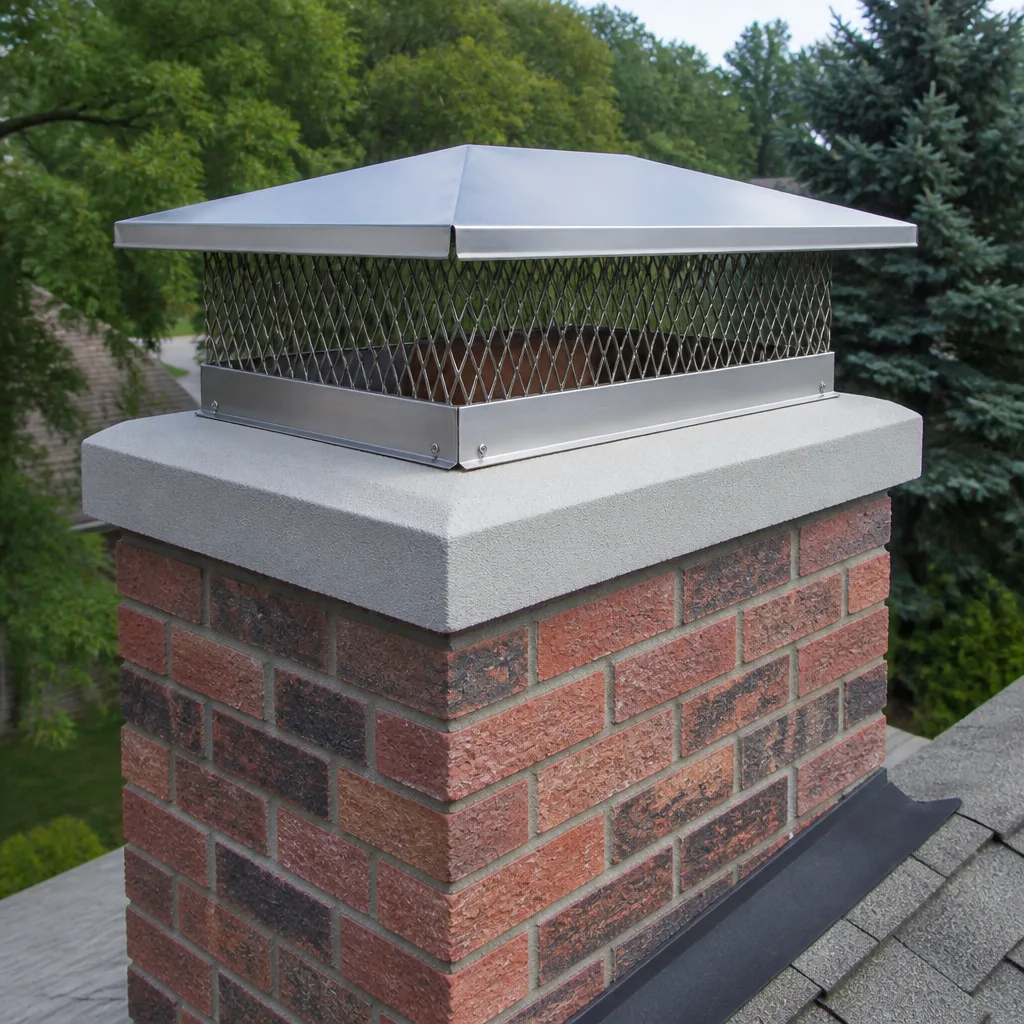
After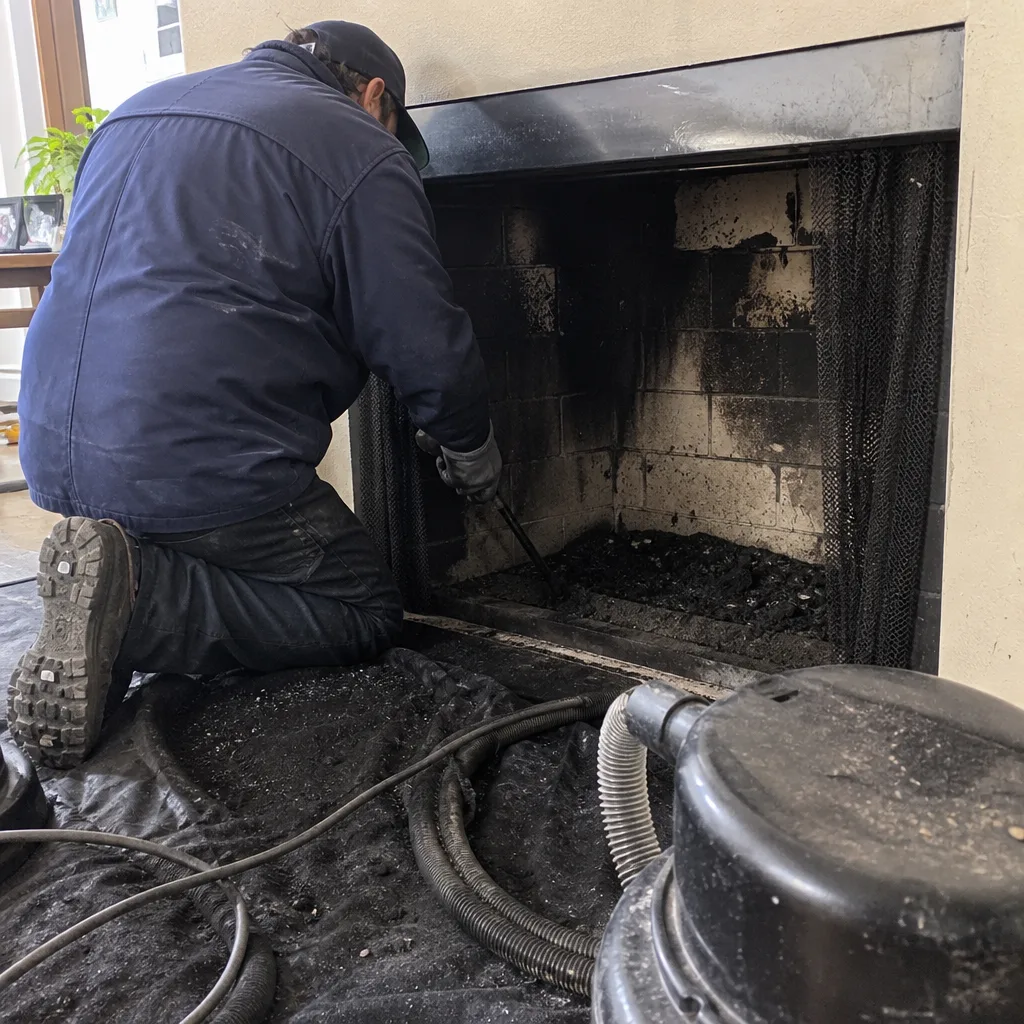 Before
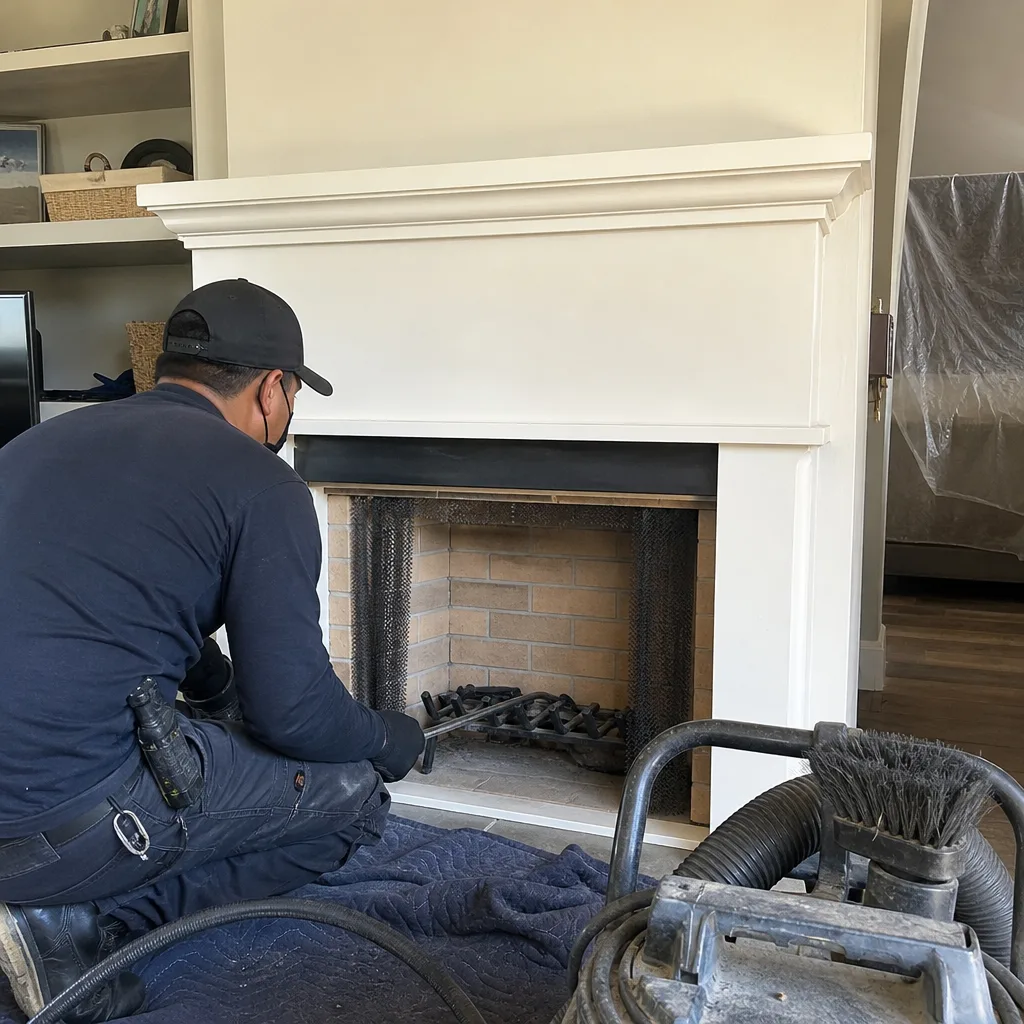 After
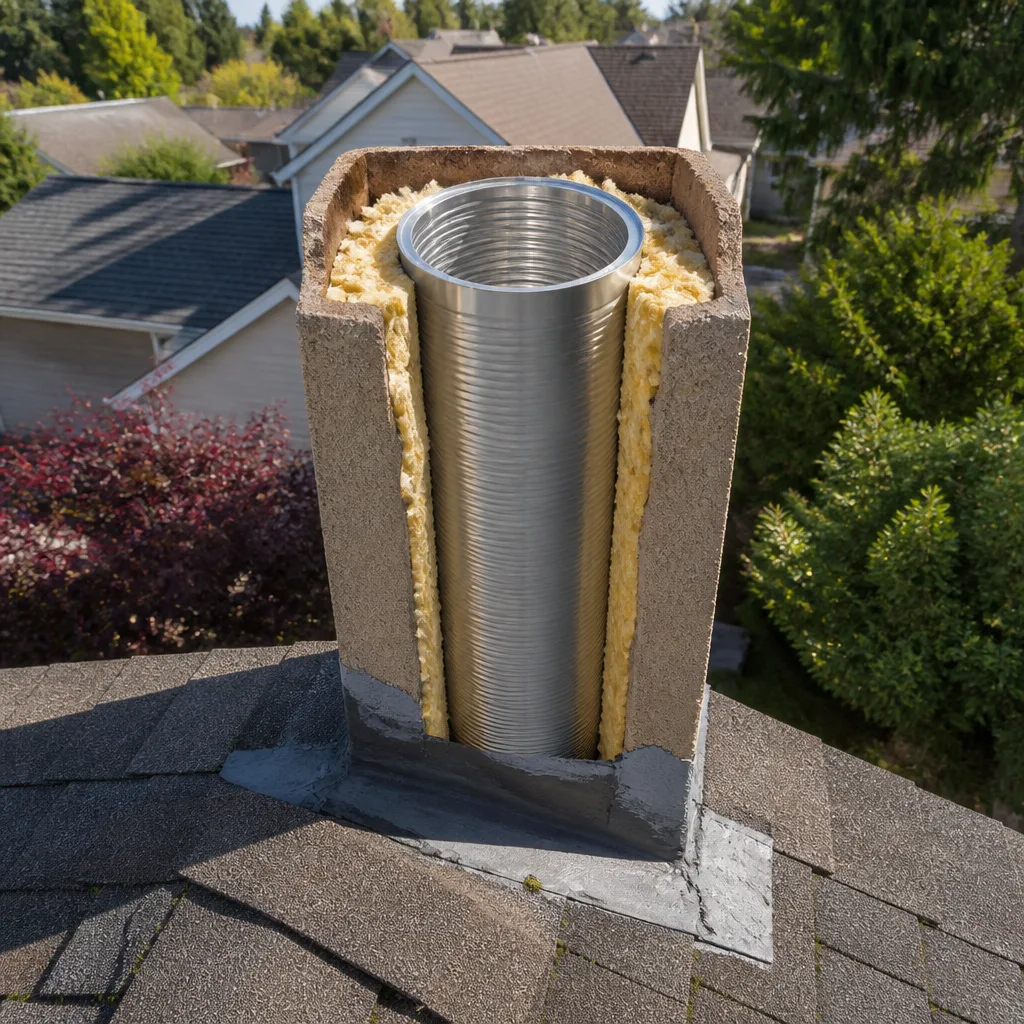
After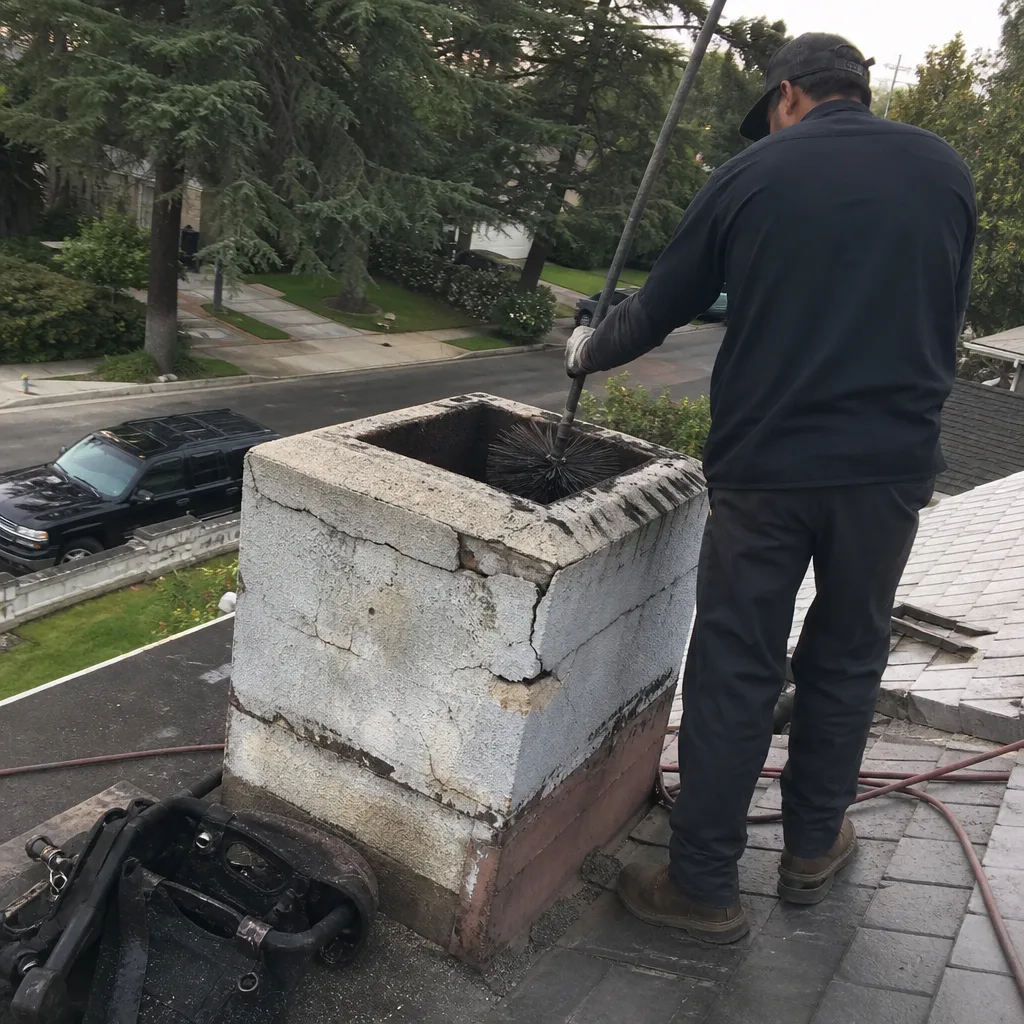 Before
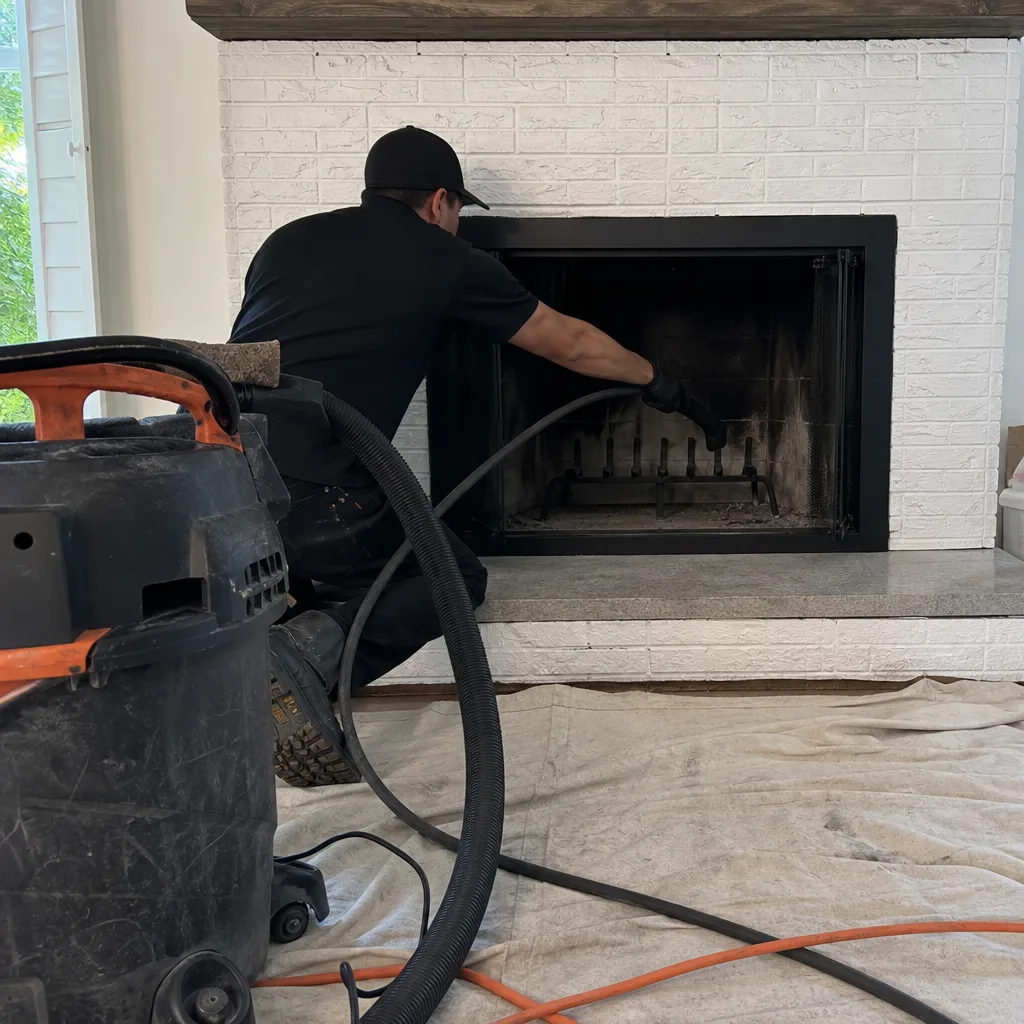 After
AfterFast, Reliable Chimney Inspection Across Marco Island
A chimney inspection on Marco Island typically runs $149 – $389 depending on the level, and most can be scheduled within a few business days. That’s the short answer. The longer answer matters more here than almost anywhere else in Southwest Florida, because Marco Island’s canal-grid housing means one masonry stack often serves multiple appliances, sometimes across property lines. If your fireplace hasn’t been checked since you closed, or if you smell something odd when the heater kicks on, the problem may not be in your firebox at all. It could be coming from the flue next door. Call (336) 863-3889 and we’ll tell you exactly what to expect before we arrive.
We know the streets you live on because we work them every week. Old Marco, Tigertail Beach, the canal-front ranches off Collier Boulevard between South Barfield and Winterberry. We know the 1970s concrete-block-stucco construction, the salt-pitted chase covers, the dampers that haven’t moved since the Carter administration. We also know that a chimney inspection here is rarely routine. The marine air, the seasonal vacancies, the attached living situations with shared stacks, they all combine into failure patterns a mainland tech may not recognize. That’s what this page is about.
Why Alcott Chimney Sweep Is Marco Island’s Preferred Chimney Inspection Company
Alcott Chimney Sweep has served homeowners since 2002 as part of the Threshold Group family. Our owner, Ruben Castellano, built the company on a simple idea: show people proof before asking for trust. Every technician who steps onto a Marco Island property has passed a background check and identity verification under the Threshold Standard. That isn’t an optional upgrade. It’s the baseline for every job, every address, every time. We send you the technician’s name and photo before the visit. When we knock on the door, the person standing there matches the photo on your phone and carries a photo ID badge. If they don’t, you don’t open the door. Simple.
Marco Island homeowners live with a very specific anxiety: it’s a quiet island, often with empty driveways on either side, and you’re being asked to let a stranger into your house to look at a fireplace you barely use. We get that. It’s why the identity verification exists. It’s why a live person answers our phone around the clock, not a voicemail queue. It’s why you’ll get a written price before any work starts, always, with no negotiation and no surprise line items at the end. Whether your inspection finds nothing or finds everything, the price you approve is the price you pay.
Our Chimney Inspection team carries professional trade materials like DuraFlex, HeatShield, Famco, and Copperfield, the same brands chimney professionals specify, not whatever was on sale at a big-box store. And every repair we recommend is backed by a written guarantee under our 365-Day Done Right Promise. That means exactly what it sounds like: if the repair fails within a year, the second visit is free. We don’t charge you to come back and fix our own work. That’s the whole point.
Chimney Flue Inspection in Marco Island
A chimney flue inspection in Marco Island is the part of the job that actually answers the question you’re really asking: is the pipe between my fire and the outside world still doing its job. Because so many of the island’s 1960s and 1970s Mackle Brothers-era homes were built with original masonry flues, and because salt-laden air has been attacking those flues for fifty or sixty years, the answer is often complicated. We run a camera down the flue and look at every inch: the tile liner for cracks and gaps, the smoke chamber for crumbled mortar, the top of the chimney for the cap and crown.
A standard chimney flue inspection in Marco Island runs $149 – $229 when paired with a sweep, and $189 – $289 as a standalone Level 1 inspection. If you’re seeing moisture streaks on the firebox wall, smelling something musty when the AC runs, or noticing salt crystal deposits on the brick face, you need a camera inspection. We’ll show you the footage. You don’t take our word for anything. Ruben Castellano’s rule is simple: no recommendation without visual evidence the customer can see for themselves.
Camera Inspection for Finding What You Can’t See
Racoon nests, chimney swift debris, a rusted damper frozen half-open, a cracked flue tile forty feet up. None of that is visible from the hearth, and none of it announces itself. We run a camera from the top down and the bottom up, and we record what we find. If we tell you a flue needs repair, we’ll show you the photograph that proves it.
Shared Flue and Adjacent Stack Verification
On Marco Island, this step does something a camera alone can’t. Because canal-grid blocks put attached and near-attached homes within feet of each other, we verify whether more than one appliance vents into the masonry column you’re looking at. If a neighbor’s water heater ties into the same stack, the camera confirms separation or finds the crossover. A Level 1 inspection alone won’t catch this. Our Level 2 inspection exists for exactly this scenario.
Chimney Fire in Marco Island
A chimney fire in Marco Island usually starts the same way everywhere Chicago, Seattle, St. Louis: creosote ignition. The tar-like residue that builds up inside a flue when wood doesn’t burn hot enough is extraordinarily combustible. Once it lights, it can reach 2,000°F in under a minute, cracking flue tiles, spreading to framing, and sometimes breaching the masonry wall entirely. What’s different here is the false sense of security. A fireplace that got used twice last winter feels harmless. It isn’t a creosote question if the flue has other problems.
But there’s a second Marco Island failure mode that looks like a chimney fire risk without being one. When a neighbor’s appliance backdrafts into your shared or adjacent flue, the exhaust is hot, oxygen-starved, and carrying combustion byproducts into your firebox and smoke chamber. It deposits soot and creosote-like residue on your side of the stack. It also smells like something is burning when nothing is. You need a professional to tell the difference before you light a match. A standard chimney inspection after a suspected chimney fire in Marco Island runs $189 – $389 depending on whether we pull the camera and run a full Level 2 protocol.
Creosote Buildup from Rare Burn Days
This surprises a lot of Marco Island homeowners. Firing a fireplace only eight or ten evenings a year doesn’t prevent creosote; in some ways it encourages it. Cold starts, short burns, wet or salt-misted firewood, insufficient draft in a warm chimney, all of it means the smoke cools before it exits and condenses onto the flue walls. A fireplace used rarely can build enough creosote in one season to become a fire hazard. Frequency isn’t the predictor. Combustion efficiency is.
Salt Air and the Chimney Cap
Marco Island’s Gulf-front exposure means airborne salt attacks every exterior metal component on your chimney, whether you burn fires or not. A steel chase cover that would last thirty years in Ohio can rust through in eight or ten here. A pitted cap lets rain into the flue, which turns into efflorescence and biological growth in the masonry, which then becomes spalling during the wet season from May through October. We see it all the time. You can’t smell it, and you can’t see it from the ground. That’s what inspections are for.
Trusted Brands We Service in Marco Island
When we repair what the inspection finds, we use materials built for the environment they’re going into. DuraFlex liner systems for corroded or cracked flues. HeatShield resurfacing for masonry repair without a full rebuild. Famco and Copperfield for caps, dampers, and chase covers specified for coastal salt exposure. We keep the common parts stocked for Marco Island’s housing stock because we know what fails here and how fast. If your inspection turns up a rusted damper on a Thursday, we can usually schedule the repair with parts on the truck, not on a supply order from Ohio. That matters when you’re a seasonal homeowner trying to get the fireplace running before the family arrives for Thanksgiving.
Common Chimney Inspection Problems We See in Marco Island Homes
- Neighbor’s appliance venting into your stack. This is the one that only shows up here. On a canal-front street off Bald Eagle Drive, we opened a firebox on a 1970s ranch and found the damper frozen open with rust, in a fireplace that hadn’t been lit in years. Then our camera found the adjacent unit’s flue tied into the same masonry column, so their gas water heater was pushing exhaust into our client’s smoke chamber. We fitted a HeatShield liner on the client’s side and documented the shared-stack deficiency for the HOA so both flues could be properly separated.
- Salt-corroded caps and chase covers. Marine air doesn’t take a summer off. Even on second homes that sit empty from May to October, the metal on the roof keeps rusting. By the time owners return for winter season, a cap that was “fine” in April is pitted through, and rain has been seeping into the flue for months.
- Frozen dampers from idle hardware. It’s humid here. A cast-iron or steel damper that doesn’t get opened and closed regularly will seize in place, often permanently. When that happens, you can’t burn safely even if everything else is perfect, because the fireplace can’t draw, and smoke fills the room. We pull those dampers, clean them, and replace them when they’re too far gone.
- Roof access that gets skipped. Marco Island’s tight streets and stucco-walled canals make roof ladder setup genuinely awkward. A technician in a hurry can “inspect” from the ground and miss the crown and flashing entirely. We don’t do that. Every inspection includes actual roof access and actual crown condition. If spalling mortar is starting, we want to find it before it becomes a leak.
Pricing for Chimney Inspection in Marco Island, FL
You deserve straight numbers, so here they are. A Level 1 chimney inspection in Marco Island runs $149 – $229, less if paired with a sweep. A Level 2 inspection, the one you want if you’re buying a home, selling a home, had a chimney fire, or share a masonry stack with a neighboring unit, runs $289 – $389 and includes a full camera run. A Level 3 inspection, which involves opening up portions of the flue or masonry to see behind the surface, starts at $500 and goes up based on what we’re accessing. You’ll get a written price before any work begins, every time. No surprises at the end. Call (336) 863-3889 for a free estimate and we’ll tell you exactly what level your situation needs.
The variables that move the price: roof pitch and access difficulty on canal-block properties, whether we’re pulling multiple caps or chase covers, whether the flue is shared and requires coordination with an adjacent unit, and whether the camera reveals damage that needs a more thorough diagnosis. None of that is a mystery fee. It’s all in the written quote before we start.
We Also Serve Cities Near Marco Island
Our Marco Island inspection crews work the island daily, but we also cross the bridge for scheduled appointments in Naples, Immokalee, Bonita Springs, and Estero. If you own a mainland property with a fireplace, the same vetting standard, the same written pricing, and the same warranty apply everywhere we go. Same team. Same rules.
Serving Marco Island, FL - Our Local Coverage Area
We’re based in the Marco Island area and know this community well. Use the map below to see our service coverage - if you’re nearby, we can almost certainly help.
FAQs About Chimney Inspection in Marco Island
Yes. That’s one of the most common inspection findings on the island: significant deterioration in a fireplace that hasn’t been used in years. Salt air corrodes exterior metal whether you burn or not. Birds and rodents nest in uncapped flues whether you burn or not. Moisture works its way into masonry whether you burn or not. And if a neighbor’s appliance shares your stack, exhaust enters your flue whether you burn or not. A fireplace that sits idle still deteriorates. Call (336) 863-3889 for an exact quote. Estimates are free.
You usually can’t tell from the hearth. Warning signs include a constant warm draft from the fireplace even when it’s closed, a persistent soot smell in the room, moisture on the firebox walls during summer months, or a gas exhaust odor when water heaters or furnaces run. The only way to confirm is a Level 2 camera inspection that traces the flue’s full path and verifies separation or finds the crossover. This is the information-gain issue only Marco Island’s canal-grid layout presents at scale. If you’re in an attached or near-attached home, get the Level 2.
From the ground, it looks like rust staining running down the top course of brick, or thin, flaking metal that’s lost its paint. Up close, the cap will be pitted with rust blooms, sometimes eaten through entirely. It matters because a failed cap is the single biggest entry point for rain into the flue. Once water gets in, it starts breaking down the masonry from inside. Efflorescence, spalling, biological growth, the works. In a climate as humid as ours, a failed cap turns a $200 replacement into a $1,500 masonry repair within a couple of wet seasons.
A Level 1 inspection is the basic visual check: the accessible portions of the fireplace and chimney, done with a flashlight and a trained eye. It’s what you should get annually if you use the fireplace regularly and nothing has changed. A Level 2 inspection adds a camera scan of the full flue interior, checks the attic and crawlspace clearances, and verifies the entire system including shared-stack separation on Marco Island’s attached homes. You need this for real estate transactions, suspected chimney fires, any change to the appliance, or a neighbor’s vent in your stack. A Level 3 inspection means we’re opening up masonry or liners to see what’s hidden behind the surface, typically after a Level 2 found something that requires structural access. Call us at (336) 863-3889 and we’ll tell you which level your situation calls for.
It can, and it does. Creosote forms when smoke cools too quickly inside a flue and condenses. Rare, short burns are actually more likely to produce it than steady, hot fires. Cold firebox, cold flue, wet or salty wood, and a marginal draft on a humid evening, all conditions Marco Island serves up regularly. We commonly find thick, sticky creosote deposits in flues that get lit maybe six times per season. Don’t assume infrequent use means clean. It often doesn’t. Call (336) 863-3889 to have your flue checked before you light the first fire of winter.
Written by Ruben Castellano, Owner at Alcott Chimney Sweep, serving Marco Island since 2002.