

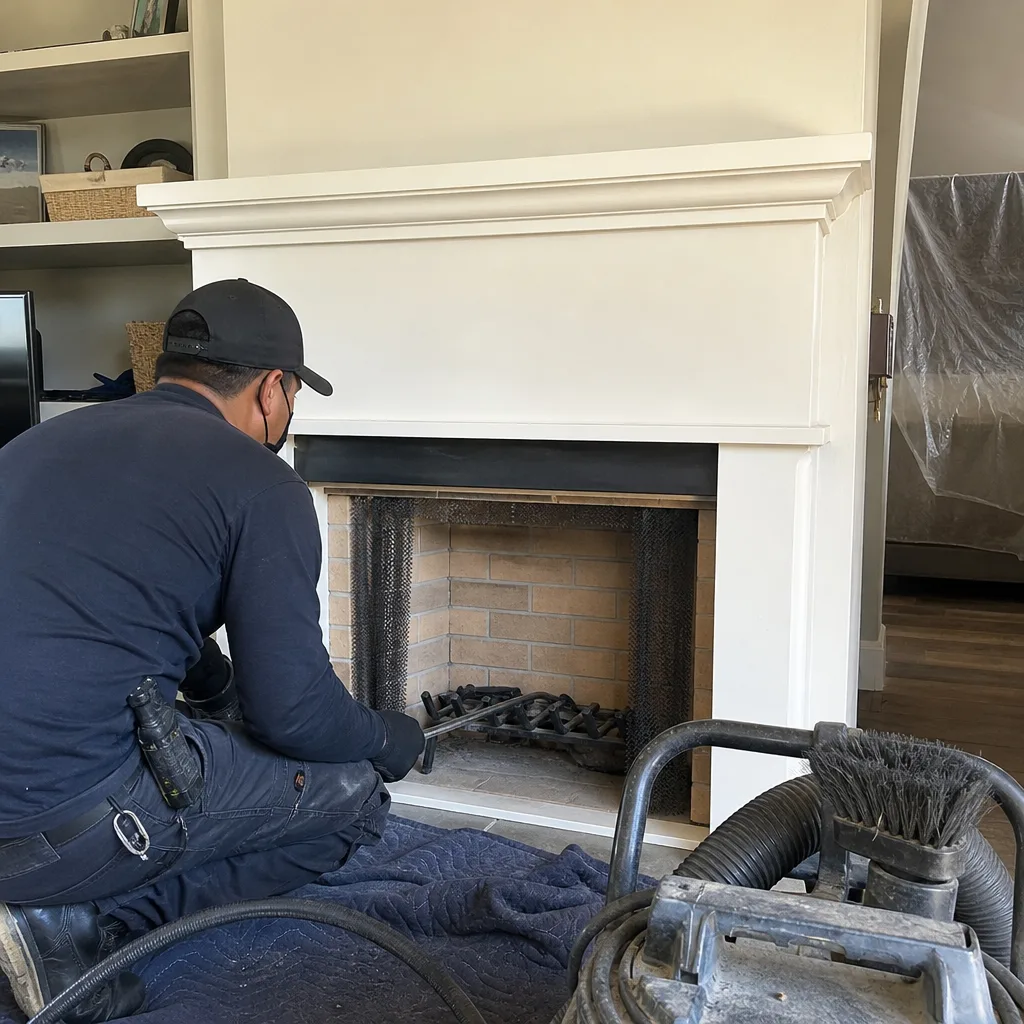
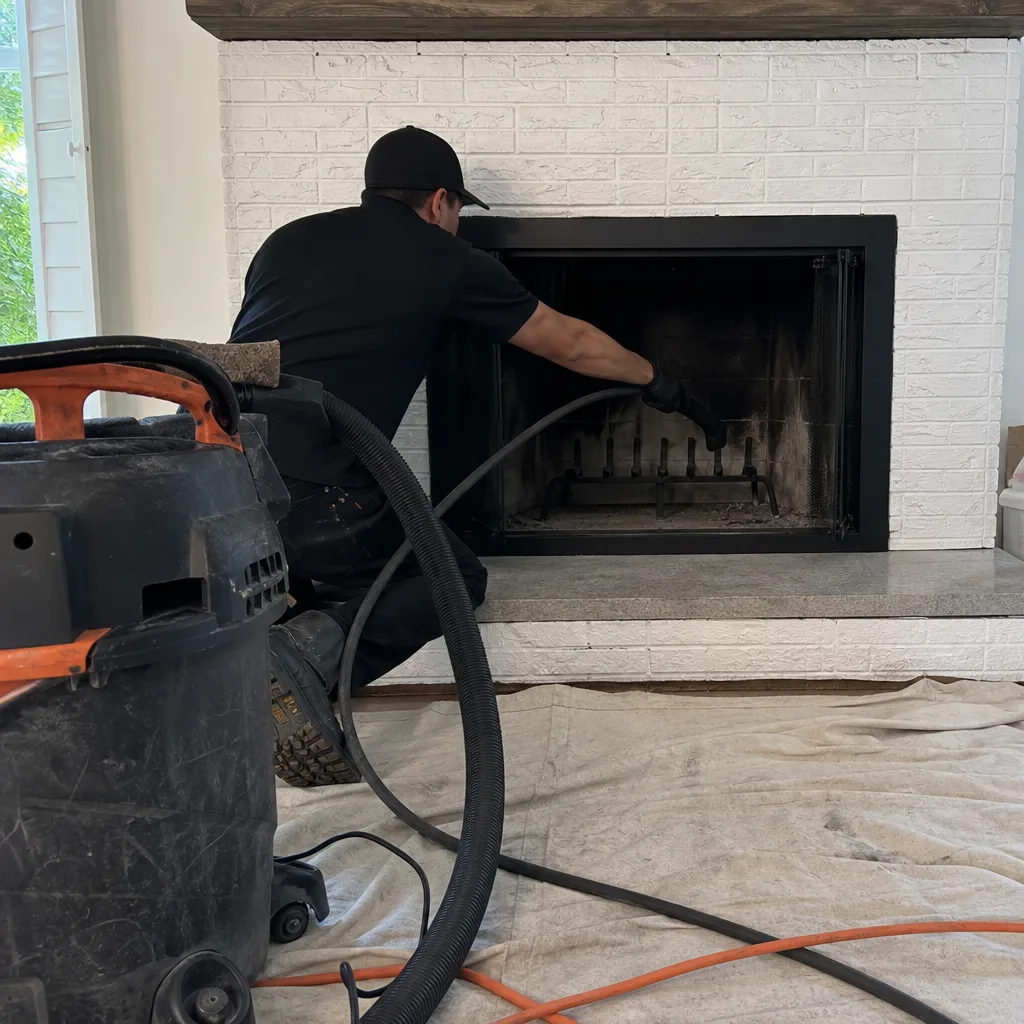
Level 1 sweep and inspection to the NFPA 211 annual standard - flue, crown, cap, and flashing checked and photographed
Chimney sweep logs do not sweep chimneys. They loosen some creosote - which then falls where a brush and vacuum still have to collect it.
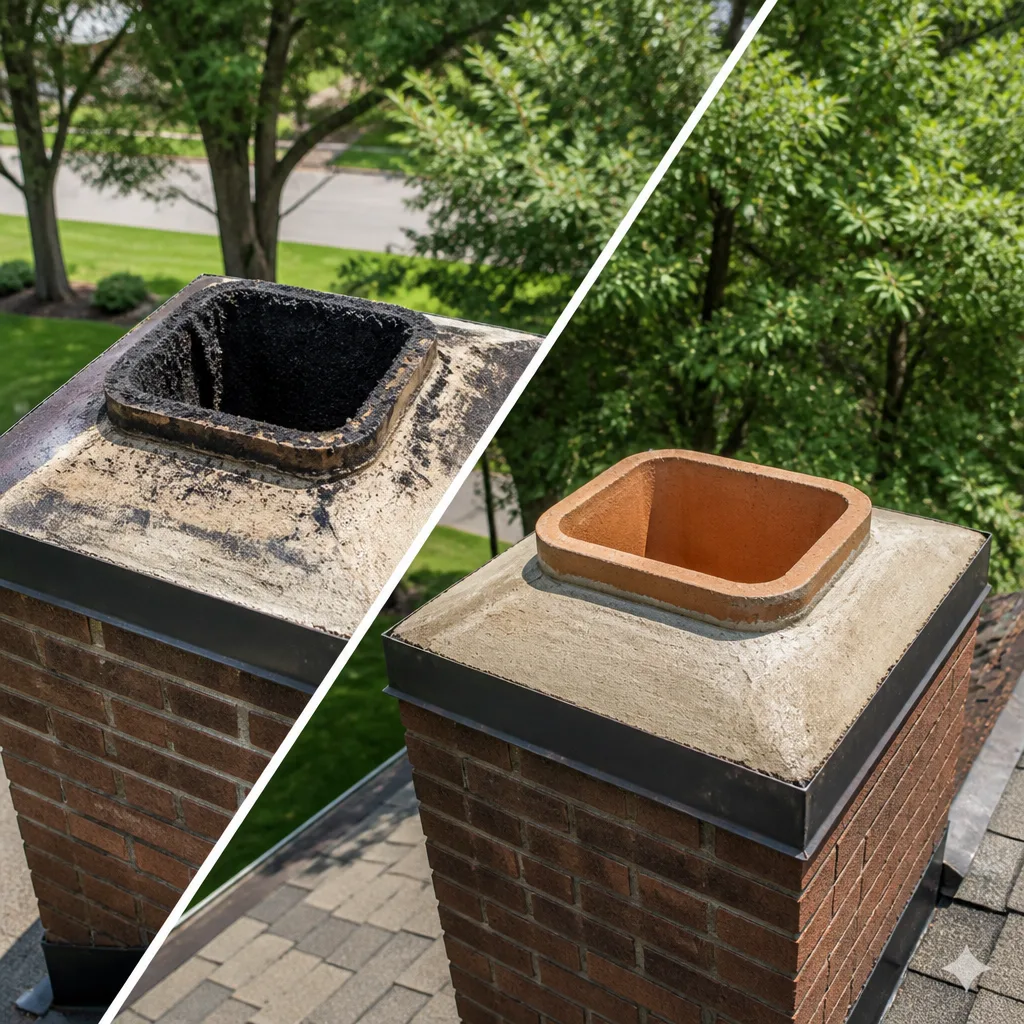
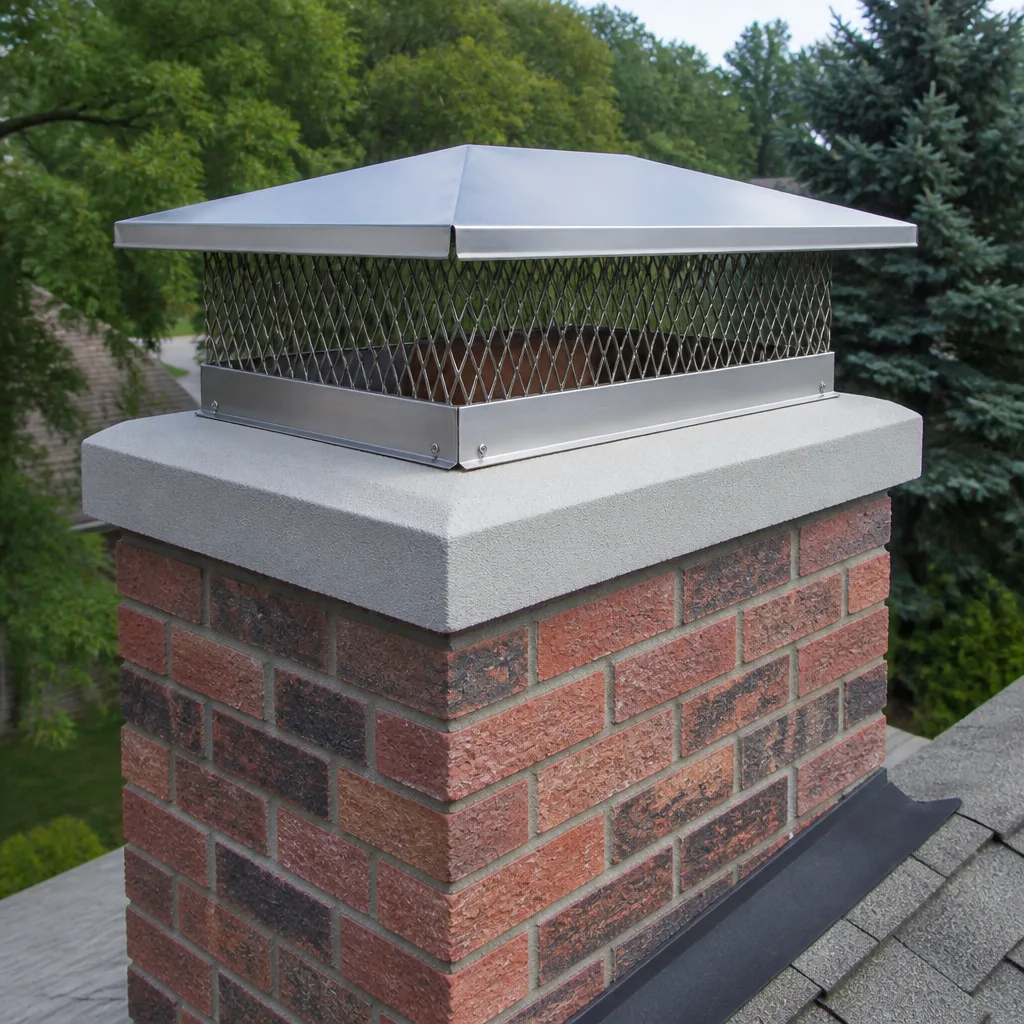
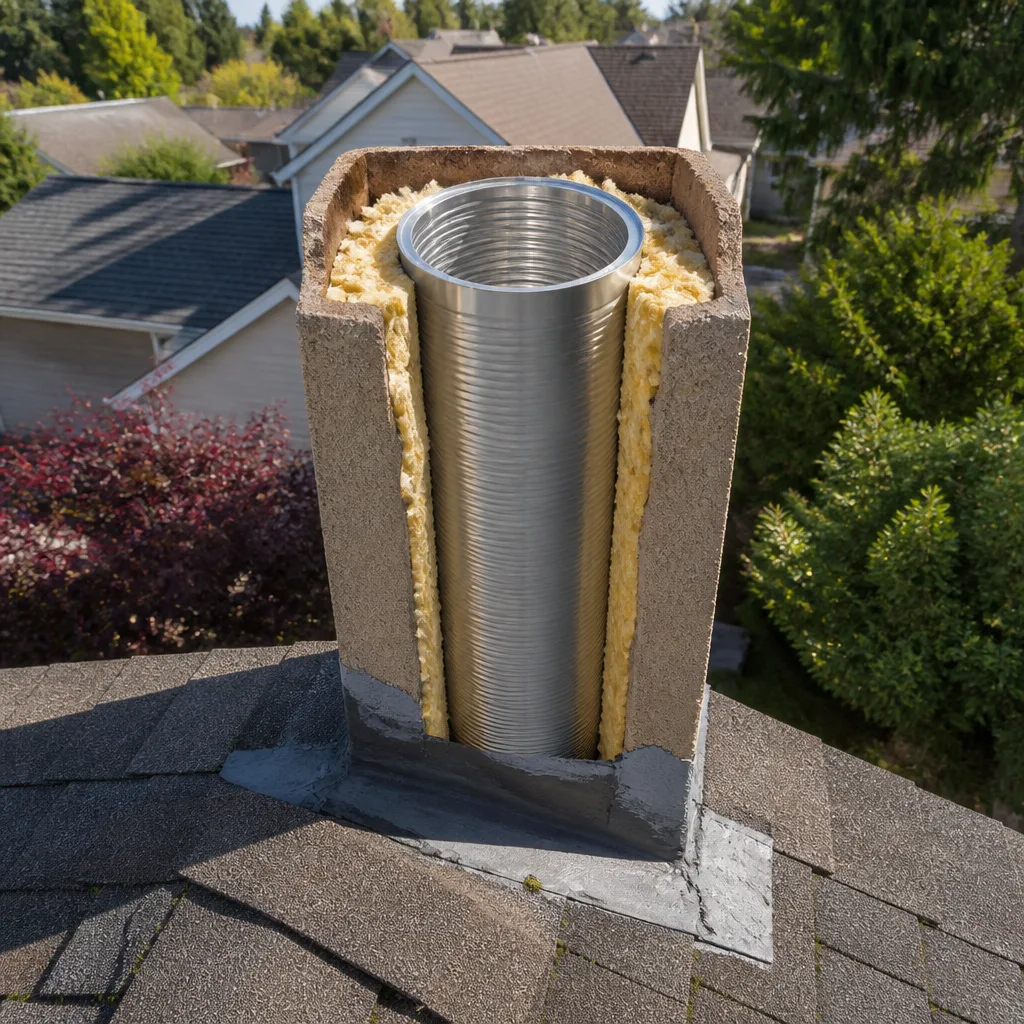
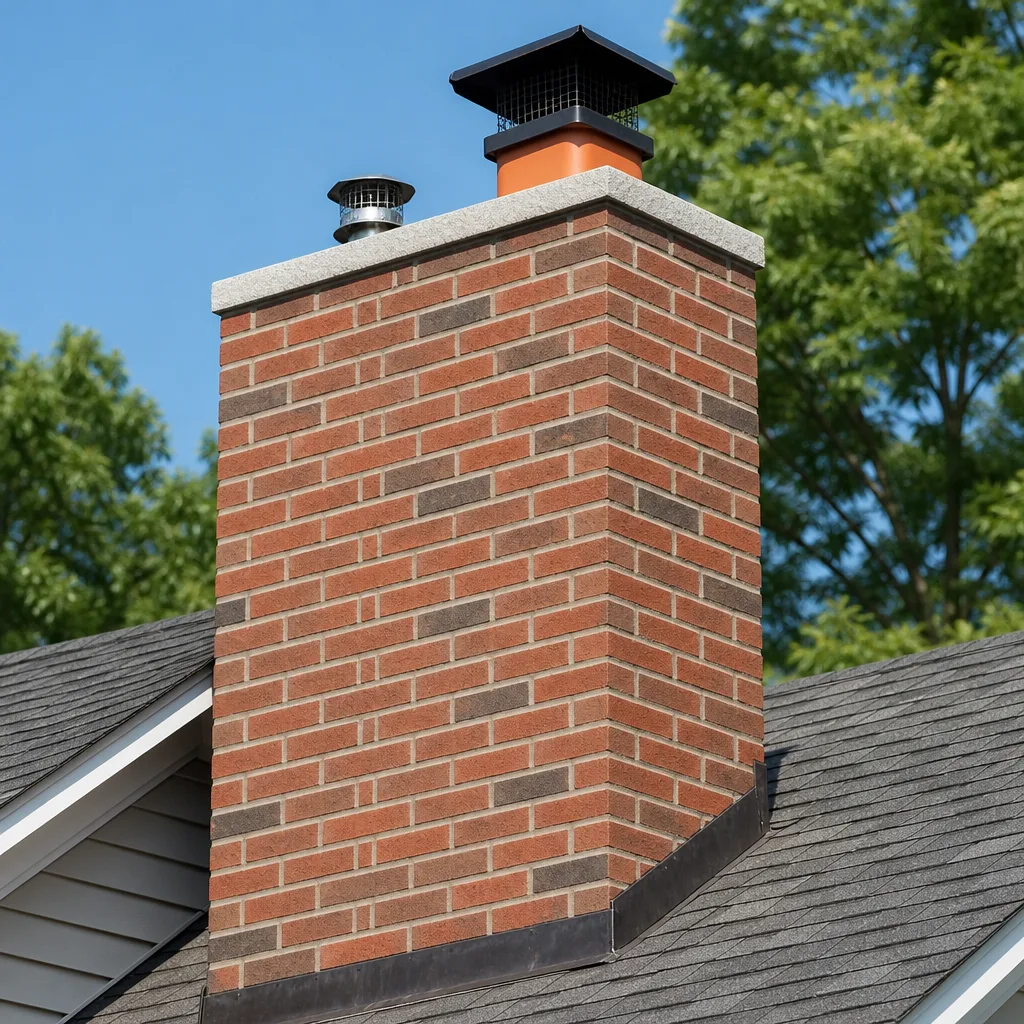
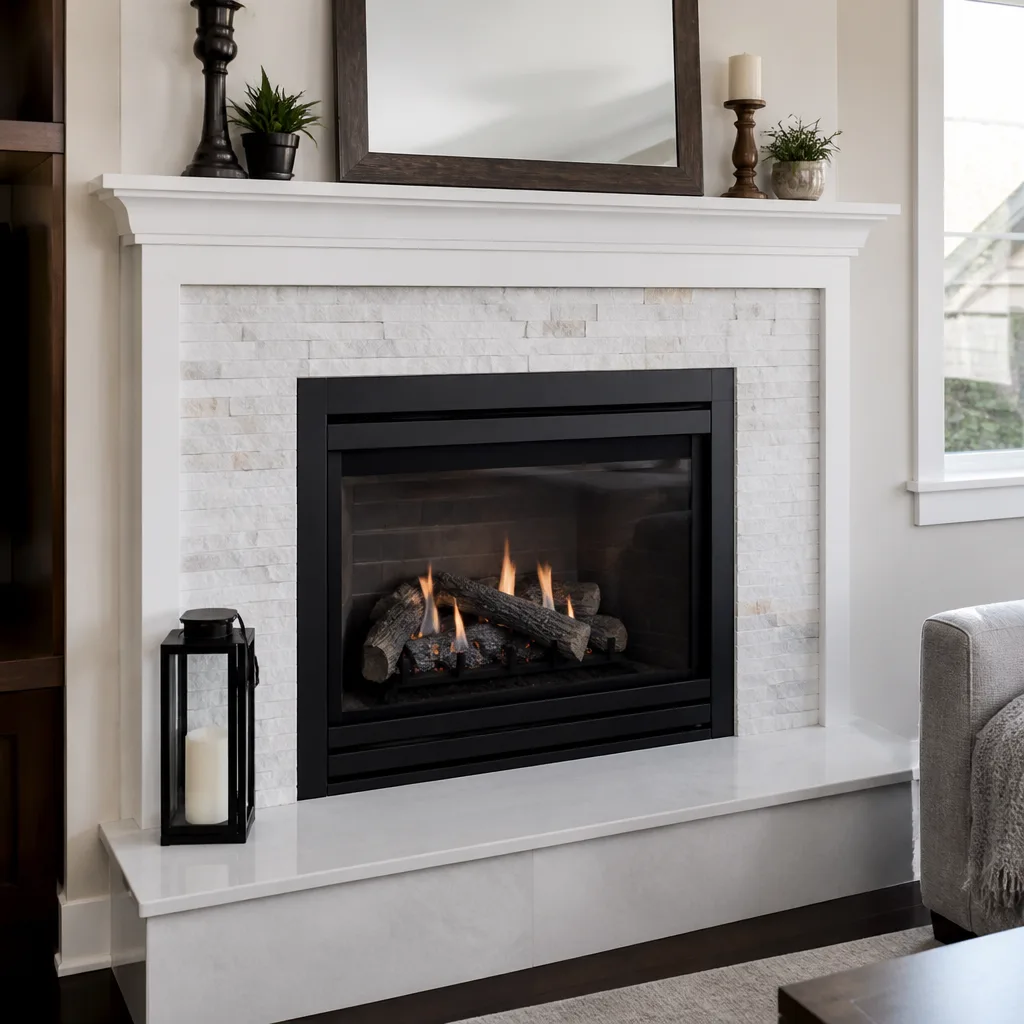
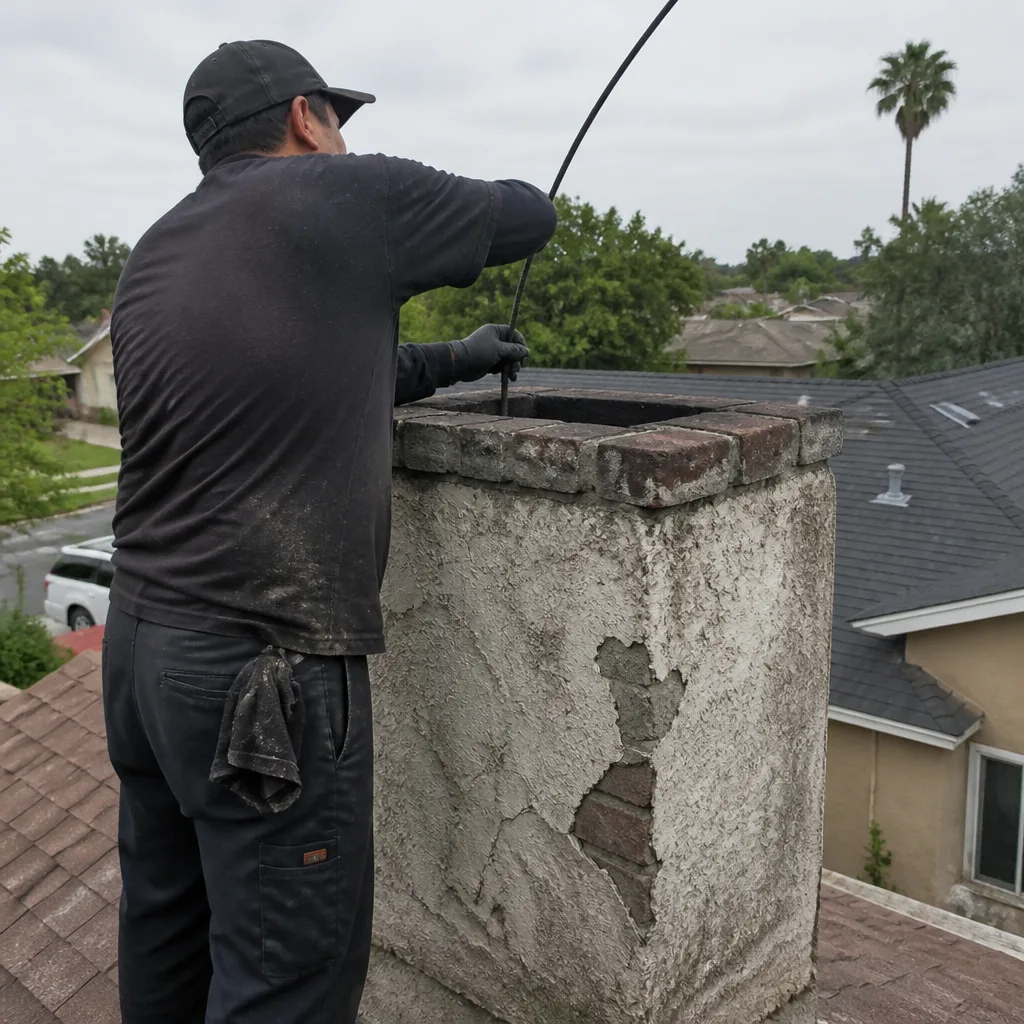 Before
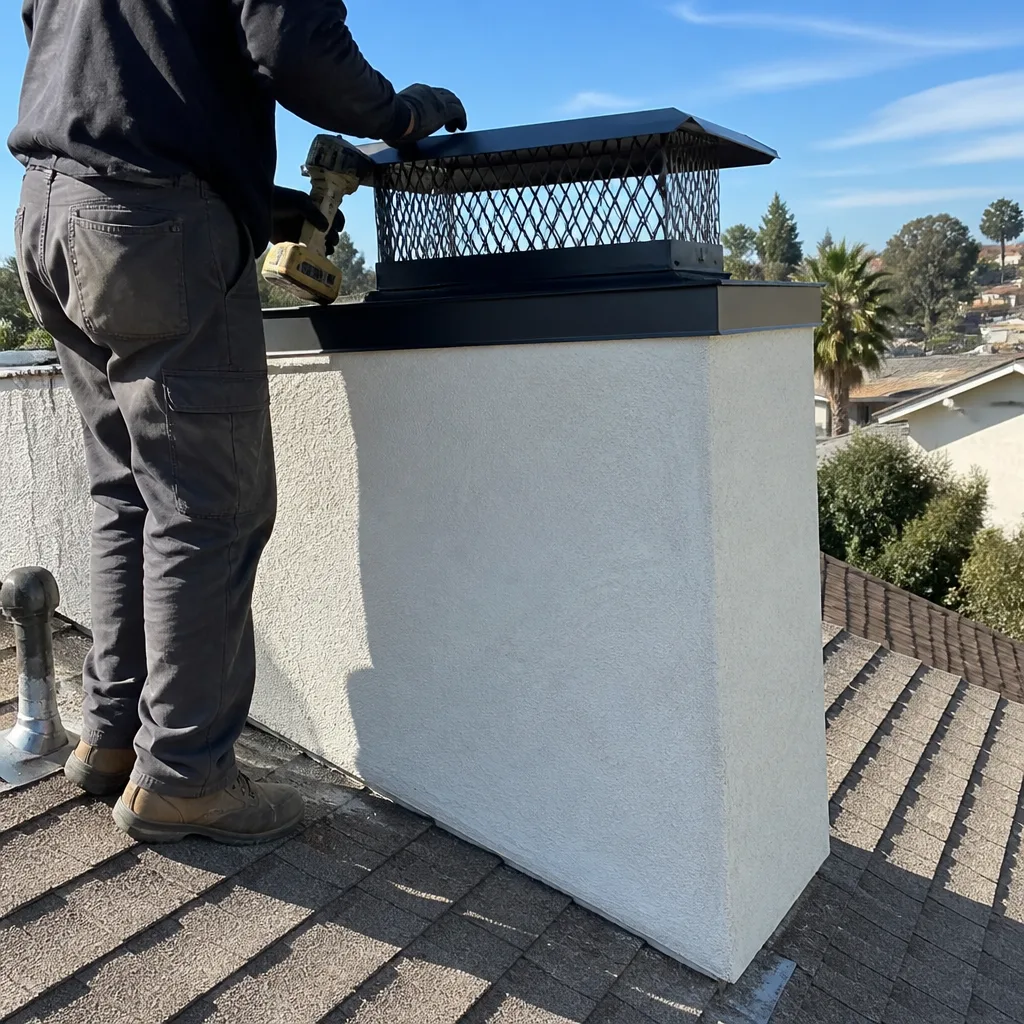 After
After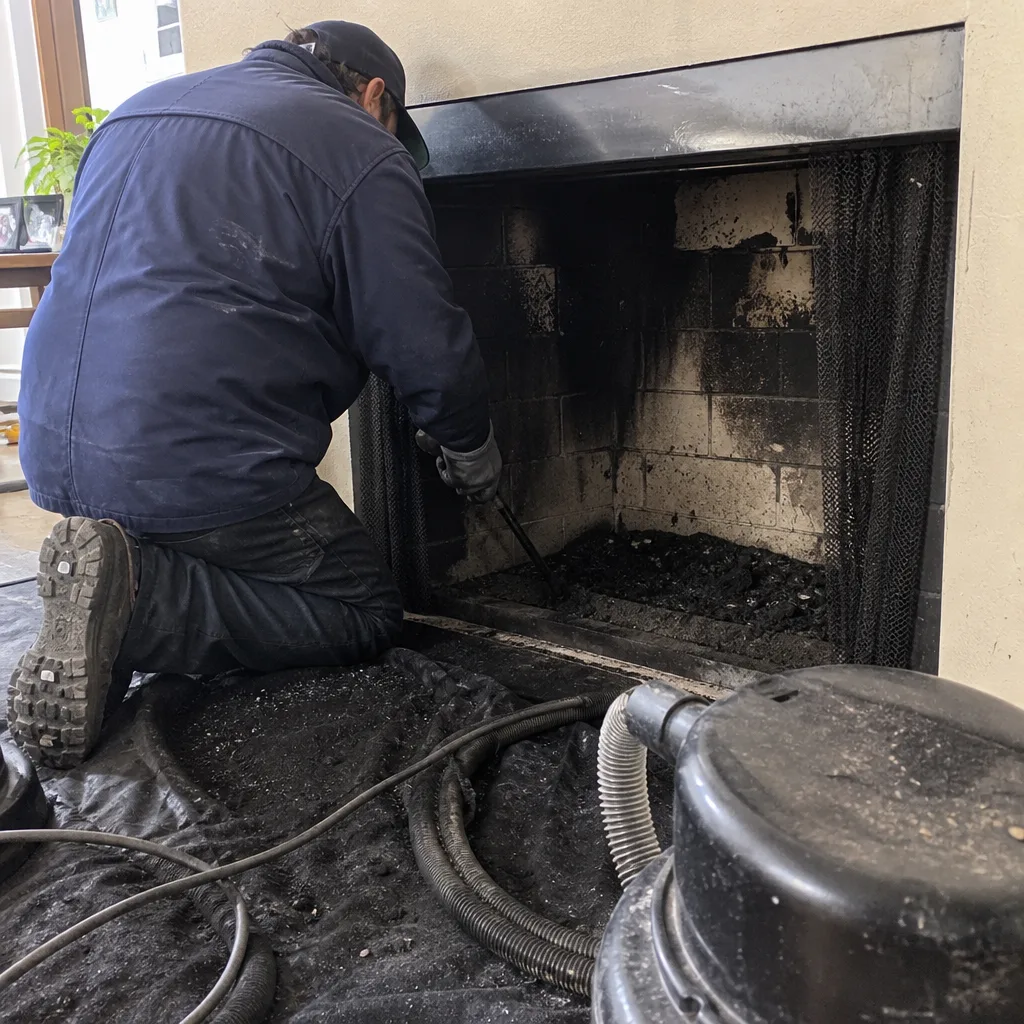 Before
 After
After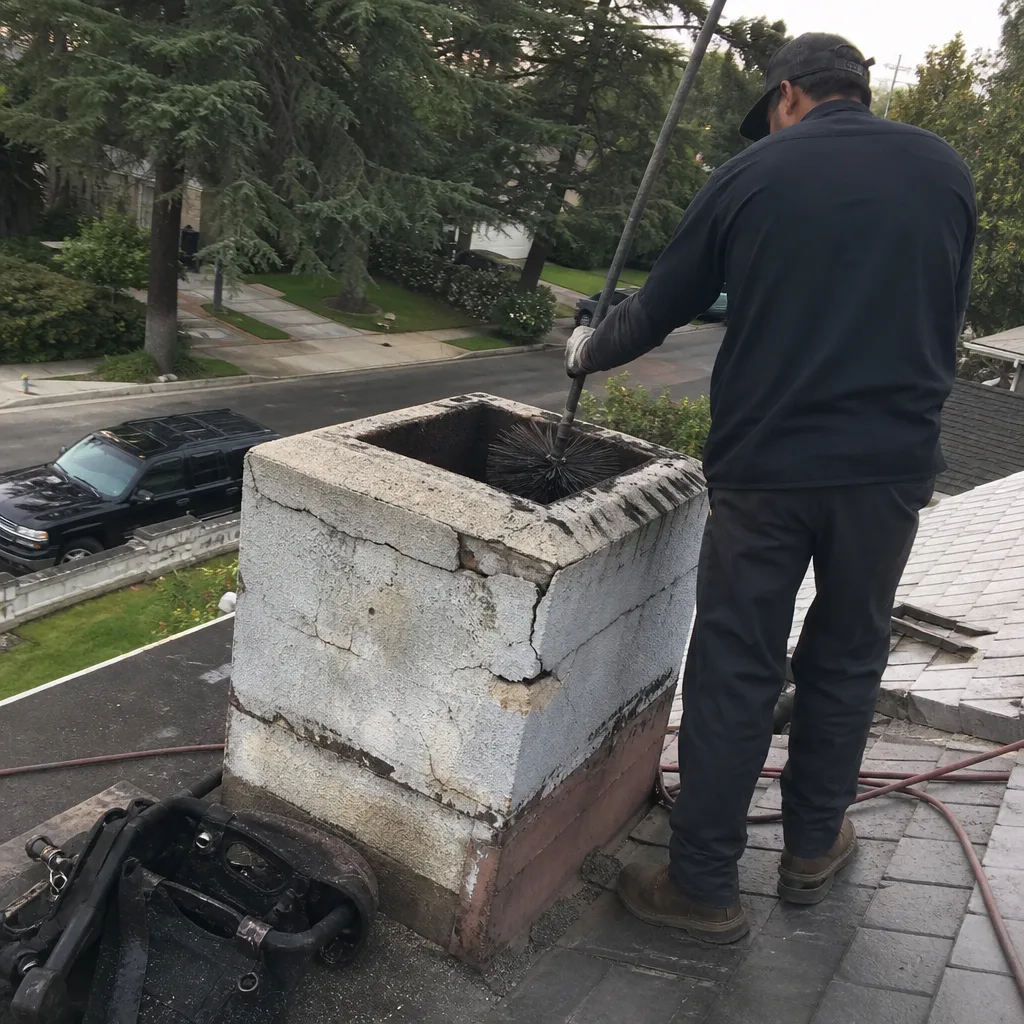 Before
 After
AfterDamper Stuck Open or Closed
A stuck damper almost always comes down to one of three things: built-up creosote or debris locking the blade in place, a warped or corroded damper plate that no longer moves freely on its pivot, or a broken cable or handle on a top-mounted damper. Any of these is fixable, and none requires tearing out your firebox to sort out.
The damper is the metal plate or cap that sits between your firebox and the flue. When it works, you open it to light a fire and close it to keep cold air, animals, and rain from pouring down your chimney when the fireplace isn’t in use. When it stops moving, either position causes a real problem. A damper stuck open bleeds your heated or air-conditioned air straight up the flue year-round. A damper stuck closed traps smoke in the room the moment anyone tries to light a fire. Neither condition is one you work around for long.
Why It Happens
Creosote and Debris Buildup
Every time you burn wood, combustion byproducts rise through the flue and some of them stick to the metal surfaces just above the firebox. Over a few seasons, that residue – creosote – can cake around the damper frame and seize the blade in position. You’ll know this is the likely culprit if the damper used to move fine and now feels gummy or refuses to budge at all. There’s often a faint smoky smell even when no fire is burning, and you may see dark, tar-like staining around the damper collar.
Rust and Corrosion
A traditional throat damper is a cast-iron or steel plate set in a metal frame. Moisture from rain, humidity, and the condensation that forms in an unused flue gets to work on it over years. Once rust sets in deeply enough, the pivot points freeze and the blade won’t rotate no matter how hard you push the handle. If the handle moves but the plate doesn’t follow, or if you hear grinding when you try to operate it, corrosion is the most likely culprit. Older homes with fireplaces that see only light seasonal use tend to show this faster than fireplaces that are burned regularly.
Warped or Cracked Damper Plate
Intense heat from a very hot fire, or in some cases a chimney fire, can warp a damper plate so badly that it binds against its frame no matter how good the pivot is. You may be able to see this from below with a flashlight: look for a plate that sits visibly crooked, or one that has a slight bow where it should lie flat. A warped plate that’s forced open or closed with enough effort sometimes cracks at the pivot, which means replacement rather than repair.
Failed Cable or Handle on a Top-Mount Damper
Top-mount dampers sit at the very top of the flue, above the smoke chamber, and are operated by a cable or chain that runs down to a bracket on the firebox wall. If that cable snaps, corrodes through, or slips its anchor, you lose all control of the damper from inside the room – it typically drops to the closed position by gravity or sits stuck open depending on the design. From below, you’ll simply notice the handle has gone slack or the chain no longer creates any resistance when you pull it.
What to Do Right Now
- Stop burning fires until it’s fixed. If the damper is stuck closed, smoke has nowhere to go except into your living space. Carbon monoxide can accumulate quickly. Don’t attempt to push through it with a small fire to “test” the draw.
- Take a flashlight and look up from the firebox floor. Note what you see: heavy black buildup on the plate, obvious rust, visible warping, or a cable that’s hanging loose. A quick phone photo is worth taking – it helps the technician come prepared.
- Do not force the handle or try to free the plate with tools. Throat dampers sit directly below the smoke chamber and can dislodge debris, creosote chunks, or deteriorated masonry down into the firebox if forced. A damper plate is not heavy on its own, but what’s resting on top of it sometimes is.
- If the damper is stuck open in winter, use a fireplace plug or a piece of rigid foam cut to fit the opening. This is a short-term fix only – it reduces the draft but does not seal the way a working damper does, and it should come out before anyone lights a fire.
- If you smell gas near a gas fireplace and suspect the damper is involved, leave that room, ventilate the house, and call your gas utility first. A stuck damper on a gas appliance can allow combustion gases to back-draft into the room. That’s a utility emergency before it’s a chimney repair.
How We Fix It
When your local Alcott Chimney Sweep team arrives, the first step is a hands-on inspection of the damper assembly – checking the plate, frame, pivot points, and the condition of the flue just above it. Before any work begins, you receive a written price. That’s not a ballpark: it’s the number, in writing, and nothing starts until you’ve agreed to it.
If the damper is seized by creosote, a chimney sweep clears the buildup and frees the mechanism. If the plate or frame is corroded or warped beyond repair, the technician replaces the assembly – sourcing components from the same professional trade brands Alcott uses across every job: Gelco, Olympia Chimney, Famco, and Copperfield, among others. Top-mount damper cable failures are addressed at the damper itself; in some cases a full top-mount replacement is the cleaner, more durable solution.
Most damper repairs are completed in a single visit. Every repair is covered by Alcott’s 365-Day Done Right Promise: a written guarantee, included at no extra charge, and a free return visit if the repair fails within that year.
Frequently Asked Questions
It depends on which direction it’s stuck. A damper stuck open is not immediately dangerous but wastes conditioned air continuously and leaves your home exposed to animals and weather. A damper stuck closed is genuinely dangerous to operate – lighting a fire with a closed damper sends smoke and carbon monoxide directly into the room. Don’t light any fires until this is resolved. If you want to know whether your specific situation can safely wait, call us at (336) 863-3889 and describe what you’re seeing – a live person picks up every time.
Your local Alcott team does its best to get to urgent situations quickly, and we keep our schedule moving. Call (336) 863-3889 to find out the earliest available appointment in your area. A live person answers around the clock, so you won’t reach a voicemail box, even if you’re calling late in the evening because something smells off.
A damper that has seized or failed often signals that the rest of the system hasn’t been looked at in a while either. In many cases, the same visit that addresses the damper includes a chimney inspection so you know the full picture before winter. Nothing additional gets added to the job without your written approval first – that’s how Alcott’s upfront pricing works.
The honest answer is that the price depends on what the technician finds: seized and dirty is a different job than cracked and in need of full replacement. Alcott doesn’t publish a single number because the written estimate you receive on-site, after the inspection, is the real price for your specific repair – not an average. That estimate is free and comes with no obligation. Call (336) 863-3889 or book online to get the process started.
Get It Fixed
Call (336) 863-3889 any time – a live person answers, day or night. Your local Alcott Chimney Sweep team will inspect the damper, hand you a written price before anything starts, and back every repair with the 365-Day Done Right Promise. You can also book online if that’s easier.
Written by Ruben Castellano, Owner at Alcott Chimney Sweep, part of the Threshold Group family of home-service companies, serving homeowners since 2002.
What Our Customers Say
"Good chimney cleaning. They found a small gap in the mortar and quoted the repair, which was a bit more than I wanted to spend. Did the sweep and left the repair for later without any pressure."
- Stuart L."Left no soot anywhere. Even brought a vacuum with a sealed filter. I'd use them again every fall."
- Beth H."Gas fireplace pilot kept going out. Cleaned the burner, replaced the thermocouple, and explained what failed. Works first try now."
- Alicia R.