
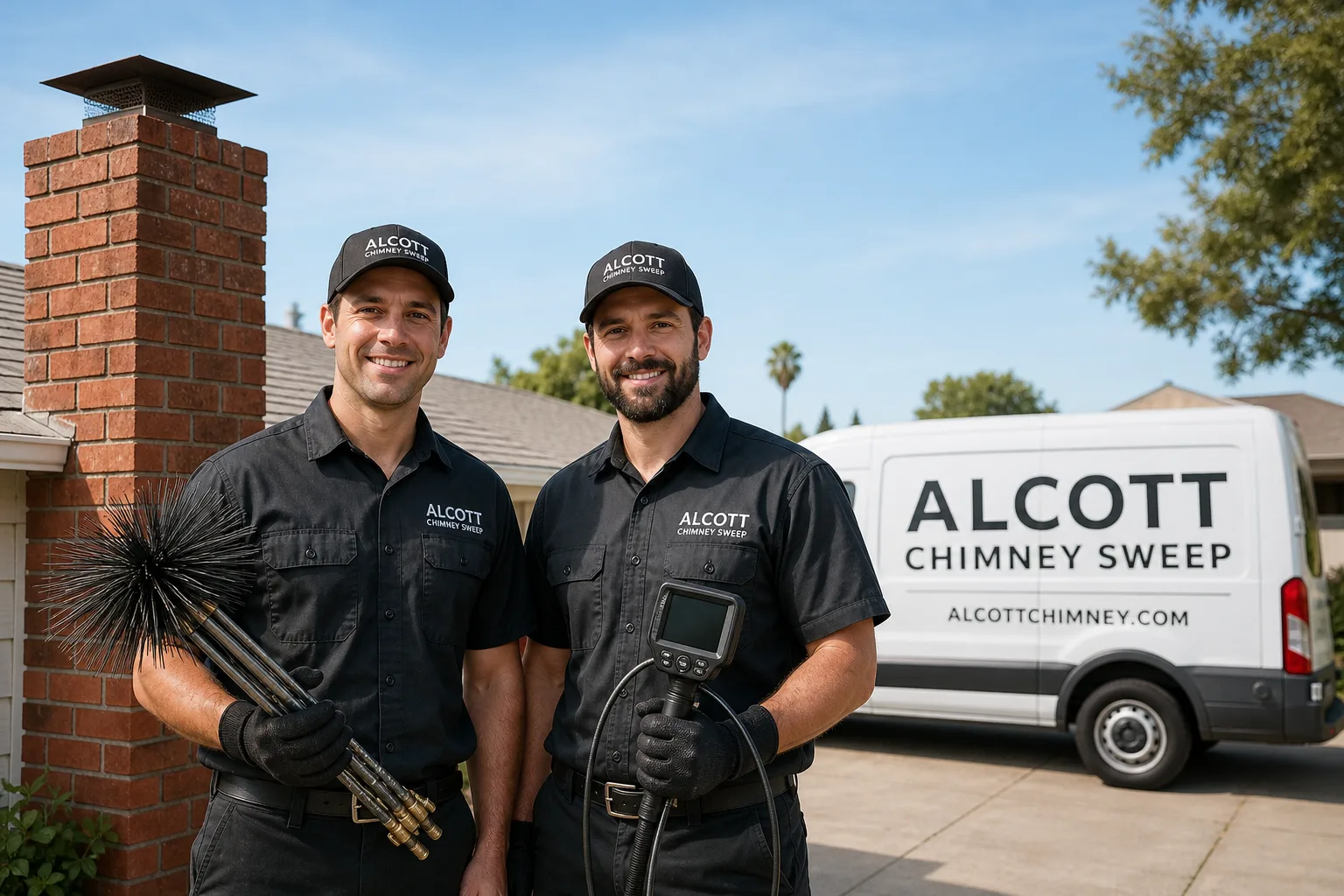
Level 1 sweep and inspection to the NFPA 211 annual standard - flue, crown, cap, and flashing checked and photographed
Chimney sweep logs do not sweep chimneys. They loosen some creosote - which then falls where a brush and vacuum still have to collect it.
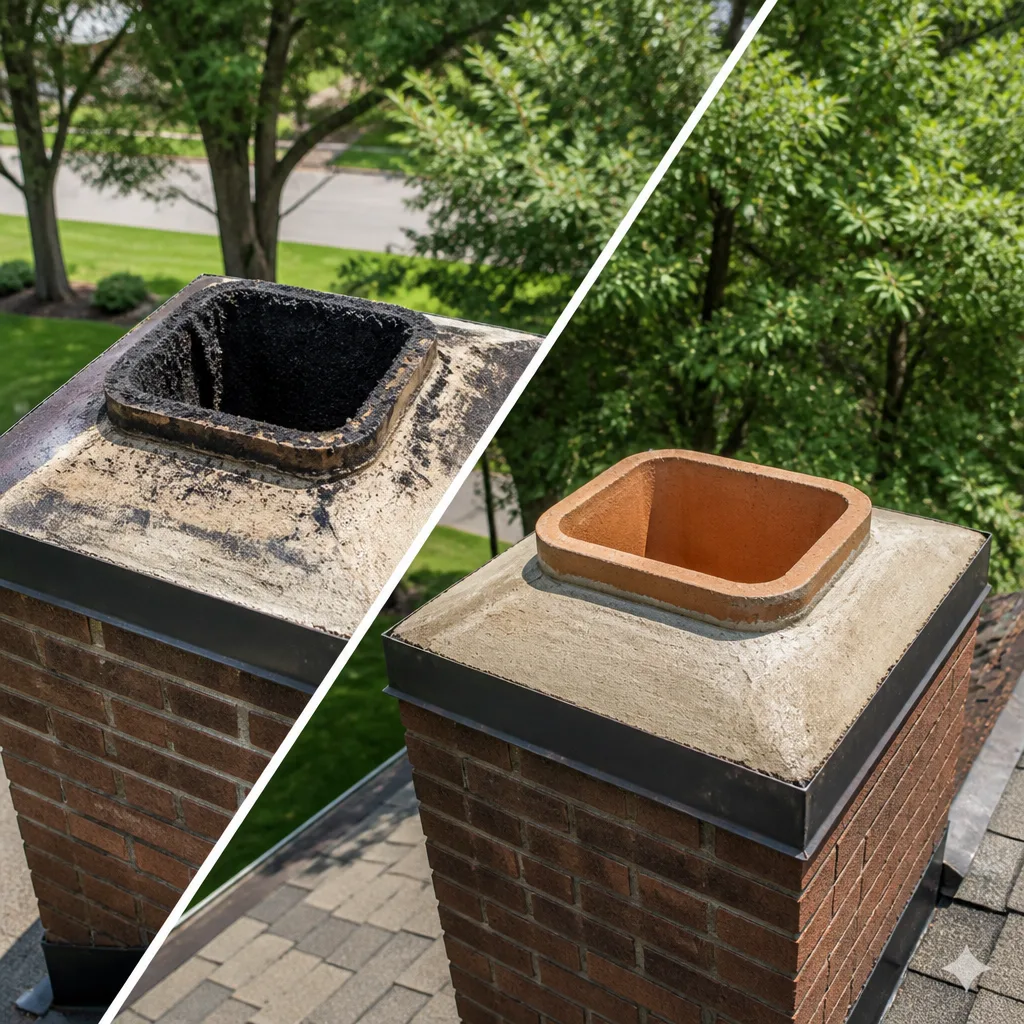
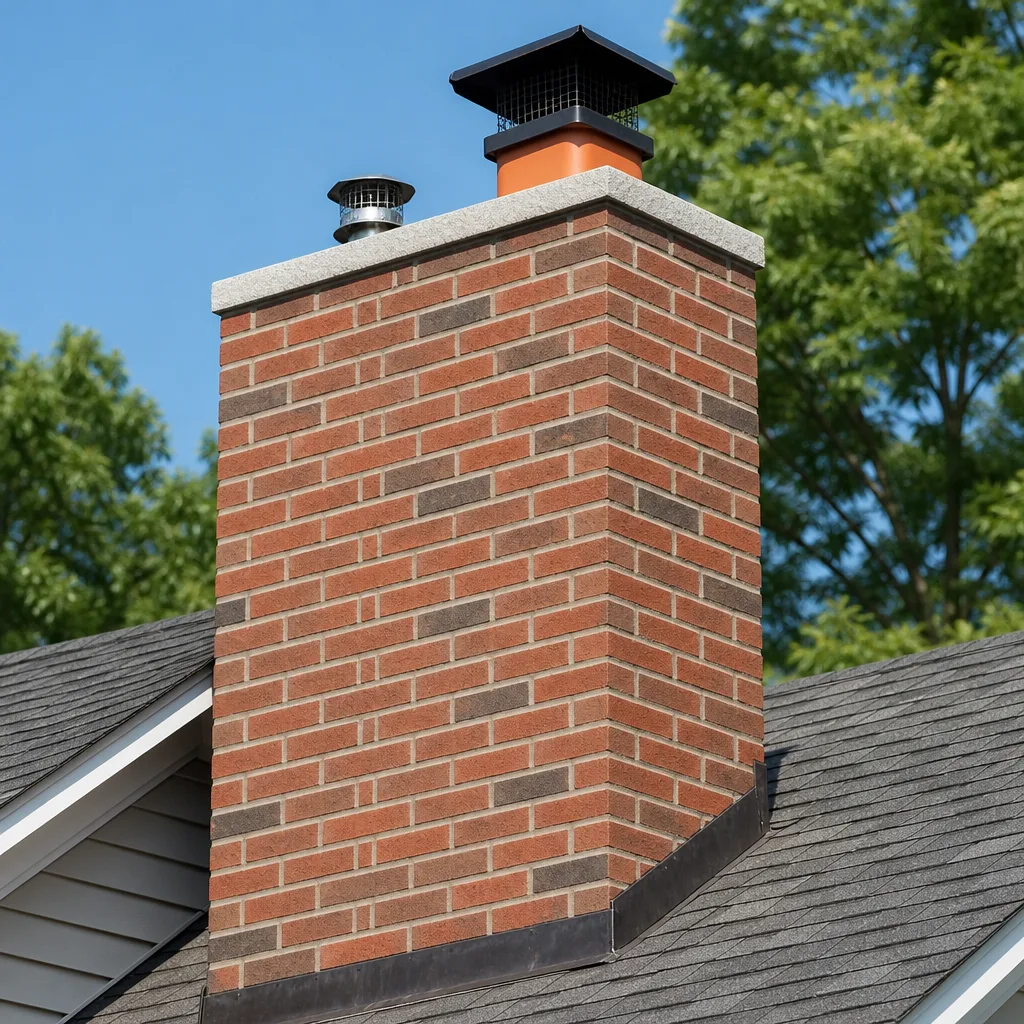
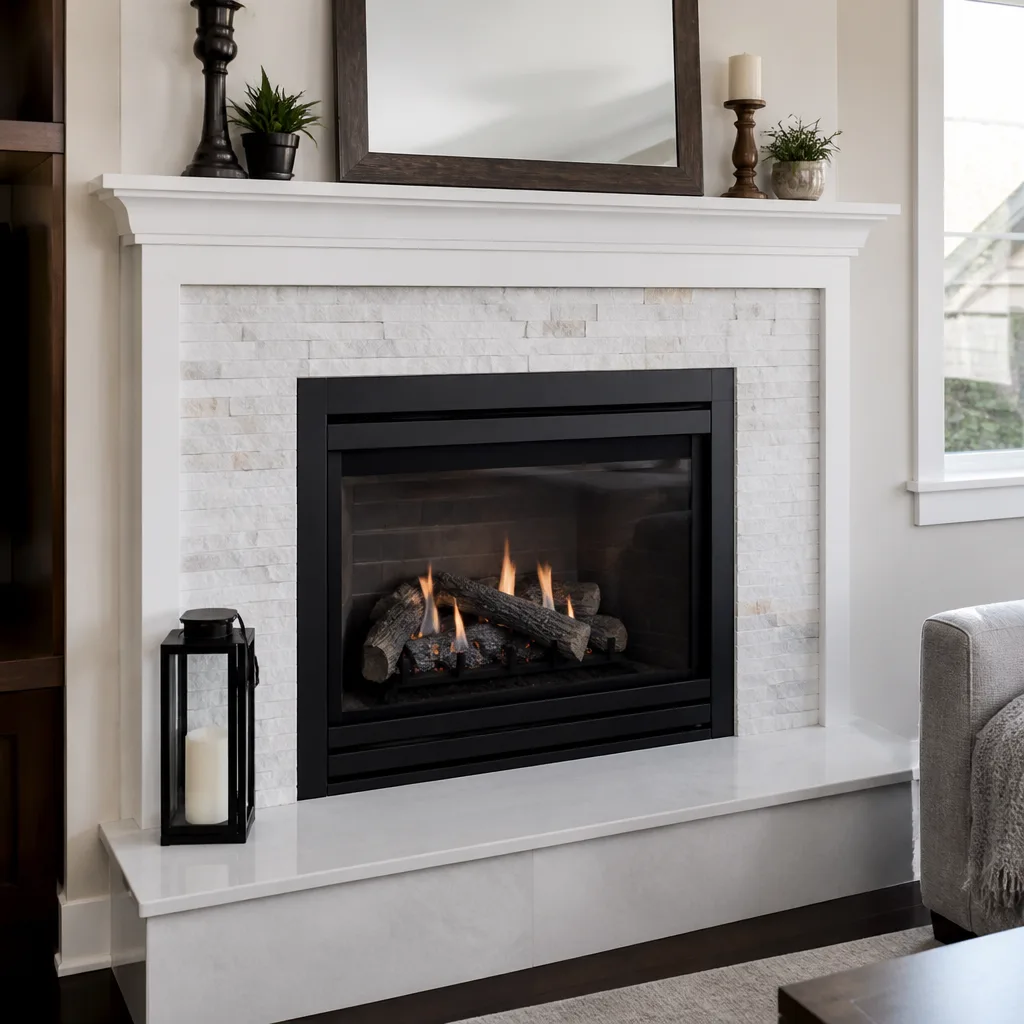
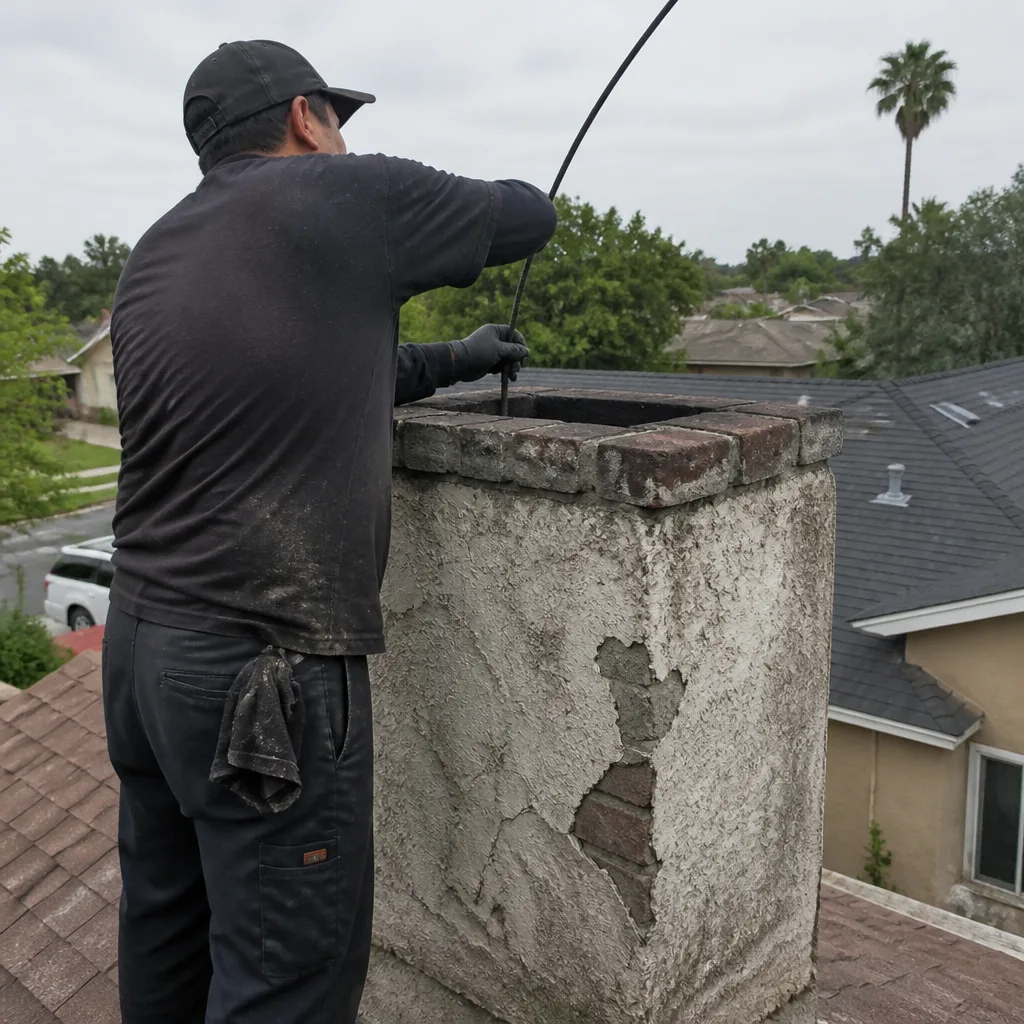 Before
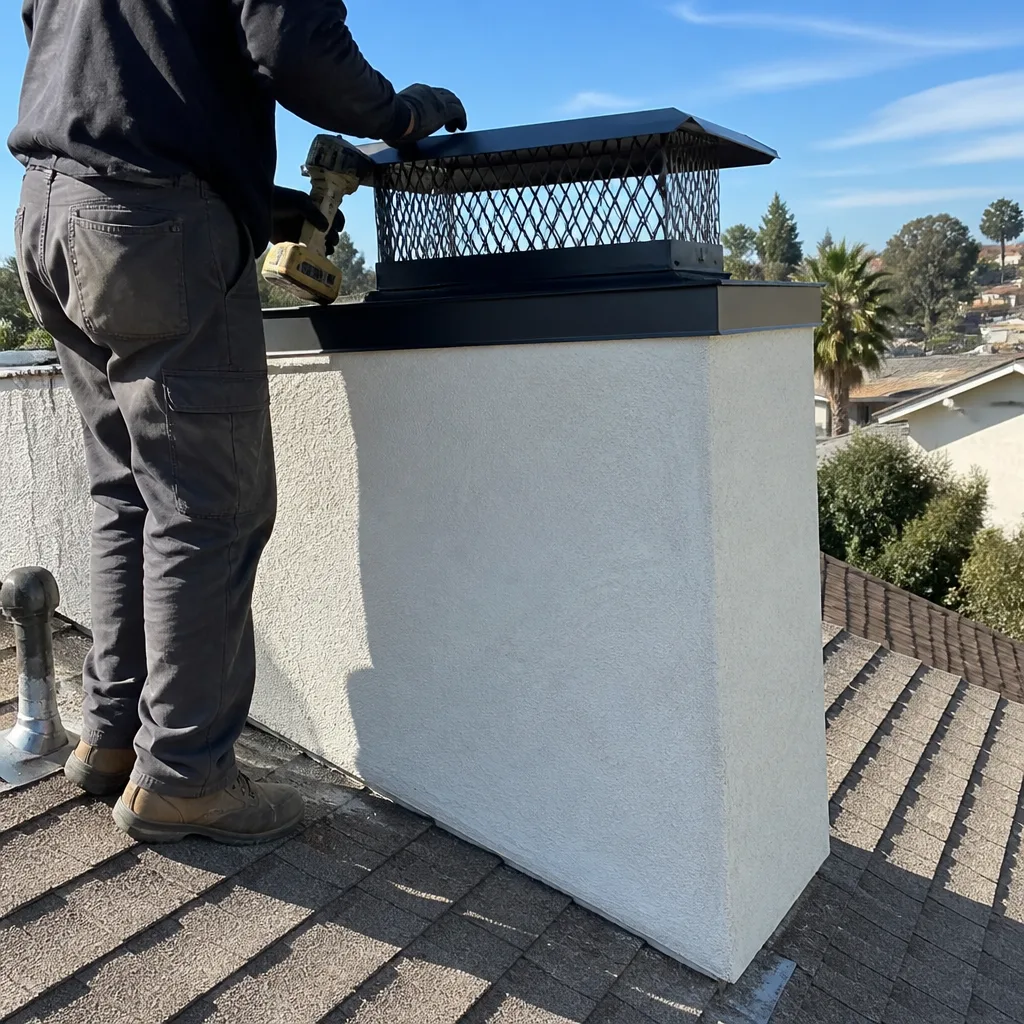 After
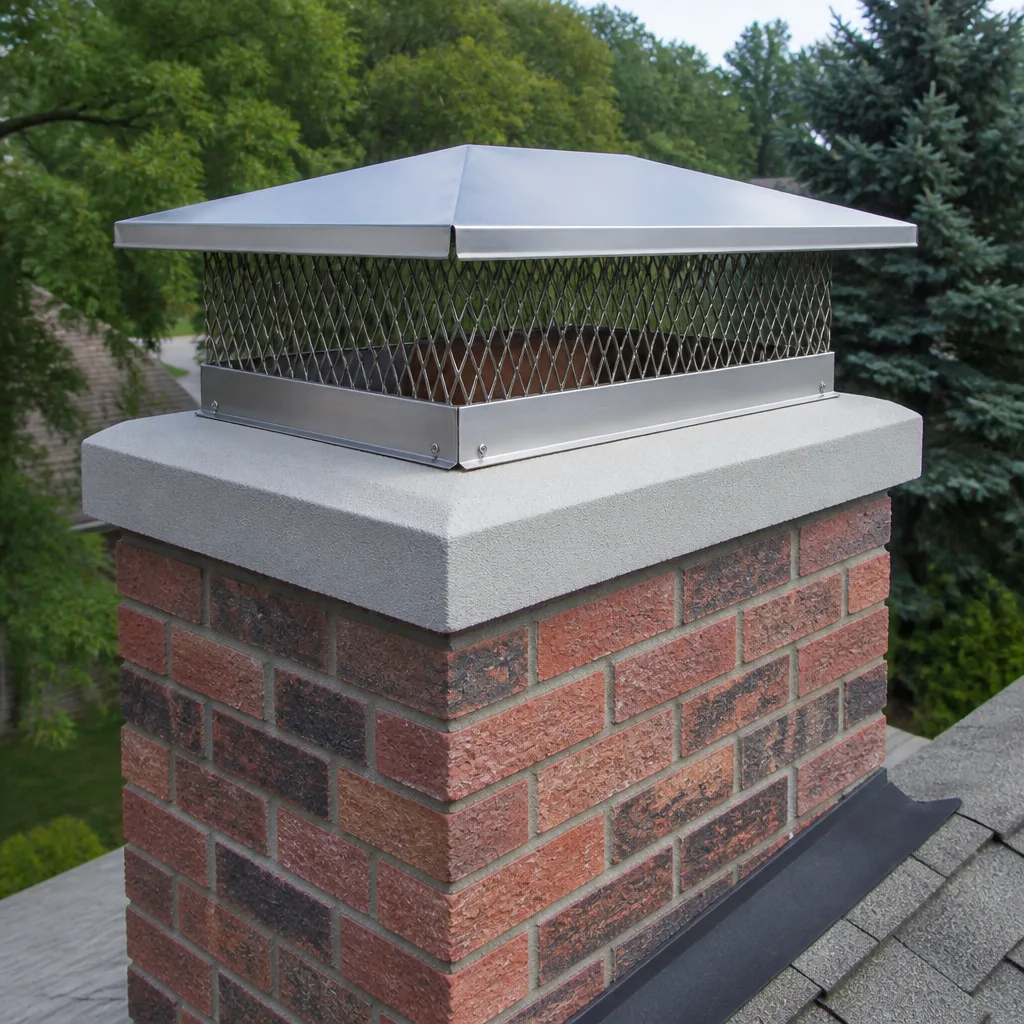
After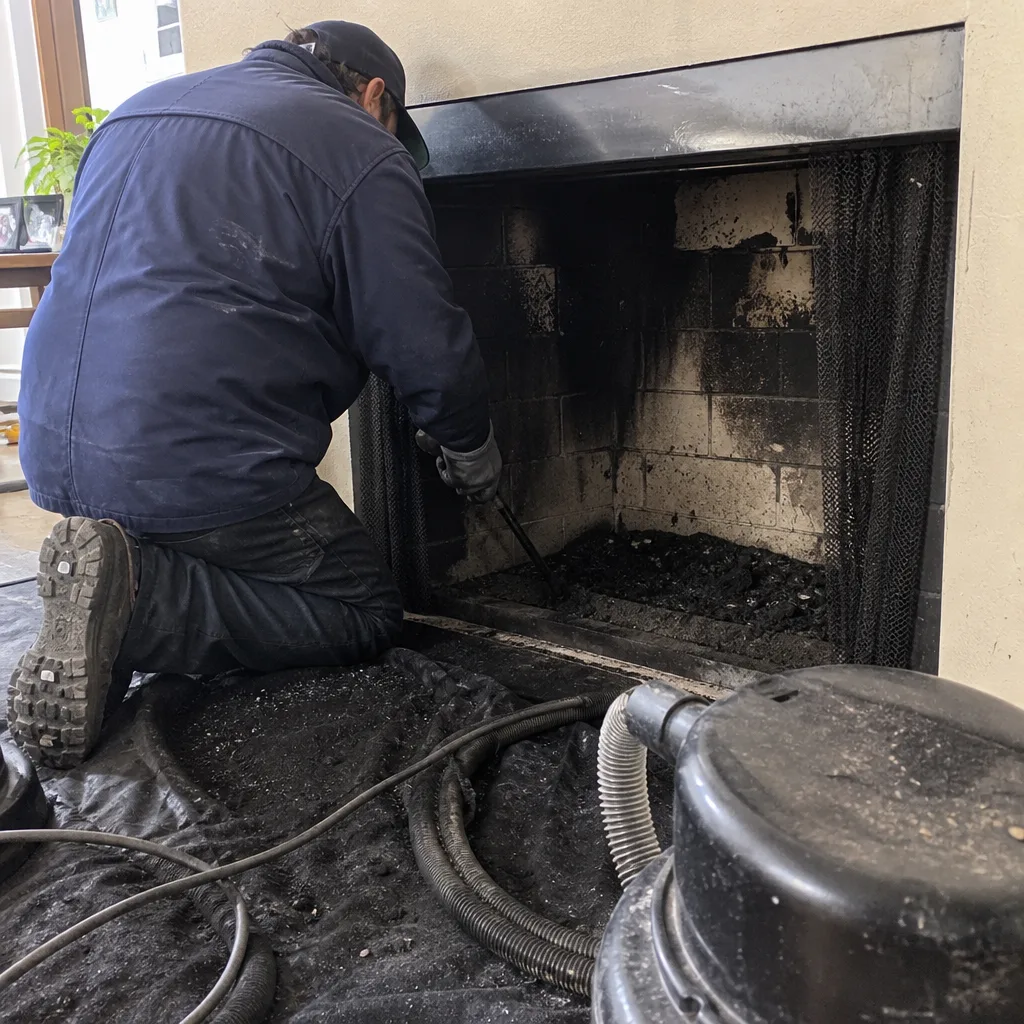 Before
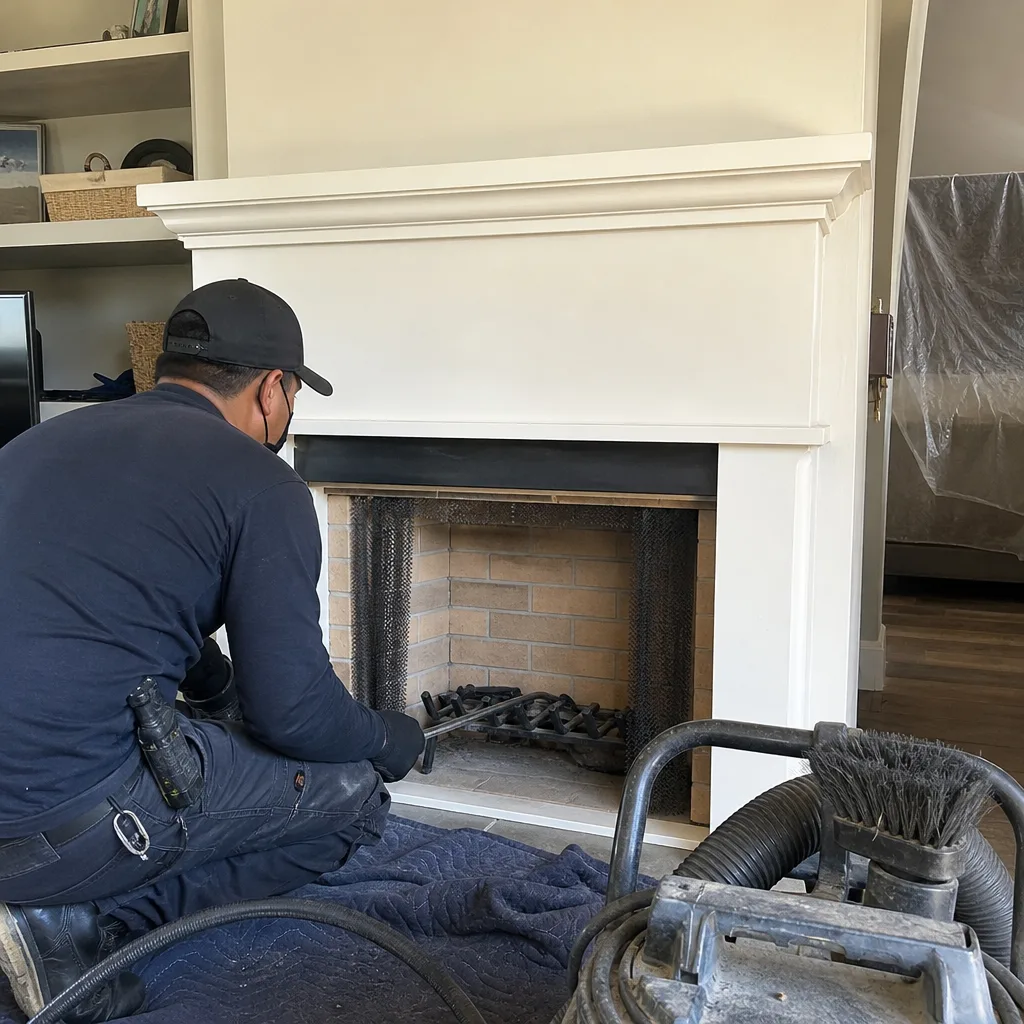 After
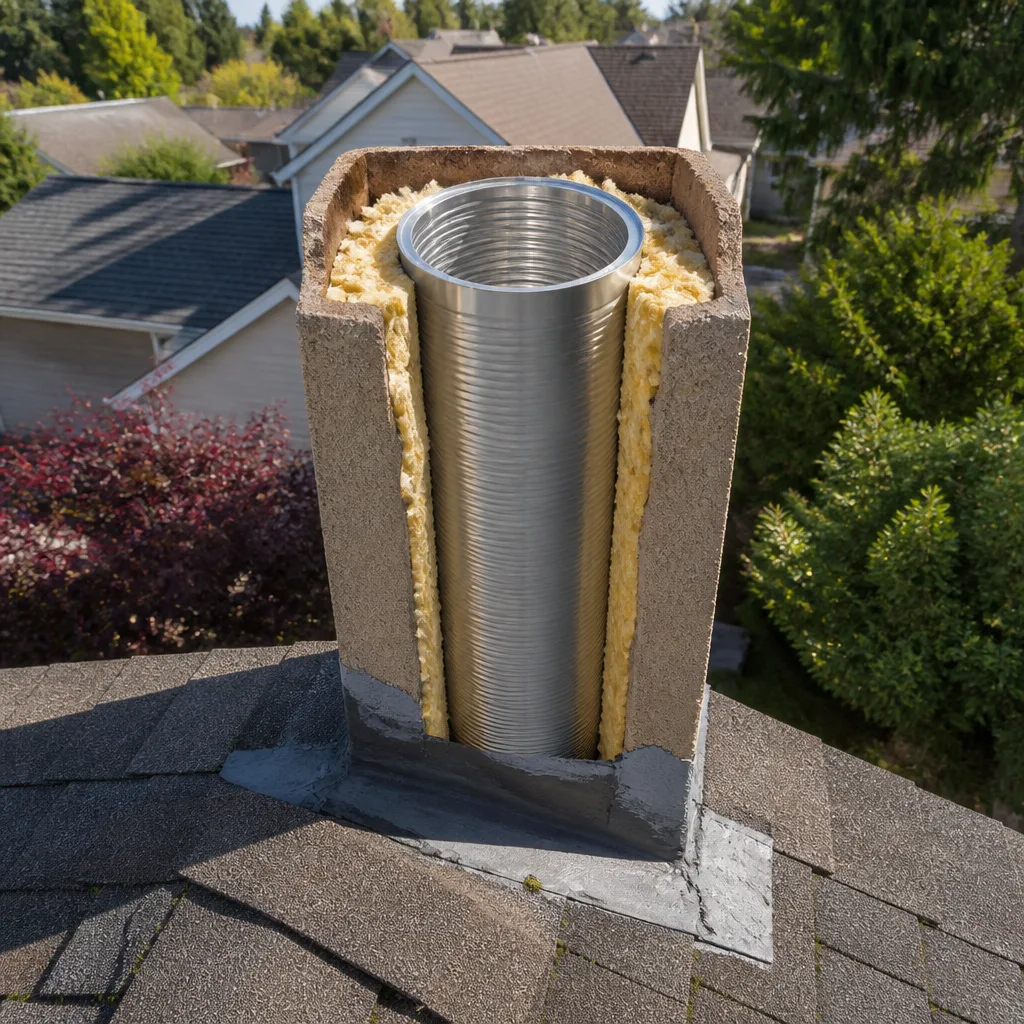
After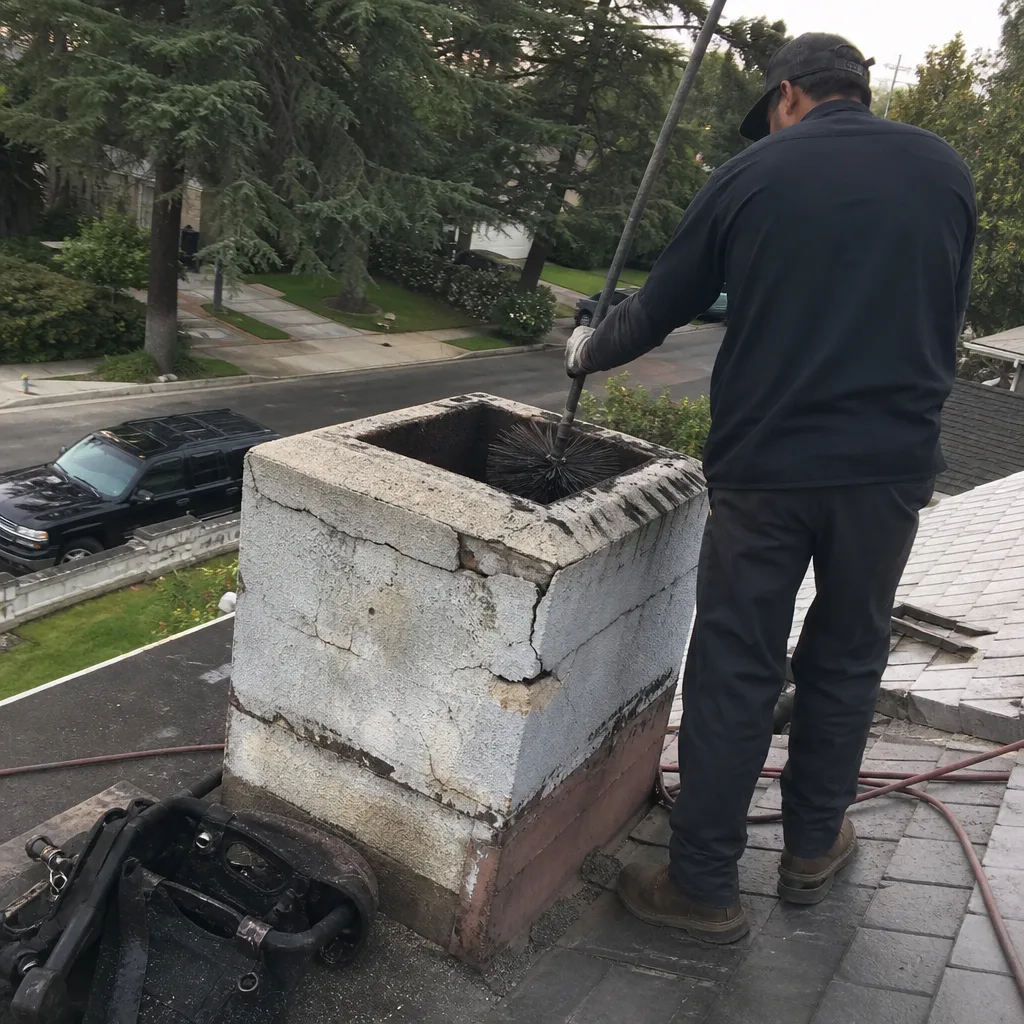 Before
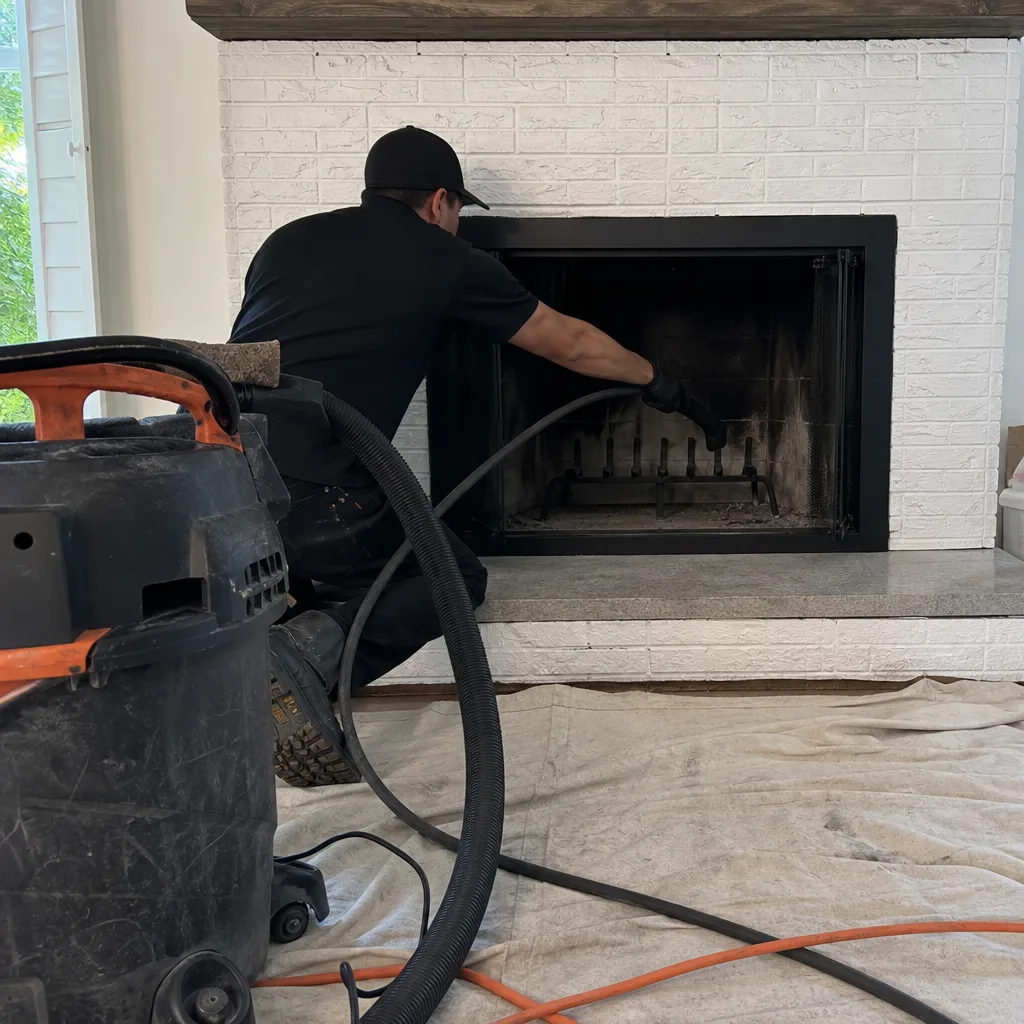 After
AfterFireplace Is Hard to Light or Won’t Draw
A fireplace that won’t draw – where smoke billows into the room instead of up the flue, or where you can’t get a flame to catch and hold – almost always comes down to one of three things: a blocked or dirty flue, a closed or stuck damper, or a cold air column sitting in the chimney that the fire can’t push out. All three are diagnosable, and most are fixable in a single visit.
The flue is a vertical column of air, and fire draws because warm air rises. Anything that disrupts that column – a creosote buildup that narrows the passage, a damper that won’t open fully, cold dense air that’s heavier than the warm air your fire produces, or a physical blockage like a bird nest – will cause smoke to take the path of least resistance. That path, in a house with the flue blocked, is straight into your living room. It’s annoying at minimum. At worst it’s a carbon monoxide risk, and that’s the reason to take it seriously rather than just crack a window and try again.
Why It Happens
1. The flue is dirty or partially blocked
Creosote – the tar-like byproduct of wood combustion – builds up on the flue liner over time and narrows the passage your fire depends on for airflow. Even a moderate accumulation can choke the draw enough that smoke backs up into the room. You won’t see the creosote from below, but if your fireplace smoked badly last season too, or if you haven’t had the flue swept in more than a year of regular use, this is the likeliest culprit. A bird nest or debris from a disconnected cap can do the same thing, and you can sometimes spot those by shining a flashlight up from the firebox while the damper is open – if something other than daylight looks back at you, the flue is blocked.
2. The damper is stuck, partially closed, or warped
The damper is the metal plate that seals the flue when the fireplace isn’t in use. It should open fully when you pull the handle or chain, but dampers warp from heat cycling, corrode from moisture, and sometimes seize up entirely when they haven’t been moved in years. A damper that’s only partially open cuts the draft significantly. You can check this yourself: with the fireplace cold and unlit, lean in and look up. You should see open sky or at least the full interior of the flue throat. If you see a plate that’s only cracked open an inch or two, the damper isn’t doing its job. Don’t force it – a stuck or corroded damper can be damaged further by forcing, and the hardware above it can be under enough tension that it warrants a trained eye.
3. Cold air column in the flue (negative draft)
This one catches a lot of people off guard in colder months. When a chimney sits unused, the flue fills with cold, dense air that sits like a plug. When you open the damper, that cold column actually pushes down into the firebox, which is why smoke won’t rise – it’s fighting the air flowing the wrong direction. You can feel this with your hand near the open damper before you light anything: if air is flowing down toward you rather than up, you’ve got a cold flue. The fix is usually simple – warming the flue before lighting – but if your house is also depressurized from exhaust fans running, the problem compounds.
4. Pressure imbalance in the house
Modern homes are tightly sealed for energy efficiency, and that can starve a fireplace of the combustion air it needs to draw. If your home has powerful kitchen exhaust fans, a whole-house ventilation system, or a lot of recessed lighting in a sealed ceiling, the house may be pulling air in through the path of least resistance – which is sometimes down your chimney. Lighting a stick of incense or a thin piece of paper near the firebox opening (with the damper open and no fire lit) can show you the direction of air movement. If the smoke pulls toward the firebox, air is coming down. Cracking a window near the fireplace often fixes this immediately, and a good technician can walk you through longer-term solutions.
What to Do Right Now
- Stop using the fireplace until the cause is identified. If the flue is blocked or the damper is stuck, repeated attempts pull smoke and potentially carbon monoxide into the living space. If you have a CO detector nearby, check it now.
- Open the damper fully and check with a flashlight. Stand to the side of the firebox, not directly below, and shine a light up the flue throat. You’re looking for daylight, clear passage, and no obvious debris. If you see a nest, heavy black buildup, or something lodged in the throat, stop and call – don’t try to dislodge a blockage from below.
- Try warming the flue before your next lighting attempt. Roll a few sheets of newspaper tightly, light the end, and hold the flame up near the open damper for 30 to 60 seconds before you build the fire. If the draft reverses and you feel air moving upward, the cold-column issue is likely your main problem.
- Crack a window near the fireplace and try again. If the draft improves noticeably with a window open three or four inches, your house has a pressure issue. Note this for the technician – it changes the diagnosis.
- Do not attempt to free a seized damper or remove a liner section yourself. Damper hardware can fail suddenly, and anything involving the flue liner or crown above the firebox involves height and components under real stress. Photograph what you can see from the firebox floor – that documentation helps the technician before they even start.
How We Fix It
When your local Alcott Chimney Sweep team arrives, the first thing on the agenda is a proper chimney inspection – camera and all – to confirm which cause is actually driving the problem. We don’t guess, because the repair for a dirty flue is different from the repair for a warped damper, and getting it wrong wastes your time and ours.
If the flue is dirty, a professional chimney sweep clears creosote and debris, restores the full passage, and leaves the firebox and surrounding area clean. If the damper is the issue, we’ll show you exactly what we’re seeing and give you a written price before touching it. Damper replacement and damper cap upgrades that improve draft fall under our standard repair scope. For liner problems – cracks, gaps, or deterioration that’s contributing to draw failure – we install DuraFlex liner systems or apply HeatShield resurfacing, depending on what the inspection shows.
Most sweep and damper visits are completed in under two hours. Every repair is covered by a written guarantee and Alcott’s 365-Day Done Right Promise: if the repair fails within a year, we come back at no charge. The written price comes first, always – you’ll know the exact cost before we start.
Frequently Asked Questions
It depends on what’s causing it, which is why you shouldn’t keep lighting fires until you know. A partial blockage or a degraded liner can allow carbon monoxide to accumulate in the living space – an odorless gas that builds up before most people realize anything is wrong. If smoke is backing into the room, or if your CO detector has gone off, treat it as urgent and stop using the fireplace. If the symptom is purely a weak or intermittent draft with no smoke spillage and no CO alarm, it’s still worth addressing before the next fire rather than after. Call (336) 863-3889 and describe what you’re seeing – a live person answers around the clock and can help you assess the urgency.
Your local Alcott Chimney Sweep team schedules appointments based on current availability in your area – call (336) 863-3889 and we’ll tell you exactly what’s open. A live person answers every call, day or night, so you won’t leave a message and wait. We’ll give you your technician’s name and photo before they arrive, and they’ll show a photo ID badge at the door.
A chimney sweep removes what’s there. An inspection tells you what’s causing the problem in the first place. For a draw issue, we almost always recommend starting with an inspection because the symptom can come from multiple sources – a sweep that misses a cracked liner or a failing damper won’t fix the underlying problem. The good news is that inspection and sweep can often be done in the same visit, and you’ll get a written price before either one starts.
A hard-to-draw fireplace often develops gradually, so it’s difficult to say exactly when the problem crossed from “annoying” to “risky” without looking at the flue. What we can tell you is that creosote accumulation and liner damage don’t improve on their own – they typically get worse with each burning season. If this has been going on for more than one season, the inspection is going to matter more, not less. Call (336) 863-3889 and get an honest picture of what’s actually in there before next season starts.
Get It Fixed
If your fireplace won’t draw, call (336) 863-3889 – a live person answers every call, any hour. Your local Alcott Chimney Sweep team will schedule a visit, send you your technician’s name and photo beforehand, and give you a written price before anything starts. The 365-Day Done Right Promise is included.
Written by Ruben Castellano, Owner at Alcott Chimney Sweep, part of the Threshold Group family of home-service companies, serving homeowners since 2002.
What Our Customers Say
"Very respectful of my home. Took off his boots and wiped the hearth when finished."
- Carol D."Annual inspection and sweep. He used a camera to check the liner and found a cracked tile I had no idea about. Gave me a written estimate and did not push."
- Janet W."Water was leaking around the flashing. They resealed it and installed a new crown coating. Dry through two heavy rains since."
- Douglas P.