

Level 1 sweep and inspection to the NFPA 211 annual standard - flue, crown, cap, and flashing checked and photographed
Chimney sweep logs do not sweep chimneys. They loosen some creosote - which then falls where a brush and vacuum still have to collect it.
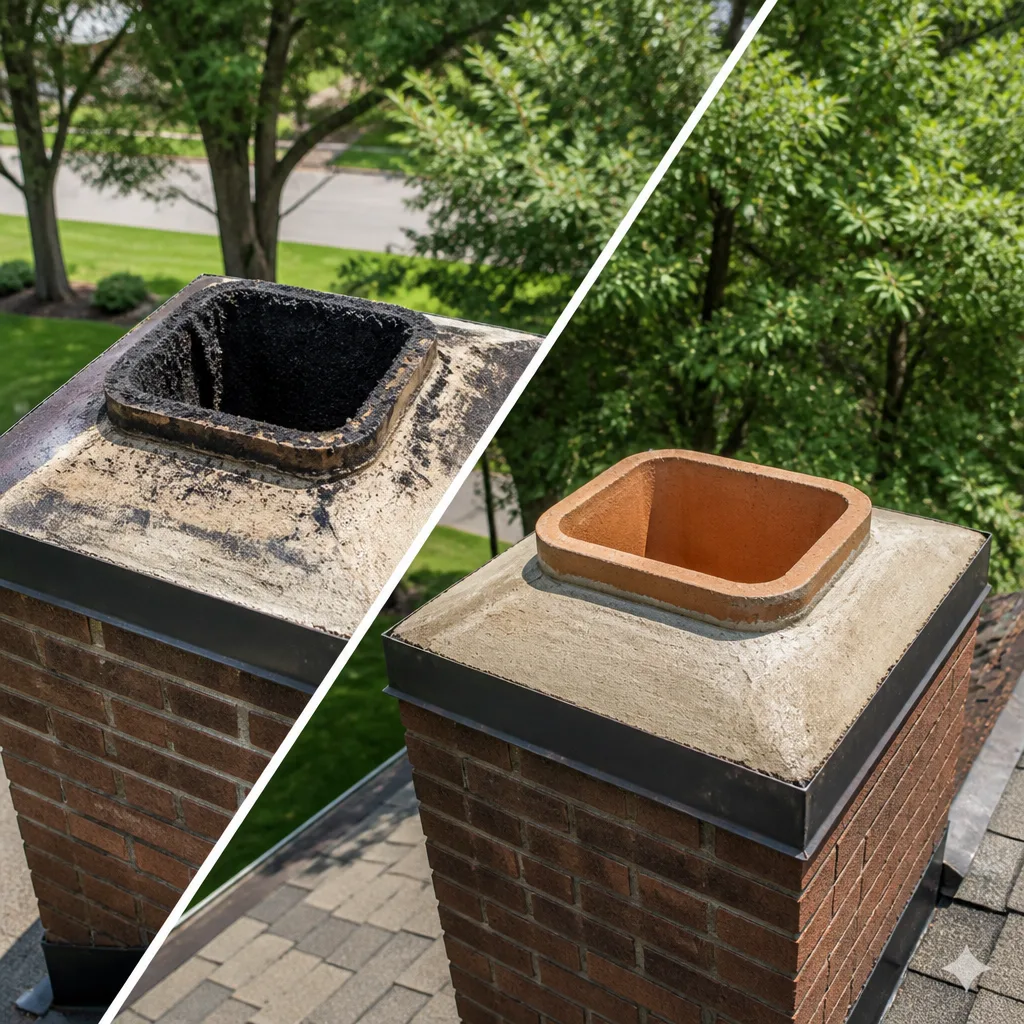
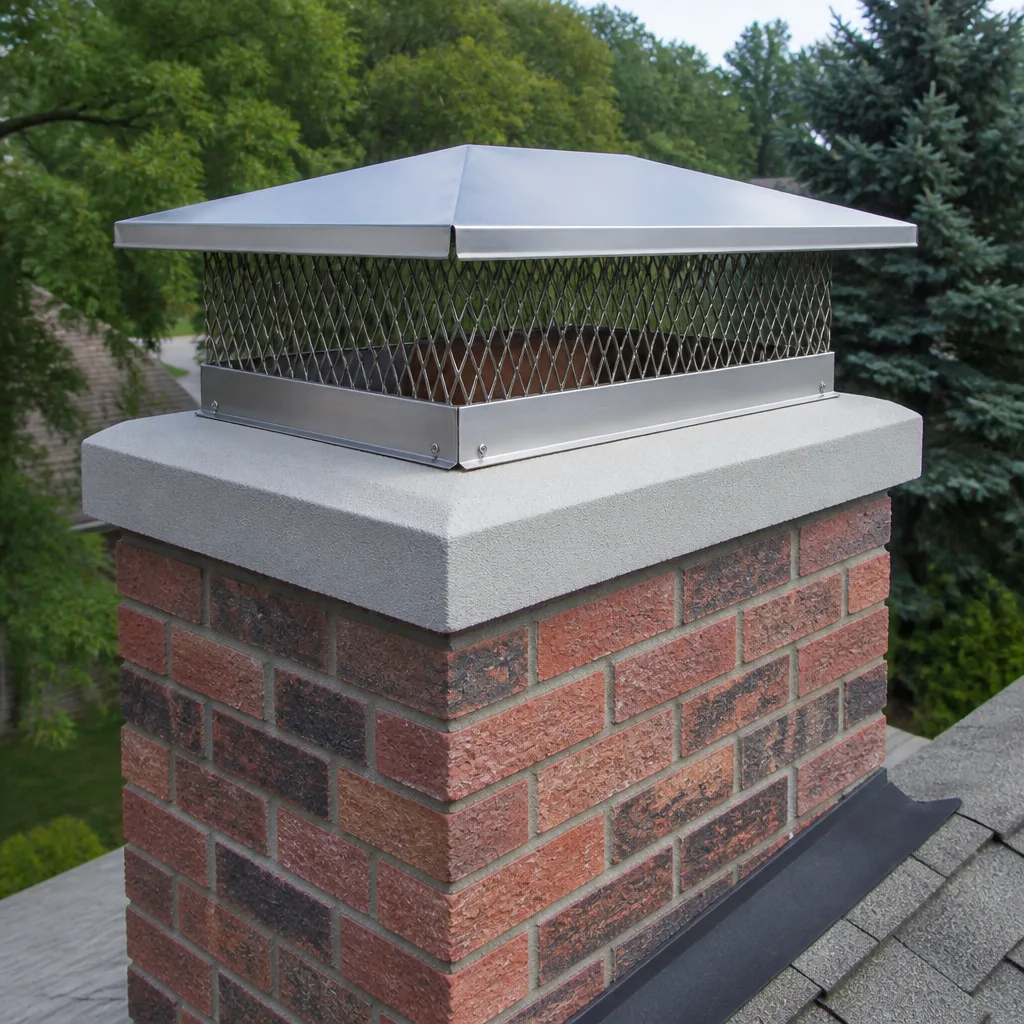
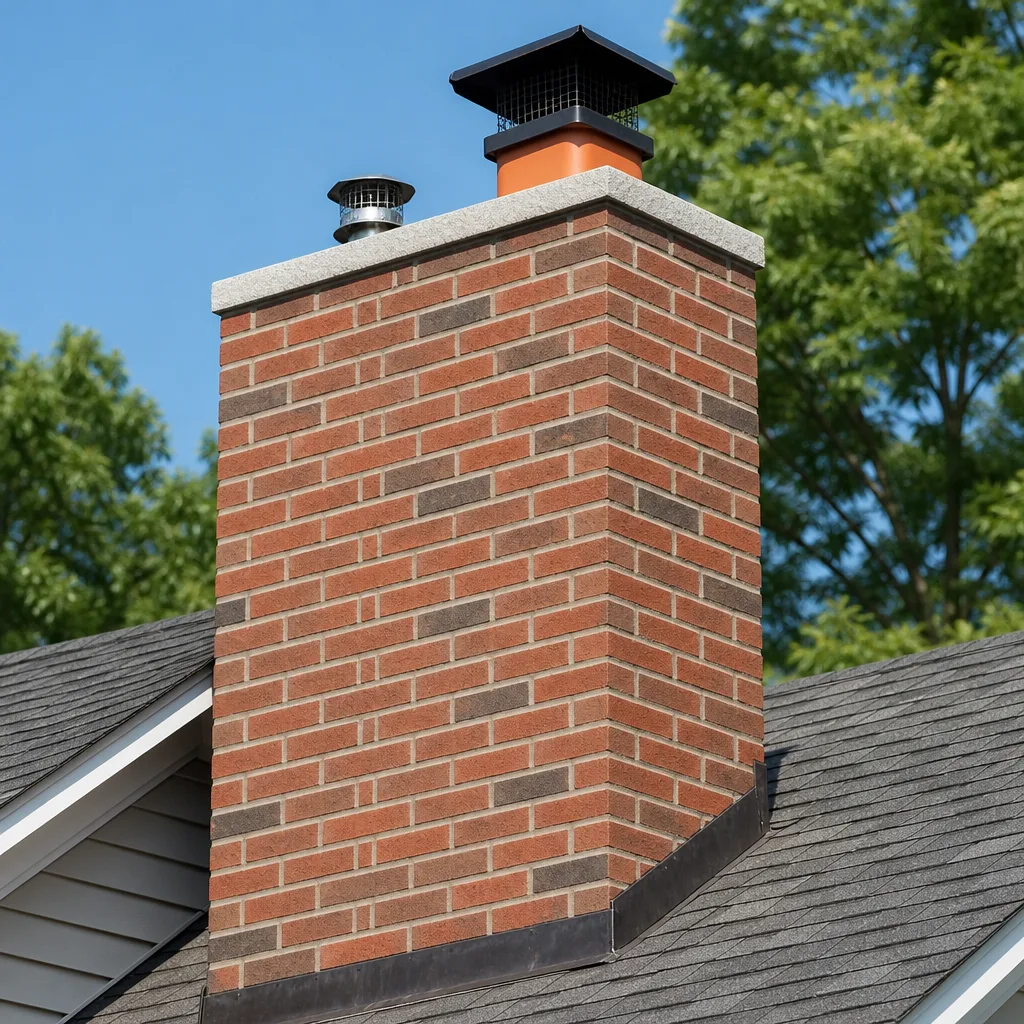
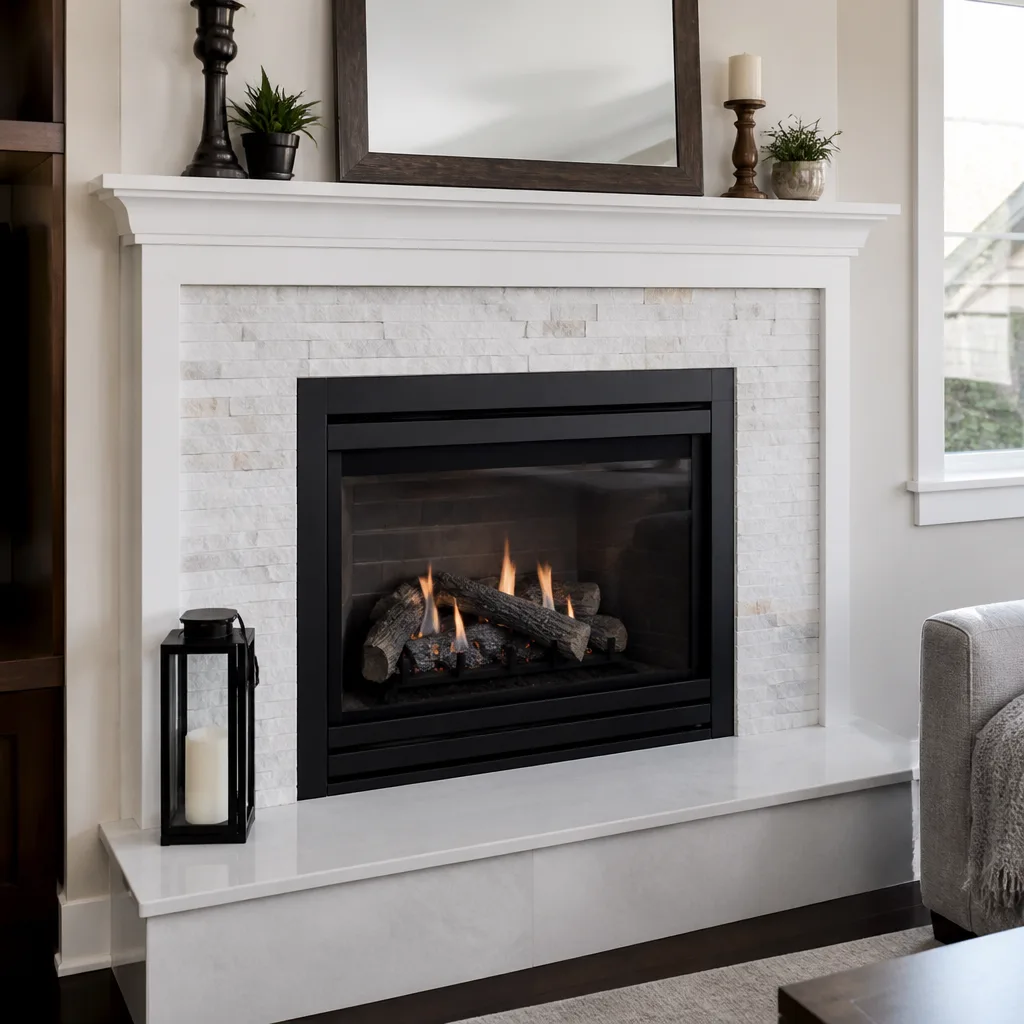
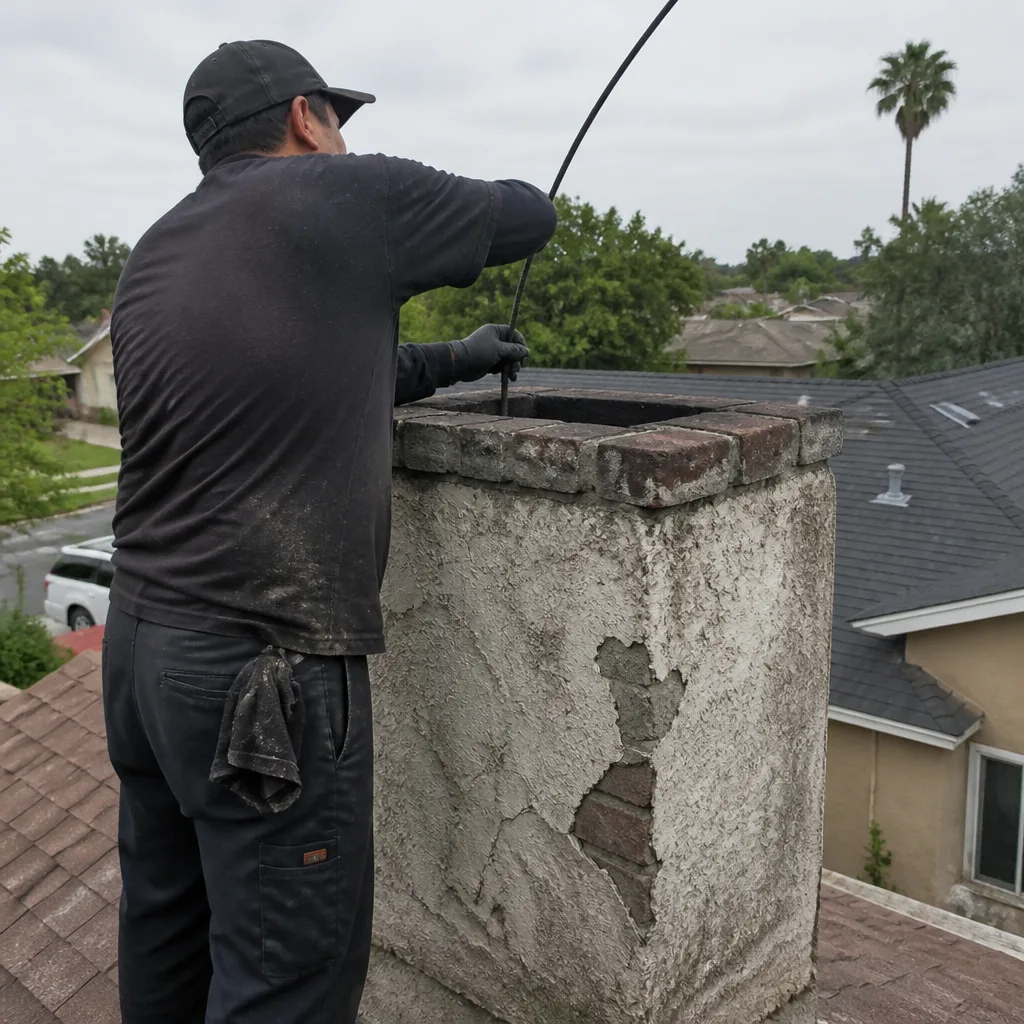 Before
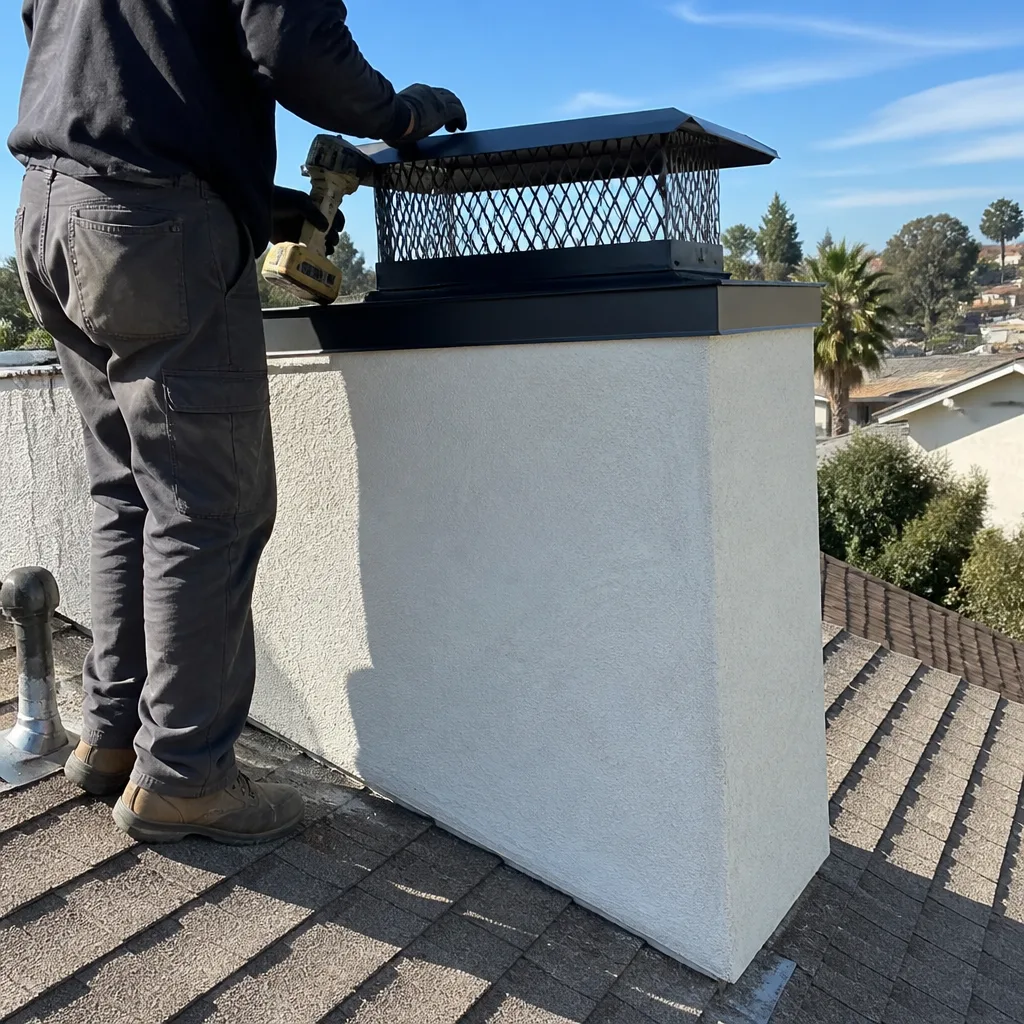 After
After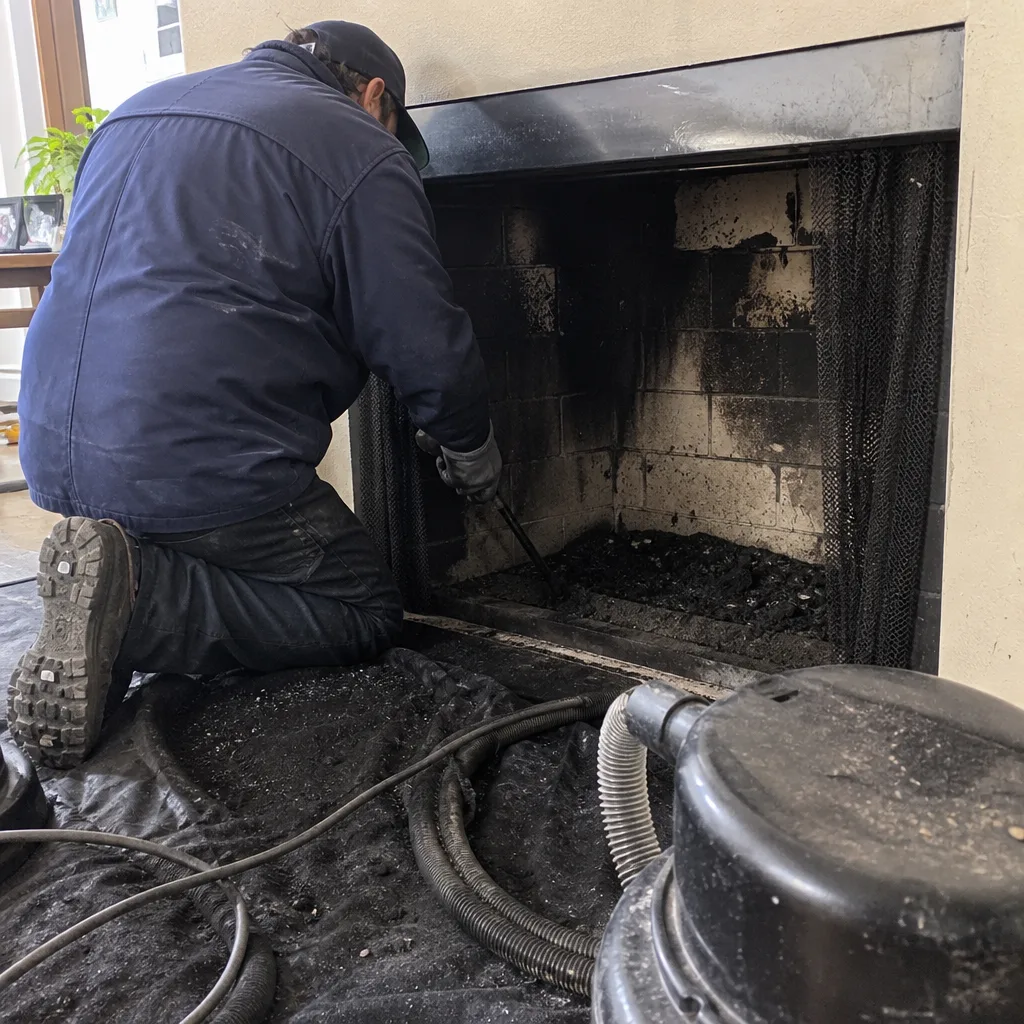 Before
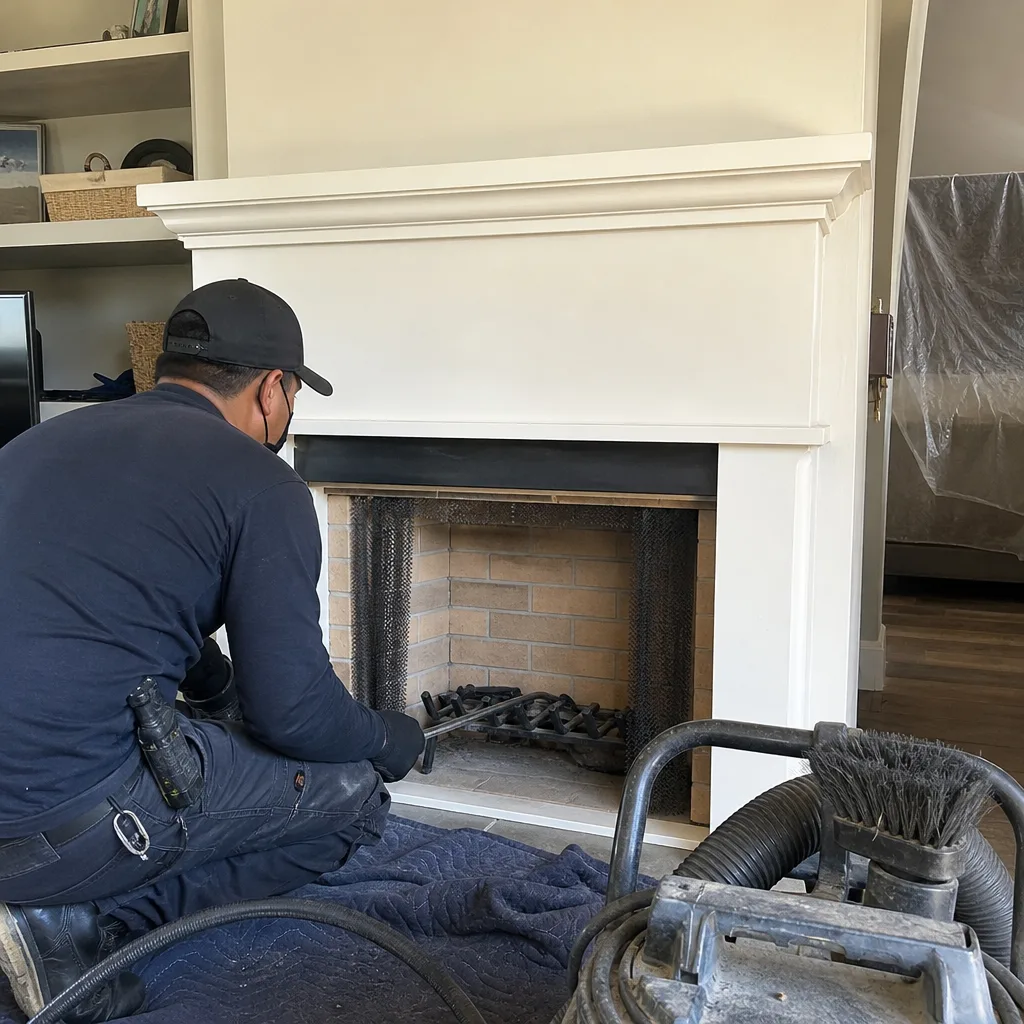 After
After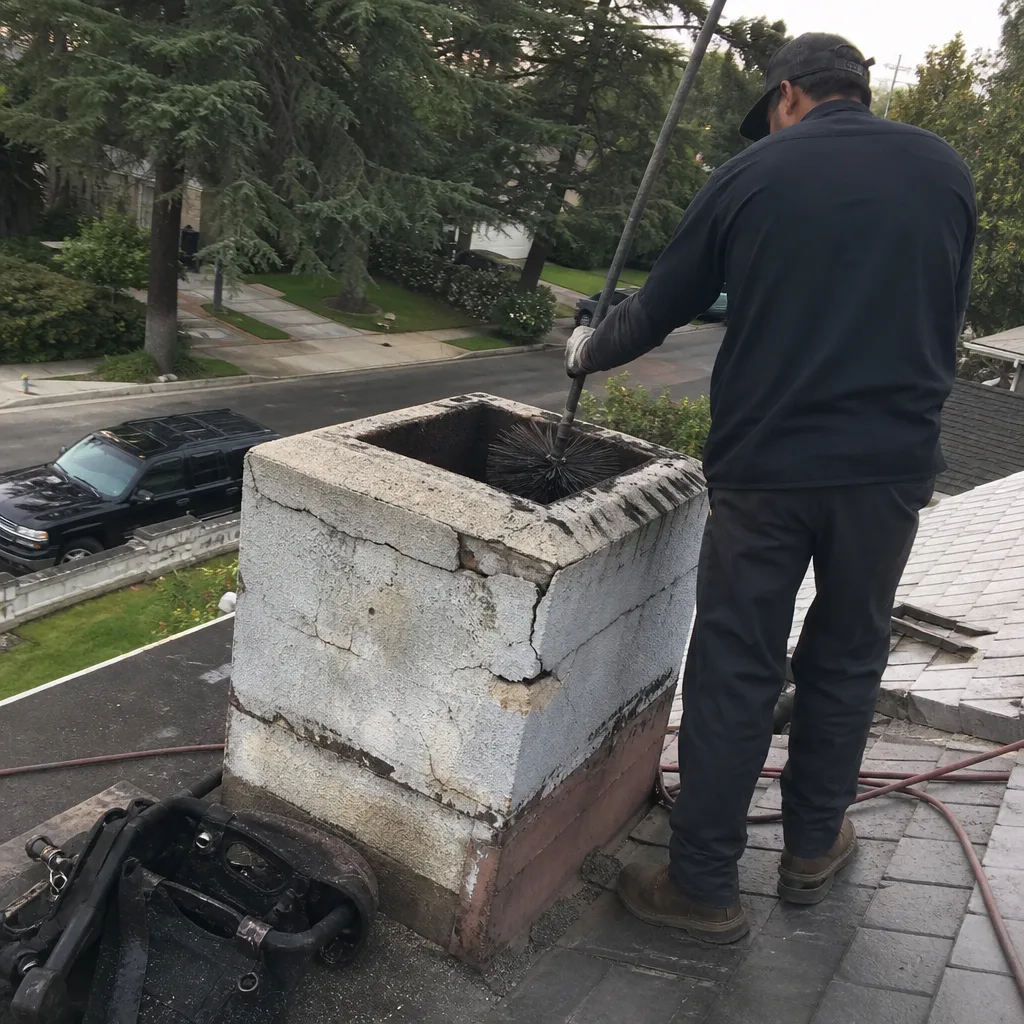 Before
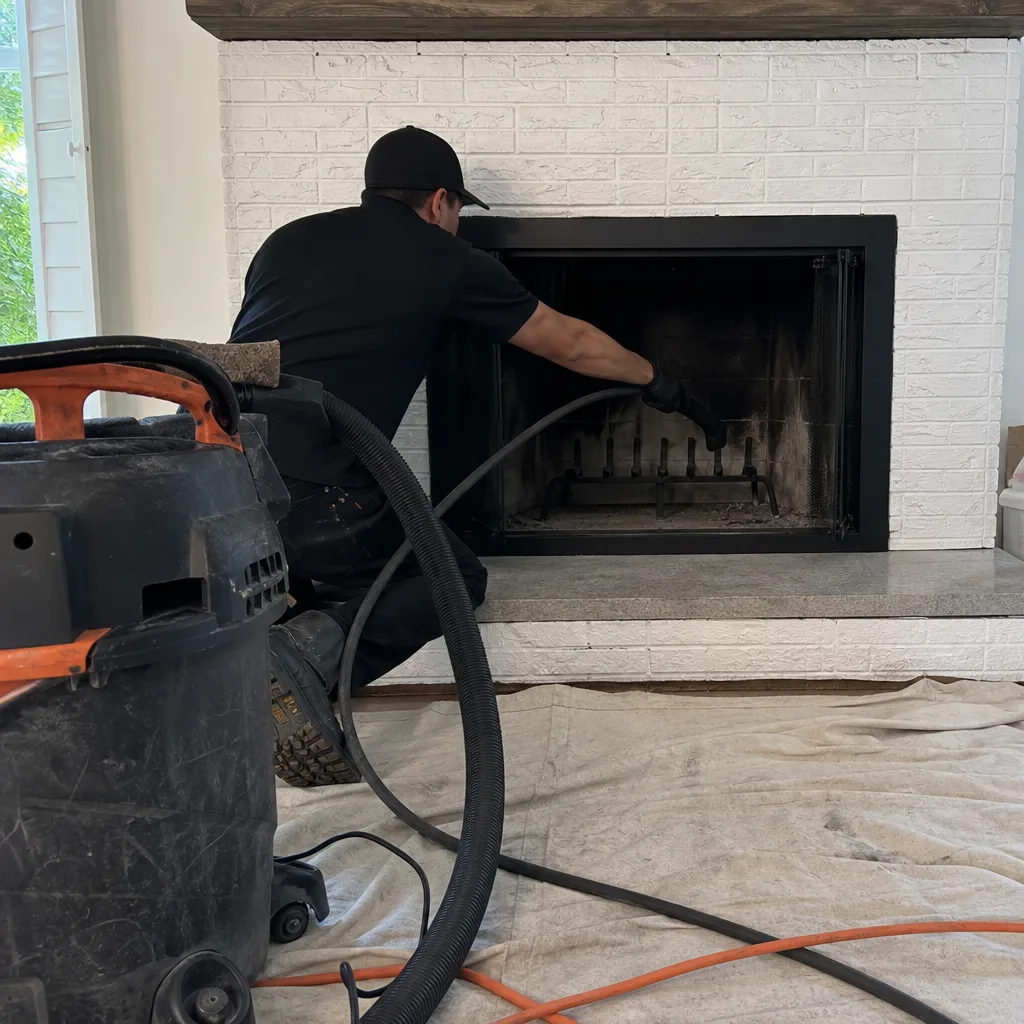 After
AfterStrong Campfire Smell Indoors: What It Means and What to Do
A strong campfire smell inside your home almost always means combustion byproducts – creosote, smoke, or exhaust gases – are moving the wrong direction: into your living space instead of up and out through the flue. In most cases, the fix is a chimney cleaning, a damper adjustment, or a flue-airflow correction. None of those are emergencies you can DIY your way through, but they are well-understood problems with clear solutions.
What’s Happening
That campfire smell is combustion gases reversing course and entering your home instead of exhausting through the flue. It almost always points to one of three things: a significant creosote buildup inside the flue, a ventilation or draft problem that’s pulling air down instead of up, or a damper that isn’t sealing or opening the way it should.
Creosote is the dark, tar-like residue that forms every time wood burns. It coats the interior walls of the flue and, as it builds up, it narrows the airflow path and holds onto the smell of every fire you’ve ever burned. Even when the fireplace is cold, a heavily coated flue can off-gas that campfire odor into the house – particularly on warm, humid days when air pressure changes pull the smell downward. A draft problem compounds this: if your chimney isn’t drawing air upward properly, smoke and smell take the path of least resistance, which is into your living room. Both problems are diagnosable and both are fixable.
Why It Happens
Creosote Buildup
Creosote accumulates on the inside of the flue liner every time you burn wood, and it comes in three forms – flaky, tarry, or hardened glaze. The first stage brushes out easily during a standard sweep. The second and third stages are harder to remove and, more to the point, are what produce that persistent campfire smell even when no fire is burning. If the smell is strongest a day or two after a fire, or during humid weather, heavy creosote is almost certainly the reason. You won’t be able to see into the flue yourself, but if the smell is there year-round and gets worse in summer, that’s a reliable sign.
A Stuck or Improperly Seating Damper
The damper is the metal plate that sits just above the firebox opening. When the fireplace isn’t in use, it’s supposed to close completely and stop outside air – and outside smells – from cycling through the flue. When a damper warps, corrodes, or simply hasn’t been fully closed, it leaves the flue open to the air column above, which can carry smoke residue right back into the house. You can check whether your damper is closed by standing in front of the firebox and looking up with a flashlight – if you can see daylight, it’s open. If it’s closed and the smell is still coming through, the damper may not be seating tightly.
Negative Air Pressure in the House
This one surprises a lot of homeowners. Modern, tightly insulated homes can create a slight vacuum indoors – particularly when exhaust fans, range hoods, or HVAC systems are running. When the house is under negative pressure, it pulls air from anywhere it can find it, including down the chimney flue. The campfire smell comes in with that air. If you notice the smell gets noticeably worse when the kitchen exhaust fan is on, or when windows are closed and the furnace is running, negative air pressure is worth investigating.
Debris, Nesting, or a Blocked Flue
Birds, squirrels, and wasps treat open chimney flues as attractive real estate, particularly in late spring and early fall. A nest – or even a layer of windblown leaves – partway up the flue creates a partial blockage that disrupts the draft and pushes smoke residue back down. If the campfire smell appeared suddenly, around the start of a new season, and you haven’t used the fireplace in a while, debris or an animal nest is a reasonable suspect. A camera inspection will confirm it within minutes.
What to Do Right Now
- Stop using the fireplace until it’s been inspected. If combustion gases are already backdrafting, adding an active fire to the situation increases the risk of carbon monoxide entering the living space. Close the damper if you can do so safely from floor level, and don’t burn again until a technician has looked at the flue.
- Open a window in the room where the smell is strongest. This equalizes air pressure, reduces the pull on the flue, and helps clear the smell while you wait. It’s a temporary measure, not a fix.
- Check your carbon monoxide detectors. If you don’t have one within 15 feet of the fireplace, that’s worth correcting regardless of what’s causing the smell. If any detector is alarming, leave the house and call 911 before calling anyone else – that is not a situation to troubleshoot.
- Take a photograph of the damper area from floor level. A flashlight photo looking up into the firebox takes thirty seconds and gives your technician useful information before they arrive. Note whether the damper plate is visibly open, closed, or corroded.
- Do not attempt to reach into the flue, adjust components above the firebox, or access the chimney from the roof. The flue liner, chimney cap, and roofline components are best left to someone with the right tools and training. Heights aside, a blocked or deteriorated flue can be fragile, and disturbing it without knowing what you’re dealing with can make things worse.
How We Fix It
When your local Alcott Chimney Sweep team arrives, the first step is a camera inspection of the flue – this is not optional and it’s not a sales tool. It’s how a technician actually diagnoses the problem rather than guessing. The camera shows the degree of creosote buildup, the condition of the liner, the damper seal, and whether any obstruction is present.
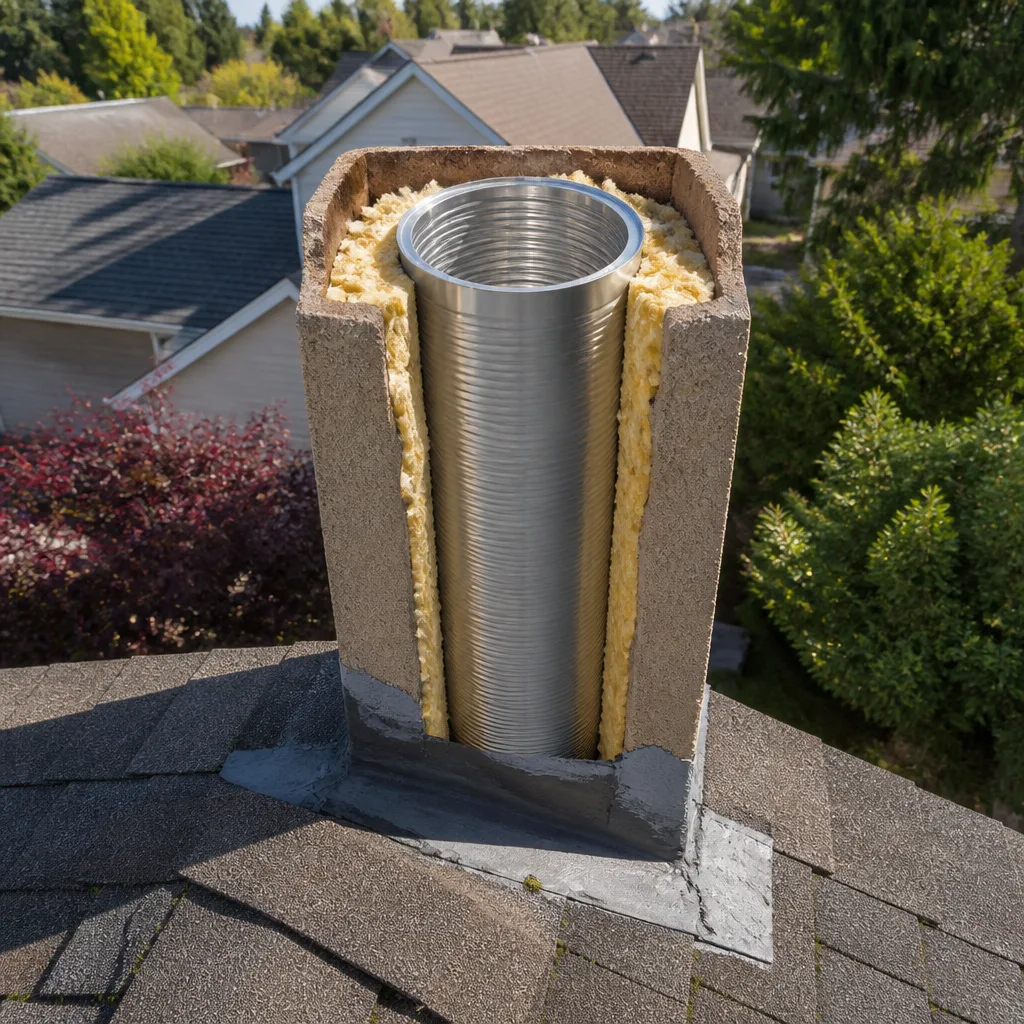
From there, the path is usually a chimney sweep to clear creosote and debris, followed by a damper adjustment or replacement if the plate isn’t seating correctly. If the liner has deteriorated or the creosote has reached a stage that brushing alone won’t address, a HeatShield resurfacing or a DuraFlex liner system may be the right call – and if so, your technician will show you the camera footage that supports the recommendation before anything is written on a work order.
Most visits take between one and two hours. Before any work begins, you’ll receive a written price – no verbal estimates, no figures that change once the job is underway. Every repair is covered by a written guarantee, and if the repair fails within a year, the return visit is free. That’s the 365-Day Done Right Promise, and it applies to every job without exception.
Frequently Asked Questions
It depends on the source, and that’s exactly why it shouldn’t wait. Creosote smell on its own is a nuisance and a fire hazard if the buildup is significant – but backdrafting combustion gases can carry carbon monoxide, which is colorless and odorless and won’t announce itself the way smoke does. If your CO detector is silent and you’ve stopped using the fireplace, the risk is lower, but the underlying cause still needs to be identified before you burn again. Call (336) 863-3889 and let us take a look – the inspection tells you what you’re actually dealing with.
No. If the flue is partially blocked, the damper isn’t seating correctly, or there’s a draft problem, lighting a fire pushes smoke and combustion gases further into the house rather than clearing anything out. Burning off creosote odor isn’t a safe strategy at any stage of buildup, and at the heavier stages it’s an active fire risk. The smell is telling you something – the right response is an inspection, not another fire.
Your local Alcott Chimney Sweep team books appointments as quickly as scheduling allows, and a live person answers the phone at (336) 863-3889 around the clock – no voicemail, no callback queue. Call us and we’ll tell you exactly what availability looks like in your area. If you’re smelling smoke indoors right now and your CO alarm is going off, leave first and call 911. If it’s creosote odor with no alarm sounding, we’ll get you on the schedule as soon as we can.
You’ll see the camera footage yourself. Alcott’s inspection process is not a verbal walk-through – the camera goes into the flue, and your technician will show you what it found before anything else is discussed. If the footage shows deterioration that requires a DuraFlex liner system or HeatShield resurfacing, you’ll see it. If it shows a flue that just needs a good sweep, that’s what gets written on the work order. Nothing is recommended without evidence, and nothing starts before you’ve seen a written price and agreed to it. Call (336) 863-3889 if you want to talk through what to expect before the visit.
Get It Fixed
A campfire smell indoors isn’t something to air out and ignore. Call (336) 863-3889 – a live person answers around the clock – or book online to schedule your inspection. Your local Alcott Chimney Sweep team will send you your technician’s name and photo before we arrive, show a photo ID badge at the door, and put every price in writing before any work begins.
Written by Ruben Castellano, Owner at Alcott Chimney Sweep, part of the Threshold Group family of home-service companies, serving homeowners since 2002.
What Our Customers Say
"Fast and tidy. Fireplace draws properly again."
- Mina K."Good chimney cleaning. They found a small gap in the mortar and quoted the repair, which was a bit more than I wanted to spend. Did the sweep and left the repair for later without any pressure."
- Stuart L."Left no soot anywhere. Even brought a vacuum with a sealed filter. I'd use them again every fall."
- Beth H.