

Level 1 sweep and inspection to the NFPA 211 annual standard - flue, crown, cap, and flashing checked and photographed
Chimney sweep logs do not sweep chimneys. They loosen some creosote - which then falls where a brush and vacuum still have to collect it.
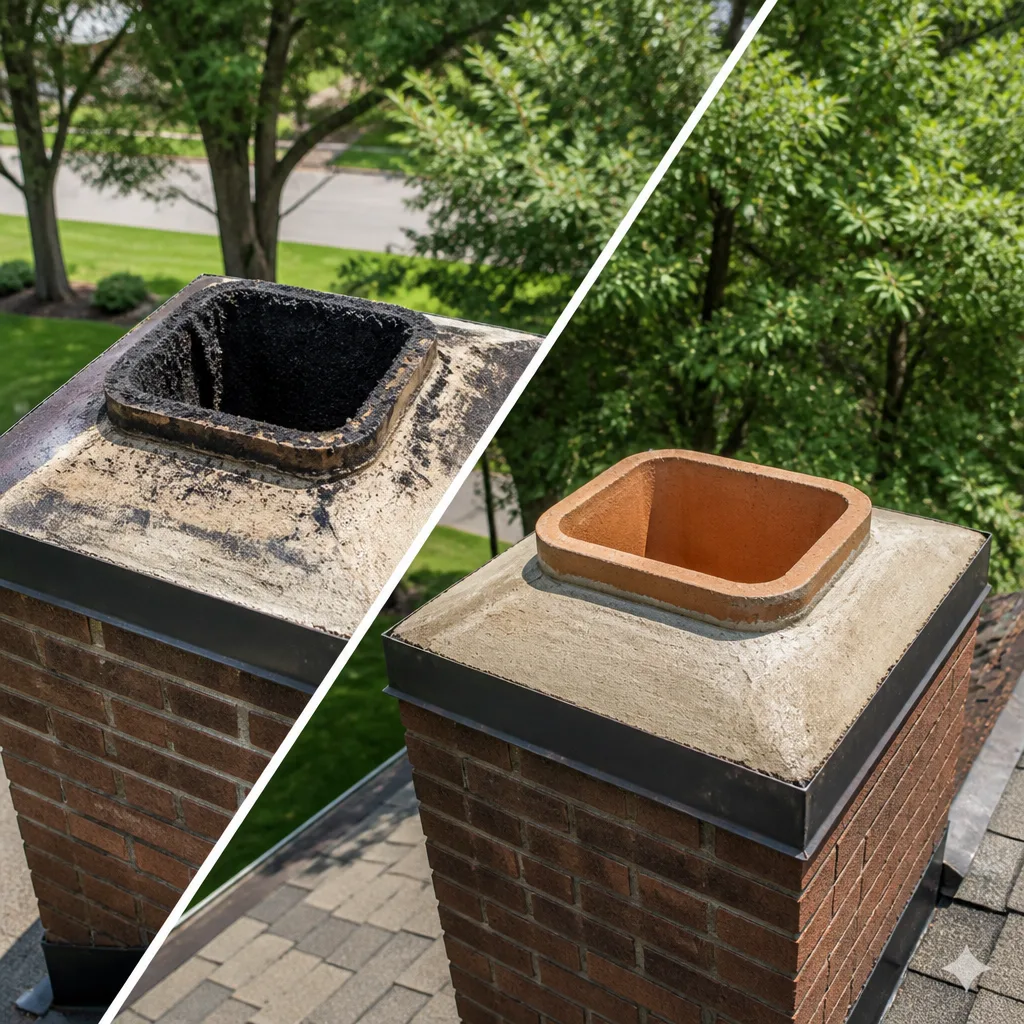
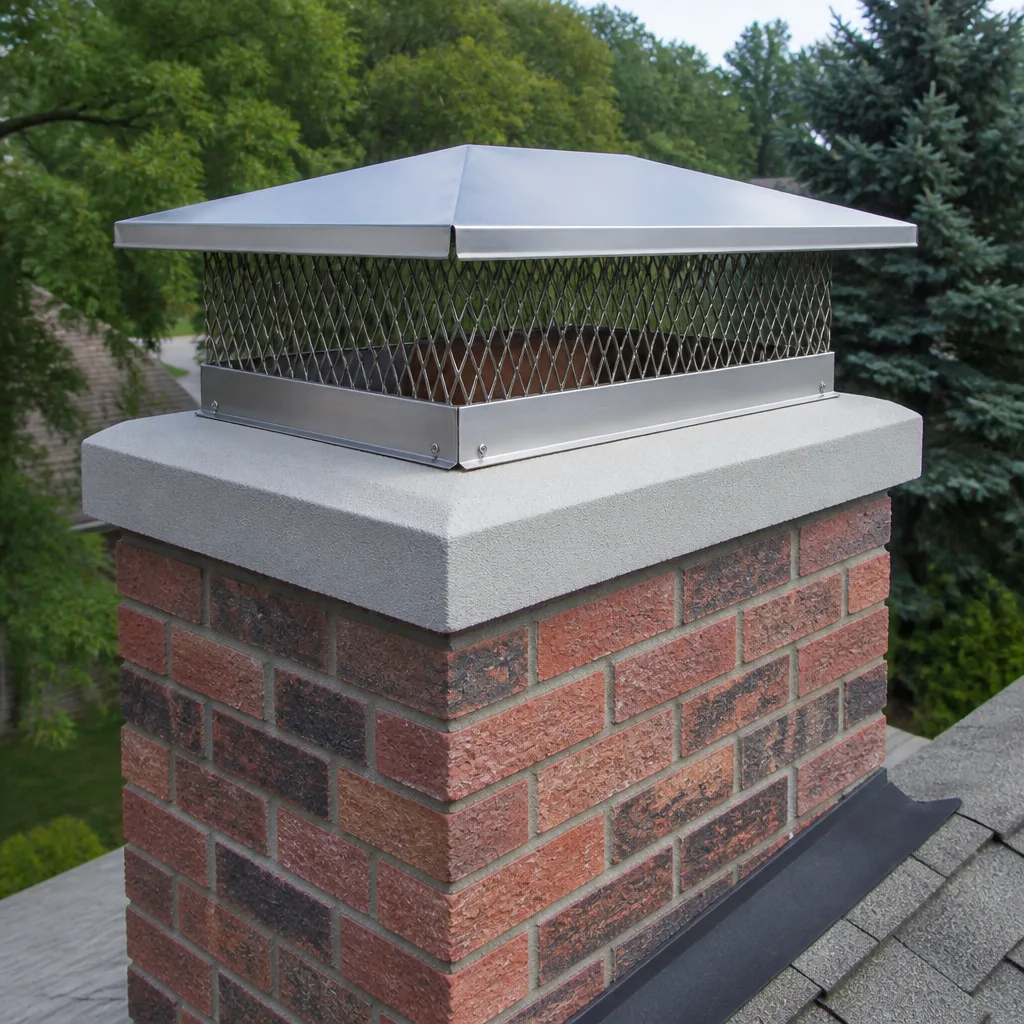
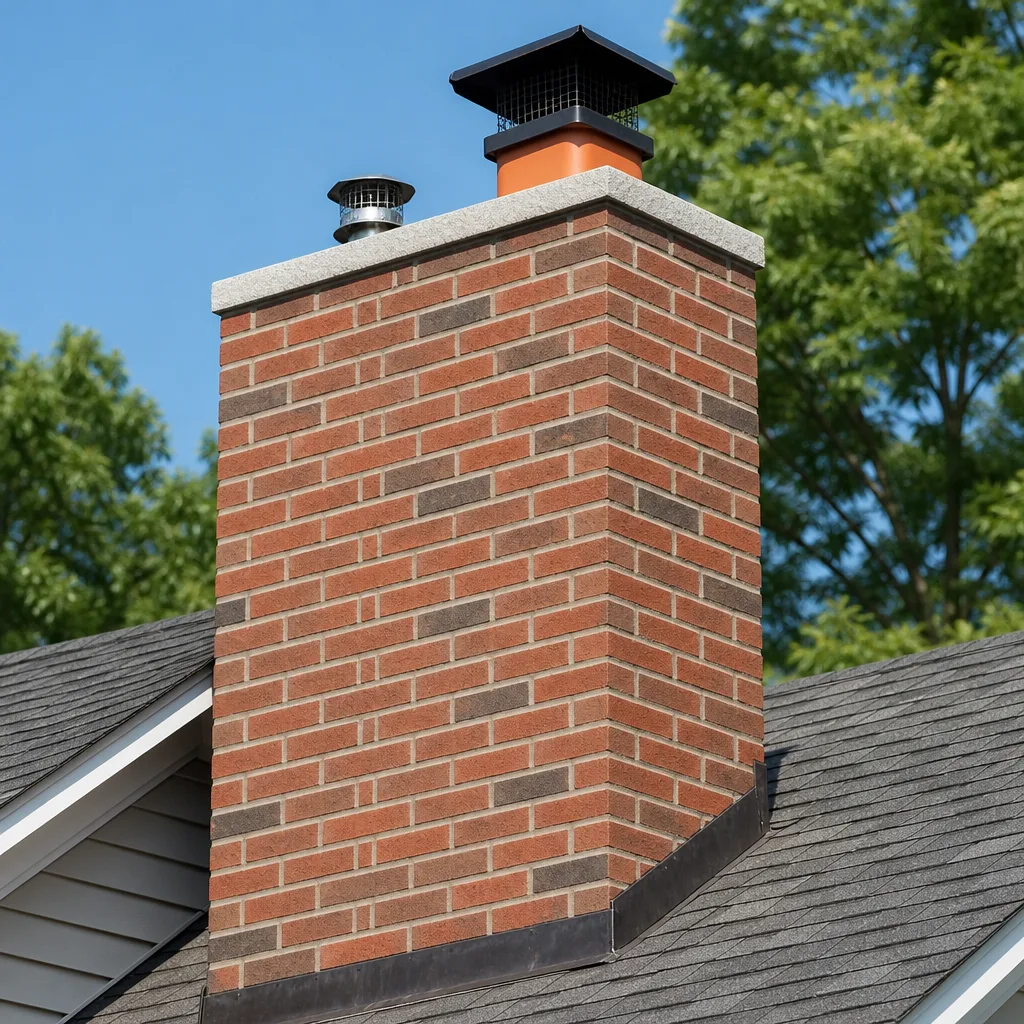
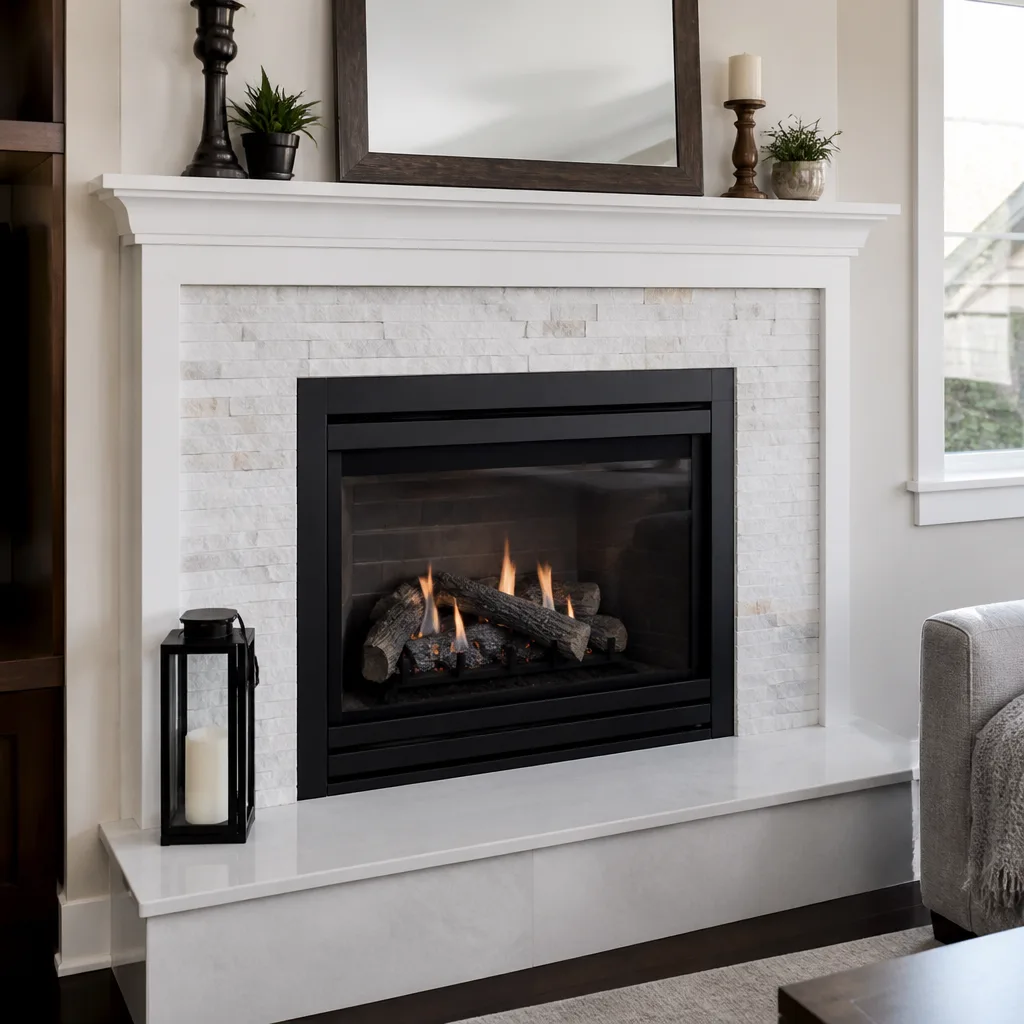
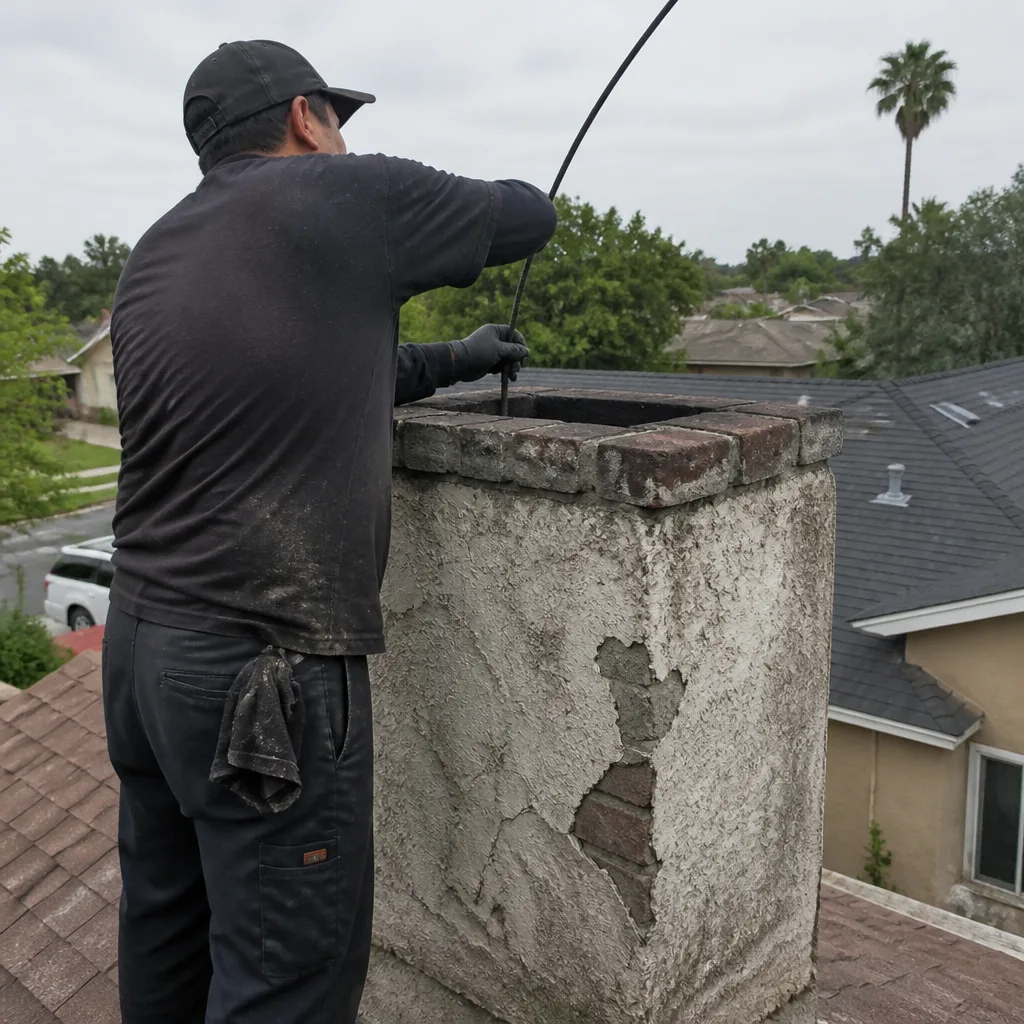 Before
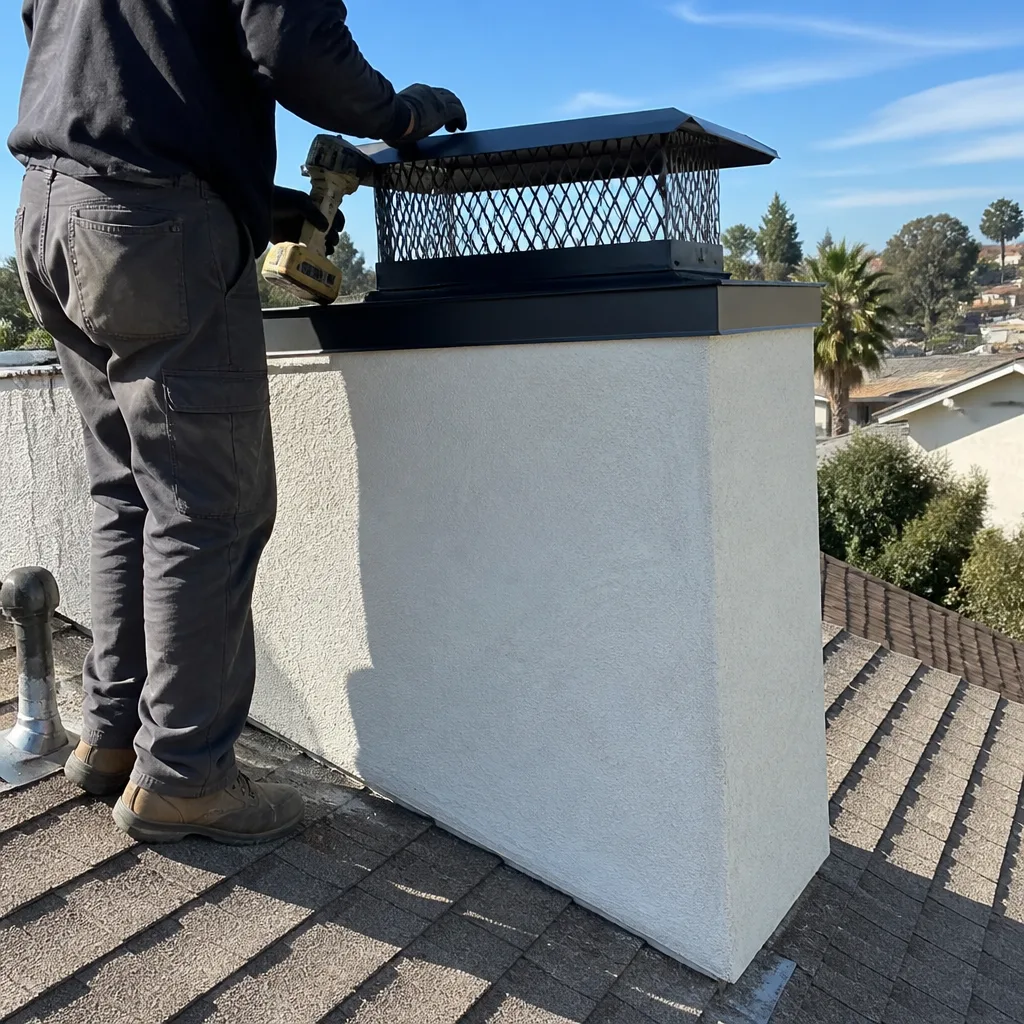 After
After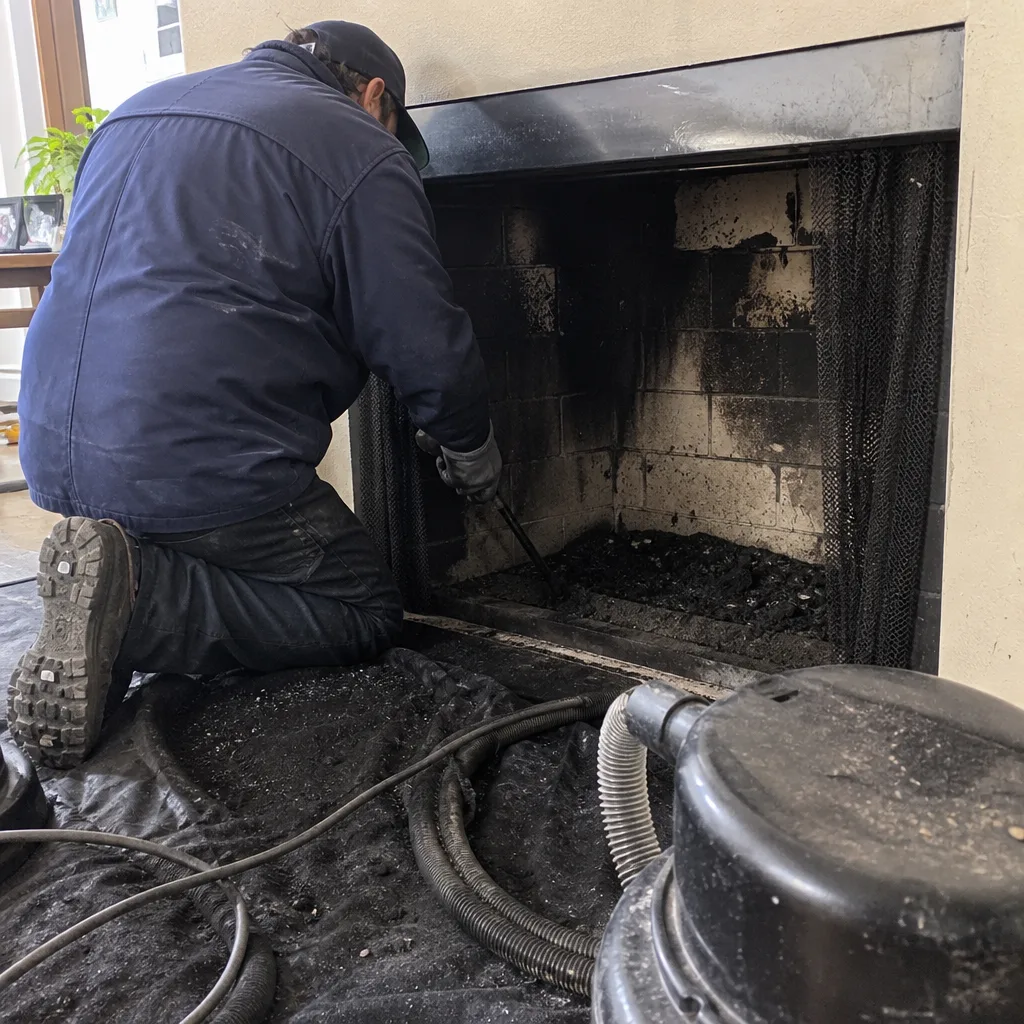 Before
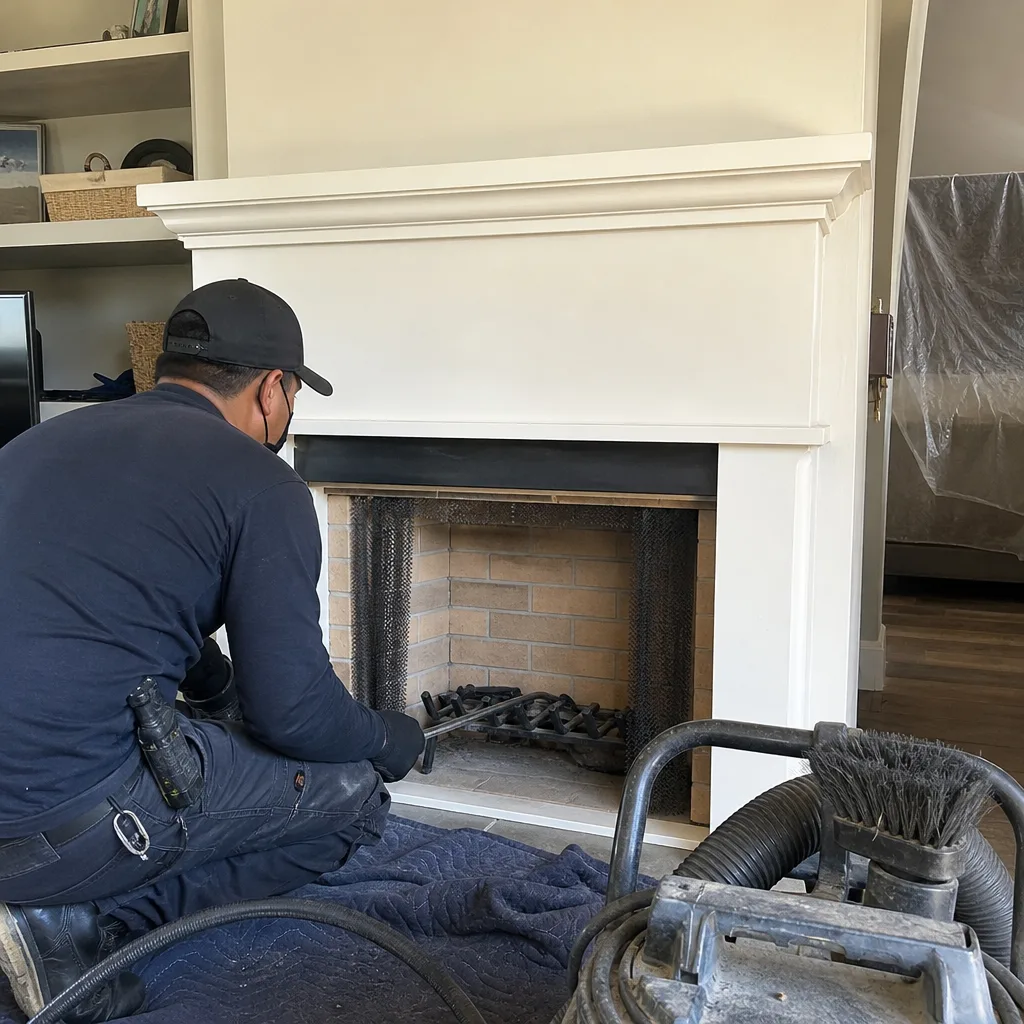 After
After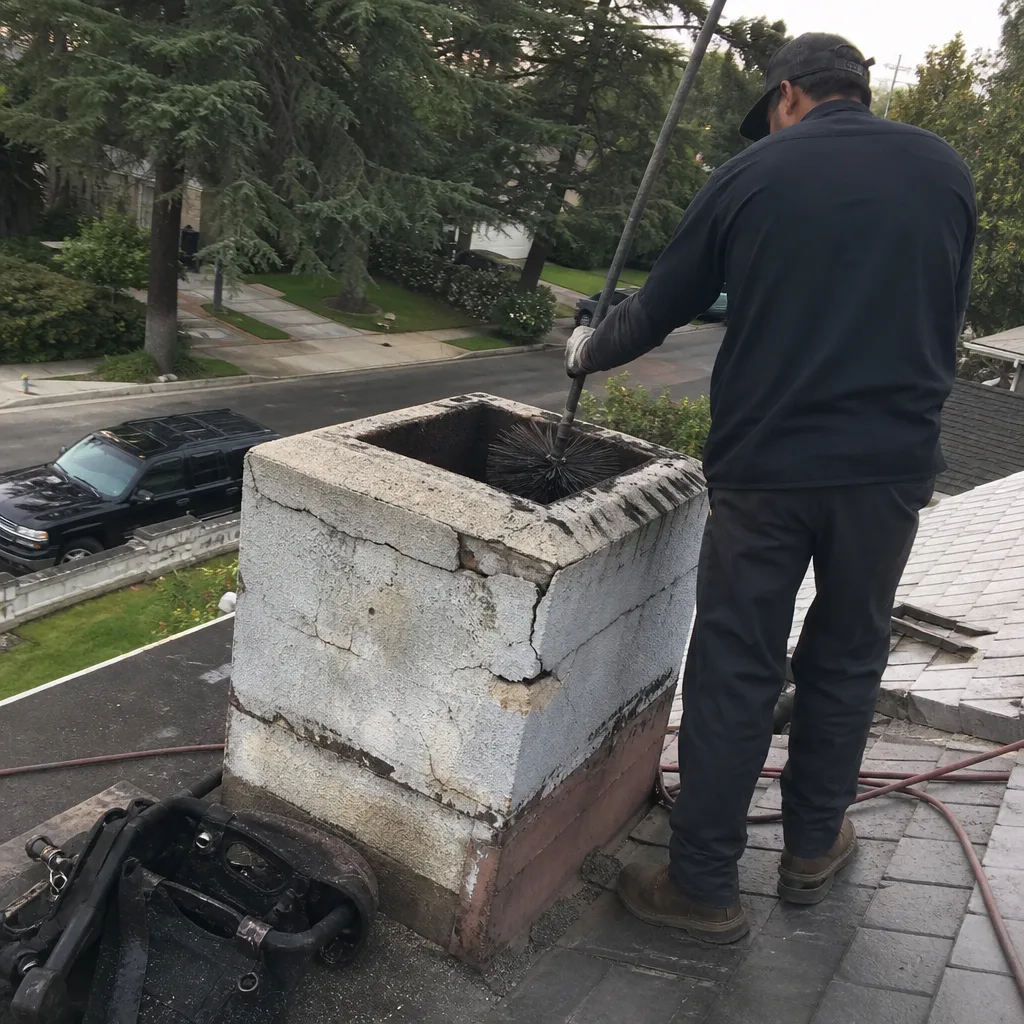 Before
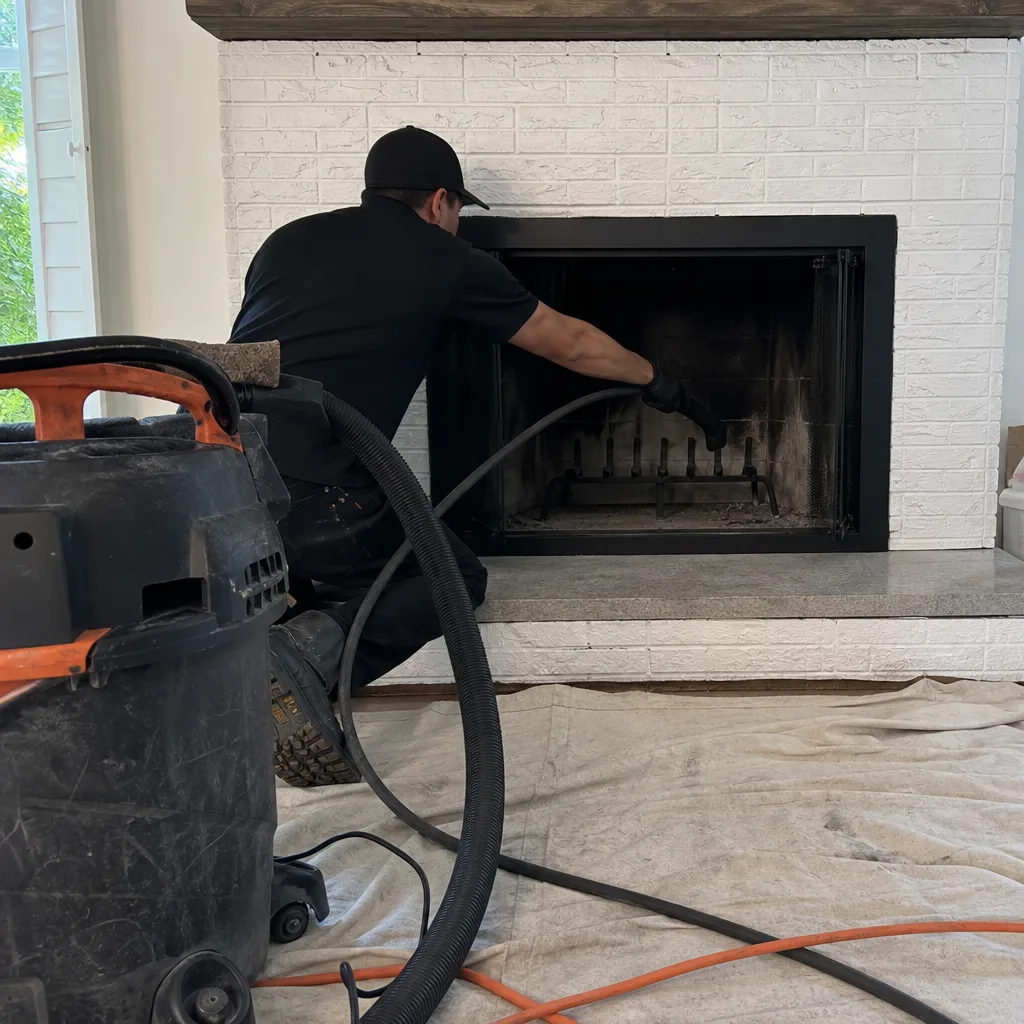 After
AfterWhite staining on the outside of the chimney
What’s Happening
That white, chalky powder or streaking on the outside of your chimney is called efflorescence. It almost always means water is moving through the masonry and pushing dissolved mineral salts to the surface as it evaporates. On its own, efflorescence is not a structural emergency, but it is a reliable sign that moisture is getting into places it shouldn’t.
Think of it as the chimney’s way of leaving a paper trail. Water gets in somewhere, travels through the brick or mortar, picks up mineral salts along the way, and then deposits them on the outer surface when it dries. The staining itself is harmless; the water causing it is not. Left alone, that moisture continues working through freeze-thaw cycles, slowly widening cracks, eroding mortar joints, and eventually threatening the structural integrity of the whole chimney stack. The good news is that catching it early usually means a straightforward fix.
Why It Happens
Failed or missing chimney crown
The chimney crown is the concrete or mortar cap that seals the top of the chimney stack around the flue opening. When it cracks or crumbles, rainwater runs straight down into the masonry rather than shedding off to the sides. If the efflorescence is heaviest near the top of the chimney and you can see a visible crack or missing chunk at the very top when you look up from ground level, a deteriorated crown is the most likely culprit.
Damaged or absent flashing
Flashing is the metal seal where the chimney meets the roof. When it pulls away, rusts through, or was never properly sealed to begin with, water follows the joint straight into the chimney’s base. Efflorescence that concentrates low on the chimney, right around the roofline, and is accompanied by water stains on the ceiling near the fireplace, points strongly toward flashing failure.
Deteriorating mortar joints
Mortar is softer and more porous than the brick around it, so it erodes first. Once the mortar between courses of brick starts to hollow out or crumble, it acts like a channel, pulling water directly into the masonry. If you can see gaps, crumbling edges, or mortar that looks recessed more than a quarter-inch between the bricks, that’s a strong indicator. This is one of the most common causes of persistent efflorescence on older chimneys.
No waterproof sealant, or a sealant that has worn out
Masonry is naturally porous. A breathable waterproof sealer applied to the exterior slows water absorption significantly, but those coatings don’t last forever. If the chimney hasn’t been sealed in several years, or was never sealed at all, even modest rainfall can push moisture through the brick face. Efflorescence that appears across the broad face of the chimney rather than at specific joints or the top often points here.
What to Do Right Now
- Stop using the fireplace. If water is moving through the masonry, there’s a real chance the flue liner or damper has taken damage you can’t see from the outside. Using the fireplace before an inspection adds risk for no good reason.
- Photograph everything you can see from the ground. Take wide shots of the staining and close-ups of any obvious cracks, crumbling mortar, or gaps around the flashing. Good photos help the technician understand the scope before arriving and can speed up the assessment.
- Check indoors for water stains. Look at the ceiling around the fireplace, the firebox itself, and the area around the damper. Water stains or a musty smell inside confirm that moisture has already gotten further than the outer masonry.
- Do not attempt to inspect the crown, flashing, or upper chimney yourself. Chimney stack work is at-height work on an uneven, often sloped surface. It’s genuinely dangerous without proper equipment and training. Look from the ground, photograph what you can see, and leave the roof-level inspection to the technician.
- Hold off on scrubbing the staining. It may be tempting to clean it off, but leaving it in place gives the technician a clearer picture of where the water is traveling and how long it has been moving. It can always be cleaned after the source is fixed.
How We Fix It
When your local Alcott Chimney Sweep team arrives, the first step is a chimney inspection, not a sales pitch. The technician examines the crown, flashing, mortar joints, and the flue liner, and tells you exactly what they find. Nothing is recommended without a clear reason tied to what they can see.
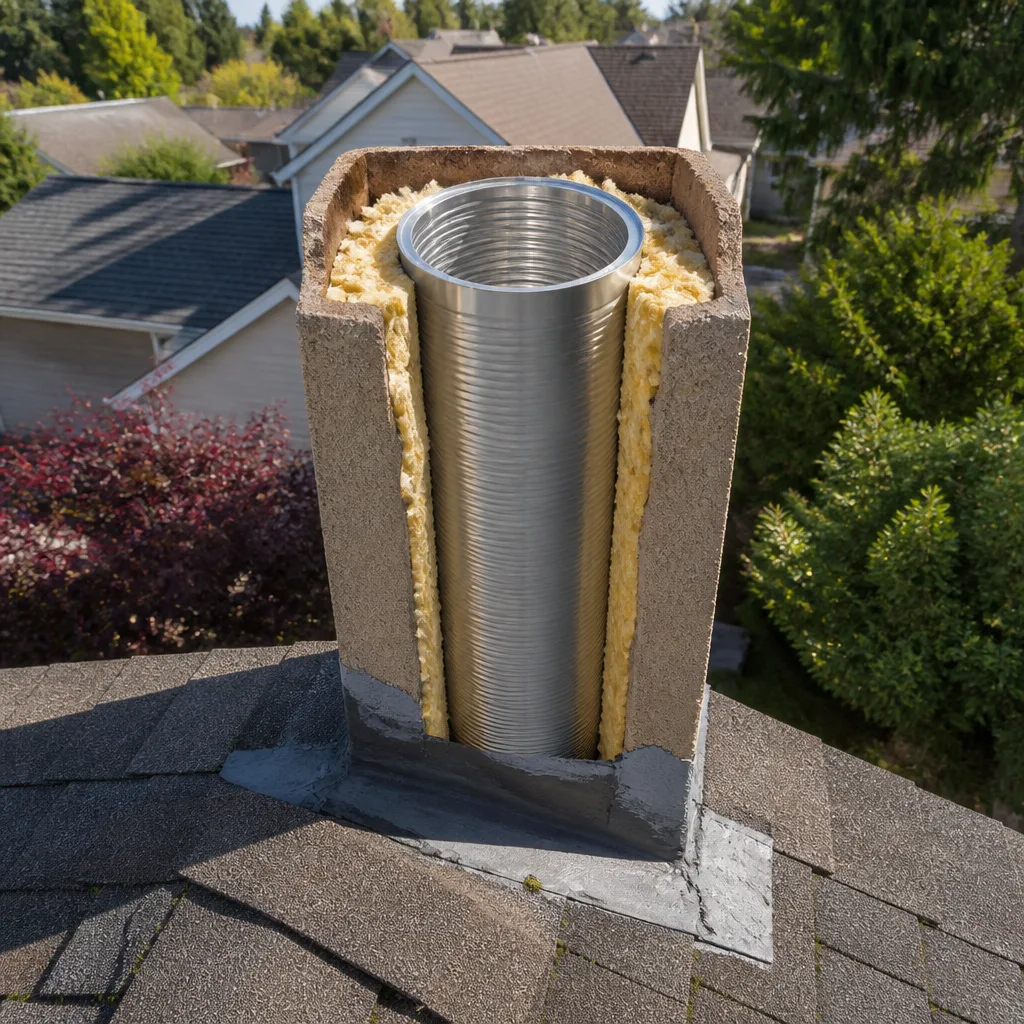
Depending on what the inspection turns up, the repair path typically involves one or more of the following: repointing deteriorated mortar joints, resealing or replacing the crown, reseating flashing, applying a breathable masonry waterproofing treatment, or, if the flue liner has taken damage, installing a DuraFlex liner system or applying HeatShield resurfacing. Both are professional trade products, not box-store substitutes, and they carry their own manufacturer standards.
Before any work starts, you receive a written price. That’s not a soft commitment, it’s how every Alcott job works. The repair is also backed by a written guarantee, and the 365-Day Done Right Promise means that if the repair fails within a year, the return visit is free. Most assessments and straightforward repairs are completed in a single visit.
Frequently Asked Questions
Efflorescence itself isn’t the danger, but the moisture causing it is. Water working through masonry through repeated freeze-thaw cycles will eventually crack bricks, hollow out mortar joints, and compromise the structural integrity of the chimney stack. It can also damage the flue liner over time, which is where genuine fire and carbon monoxide risk lives. Getting it inspected sooner rather than later is the right call, especially before burning season starts. Call (336) 863-3889 and your local team will get you scheduled.
Alcott Chimney Sweep schedules visits in your area, and availability varies by location and time of year. The fastest way to find out is to call (336) 863-3889, where a live person answers every call, around the clock. No voicemail, no callback queue. They’ll tell you exactly what’s open.
A liner replacement is genuinely necessary when the existing liner is cracked, separated, or missing sections, because a compromised liner allows combustion gases, including carbon monoxide, to enter the living space. It’s not a precaution, it’s a safety requirement at that point. That said, nothing is recommended at Alcott without the inspection findings to back it up, and a HeatShield resurfacing treatment is sometimes the right repair instead of a full replacement, depending on the liner’s condition. You’ll see exactly what the technician found before anyone asks you to approve anything.
The honest answer is that the cost depends entirely on what the inspection finds, because “white staining on the chimney” can mean a simple waterproof sealant application or a more involved crown repair and repointing job. Alcott doesn’t quote prices before seeing the chimney, but every customer receives a written estimate before any work begins, so you know the exact number before committing to anything. Call (336) 863-3889 to schedule a no-obligation assessment.
Get It Fixed
Your local Alcott Chimney Sweep team is ready to take a look. Call (336) 863-3889 anytime, day or night, and a live person picks up. Or book online to pick a time that works for you. Written price before any work starts, backed by the 365-Day Done Right Promise.
Written by Ruben Castellano, Owner at Alcott Chimney Sweep, part of the Threshold Group family of home-service companies since 2002.
What Our Customers Say
"Fast and tidy. Fireplace draws properly again."
- Mina K."Good chimney cleaning. They found a small gap in the mortar and quoted the repair, which was a bit more than I wanted to spend. Did the sweep and left the repair for later without any pressure."
- Stuart L."Left no soot anywhere. Even brought a vacuum with a sealed filter. I'd use them again every fall."
- Beth H.