
Last updated October 9, 2026
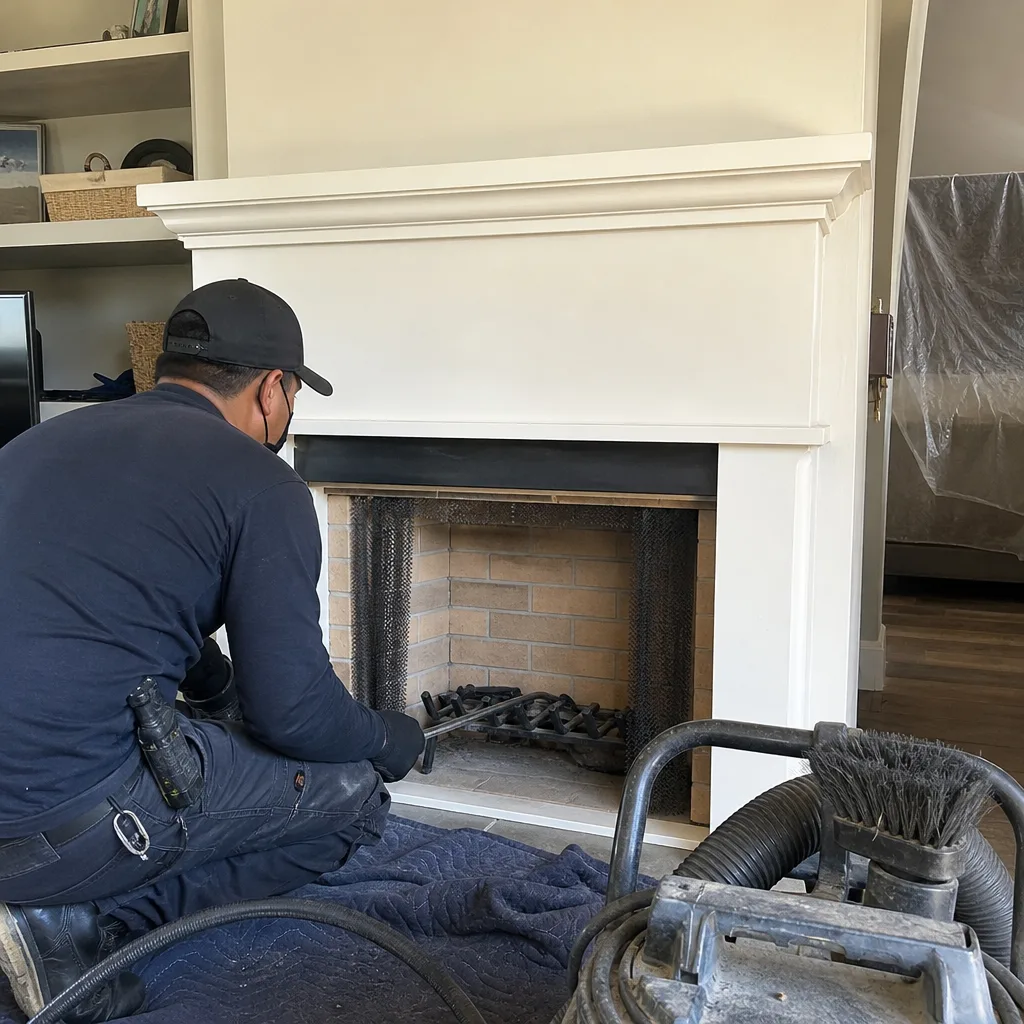
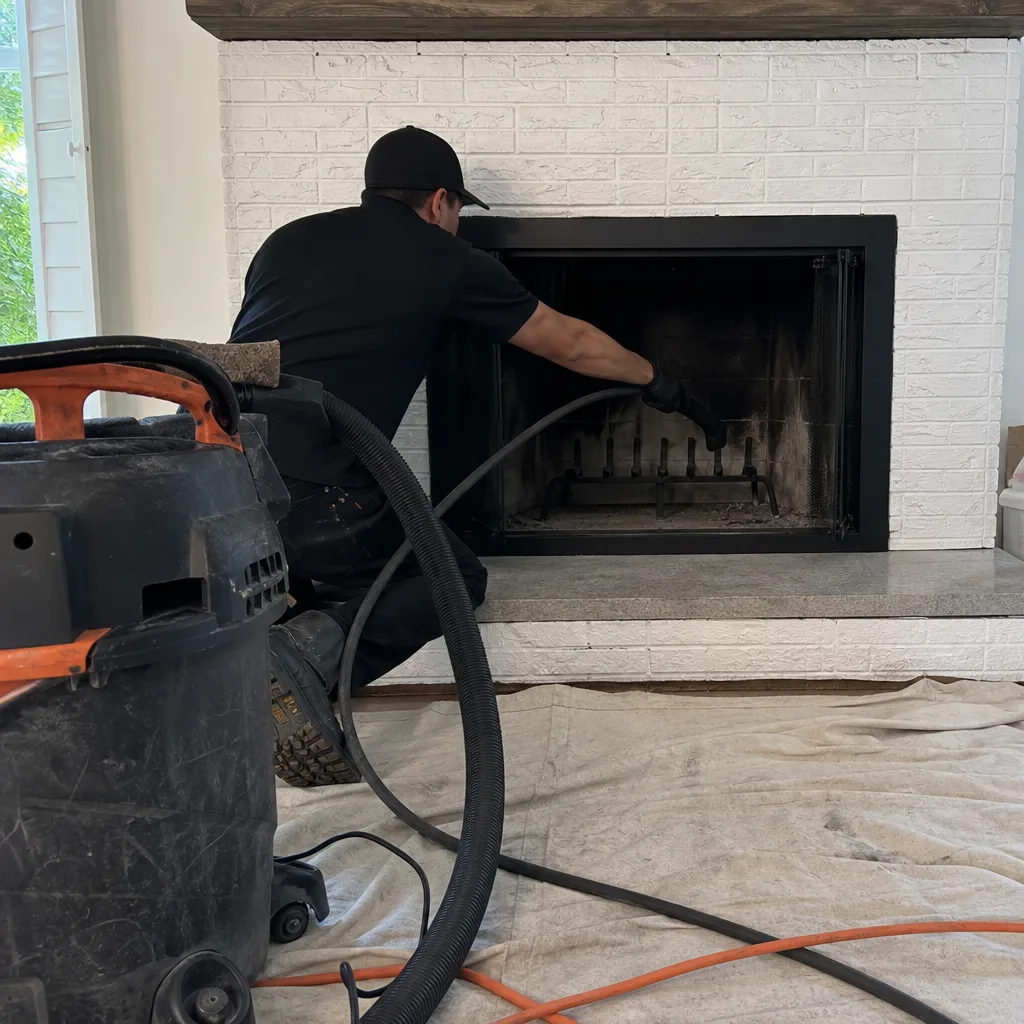
Level 1 sweep and inspection to the NFPA 211 annual standard - flue, crown, cap, and flashing checked and photographed
Chimney sweep logs do not sweep chimneys. They loosen some creosote - which then falls where a brush and vacuum still have to collect it.
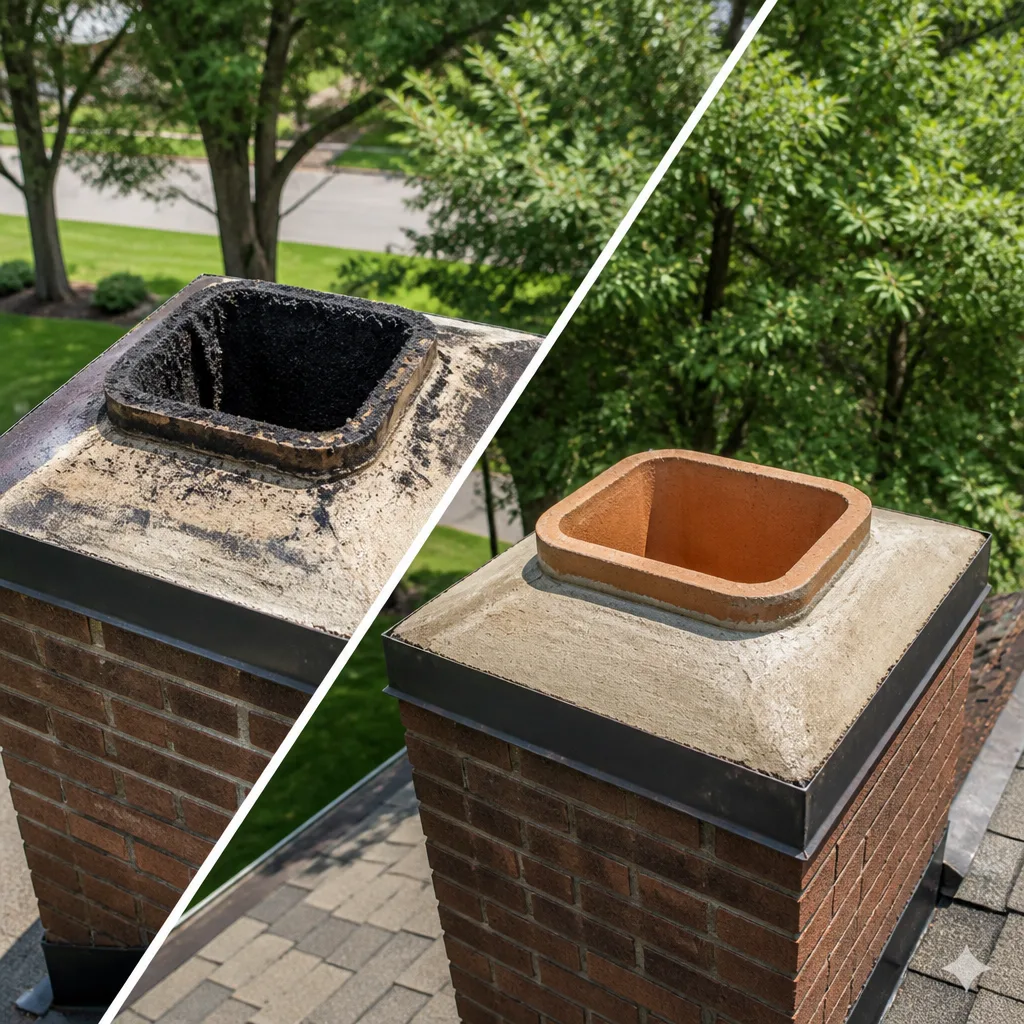
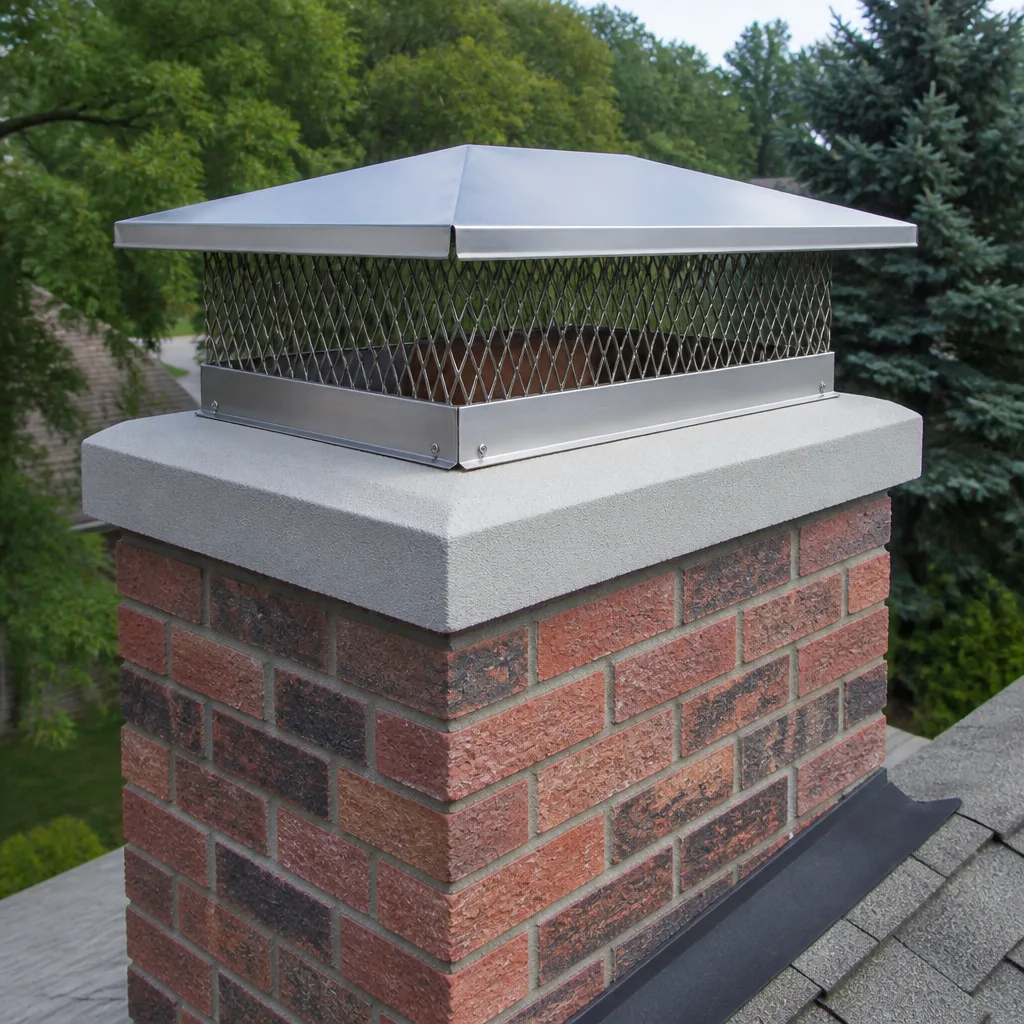
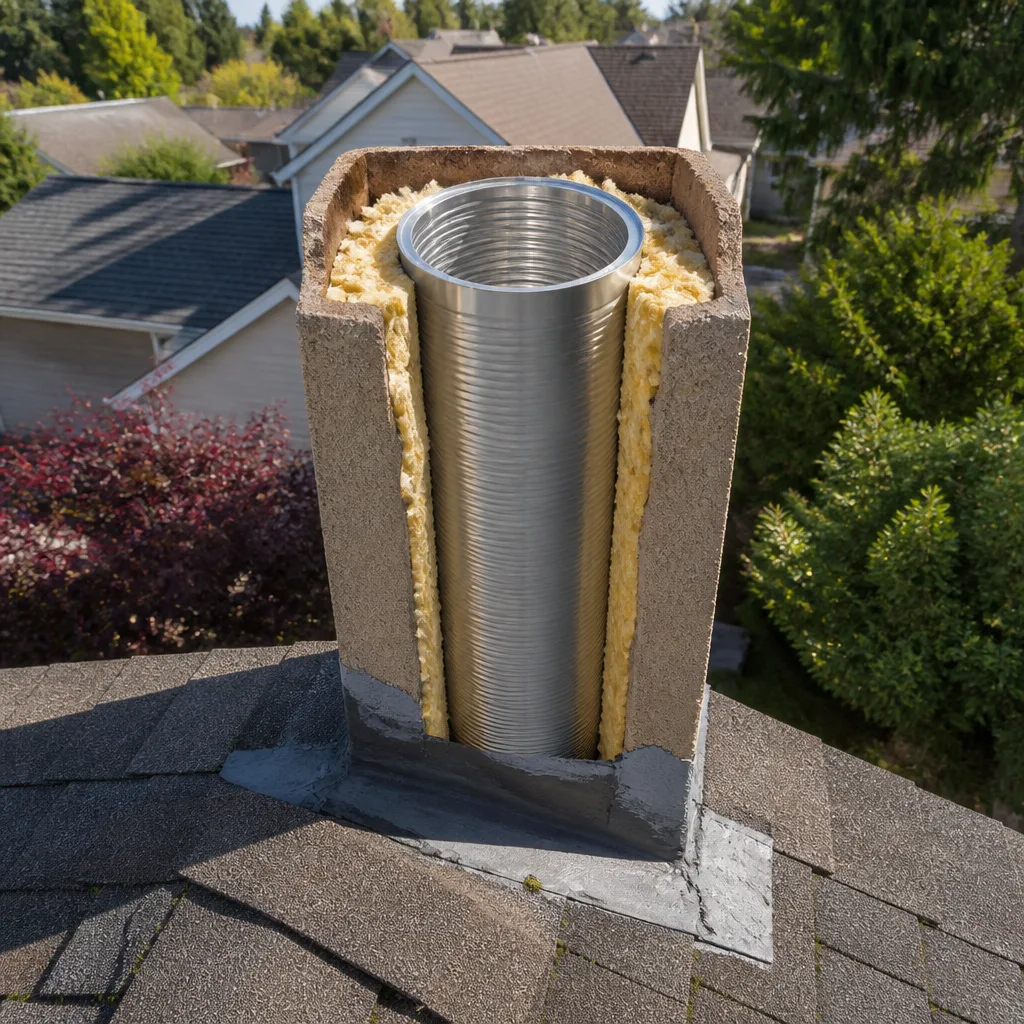
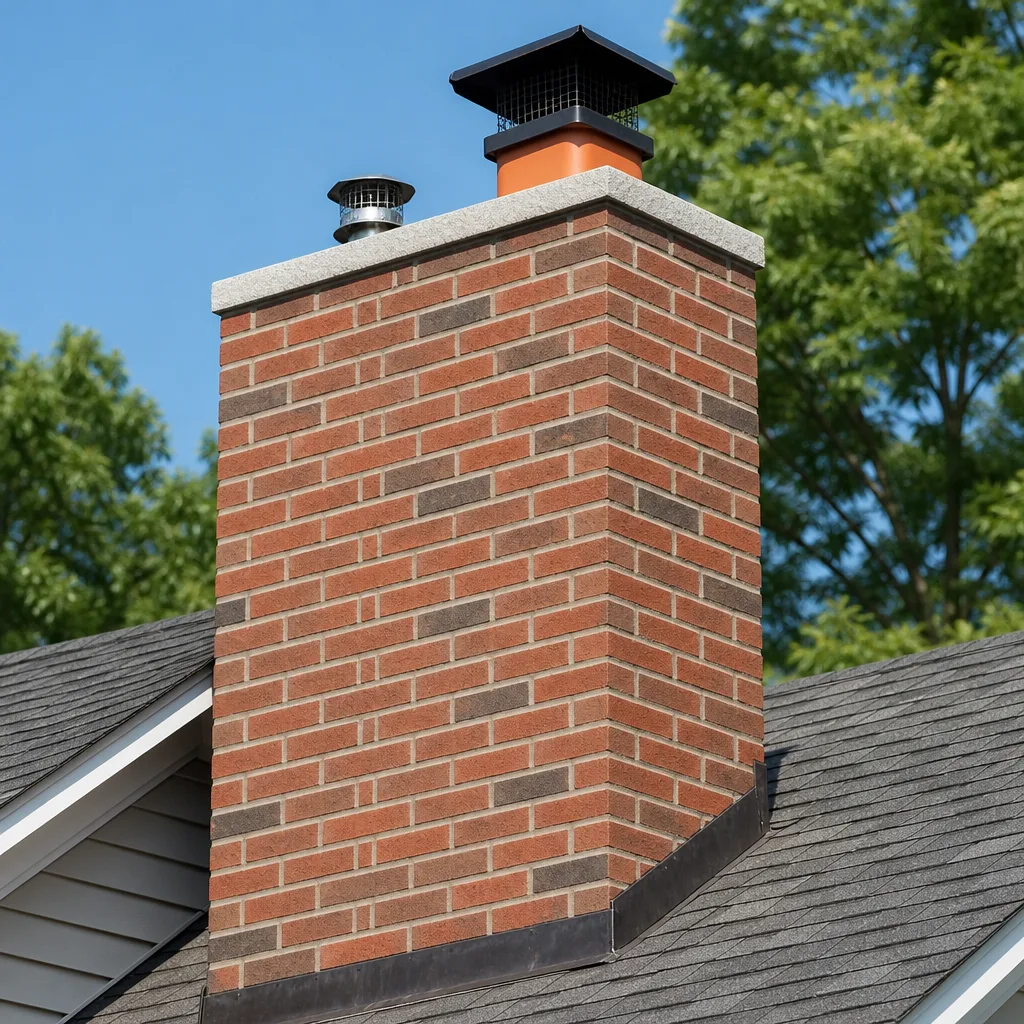
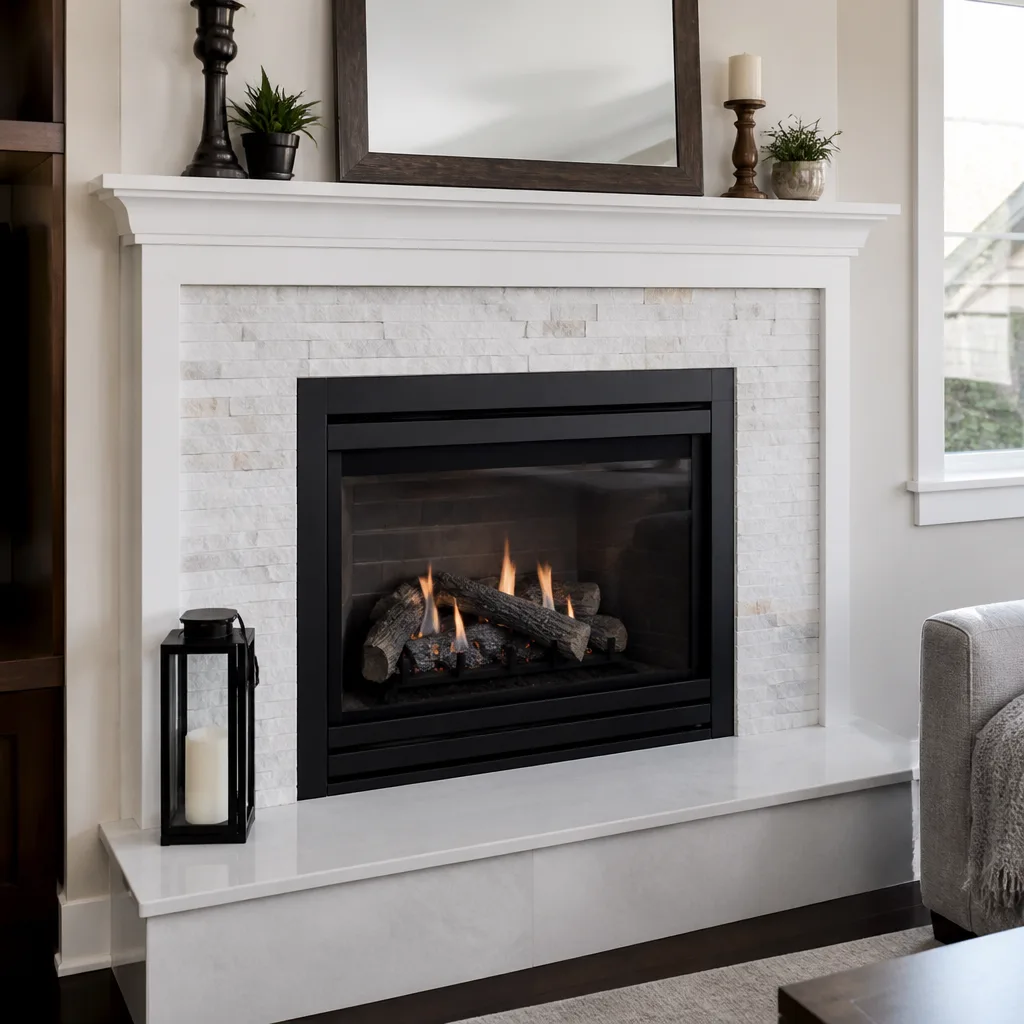
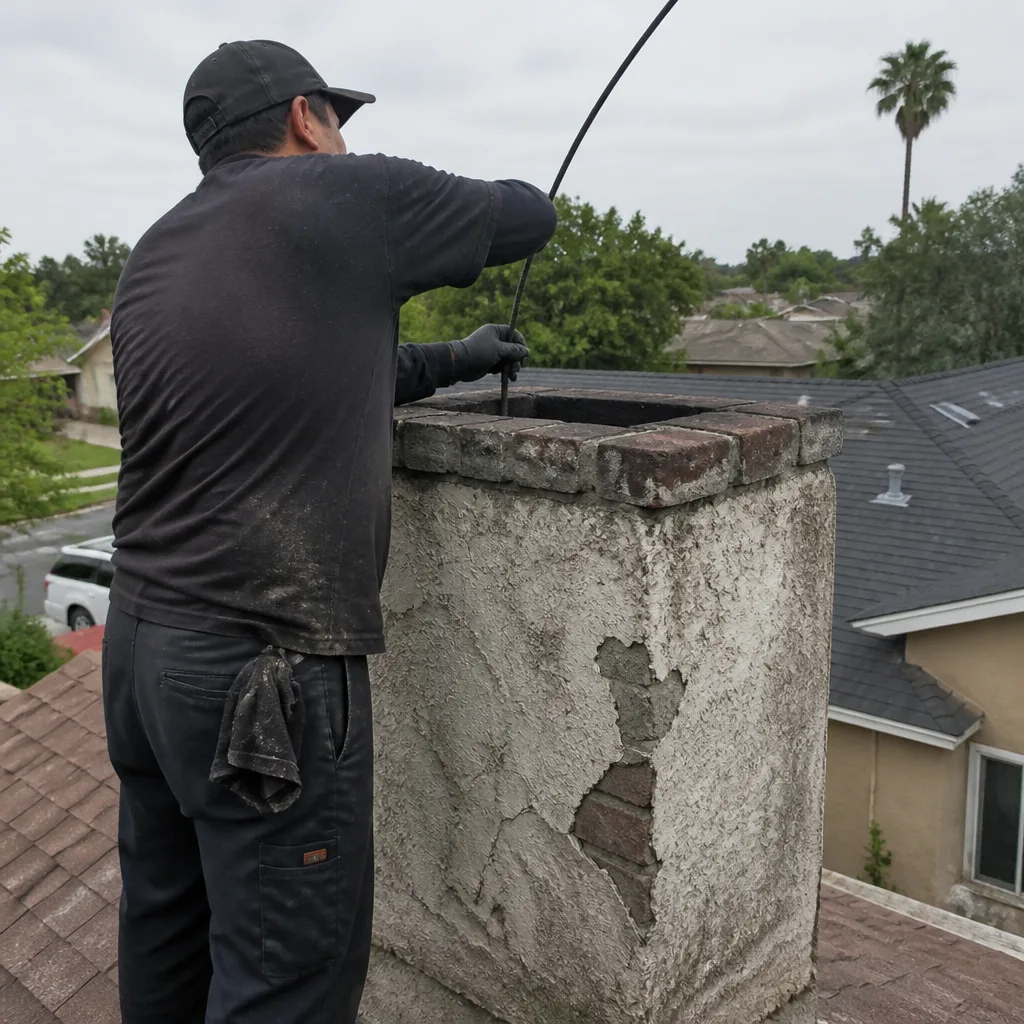 Before
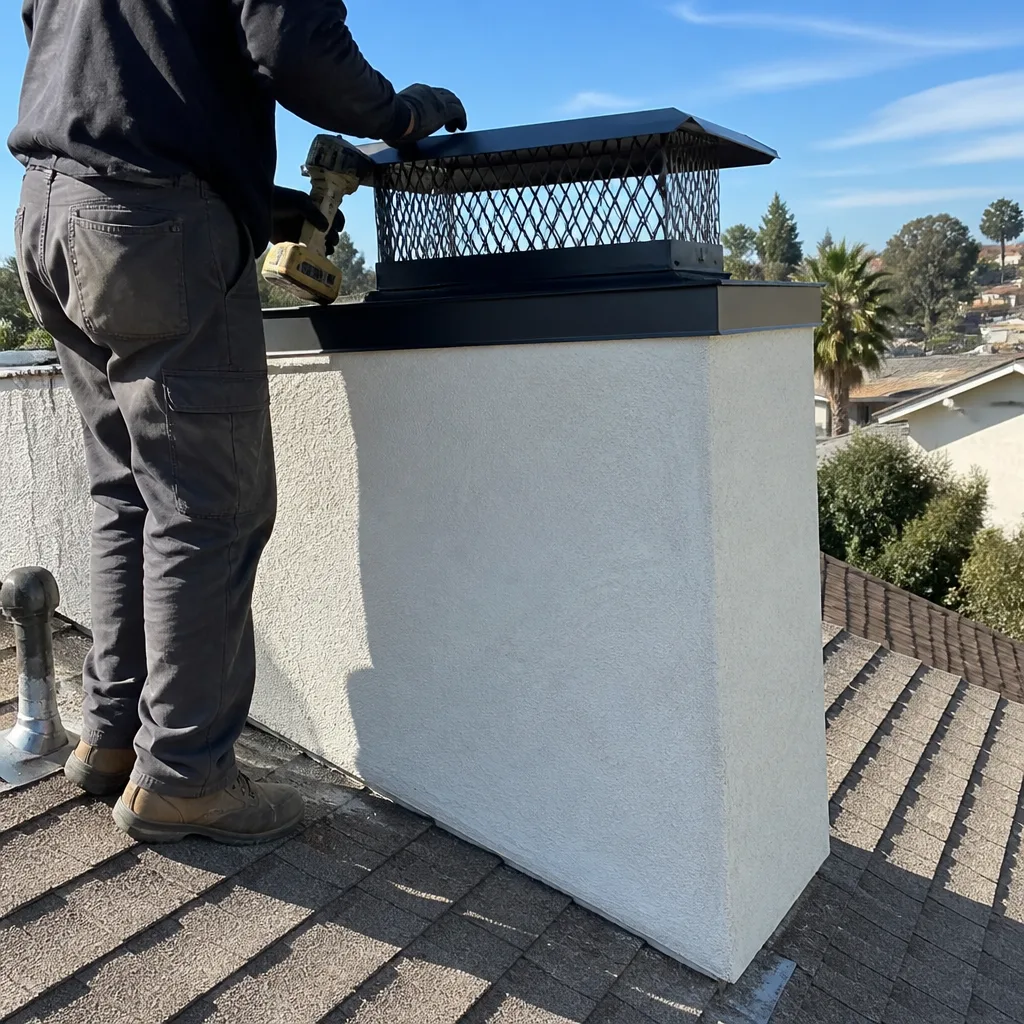 After
After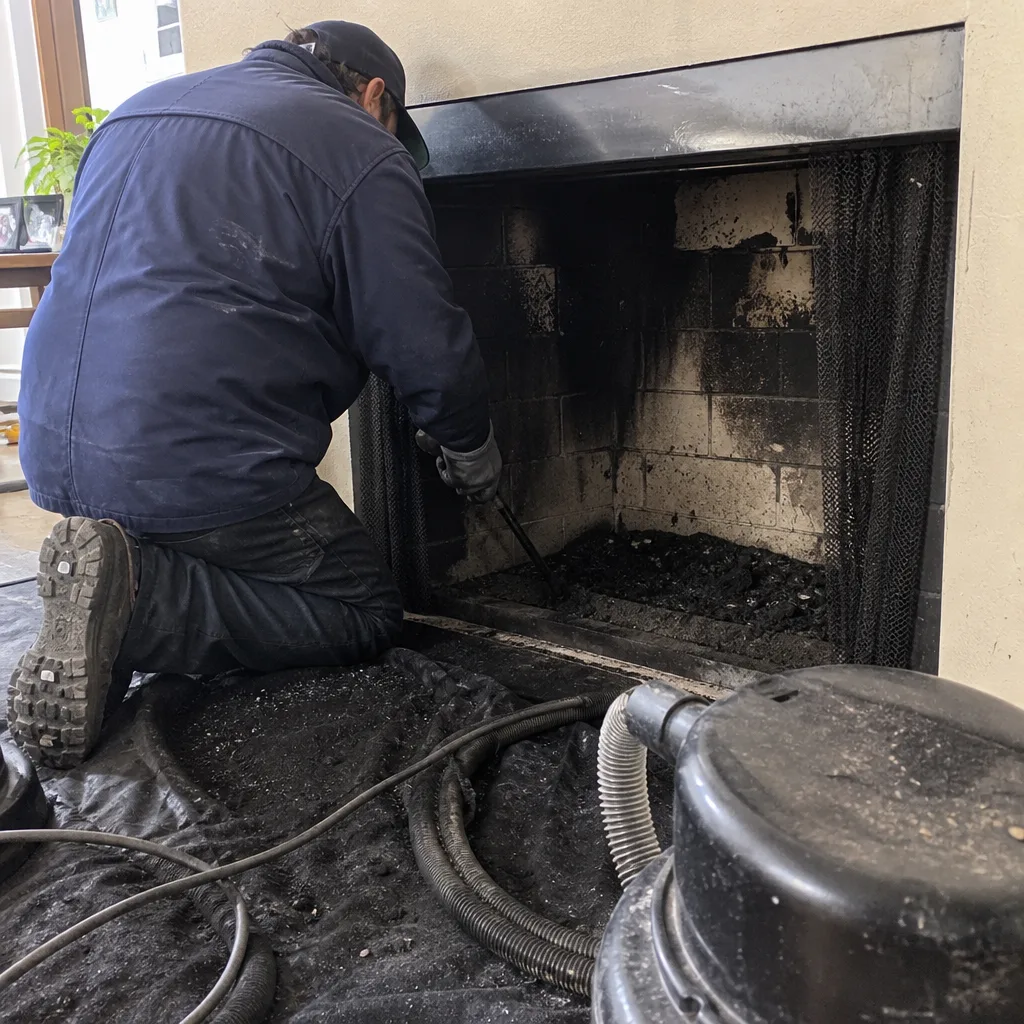 Before
 After
After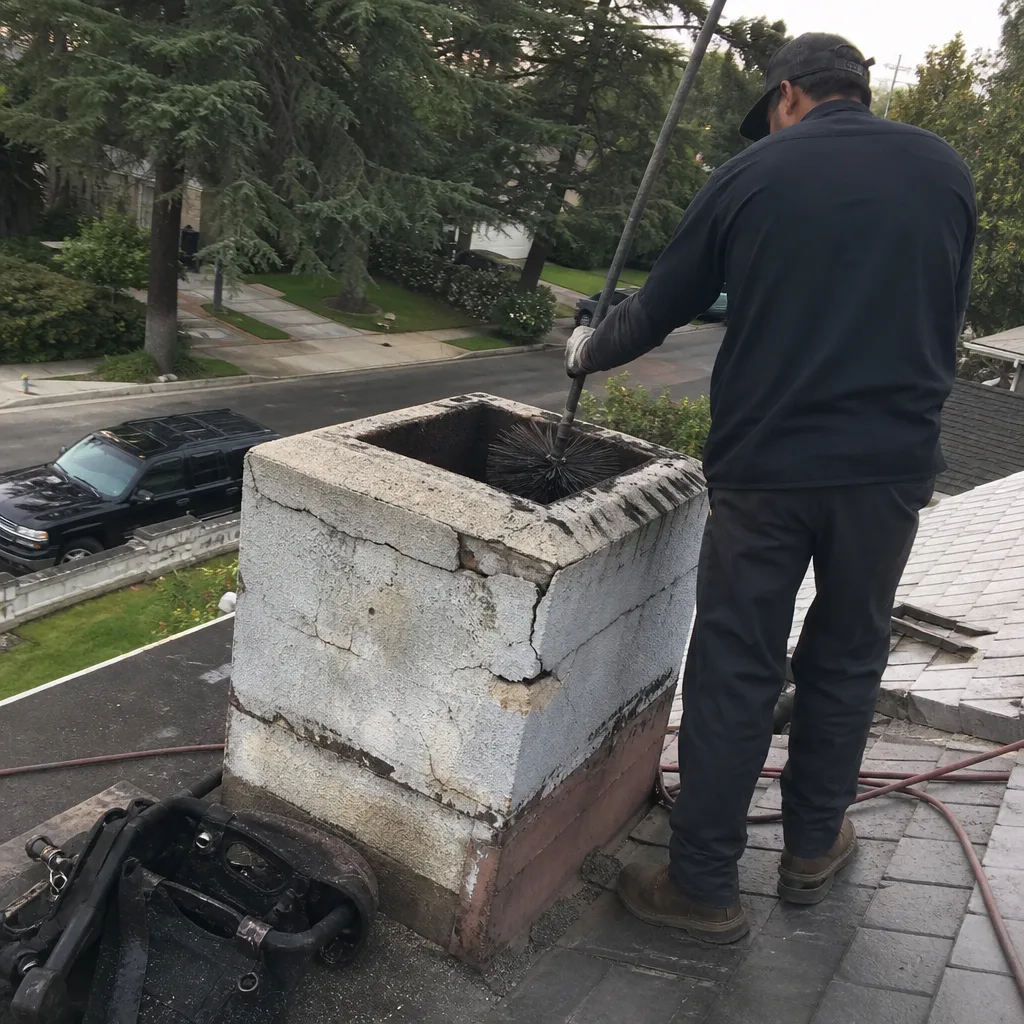 Before
 After
AfterChimney Inspection Troubleshooting: Common Problems and How to Fix Them
The phrase “deteriorated mortar joints” appears on thousands of Los Angeles chimney inspection reports every year. It can mean a $200 repointing job or a $4,000 rebuild, and the report language is often identical in both cases. Most homeowners get a repair quote before they understand what they’re actually paying to fix. This guide and our Chimney Inspection Warning Signs Every Homeowner Should Know translate the most common inspection findings into plain English so you can evaluate proposals, ask the right questions, and avoid paying for repairs that aren’t urgent.
Quick Answer
Chimney inspection findings fall into three categories: monitor at next inspection (cosmetic or early-stage issues), address before next burning season (safety concerns that can wait with reduced use), and address before next use (immediate hazards like blocked flues or detached liners). The most common problems found in Los Angeles inspections are creosote buildup, cracked flue liners, deteriorated mortar joints, and prefab fireplace warranty violations from improper installation or missing components.
Table of Contents
- The 10 Most Common Inspection Findings Translated
- “Monitor” vs. “Address Before Use” – What the Report Should Tell You
- Prefab Fireplace Findings That Void Your Warranty (and Those That Don’t)
- Three Findings Inspectors Overstate and Two They Understate
- How to Get a Second Opinion Without Starting Over
- Realistic Repair Cost Ranges in Los Angeles
- Common Mistakes to Avoid
- When to Call a Professional
- Frequently Asked Questions
The 10 Most Common Inspection Findings Translated
Inspection reports often read like they were written for insurance adjusters, not homeowners. Here’s what the language actually means, what happens if you ignore it, and what repair typically costs in Los Angeles.
1. Creosote Buildup (Glazed or Stage 3)
What it is: Creosote is the tar-like residue that forms when wood burns incompletely. Stage 1 creosote is flaky and brushes off easily. Stage 3 is shiny, hardened, and essentially baked onto the flue walls. Glazed creosote is the most dangerous – it’s highly combustible and the leading cause of chimney fires in Los Angeles County.
What happens if ignored: Chimney fires start at about 2,000 degrees Fahrenheit and can crack liners, damage surrounding structure, or spread to the roof. In Los Angeles, where many neighborhoods have dense housing and mature trees, a chimney fire can jump quickly.
Repair: Standard sweep for Stage 1: $180 – $280. Stage 3 glazed creosote removal requires chemical treatment and mechanical removal: $400 – $700. We use professional-grade removal agents, not hardware-store sprays, because the wrong chemical can damage clay flue tiles.
2. Cracked or Deteriorated Flue Liner
What it is: The flue liner is the protective channel inside your chimney that carries smoke and gases up and out. Clay tile liners crack from thermal shock (rapid heating and cooling), from chimney fires, or simply from age. In Los Angeles, the thermal cycling between 50-degree winter mornings and 90-degree afternoons accelerates this stress.
What happens if ignored: Cracks allow heat, smoke, and carbon monoxide to escape into wall cavities or living spaces. This is not a theoretical risk. Carbon monoxide is odorless and can reach lethal levels before you feel symptoms.
Repair: Partial relining with a stainless steel insert (we specify DuraFlex for its lifetime warranty and proper sizing): $2,200 – $4,500 depending on flue height and diameter. Full relining: $3,500 – $6,000. HeatShield resurfacing, a cerfractory sealant system, can repair minor cracks in otherwise sound liners for $1,200 – $2,000 if the damage is limited.
3. Deteriorated Mortar Joints
What it is: The mortar between bricks or stones erodes from moisture, age, or freeze-thaw cycles. Even in mild Los Angeles winters, rainwater penetration followed by occasional near-freezing nights in the hills or valleys causes expansion damage.
What happens if ignored: Water enters the chimney structure, accelerates deterioration, and can cause the outer shell to separate from the inner structure. Spalling brick faces pop off. Eventually the chimney leans or collapses.
Repair: Tuckpointing (grinding out and replacing mortar in limited areas): $200 – $600. Partial rebuild of the top few courses (common after water damage): $1,200 – $2,500. Full rebuild above the roofline: $3,500 – $7,000 depending on height and access. The difference between “needs tuckpointing” and “needs rebuild” should be obvious from photos. Ask to see them.
4. Spalling Bricks or Stone
What it is: The face of the brick flakes or pops off, exposing the softer interior. This is advanced water damage, not cosmetic.
What happens if ignored: Structural weakening accelerates. In earthquake country, a compromised chimney is a liability.
Repair: Individual brick replacement: $150 – $400 per brick including matching. Widespread spalling indicates systemic water intrusion and typically requires rebuild plus crown repair or waterproofing.
5. Damaged or Missing Chimney Crown
What it is: The crown is the concrete or mortar cap at the very top of the chimney that sheds water away from the flue and masonry. A proper crown has a drip edge and slopes away from the flue opening.
What happens if ignored: Water enters the chimney core. This is the single most preventable cause of major chimney damage in Los Angeles, where winter rains are concentrated and intense.
Repair: Minor crack sealing with crown coat: $300 – $500. Full crown replacement with proper reinforcement and slope: $800 – $1,500. We use Gelco and Olympia Chimney crown materials formulated for thermal expansion, not standard concrete that cracks within seasons.
6. Flue Obstruction or Blockage
What it is: Bird nests, leaves, collapsed liner pieces, or excessive creosote restrict airflow. Los Angeles has active bird populations year-round, and Santa Ana winds deposit debris that homeowners don’t expect.
What happens if ignored: Smoke backs up into the house. Carbon monoxide accumulates. This is an “address before next use” finding, period.
Repair: Nest or debris removal: $150 – $300, often bundled with sweep. Structural obstruction requiring camera inspection to diagnose: $200 – $400 for diagnosis, then repair priced separately.
7. Improper Clearance to Combustibles
What it is: The chimney or connector pipe passes too close to wood framing, insulation, or other combustible materials without proper shielding. Common in older Los Angeles homes with modified framing, additions, or unpermitted work.
What happens if ignored: Pyrolysis – the slow chemical decomposition of wood at temperatures below ignition point – makes wood ignite at progressively lower temperatures over years. The house can catch fire without a dramatic event.
Repair: Heat shields, clearance reduction systems, or refractory wall panels: $400 – $1,200. Major framing modification: $1,500 – $3,000 plus permit. This finding should always trigger a permit check – unpermitted modifications may need to be disclosed in a sale.
8. Rusted or Missing Chimney Cap / Spark Arrestor
What it is: The metal cover that keeps rain, animals, and sparks out of the flue. In coastal Los Angeles neighborhoods, salt air accelerates corrosion of cheap caps.
What happens if ignored: Water damage, blockages, and in wildfire-prone areas, ember emission that can ignite nearby vegetation.
Repair: Standard cap installation: $150 – $350. Custom cap for oversized or multiple flues: $400 – $800. We specify stainless steel or copper from Famco and Copperfield, not galvanized steel that rusts through in 3 – 5 years near the coast.
9. Smoke Chamber Defects (Parging Loss, Corbeling Issues)
What it is: The smoke chamber is the area above the firebox that funnels smoke into the flue. Building codes require it to be parge-coated smooth to reduce turbulence and creosote accumulation. Corbeling (stepped brickwork) creates sharp edges that trap creosote.
What happens if ignored: Creosote accumulates in rough surfaces. Smoke spillage into the room increases. In severe cases, the smoke chamber can be a fire pathway into surrounding structure.
Repair: Smoke chamber parge coating with HeatShield or similar refractory material: $1,500 – $2,500. This is specialized work that requires proper access and cure time.
10. Factory-Built (Prefab) Fireplace Defects
What it is: Metal firebox units with specific manufacturer clearances and component requirements. Common in Los Angeles homes built from the 1970s forward. Defects include missing refractory panels, damaged firebox wrappers, improper termination clearances, or non-listed chimney systems installed as “compatible.”
What happens if ignored: Manufacturer warranty voids. Insurance may deny claims. Fire risk increases dramatically with improper clearances.
Repair: Refractory panel replacement: $300 – $600. Firebox replacement (when panels are no longer available): $2,500 – $4,500 for the unit, plus surround finishing. Full system replacement with proper listed chimney: $4,000 – $8,000.
“Monitor” vs. “Address Before Use” – What the Report Should Tell You
A competent inspector categorizes every finding by urgency. If your report doesn’t do this explicitly, that’s a red flag. Here’s what each category means and how to act on it.
Monitor at next inspection: The issue is early-stage, cosmetic, or stable. Examples: minor hairline cracks in a crown with no water intrusion evidence, slight mortar erosion in non-critical joints, or surface rust on a cap that’s still functional. Action: note it, schedule routine follow-up, don’t lose sleep. A photo comparison at the next inspection shows whether it’s progressing.
Address before next burning season: The issue affects safety or efficiency but doesn’t create immediate hazard with minimal or no use. Examples: Stage 2 creosote, a cracked liner with no active leaks detected, or a damaged cap in summer when the fireplace isn’t used. Action: get quotes, schedule repair before temperatures drop and you want a fire. In Los Angeles, this means planning ahead of November, when chimney companies book solid.
Address before next use: The issue creates immediate hazard. Examples: blocked flue, detached liner, significant carbon monoxide risk, or improper clearance with active pyrolysis risk. Action: do not use the fireplace. Get repair scheduled immediately. If it’s cold, use alternative heating.
We put this classification in writing on every Chimney Inspection in Los Angeles we perform. If your inspector didn’t, ask them to clarify verbally and document it. A finding without urgency context is an incomplete finding.
Prefab Fireplace Findings That Void Your Warranty (and Those That Don’t)
Los Angeles has one of the country’s largest concentrations of factory-built fireplaces, installed from the 1970s through present construction. These units have manufacturer warranties with specific conditions. Understanding what voids coverage helps you evaluate whether a repair quote should include warranty protection.
Findings That Typically VOID Warranty Coverage
- Installation of non-listed chimney system. If the original listed chimney was replaced with “compatible” generic pipe, the warranty is void regardless of current condition. Only the manufacturer’s listed chimney system qualifies.
- Modification of clearances or framing. Built-in cabinets, mantel modifications, or surround changes that reduce clearances void coverage. This is common in Los Angeles flip properties and unpermitted renovations.
- Use of non-manufacturer refractory panels. Generic “universal” panels may fit but don’t carry the fire rating. We install OEM panels or listed equivalents from Gelco and Olympia Chimney that maintain warranty compliance.
- Missing or altered termination cap. The cap is part of the listed system. Generic replacements void coverage.
Findings That Do NOT Affect Warranty
- Normal refractory panel cracking from thermal cycling (covered for replacement, not a voiding event).
- Chimney cap damage from weather or impact (wear item, not system defect).
- Creosote accumulation from fuel choice or burning practice (maintenance issue, not defect).
- External rust on termination components in coastal conditions (environmental, not installation defect).
The key question to ask: “Is this finding a warranty issue, a maintenance issue, or an installation defect?” Each has different cost responsibility. A warranty issue may be partially covered. A maintenance issue is owner responsibility. An installation defect may involve the original installer or their insurance.
Three Findings Inspectors Overstate and Two They Understate
Not every inspector has the same incentives. Some companies use inspection reports to generate repair work. Others miss genuine hazards because they lack proper equipment or training. Our more guides & resources show how to read between the lines.
Three Commonly OVERSTATED Findings
1. “Deteriorated mortar joints” requiring full rebuild. Minor erosion in a few joints becomes “needs rebuild” when tuckpointing would suffice. Ask: how many joints are affected? What percentage of total? Can you show me photos from inside the flue and outside? If the answer is vague, get a second opinion.
2. “Cracked flue liner” requiring full relining. A single hairline crack in an otherwise sound tile may be repairable with HeatShield resurfacing rather than $4,000 relining. Ask: how many cracks? Where are they located? Did you run a camera so I can see? A video recording is standard; refusal to provide it is a red flag.
3. “Needs waterproofing” on a sound chimney. Waterproofing sealant is appropriate for porous masonry in wet climates. In most of Los Angeles, it’s rarely urgent and sometimes unnecessary on chimneys with proper crowns and caps. Ask: what specific water damage evidence do you see? Where is moisture entering? Generic “preventive waterproofing” on a dry chimney is often upsell.
Two Commonly UNDERSTATED Findings
1. Smoke chamber defects. The smoke chamber is hard to access and inspect properly. Many inspectors don’t have the right camera angles or don’t report what they see because repair requires specialized skills. A rough, unparge-coated smoke chamber is a code violation in most jurisdictions and a significant fire risk. Ask specifically: what condition is the smoke chamber in?
2. Clearance to combustibles. This requires access to framing, often through attic spaces or wall openings. Inspectors doing “visual only” inspections from the roof and fireplace opening miss it entirely. In older Los Angeles homes with multiple renovations, this is where hidden danger lives. Ask: did you verify clearances to combustibles, and how?
How to Get a Second Opinion Without Starting Over
A major finding doesn’t mean you must accept the first quote. But you also shouldn’t pay for a full second inspection if the first was competently done. Here’s the efficient path.
- Request the complete documentation. This includes: the written report with all findings and classifications, dated photos of each finding, video from the chimney camera inspection, and the technician’s notes on measurements and conditions. A professional company provides this without argument.
- Ask one specific question of the second contractor: “I have a complete inspection report with photos and video from [date]. Can you review this documentation and provide a repair opinion, or do you require your own inspection?” Reputable companies will review documentation and either confirm the findings or identify discrepancies. Those who insist on starting over may be padding billable hours.
- Verify what the second opinion covers. A documentation review should cost significantly less than a full inspection, or nothing if you’re getting a repair quote. Clarify upfront whether they’ll run their own camera to confirm critical findings. For liner cracks and clearance issues, independent camera verification is reasonable. For crown condition or cap damage, photos should suffice.
- Compare scope, not just price. One quote for “reline chimney” at $3,000 and another at $4,500 aren’t comparable until you know: what liner material and brand? What warranty? What preparation and finishing work is included? We specify DuraFlex stainless steel with lifetime warranty, proper insulation, and correct sizing – a lower quote with uninsulated generic pipe isn’t equivalent.
At Alcott Chimney Sweep home, we’ll review outside documentation and tell you honestly whether we agree with the findings or see something different. We’ve caught both overstated damage and genuinely missed hazards this way.
Realistic Repair Cost Ranges in Los Angeles
Prices vary by access difficulty, chimney height, and material choices. These ranges reflect what we see quoted across Los Angeles County, from flat Valley neighborhoods to hillside homes in the Hollywood Hills or Pacific Palisades with limited access.
| Repair Type | Typical Range | What Affects Price |
|---|---|---|
| Standard chimney sweep | $180 – $280 | Accessibility, creosote stage, number of flues |
| Stage 3 creosote removal | $400 – $700 | Chemical treatment cycles, mechanical removal time |
| Chimney cap installation | $150 – $800 | Standard vs. custom, material (galvanized/stainless/copper) |
| Crown repair / replacement | $300 – $1,500 | Crack sealing vs. full pour, accessibility |
| Tuckpointing (limited) | $200 – $600 | Number of joints, scaffold needs |
| Partial rebuild (above roofline) | $1,200 – $2,500 | Height, brick matching, permit requirements |
| Full rebuild above roofline | $3,500 – $7,000 | Height, design, seismic reinforcement |
| Stainless steel relining (DuraFlex) | $2,200 – $6,000 | Flue length, diameter, insulation, number of flues |
| HeatShield resurfacing | $1,200 – $2,000 | Crack extent, flue dimensions |
| Smoke chamber parging | $1,500 – $2,500 | Access, material volume |
| Prefab firebox replacement | $2,500 – $8,000 | Unit size, surround finishing, chimney system |
Every Chimney Sweep in Los Angeles and repair we quote comes with a written price before work begins. No surprise charges, no “while we were up there” add-ons.
Common Mistakes to Avoid
- Accepting a verbal summary without written documentation. A phone call saying “everything looks fine” protects no one. Get the report, with photos, in writing. In Los Angeles, where property sales are common, documentation affects disclosure obligations.
- Assuming all inspectors use chimney cameras. Level 2 inspections require internal visual examination, which means a camera. If your inspector didn’t mention camera footage, ask why. Visual-only inspections from the top and bottom miss most liner damage.
- Ignoring “monitor” findings until they become emergencies. That minor crown crack in 2023 becomes water intrusion and spalling bricks by 2025. Schedule the follow-up inspection you were told to get.
- Choosing the lowest quote without comparing scope. A $1,800 relining quote with uninsulated, off-brand pipe and no warranty isn’t cheaper than a $2,800 DuraFlex with lifetime coverage – it’s more expensive when it fails in eight years.
- Not verifying permit status for major repairs. Rebuilds, relining, and clearance modifications require permits in Los Angeles. Unpermitted work must be disclosed in a sale and may not be covered by insurance. Ask your contractor who pulls the permit.
- Using the fireplace after an “address before next use” finding. The classification exists because the hazard is real. Carbon monoxide doesn’t give warning symptoms at lethal concentrations.
- Neglecting gas fireplace inspections. Gas Fireplace Repair in Los Angeles addresses venting, valve, and burner issues that cause CO risk and efficiency loss. Annual inspection applies to gas units too, not just wood-burning.
When to Call a Professional
Call a certified chimney professional when: your inspection report contains any “address before next use” finding; you smell smoke or gas odors when the fireplace isn’t in use; you see visible damage to the chimney exterior; you’re buying a home and need a Level 2 inspection for the transaction; or your prefab fireplace shows refractory panel cracks or rust. In Los Angeles, where seismic activity, concentrated winter rains, and dense housing create compounding risks, professional evaluation isn’t optional for significant findings.
Alcott Chimney Sweep offers free estimates in Los Angeles. Every technician is Threshold Verified – background-checked, identity-verified, and sent to you by name and photo before arrival. You’ll receive a written price before any work begins, and every repair carries our 365-Day Done Right Promise. Call (336) 863-3889.
Frequently Asked Questions
A Level 1 visual inspection typically runs $150 – $250, while a Level 2 inspection with camera examination of the flue interior runs $250 – $400 depending on accessibility and number of flues. Call (336) 863-3889 for an exact quote – estimates are free.
It depends on crack location, number, and severity. Single hairline cracks in otherwise sound clay tile may qualify for HeatShield resurfacing at roughly half the cost of relining. Multiple cracks, missing pieces, or gaps at joints typically require stainless steel relining. We run a camera and show you the footage so you can see what we see and make an informed choice.
The National Fire Protection Association recommends annual inspection for all chimneys, and sweeping when creosote reaches 1/8 inch thickness. For Los Angeles homeowners who burn wood regularly – say, weekly during winter – that’s typically annual sweeping. Occasional users may go two years between sweeps if inspection shows minimal buildup. Gas fireplaces need annual inspection too, though sweeping isn’t required.
Progressive creosote accumulation increases fire risk. Liner deterioration allows heat and gases into wall cavities. Water intrusion destroys masonry from inside. In Los Angeles, where homes are close together and wildfire risk is significant, a chimney fire can spread beyond your property. Carbon monoxide from a compromised flue can sicken or kill occupants without warning. The cost of prevention is a fraction of the cost of remediation after a fire or health emergency.
You can check for obvious exterior damage, cap condition, and whether the damper opens and closes. You cannot safely evaluate the flue interior, liner condition, or clearance to combustibles without proper equipment and access. Chimney work involves heights, confined spaces, and genuine hazards – we don’t recommend DIY inspection beyond the basics. For anything involving the flue or structure, hire a certified professional.
Sweeping is the physical removal of creosote and debris. Inspection is the systematic evaluation of the entire system condition. They’re related but distinct. A sweep may include a basic visual inspection, but a proper Level 2 inspection requires camera examination and written documentation. At Alcott, we offer both and can bundle them when appropriate, but we don’t confuse one with the other.
The Bottom Line
Chimney inspection reports don’t have to be mysterious. The same finding can mean minor maintenance or major repair, and the difference lies in specifics: photos, measurements, urgency classification, and your right to understand before you pay. Ask for documentation, question vague language, get second opinions on major work, and never use a fireplace with an unaddressed “before next use” finding. In Los Angeles, where climate, codes, and housing density create unique conditions, working with a company that explains rather than sells makes the difference between informed maintenance and expensive surprises.
Written by Ruben Castellano, Owner at Alcott Chimney Sweep, serving Los Angeles since 2002.