
Last updated October 9, 2026
Level 1 sweep and inspection to the NFPA 211 annual standard - flue, crown, cap, and flashing checked and photographed
Chimney sweep logs do not sweep chimneys. They loosen some creosote - which then falls where a brush and vacuum still have to collect it.
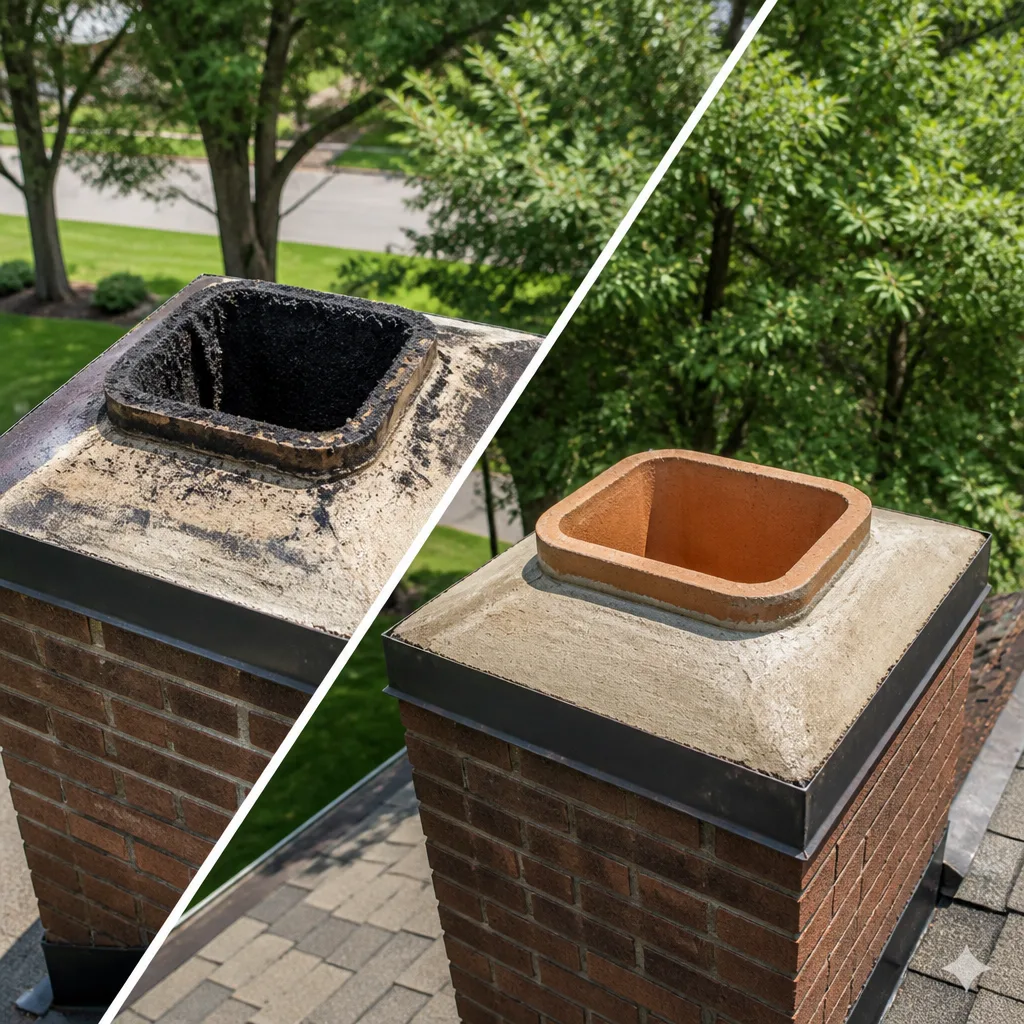
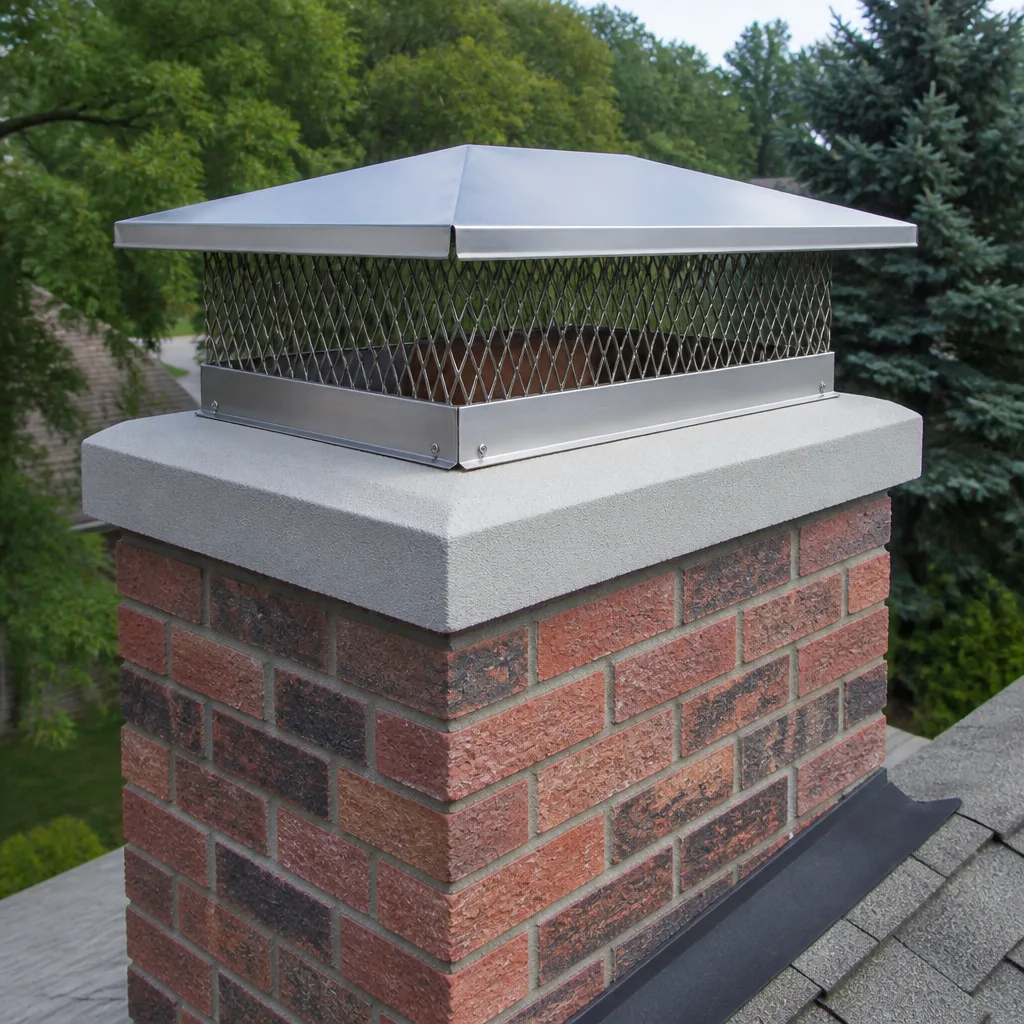
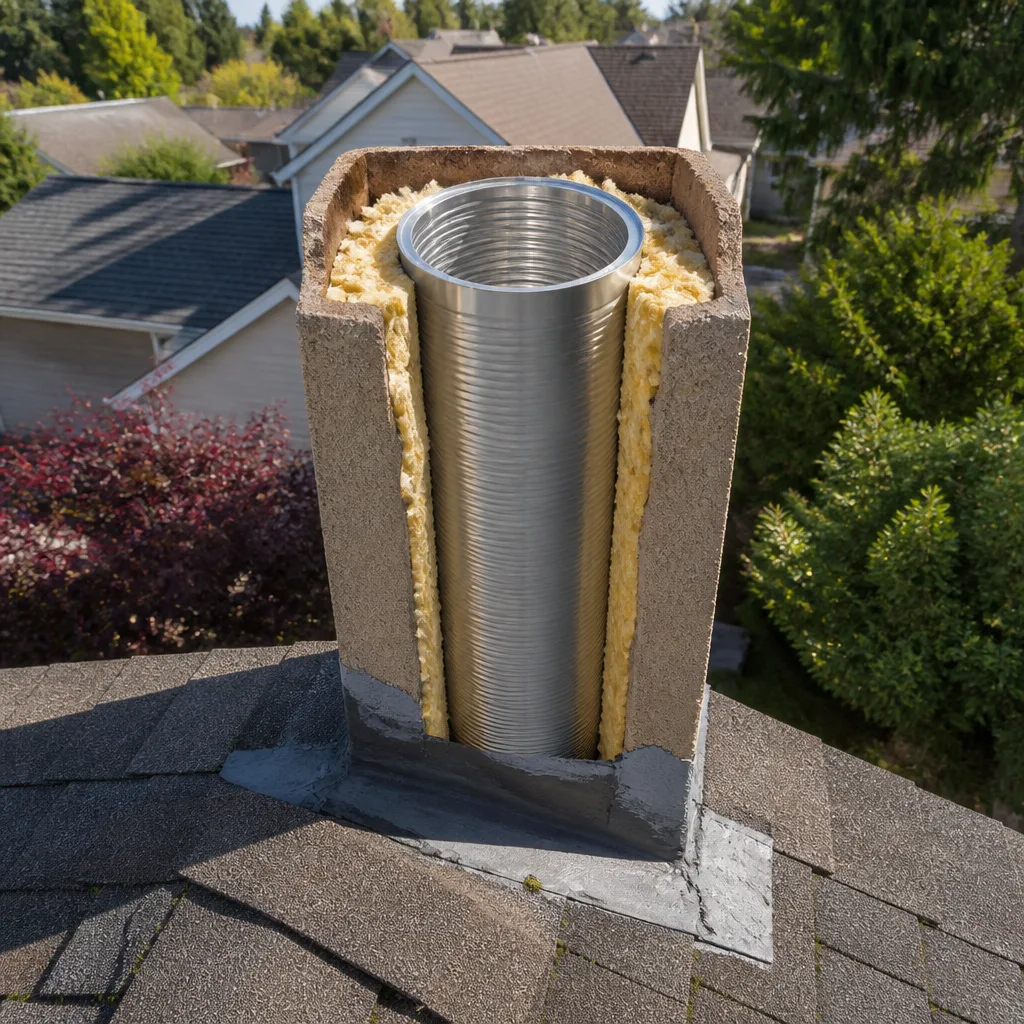
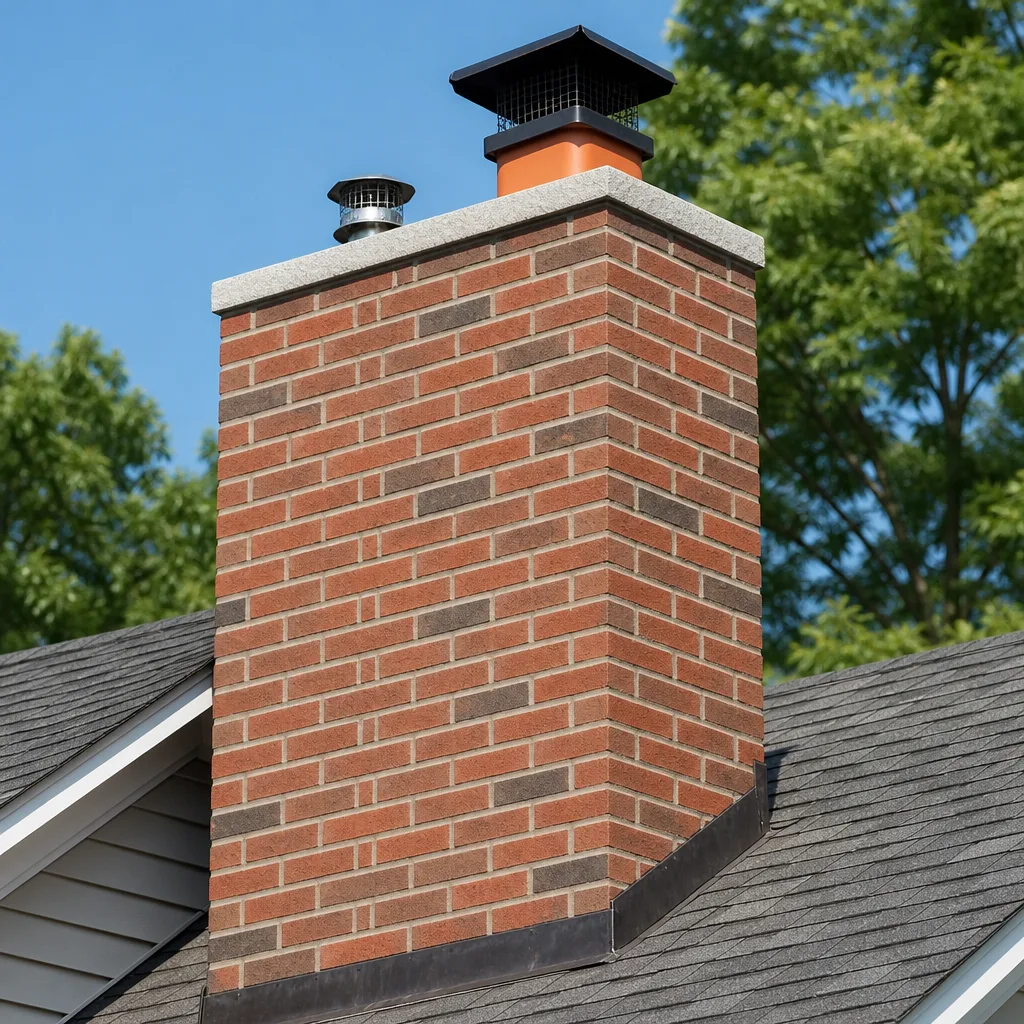
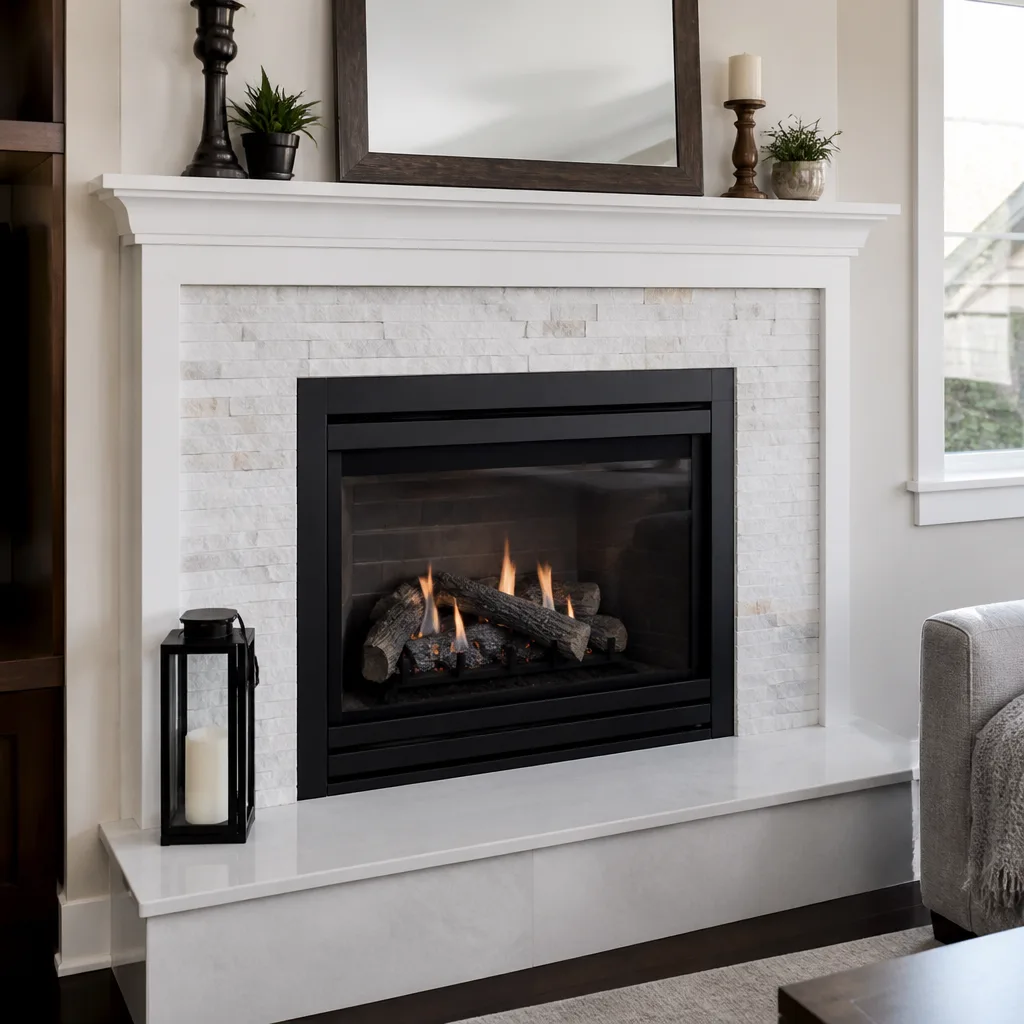
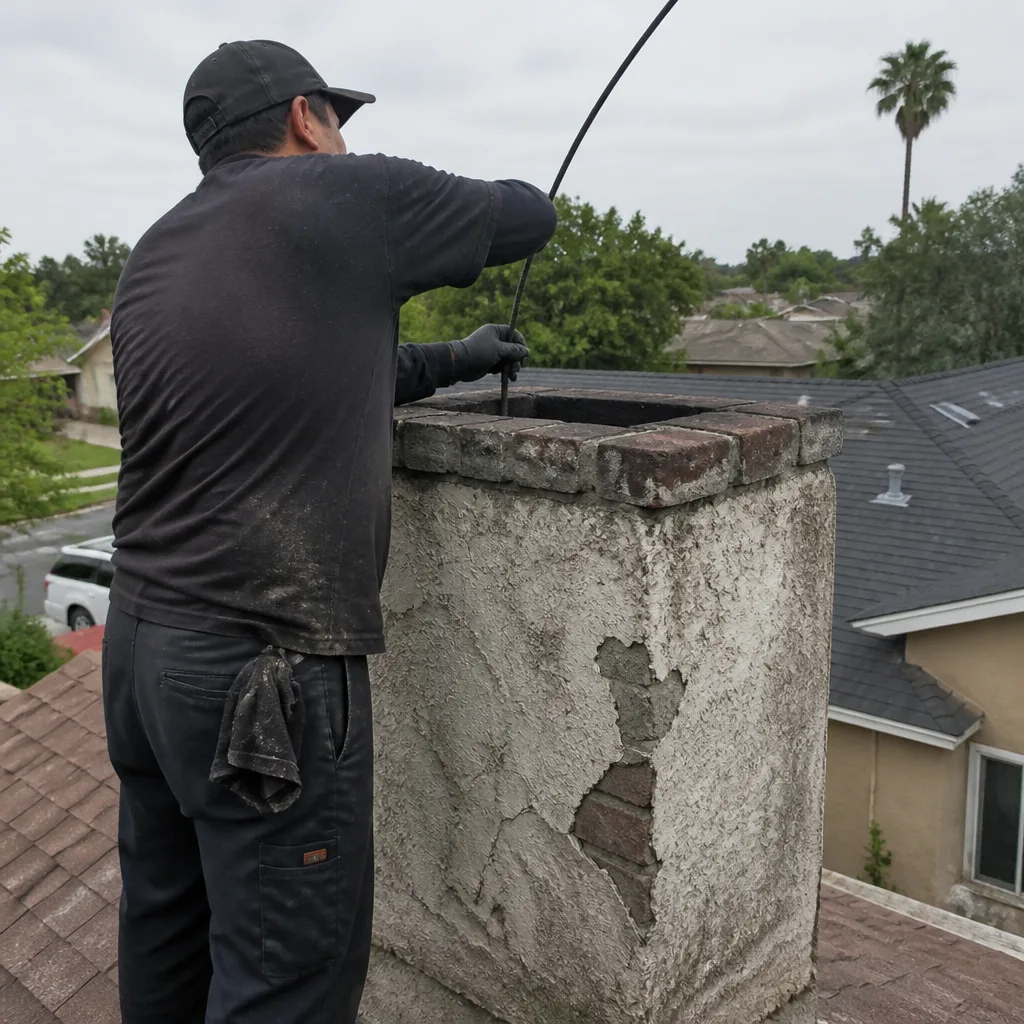 Before
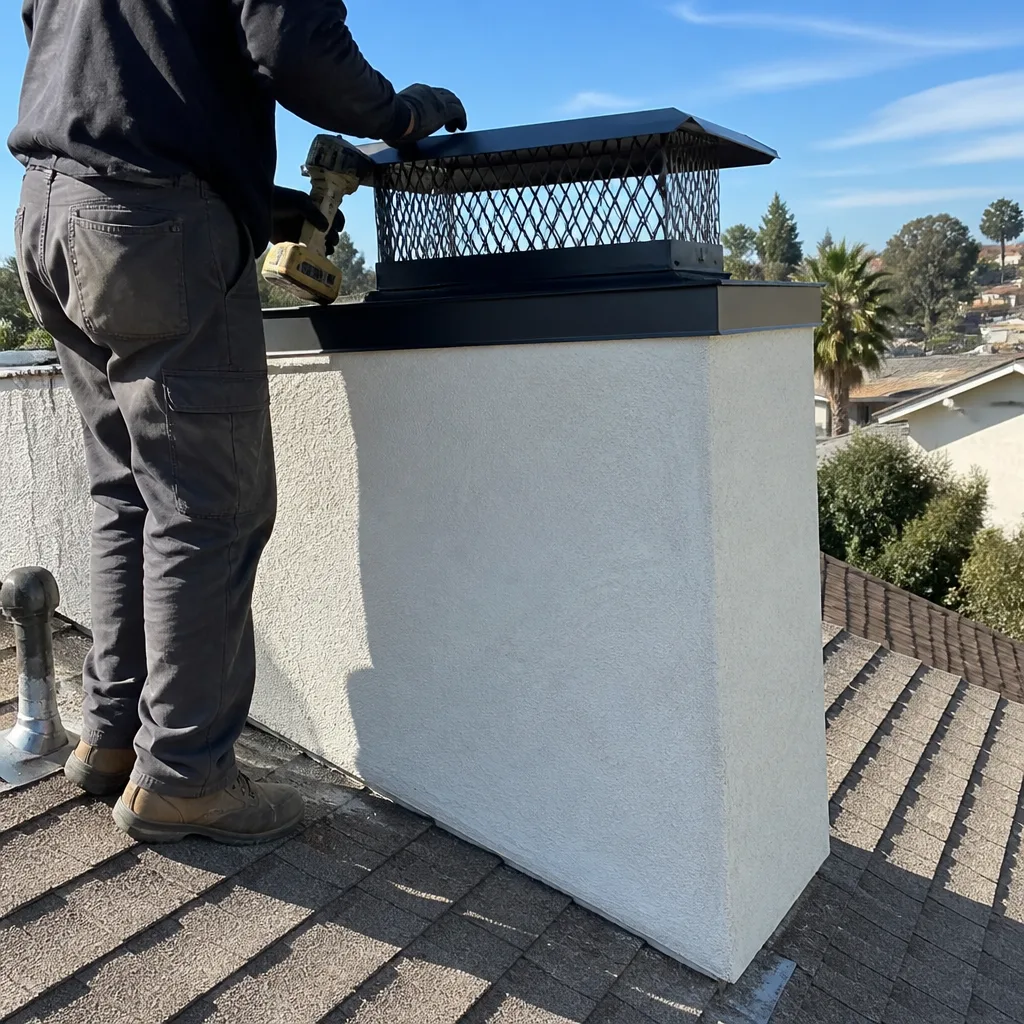 After
After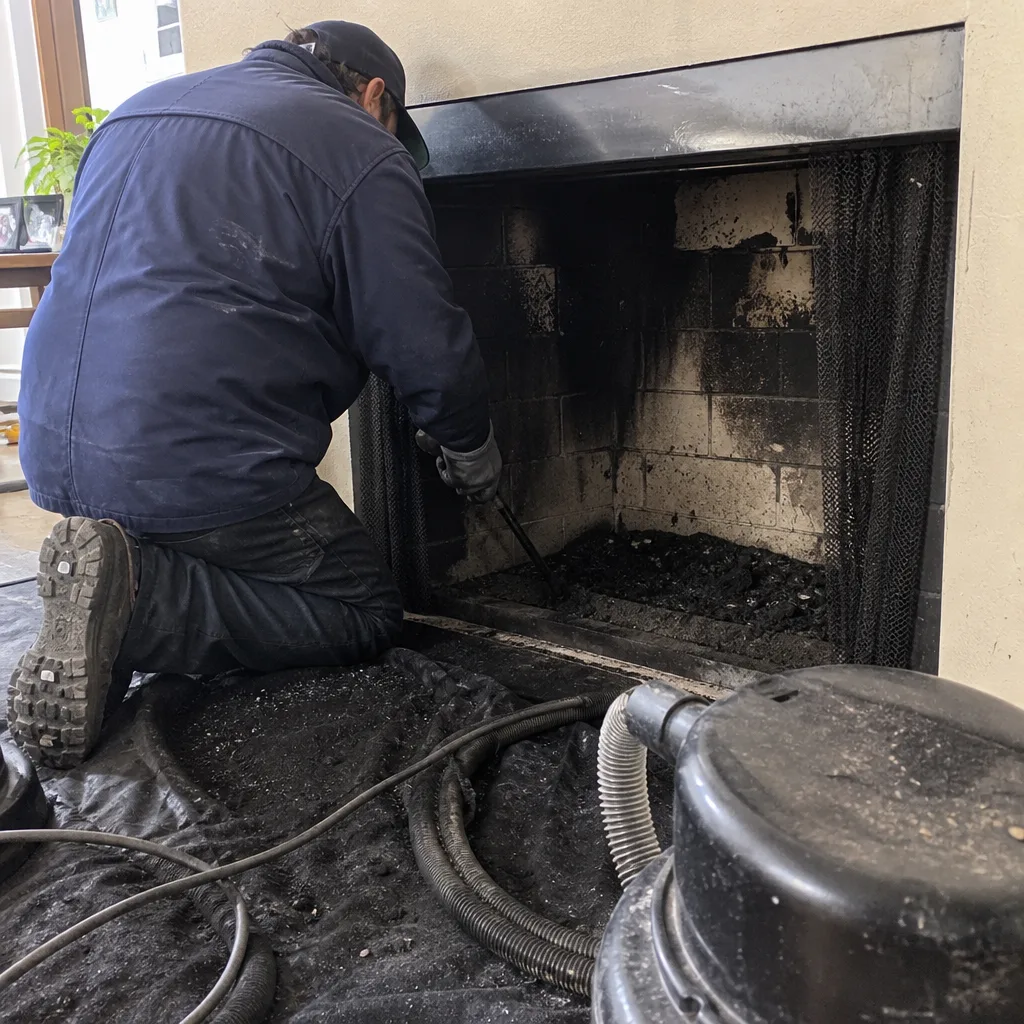 Before
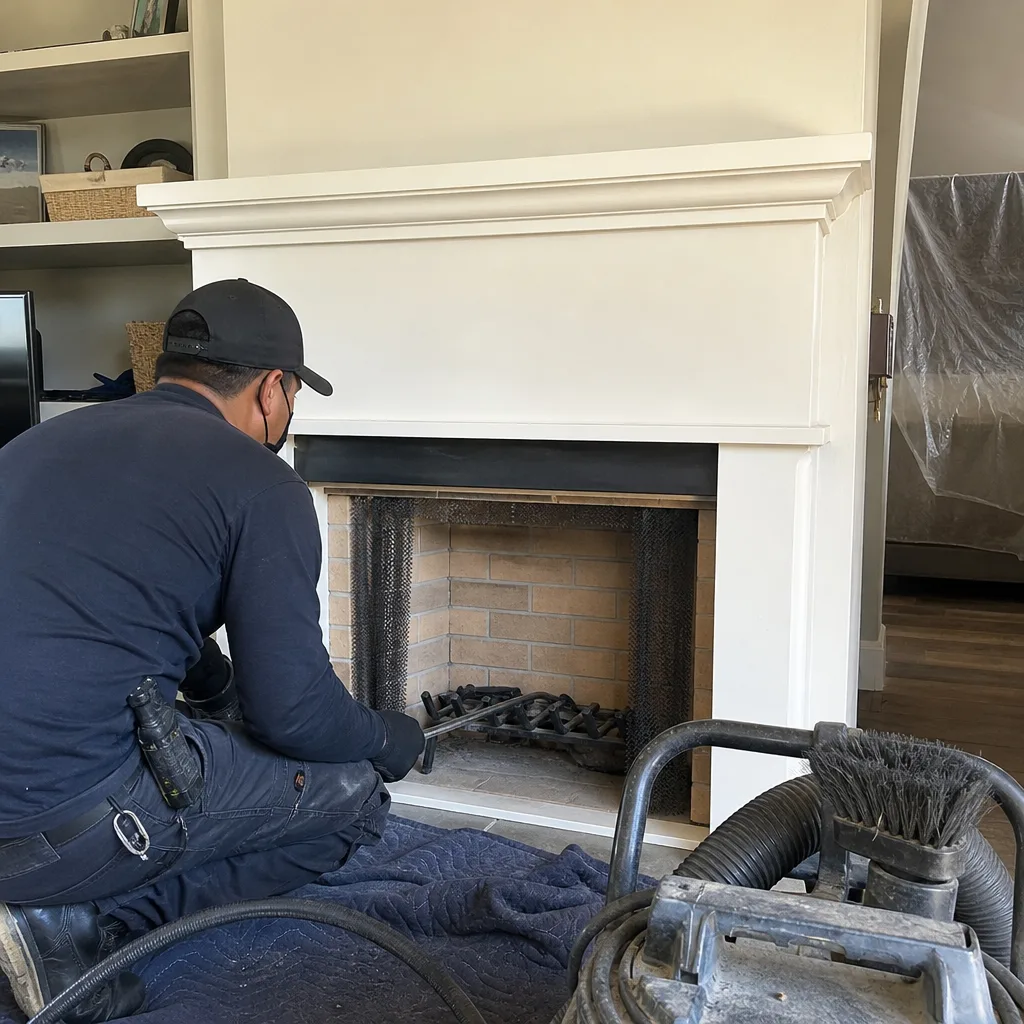 After
After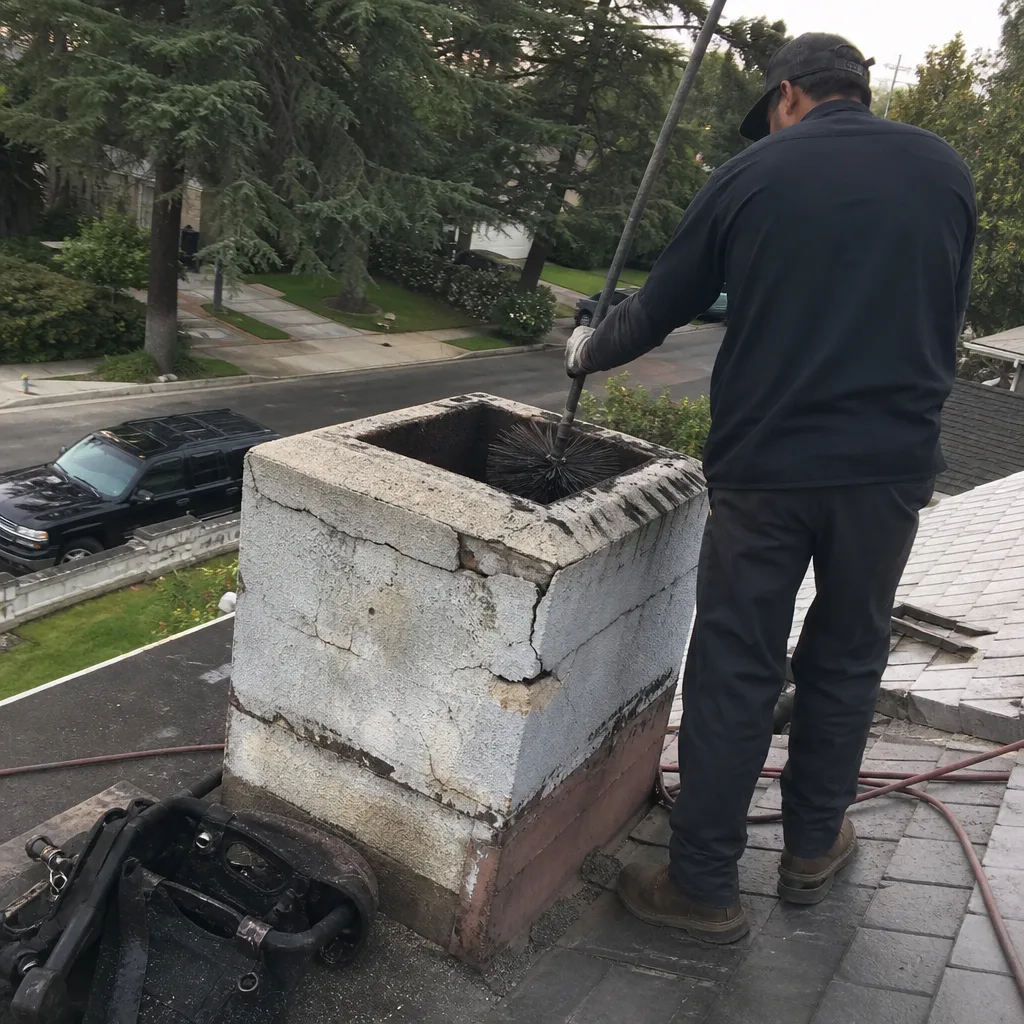 Before
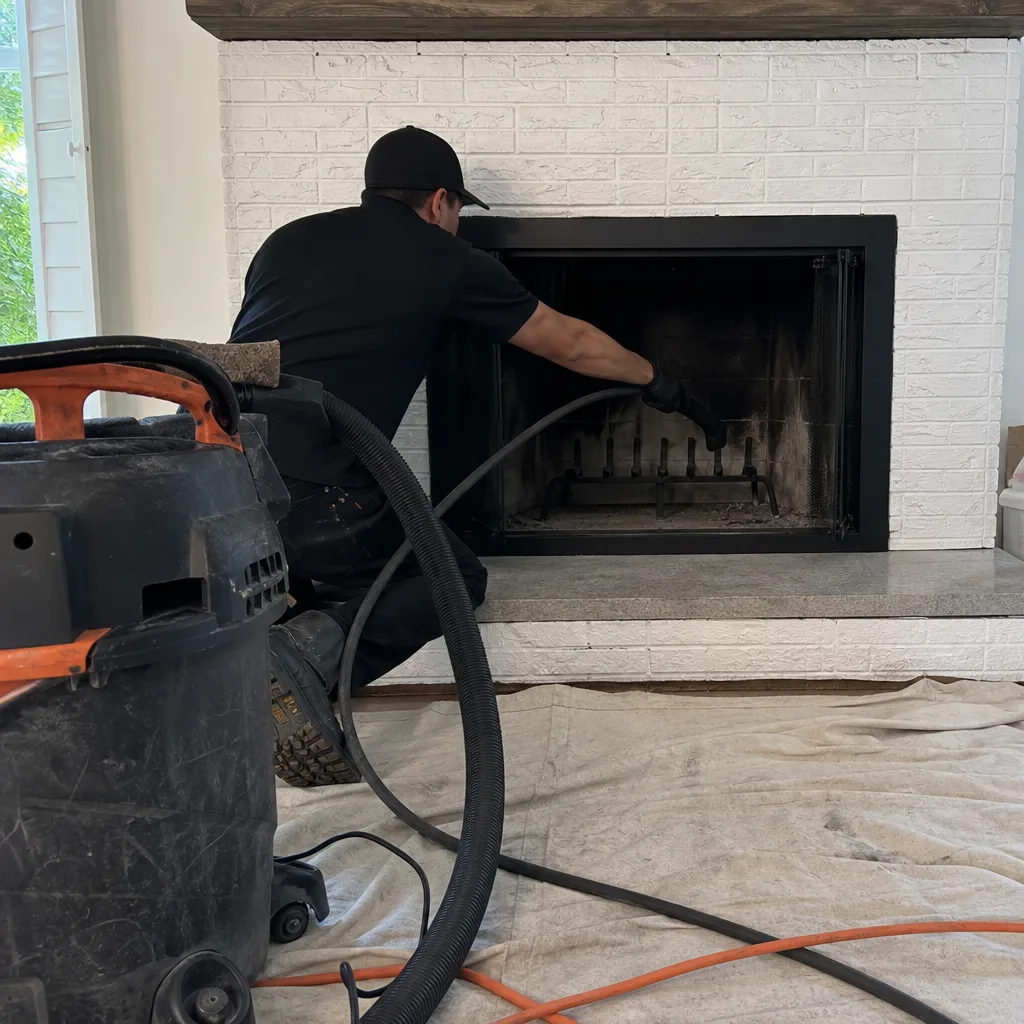 After
AfterGas Fireplace Repair Maintenance Schedule: What to Do and When
Most Los Angeles homeowners treat their gas fireplace like a light switch – flip it on in November, forget it exists by March. But here’s what we’ve learned in two decades of service: the single most common cause of uneven flames, yellow-tipped burners, and that faint gas odor no one can locate is a maintenance task so simple it feels embarrassing to charge for. Clearing the burner ports with a soft brush each October prevents the spider webs, dust, and pet hair that partially block gas flow and trick the thermocouple into thinking the pilot is unstable. In this guide, we’ll build you a month-by-month maintenance calendar specific to Southern California’s mild climate, separate what you can safely do yourself from what requires a trained technician, and give you real cost benchmarks so you can budget before something breaks. For immediate issues, see our Gas Fireplace Repair services.
Quick Answer
A gas fireplace needs monthly homeowner checks during burning season (October through March in Los Angeles), an annual deep cleaning and safety inspection before first use, and a professional service call every 12 months that includes burner inspection, gas pressure testing, and venting verification. Skip any of these, and you’re gambling with carbon monoxide risk, component failure, and repair bills that start at $400 and climb fast.
Table of Contents
- Why Most Maintenance Schedules Fail
- Monthly Homeowner Tasks (October – March)
- Annual Deep Clean: The October Ritual
- What Professional Annual Service Includes
- The Los Angeles Climate Calendar: Season-by-Season
- What Annual Service Costs in Los Angeles
- The Glass Cleaning Sequence That Won’t Ruin Your Ceramic Glass
- Common Mistakes to Avoid
- When to Call a Professional
- Frequently Asked Questions
- The Bottom Line
Why Most Maintenance Schedules Fail
Generic advice tells you to “service your gas fireplace annually.” That’s technically true and practically useless. It doesn’t tell you what “service” means, who should do it, or what happens if you delay.
We’ve repaired thousands of gas fireplaces across Los Angeles, from vintage units in 1920s Spanish Revival homes in Los Feliz to modern direct-vent inserts in new builds in Playa Vista. The pattern is consistent: the fireplaces that fail expensively are the ones where maintenance was event-driven, not calendar-driven. Something smelled funny. The pilot wouldn’t stay lit. The glass fogged up. By then, you’re not maintaining – you’re repairing.
The thermocouple is a perfect example. This $45 safety component sits in the pilot flame and generates a tiny electrical current that keeps the gas valve open. Every time the pilot flickers from partial blockage, the thermocouple heats and cools unevenly. Do that enough times, and the metal fatigues. A $45 part becomes a $350 service call with after-hours rates because it died the first cold night in December. In our experience, thermocouples that get checked and cleaned each October last 8 – 12 years. The ones we replace in emergency calls average 4 – 6 years.
Here’s what a date-anchored schedule fixes: it removes decision fatigue. You don’t ask “does it need service?” You ask “is it October yet?” The calendar decides, not your memory or your nose.
Monthly Homeowner Tasks (October – March)
These tasks take under 15 minutes and require no tools beyond a flashlight, soft brush, and microfiber cloth. Do them the first weekend of each month during burning season.
- Visual burner inspection. With the fireplace off and cooled, remove the decorative front and look at the burner ports – the small holes where flames emerge. You’re checking for visible debris: dust clumps, pet hair, spider webs. In Los Angeles, where Santa Ana winds blow fine dust through every vent and gap, this builds up faster than in humid climates. Use a soft brush (a clean paintbrush works) to gently sweep debris away. Never use compressed air – it can force debris deeper into the orifices.
- Pilot flame check. Light the pilot and observe. A healthy pilot is sharp, blue, and steady. A yellow or wavering pilot indicates incomplete combustion, which means either dirty ports or incorrect gas pressure. Note what you see; you’ll need this information for your annual professional visit.
- Glass inspection. Look for cracks, chips, or white haze that doesn’t wipe away. Ceramic glass – standard on most modern units – withstands thermal shock but not mechanical impact. That haze is typically silica residue from combustion byproducts; it means your air-fuel mixture is running rich.
- Surrounding area check. Clear combustibles within 36 inches. In Los Angeles homes where space is at a premium, we’ve seen books, dog beds, and yoga mats pushed dangerously close during summer storage rearrangements.
- Carbon monoxide detector test. Press the test button. Replace batteries annually, but test monthly. Los Angeles building code requires CO detectors within 15 feet of sleeping areas, but we recommend one in the same room as any gas fireplace.
These five checks prevent 70% of the emergency calls we field between November and February. The other 30% are component failures that no amount of homeowner diligence would catch – which is why the professional annual visit matters.
Annual Deep Clean: The October Ritual
The second Saturday in October is your date. Not “sometime in fall.” Not “before Thanksgiving.” October 15th, or the closest weekend. Here’s why this timing matters in Los Angeles specifically: our first cold snap typically hits in late October or early November. Service companies get slammed the week before Thanksgiving. Book in October, and you choose your appointment. Wait until you feel cold, and you take what you can get – often at premium rates with a two-week backlog. If you’re already seeing issues, our Gas Fireplace Repair Troubleshooting: Common Problems and How to Fix Them can help you diagnose what’s wrong.
Here’s the homeowner deep clean sequence:
- Shut off gas and electricity. The gas shutoff is typically a key valve near the fireplace or a switch on the unit itself. Turn off the breaker if your unit has a blower or electronic ignition. Wait 30 minutes for complete cooling.
- Remove glass front. Most units have spring clips or a latch system. Check your manual – forcing clips bends them, and loose glass is a safety hazard. Set the glass on a soft towel, not a hard counter edge.
- Vacuum the firebox. Use a handheld vacuum with a soft brush attachment. Remove loose debris, dead insects, and dust. Don’t scrub painted surfaces – the high-temp paint on firebox walls is thin and scratches easily.
- Brush burner ports thoroughly. This is the critical step most guides gloss over. Use a soft-bristled brush (natural bristle, not synthetic that might melt). Work across the ports, not along them, to push debris out rather than in. For stubborn buildup, a wooden toothpick can clear individual ports – never metal, which enlarges the orifice and throws off the gas-air ratio.
- Inspect the pilot assembly. Look for corrosion (white or green powder on metal), bent or cracked thermocouple, and soot buildup on the pilot hood. Soot here always indicates a problem – clean combustion produces none.
- Clean and reinstall glass. See the dedicated section below for the sequence that protects ceramic glass.
What this October ritual prevents: the thermocouple heat-cycling failure described above; the “my fireplace smells like burning dust” calls we get every November; the uneven flame pattern that stresses the burner manifold and leads to cracks; and the partially blocked ports that cause incomplete combustion and elevated carbon monoxide production.
What Professional Annual Service Includes
Your October deep clean is necessary but not sufficient. A trained technician has the tools, training, and liability insurance to handle what you shouldn’t. Here’s what professional annual service covers, and why each item matters:
- Gas pressure testing. Your fireplace is designed for a specific inlet pressure, typically 7 inches water column for natural gas, 11 inches for propane. Pressure that’s too low causes lazy flames and sooting. Too high causes overheating, burner damage, and elevated CO. We test with a manometer – a calibrated instrument, not guesswork.
- Combustion analysis. Using an electronic analyzer, we measure oxygen, carbon monoxide, and carbon dioxide percentages in the exhaust. This tells us if the burner is running within manufacturer specifications. In Los Angeles, where atmospheric pressure is lower than sea level (we’re at roughly 285 feet elevation downtown, higher in the hills), combustion parameters differ slightly from Midwest baselines. A technician who doesn’t adjust for this is working from wrong numbers.
- Venting inspection. For direct-vent units, we check the termination cap for obstruction, corrosion, and proper clearance from combustibles. For B-vent units (common in older Los Angeles homes), we verify draft and check for liner deterioration. We use a borescope camera for internal inspection – you’ll see what we see.
- Blower and electrical check. The convection blower moves heated air into your room. We test amp draw, bearing noise, and speed control. A blower drawing high amps is failing; replacing it before seizure is cheaper than after, when overheating can damage the control board.
- Control valve and safety circuit test. We verify the thermocouple output in millivolts, test the spill switch (shuts down if exhaust backs up), and check the high-limit switch. These are your protection against gas leaks and CO infiltration. We document readings; you get the report.
- Written condition assessment. Everything we find, photographed and explained. If something can wait, we say so and give you a timeline. If something is unsafe, we show you why and explain options. No recommendations without evidence you can see.
At Gas Fireplace Repair in Los Angeles, our technicians perform this full protocol on every annual service call. Every technician is Threshold Verified – background-checked, identity-verified, and announced to you by name and photo before arrival. You’ll know exactly who is coming before the truck pulls into your driveway.
The Los Angeles Climate Calendar: Season-by-Season
Cold-climate advice doesn’t fit Los Angeles. Our heating season is short, our humidity is low, and our temperature swings are mild. Here’s how that changes your maintenance calculus:
September: Pre-Season Booking
Schedule your professional annual service now. Most Los Angeles homeowners wait until they feel cold. Beat the rush. This is also when you should order replacement parts if your technician flagged anything last year – blower motors, thermocouples, and ceramic glass have lead times that stretch through October.
October: Deep Clean + First Professional Service
Perform your homeowner deep clean the second weekend. If your professional service is scheduled for later in the month, do the deep clean anyway – it gives the technician a clean baseline to work from, and you’ll spot any obvious problems early.
November – March: Monthly Checks + Active Use
Burning season. The monthly checklist above applies. One Los Angeles-specific note: our Santa Ana wind events, typically October through January, blow fine dust and debris through exterior vents. Check your termination cap after each major wind event – we’ve found bird nests, leaf clumps, and even a frisbee blocking direct-vent intakes.
April: Shutdown Ritual
Turn off the pilot light if your unit allows. Some modern units have electronic ignition with no standing pilot; skip this step. For standing pilot units, shutting down saves gas (roughly $5 – $15/month) and reduces thermocouple wear. Leave the gas valve in the “off” position, not “pilot.”
May – August: Off-Season Storage
Cover the exterior termination cap with a manufacturer-approved cap or vent cover – never plastic sheeting, which traps moisture. In coastal Los Angeles neighborhoods like Venice and San Pedro, salt air corrodes metal vent components faster than inland. Inspect the cap monthly for corrosion. This is also when you address any deferred maintenance; technicians have more availability and some companies offer off-season rates.
What Annual Service Costs in Los Angeles
Budgeting for maintenance beats reacting to breakdowns. Here’s what professional gas fireplace service costs in the Los Angeles market, based on what we charge and what we’ve verified from competitors:
| Service | Typical Range | What’s Included |
|---|---|---|
| Basic annual service (cleaning + safety check) | $175 – $275 | Cleaning, visual inspection, basic combustion test |
| Full diagnostic service with combustion analysis | $250 – $400 | Gas pressure test, electronic combustion analysis, venting inspection, written report |
| Thermocouple replacement | $45 – $85 part + labor | Part, installation, testing |
| Blower motor replacement | $280 – $450 | OEM or equivalent motor, installation |
| Control valve replacement | $400 – $750 | Valve, installation, recalibration, testing |
| Direct-vent termination cap replacement | $150 – $300 | Cap, sealant, proper clearances verified |
At Alcott Chimney Sweep, we provide a written price before any work begins – always included, never negotiable. Our full diagnostic service runs toward the middle of the range above, and every repair carries our 365-Day Done Right Promise: if the work isn’t right, we make it right, and if the repair fails within that year, the second visit is free.
Compare these costs to emergency service: after-hours rates add $100 – $200, weekend calls add $75 – $150, and a failed control valve in December means cold rooms and holiday disruption. Maintenance is cheaper. More importantly, it’s predictable.
The Glass Cleaning Sequence That Won’t Ruin Your Ceramic Glass
Ceramic glass – the clear, slightly tinted material on modern gas fireplaces – is not window glass. It’s a crystalline material that withstands temperatures above 1,200°F but scratches easily and discolors if cleaned wrong. We’ve replaced glass that homeowners ruined with ammonia-based cleaners, abrasive pads, and paper towels.
Here’s the correct sequence:
- Cool completely. Minimum 30 minutes after last use. Ceramic glass holds heat longer than it appears to.
- Remove the glass. Follow manufacturer instructions for your clip or latch system. Place on a soft towel.
- Dry-wipe with microfiber. Remove loose ash and dust. No pressure – let the cloth do the work.
- Apply cleaner: water only, or a product specifically formulated for ceramic fireplace glass. We use Gelco’s ceramic glass cleaner in our service vans; it’s formulated without ammonia or abrasives. If you don’t have this, distilled water and a drop of mild dish soap is safer than any household glass cleaner.
- Wipe in circular motion, light pressure. Let the cleaner dissolve residue; don’t scrub. Stubborn buildup may need a second application and 5 minutes of dwell time.
- Rinse with clean damp microfiber. Remove all cleaner residue. Residue burns in and discolors under heat.
- Dry with clean microfiber. Inspect for streaks while the glass is still off the unit – easier to correct now.
- Reinstall carefully. Verify clips engage fully. Loose glass is a safety hazard and voids warranties.
What never touches ceramic glass: ammonia (clouds the surface), vinegar (etches over time), paper towels (micro-scratches), abrasive pads, razor blades, or any “scrubbing” action. We’ve seen $400 glass panels ruined by 30 seconds of aggressive cleaning.
Common Mistakes to Avoid
- Using a vacuum without a brush attachment on burner ports. The metal tube can strike and deform the precision-drilled orifices. Once enlarged, the gas-air ratio is permanently wrong. In Silver Lake, we replaced a burner manifold last year because the homeowner vacuumed too aggressively.
- Ignoring the “slight gas smell” because the fireplace still works. Any gas odor means leak or incomplete combustion. Both are dangerous. The “it’s always smelled a little” explanation we hear in older Los Angeles homes is not normal – it’s a slow leak at a fitting or valve packing that has degraded over decades.
- Blocking the termination cap with furniture or plants in summer. Direct-vent fireplaces need clear intake and exhaust paths. A potted plant placed for aesthetics can partially block the intake, causing oxygen starvation and CO production when restarted in fall.
- Skipping annual service because “it worked fine last year.” The failures we prevent are invisible until they’re catastrophic. A cracked heat exchanger doesn’t announce itself; it’s found during inspection, or it’s found by the CO detector – or it’s not found in time.
- Using generic “gas appliance” technicians for fireplace-specific work. Gas fireplaces have unique venting, combustion, and safety systems. A generalist may miss the specific failure modes of your unit. We use trade-specific training and materials – DuraFlex for venting repairs, HeatShield for refractory restoration when needed.
- DIY thermocouple replacement without testing. The symptom (pilot won’t stay lit) has multiple causes: weak thermocouple, dirty pilot, low gas pressure, failing control valve, draft issue. Replacing the thermocouple on a hunch wastes money if the root cause is elsewhere. We test before replacing.
- Running the fireplace with cracked glass. Ceramic glass contains the combustion chamber. A crack means pressure loss, potential CO escape, and risk of glass shattering under thermal stress. Shut down and call for service.
When to Call a Professional
Call immediately if you smell gas when the fireplace is off, if the carbon monoxide detector alarms, if the glass cracks, or if flames appear outside the burner area. These are not maintenance issues; they’re emergencies.
Call within a few days if the pilot won’t stay lit after you’ve cleaned the assembly, if flames are consistently yellow or orange (not just at startup), if the blower makes grinding or squealing noises, or if you notice soot buildup on the glass or surrounding walls. Soot means incomplete combustion, which means elevated CO risk.
Call for scheduled annual service every September or October, before you need heat.
Alcott Chimney Sweep offers free estimates in Los Angeles – call (336) 863-3889. Every technician is Threshold Verified, announced to you by name and photo before arrival, and required to show photo ID at your door. You’ll receive a written price before any work begins, and every repair is backed by our 365-Day Done Right Promise.
Frequently Asked Questions
Annual professional service typically runs $175 – $400 depending on depth of inspection and whether combustion analysis is included. Basic cleaning and safety checks sit at the lower end; full diagnostic service with gas pressure testing, electronic combustion analysis, and written report runs $250 – $400. Call (336) 863-3889 for an exact quote – estimates are free.
Every 12 months, without exception, even if it appears to work perfectly. The failures that matter – cracked heat exchangers, deteriorated venting, creeping gas pressure issues – produce no visible symptoms until they’re dangerous. In Los Angeles, where many fireplaces see light use, homeowners mistakenly equate “rarely used” with “low maintenance.” Infrequent use actually allows dust accumulation and spider nesting in burner ports.
Monthly homeowner tasks – visual inspection, light cleaning, glass care – are safe and recommended. Anything involving gas connections, pressure testing, combustion adjustment, or venting repair requires a licensed professional. Los Angeles municipal code requires permits for gas line modifications, and your homeowner’s insurance may deny claims for unlicensed work.
Short term: dust and debris partially block burner ports, causing yellow flames, soot, and elevated carbon monoxide. The thermocouple heat-cycles into premature failure. Medium term: undetected low gas pressure causes sooting that coats the firebox and venting, requiring expensive remediation. Long term: a cracked heat exchanger or failed venting component risks CO infiltration into living spaces. Skip service, and you’re trading predictable maintenance costs for unpredictable emergency repairs and safety exposure.
Most direct-vent and B-vent gas fireplaces do not use traditional chimney liners – they have dedicated venting systems. If a technician recommends liner work, ask specifically: what type of venting does my unit use, what exactly was observed, and can you show me the camera footage? At Alcott Chimney Sweep, nothing is recommended without photographic evidence you can see yourself. Some gas fireplace conversions in older Los Angeles homes do require liner work when switching from wood to gas; we explain exactly why and show you the condition that necessitates it.
Dust accumulation on burner ports and in the firebox burns off during first use, producing a brief acrid odor. This is normal for the first 10 – 15 minutes of seasonal startup. If the smell persists, intensifies, or has a sulfur or rotten-egg character, shut down immediately and call for service – persistent odor indicates gas leak or incomplete combustion, not dust. In Los Angeles, where fireplaces may sit idle for 7 – 8 months, that first-startup smell is common; knowing the difference between normal and dangerous is why annual service matters.
The Bottom Line
A gas fireplace maintenance schedule only works if it’s date-anchored, not condition-anchored. The second Saturday in October: deep clean and book professional service. First weekend of each month, November through March: five-minute homeowner checks. April: shutdown ritual. September: pre-season booking. This rhythm prevents the silent degradation that leads to $400+ emergency calls and, worse, the carbon monoxide exposure that produces no symptoms until it’s serious.
In Los Angeles, our mild climate means lighter use but also longer idle periods that allow dust, spider webs, and corrosion to accumulate undisturbed. The maintenance schedule above accounts for this. Follow it, and your gas fireplace will work when you want it, safely, for its full designed lifespan. Skip it, and you’re hoping that silent degradation stays silent. For more guides & resources on keeping your fireplace in top condition, explore our blog.
Written by Ruben Castellano, Owner at Alcott Chimney Sweep, serving Los Angeles since 2002.